
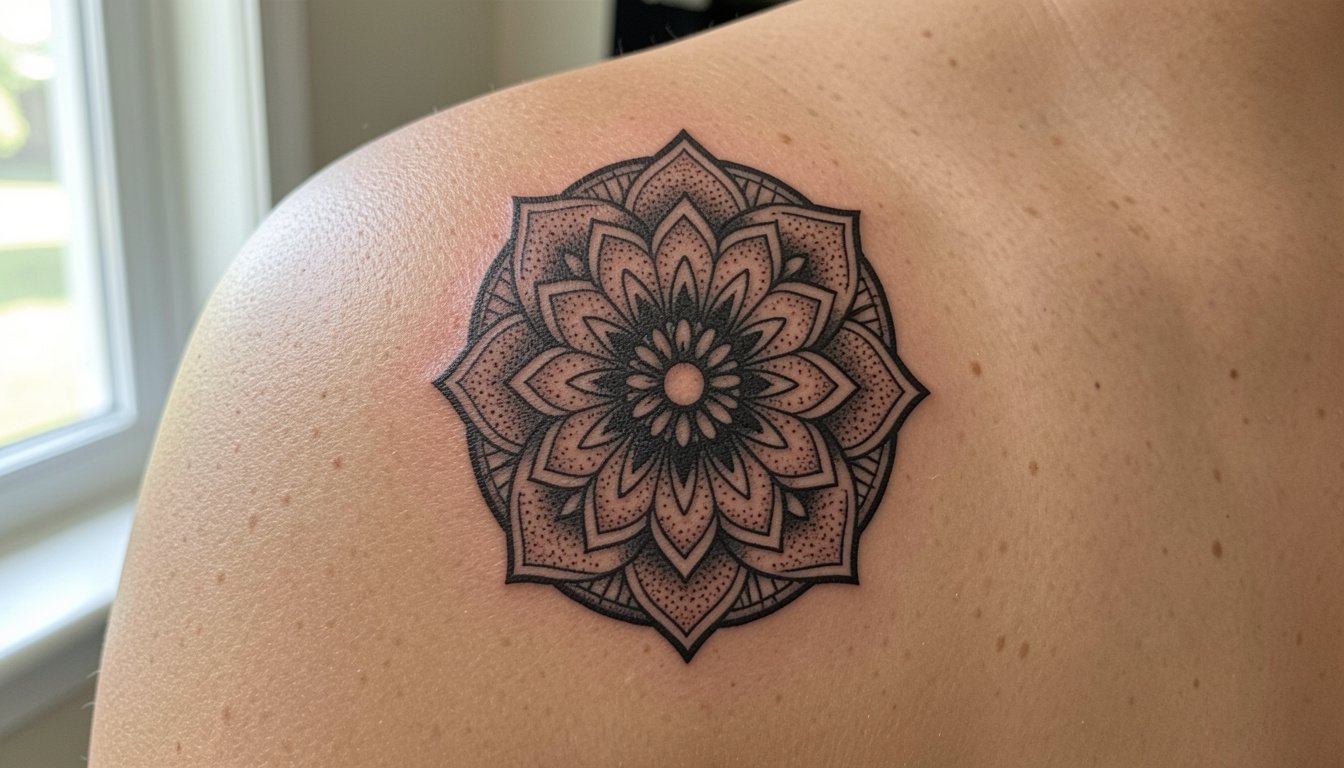
Dotwork mandala sleeves look magnetic when they are fresh, but the real question is how the stipple shading and radial geometry behave after a year of sun, sleeves rubbing, and everyday life. If dots are packed too tightly the pattern can soften into a single dark texture, and that is avoidable with spacing, anchor medallions, and planned negative space. Read these sleeve ideas with an eye for what survives healing and what needs touch-ups.
1. Full-Arm Mandala Sleeve with Geometric Filler
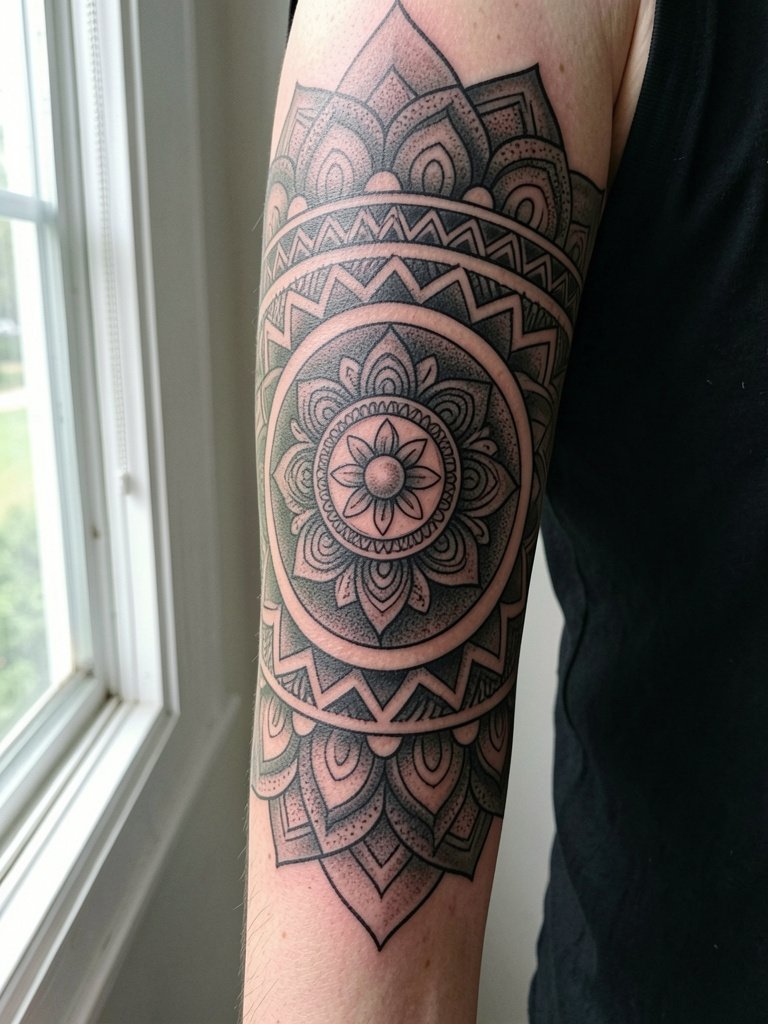
Start with a large central medallion near the shoulder and plan smaller medallions down the arm so the sleeve reads cohesive from a distance. Ask for slightly heavier linework on outer rings so the geometry still reads at five years, and bring scaled references that show spacing at three, four, and six inches. A common mistake is compressing rings too close together. Expect high session density because stipple gradients take time, and touch-ups are often needed two to four years after heavy sun exposure. For sessions wear a loose short-sleeve tee so the artist can roll fabric without tugging.
2. Dotwork Half Sleeve with Dense Background Texture
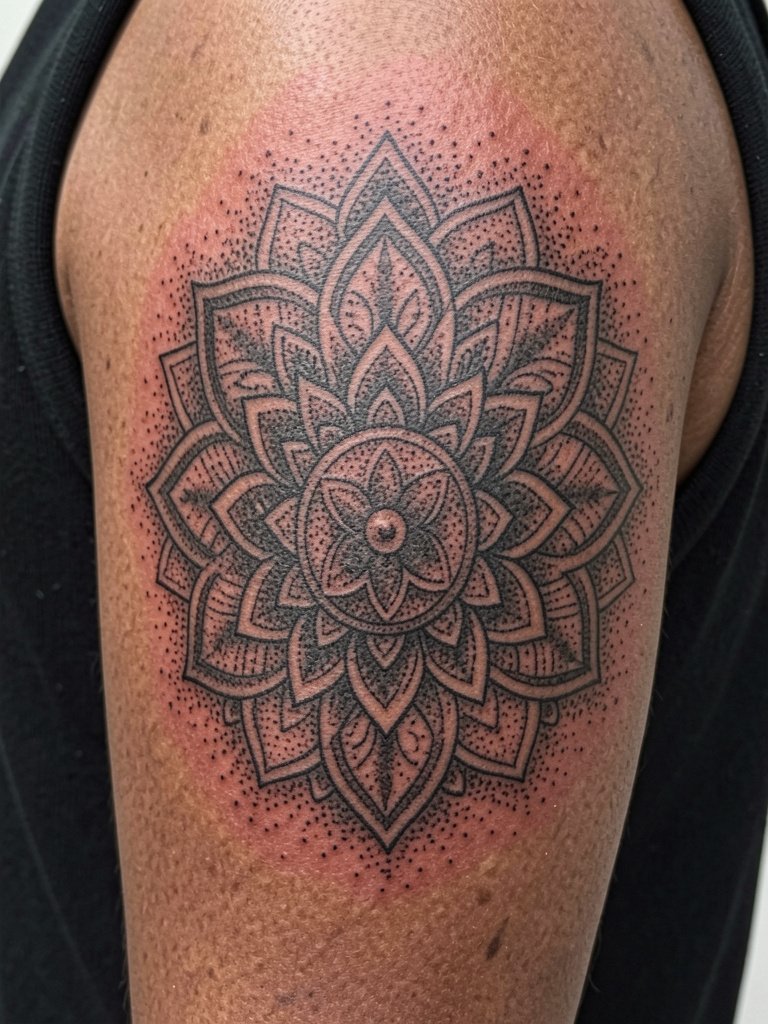
This version keeps the mandala focal but uses a denser stipple background to create depth without full black fill. Tell the artist you want gradient stops that leave skin breaks so the piece does not read as a dark block. The usual error is overpacking the stipple so negative space disappears after healing. Six months in the medallion will look punchy; at two years the background will soften and a touch-up may be required to keep the central hierarchy. Session-wise, expect two to four sittings. For showing it off pair with sleeveless tops and muscle tees in neutral tones.
3. Ornamental Mandala Sleeve with Negative Space Breathing Room
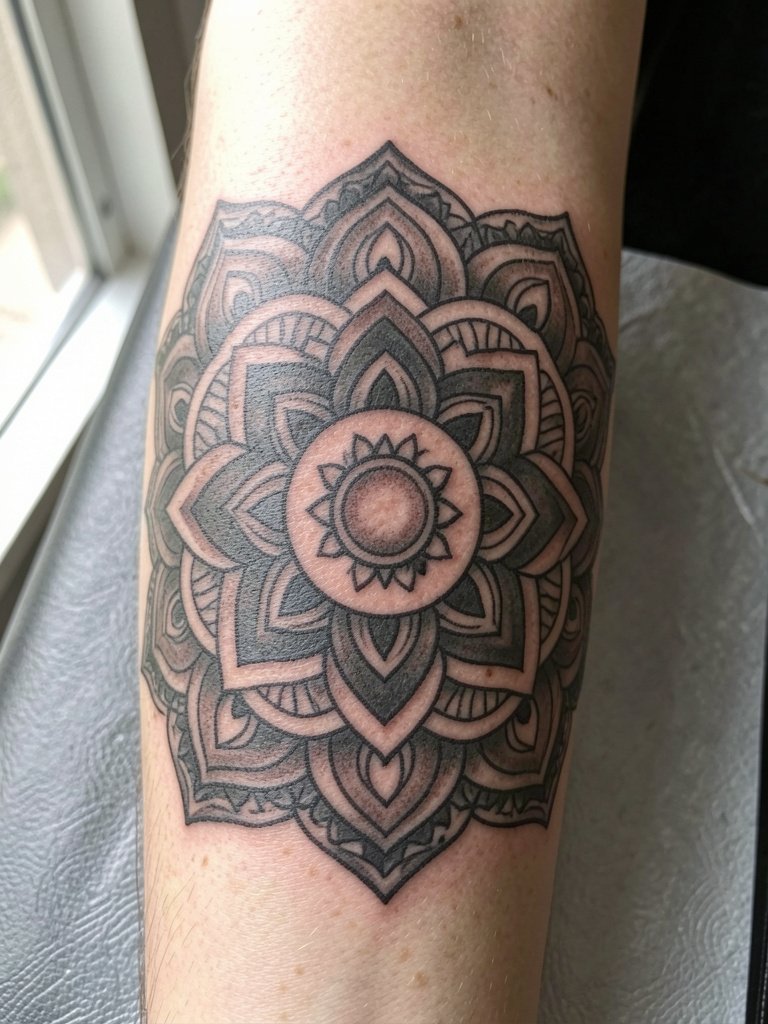
Negative space keeps a sleeve from becoming visually heavy, and designers now use open skin breaks as a compositional element. When you sit with your artist bring a mockup that shows exact skin gaps measured against your arm circumference so the negative space aligns with natural muscle contours. One mistake is matching a flat mockup to a rounded arm, which compresses gaps. Healed at six months the contrasts remain strong. At five years the open pockets still help the mandala read from across the room. For session wear consider a loose short-sleeve shirt or a zip-up that can be pushed above the shoulder.
Controversy note: Artists and collectors split on dense blackwork versus negative space. One group prefers dense fills because they read bold and age predictably. The opposing group values negative space because it preserves shape and avoids an overpacked look.
4. Geometric Mandala with Stacked Symmetry Bands
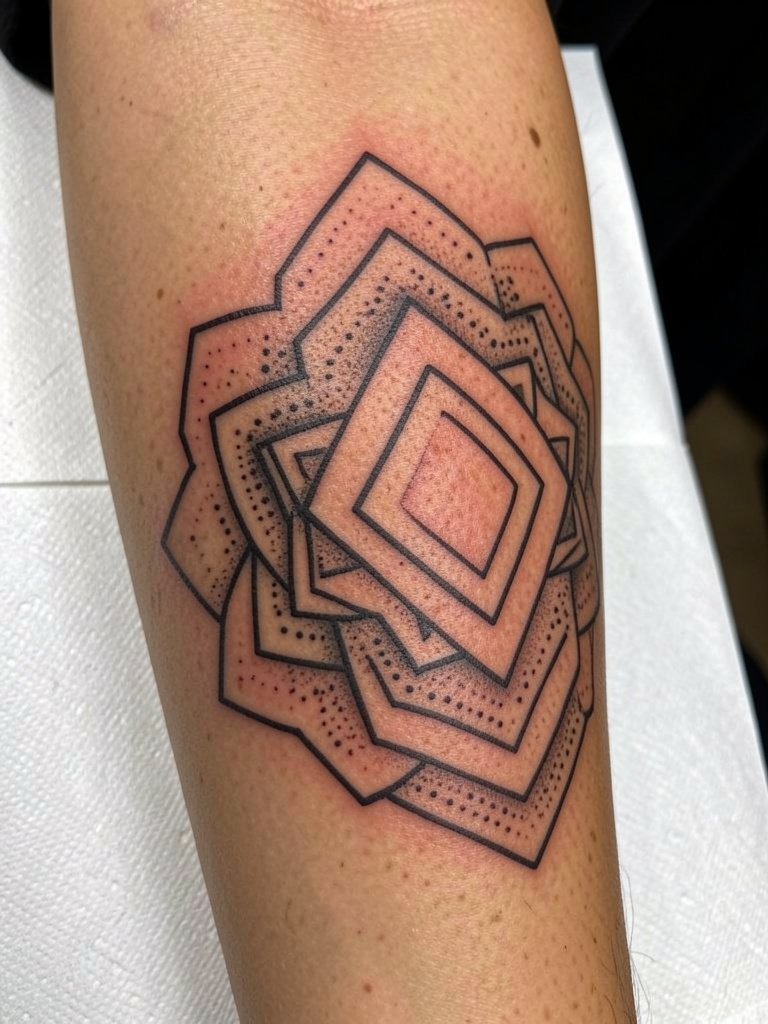
Stacked bands are ideal if you want modular expansion later. Tell the artist to plan ring widths relative to wrist circumference so bands keep proportion when moving up the arm. A common aging issue is selecting bands that are too narrow; those lines blur faster. This design usually needs two to four sessions depending on ring complexity and a light touch-up two years out. Forearm placement feels different from upper arm because the cylinder shape compresses symmetry; expect longer stencil adjustments during consultation. Wear a rolled-cuff shirt to show finished panels without covering them, and consider the rolled sleeve shirt look for reveal photos.
5. Half-Sleeve Dotwork Finished in One Long Session
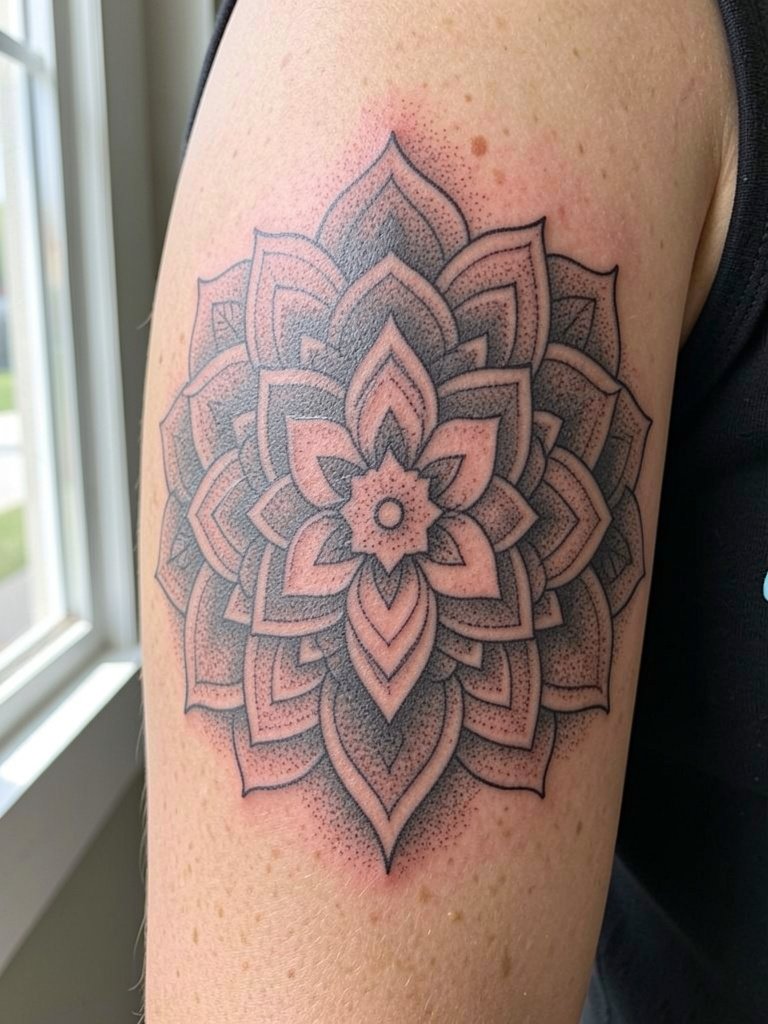
Some clients prefer a single long session to complete an upper-arm half sleeve. If you are considering that, plan for a 4 to 6 hour block and prepare hydration and snacks. Tell the artist you want a single-session approach and ask how they will stage breaks and layering for stipple work. A mistake is underestimating swelling, which makes detail work harder late in the session. Healed at six months a single-session half sleeve will look cohesive, but touch-ups are common at the one-year mark. For session comfort wear a sleeveless top so the artist has clear access and you stay cool.
6. Mandala Focal Point with Ornamental Expansion into the Forearm
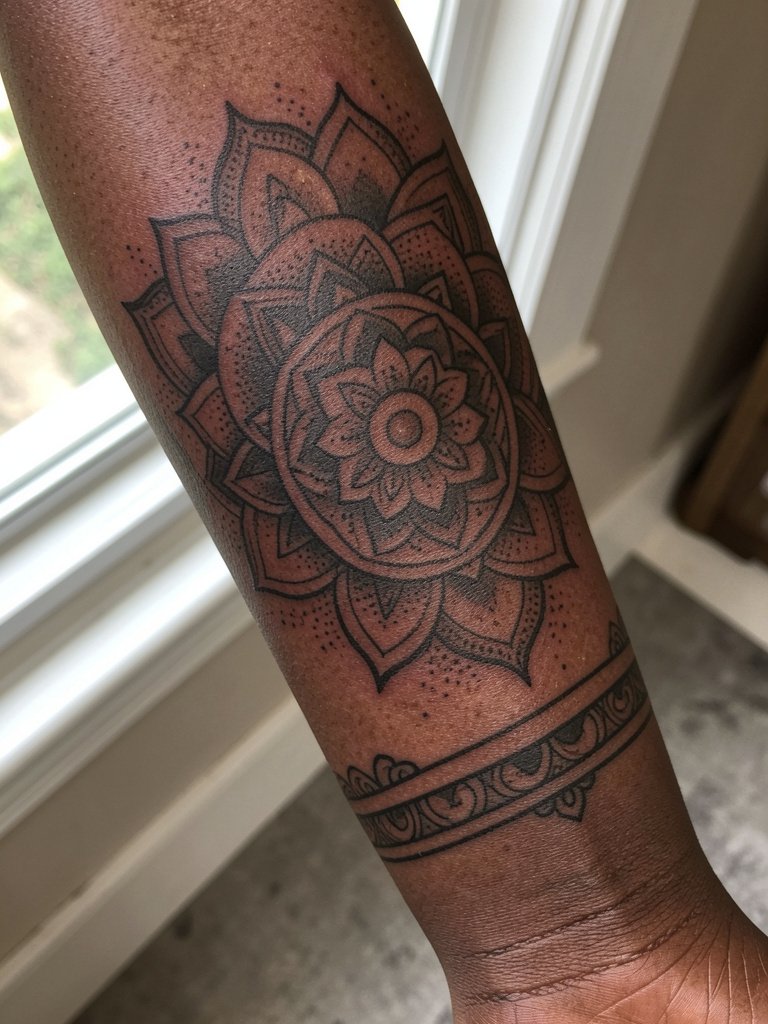
Starting with a single medallion gives you a clear anchor for future sleeve work. During consultation bring photos that show how the medallion will sit when your arm is relaxed. The design that fails is one where the medallion sits too close to the elbow crease and distorts when you bend. Expect one to three sessions for this expansion, and plan a touch-up after the initial healing window to adjust saturation. For appointments wear a short-sleeve or a tank so the artist can move along the forearm easily.
Session Day Picks
The medallion-forward and half-sleeve ideas above expose the upper arm and forearm differently, so a few products smooth the session and the first week of healing.
-
Tattoo balm sticks. Great for spot moisturizing on healed areas and less messy during travel between sessions.
-
Unscented body butter. Lightweight, fragrance-free formulas help with dry patches during the second week without over-occluding.
-
Aftercare soap, fragrance free. A gentle, low-surface-tension wash cleans inked skin without irritating delicate healing linework.
-
Barrier-style healing film roll. Useful when you want less daily lotioning and reduced friction for sleeve areas that rub clothing.
-
Second-skin bandages Saniderm style. Protects fresh work from friction on the first day or two, which is handy for outer-arm medallions that might rub against shirts.
7. Small Mandala Medallion as the Seed of a Patchwork Sleeve
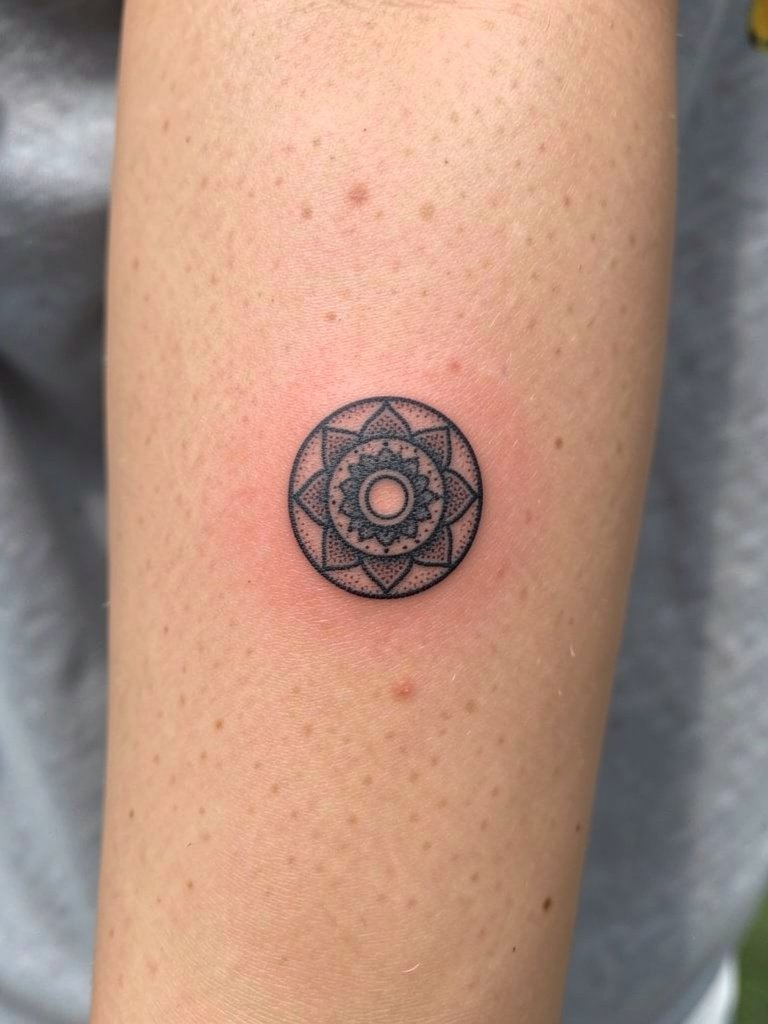
A small medallion is an easy way to commit without designing a full sleeve. Make sure the medallion is drawn slightly larger than your instinct, because inner forearm detail eats very fine work over time. Bring two reference photos at different scales so the artist can show you how a three-inch medallion reads versus a five-inch one. The mistake is choosing tiny filigree that disappears. Healed at two years a slightly larger, bolder medallion retains radial structure. Pair this placement with layered bracelets on the opposite wrist for balanced styling and wear a short-sleeve or rolled sleeve for the session.
8. Geometric Mandala with Lotus-Inspired Center
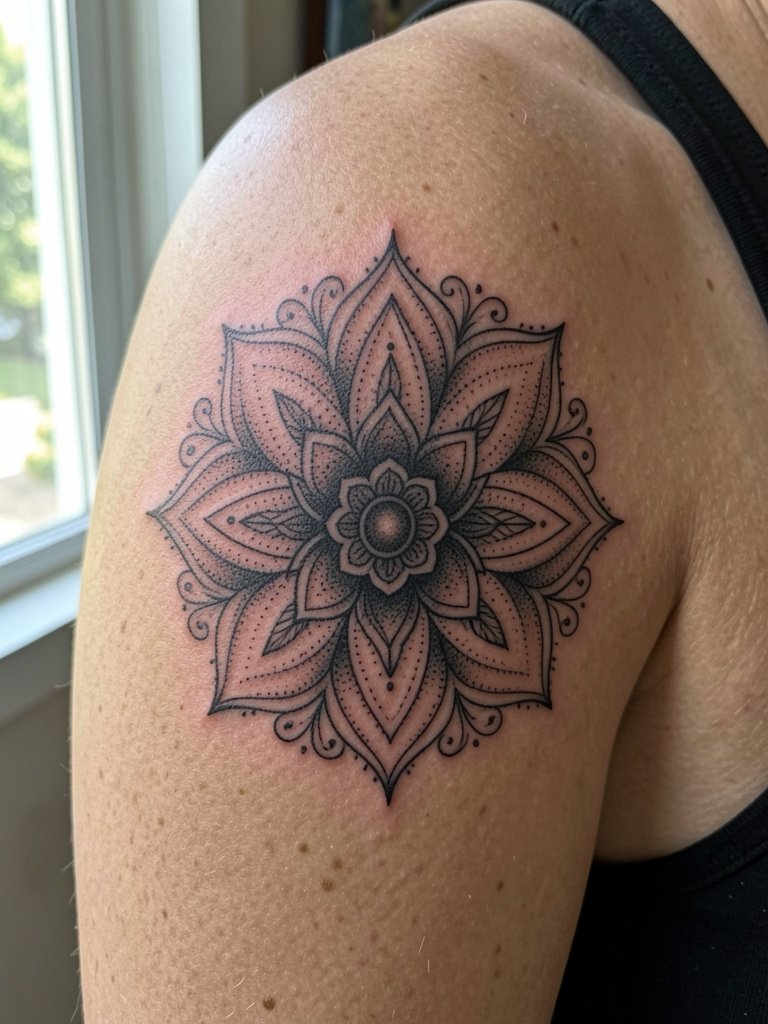
A lotus-inspired core gives the mandala a familiar anchor while keeping the rest purely geometric. Discuss with your artist how much floral suggestion you want versus literal petals so the piece respects the ornamental aesthetic. One common mistake is making the lotus too botanical, which can break the geometric rhythm. After six months the lotus core should remain crisp if linework is slightly reinforced on outer rings. For wardrobe, off-shoulder tops and wide-neck tees frame shoulder medallions neatly. Include a short sentence in your consultation about cultural respect for mandala origins if you want symbolic elements integrated.
9. Dotwork Sleeve with Soft Gradient Fill Between Mandala Anchors
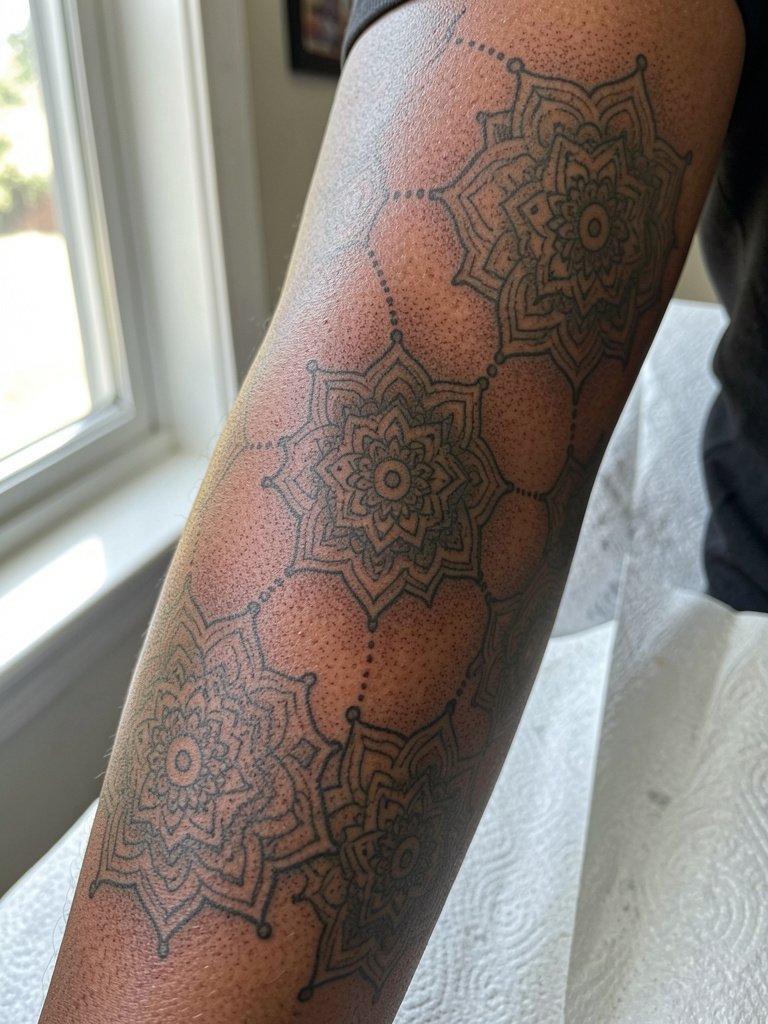
Using soft gradient fills between anchors helps the sleeve read as a continuous surface. Ask the artist to map the darkest gradient stops away from high-friction zones like the elbow crease. A frequent error is centering heavy gradients over moving skin. At two years the gradients will have the biggest visual shift so plan a touch-up timeline then. Session-wise this is dense work and usually done across multiple visits. For daily style, monochrome outfits in cream or olive let the sleeve stand out without competing patterns.
10. Mandala Sleeve with Hard Geometric Borders
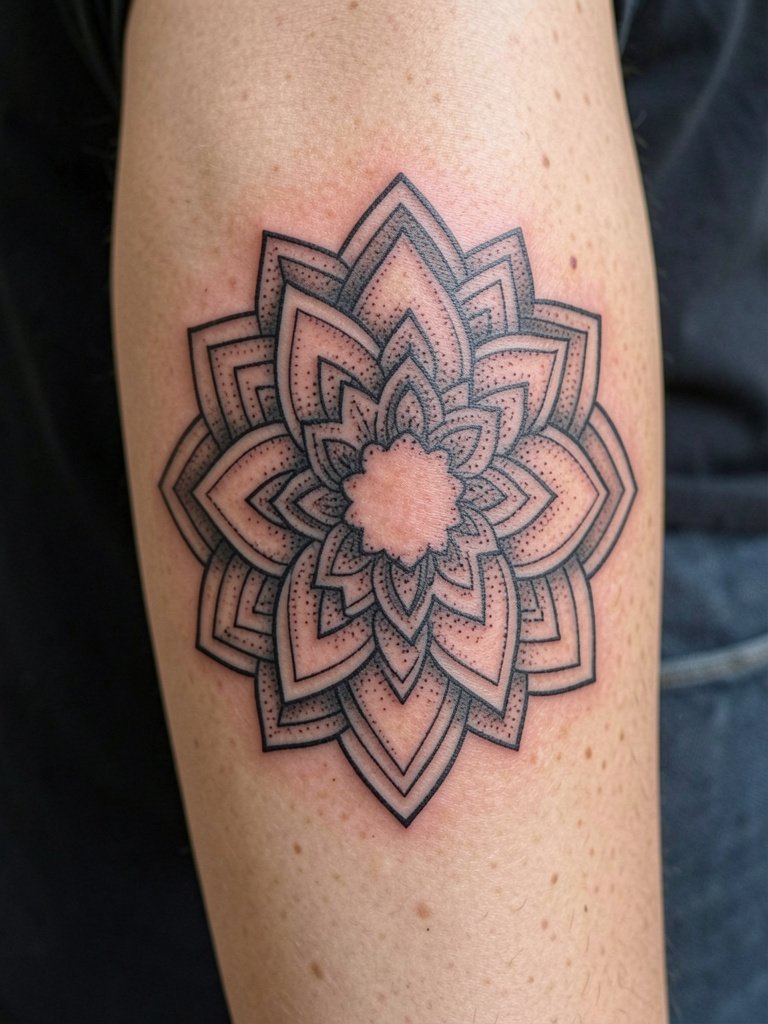
Crisp borders help patterns keep their shape over time because the eye reads the silhouette first. When you consult, request a border that is one hair heavier than the internal linework so it ages into the composition. Mistakes happen when borders match interior lines exactly, which blurs the outline as the skin ages. At five years a defined border is what preserves the sleeve's architecture. For showing it off pair with fitted short sleeves or ribbed tanks and try a fitted black t shirt to keep contrast strong.
11. Mandala and Geo-Dots Sleeve Designed for Arm Wrap
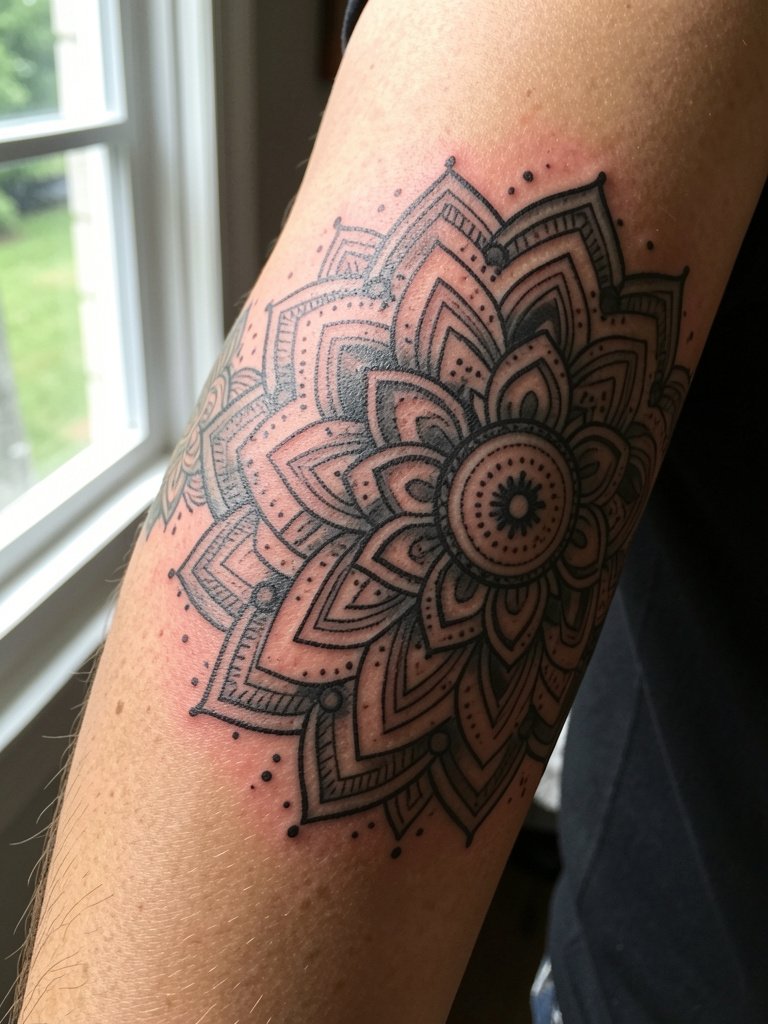
Wraparound composition flatters the arm because it avoids flat, front-facing layouts that distort on the curve. Ask the artist to sketch the wrap with your arm at rest so anchors sit where your eye expects them. A common mistake is using a flat mockup and ignoring how the bicep bulges when you flex. At the two-year mark a well-planned wrap still reads as continuous; a rushed wrap looks like separate islands. Wear short sleeves that can be pushed up and bring photos of your arm circumference to the consultation.
12. Mandala Forearm Panel with Future Sleeve Extension Points
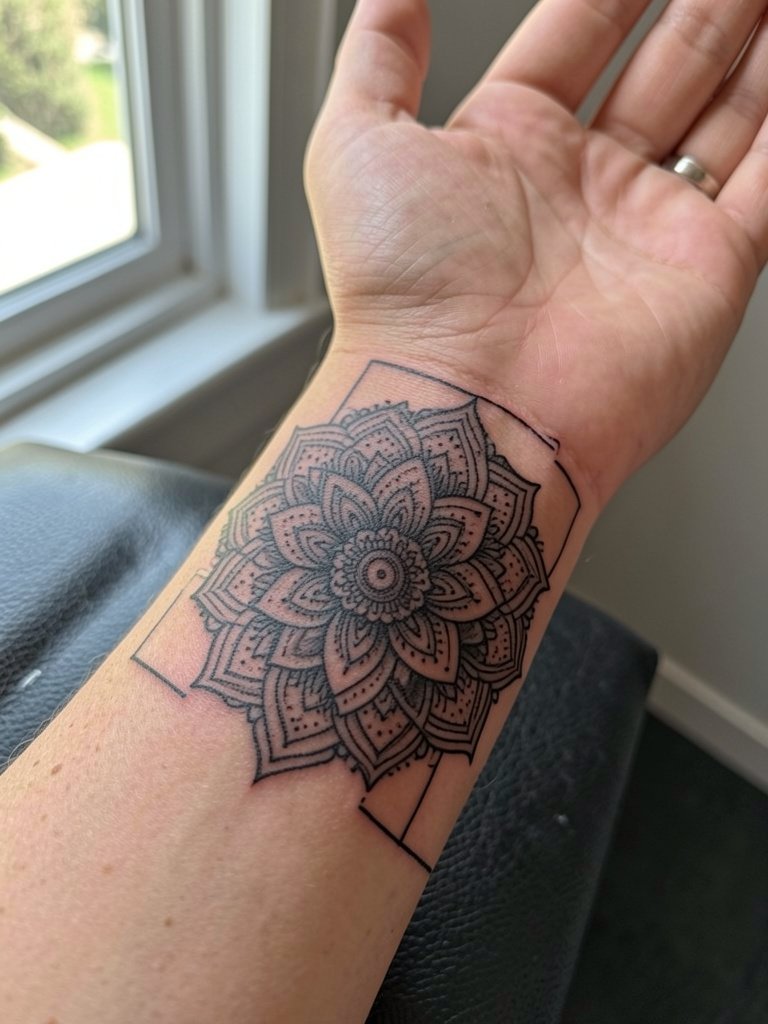
Design this as a modular panel with planned extension points so you can add pieces later without awkward seams. Specify on the stencil where you want future anchors and how big they should be so the artist can leave precise margins. The frequent mistake is failing to mark extension points, which forces heavy covering or awkward gaps later. Healed at six months a modular panel looks like a completed unit. For sessions wear a shirt with sleeves that roll fully above the elbow and bring two reference photos that show extension options.
13. Large-Scale Dotwork Mandala Built Around a Central Rosette
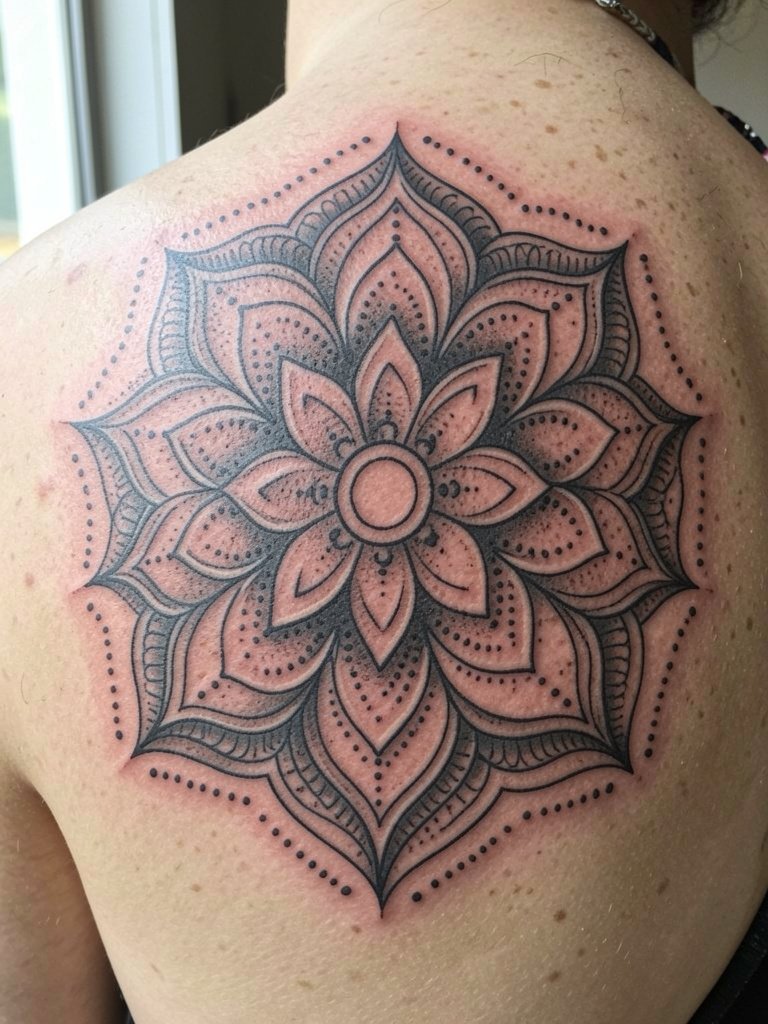
A rosette creates instant focal hierarchy and makes the sleeve feel intentional. When planning, decide whether the rosette sits centered on the shoulder cap or slightly anterior to follow collarbone lines. A mistake is centering the rosette exactly on a moving joint; that causes distortion when you lift your arm. Multi-session build is normal and touch-ups around the rosette often happen after seasonal sun exposure. For show-off outfits choose off-shoulder tops and tank silhouettes to emphasize the cap.
Controversy note: Some clients push for a single dominant mandala to anchor the sleeve. The pro side says a dominant centerpiece gives architectural clarity and a strong visual focus. The other side prefers repeated medallions spaced across the arm because they are more adaptable and easier to extend over time.
14. Ornamental Sleeve with Repeated Mandala Medallions
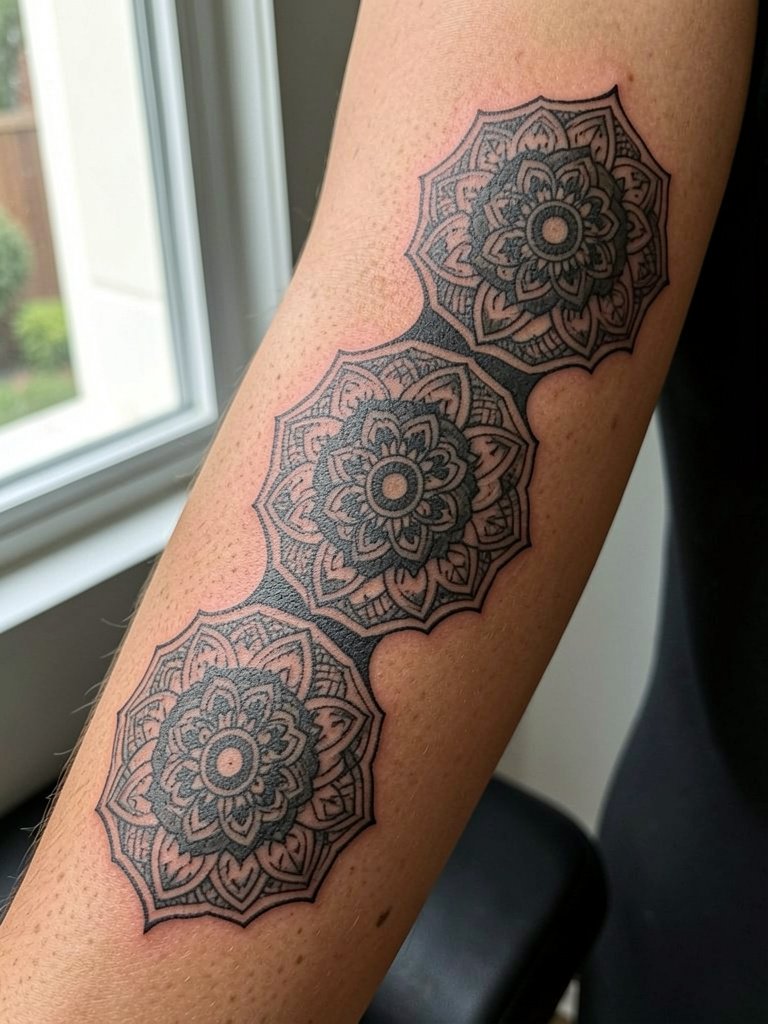
Repeated medallions make expansion straightforward because you can add more medallions without redesigning the whole arm. Tell the artist you want consistent scales for the medallions but allow one anchor to be slightly larger to avoid monotony. A mistake is repeating exact size and rhythm which reads mechanical. Over the years the repeated motif reads more harmoniously than a single crowded center. For session-day clothes, sleeveless or half-sleeve tops work best for upper-arm medallions and try a linen sleeveless top when showing the piece.
15. Forearm Panel with Geometric Border and Delicate Stipple
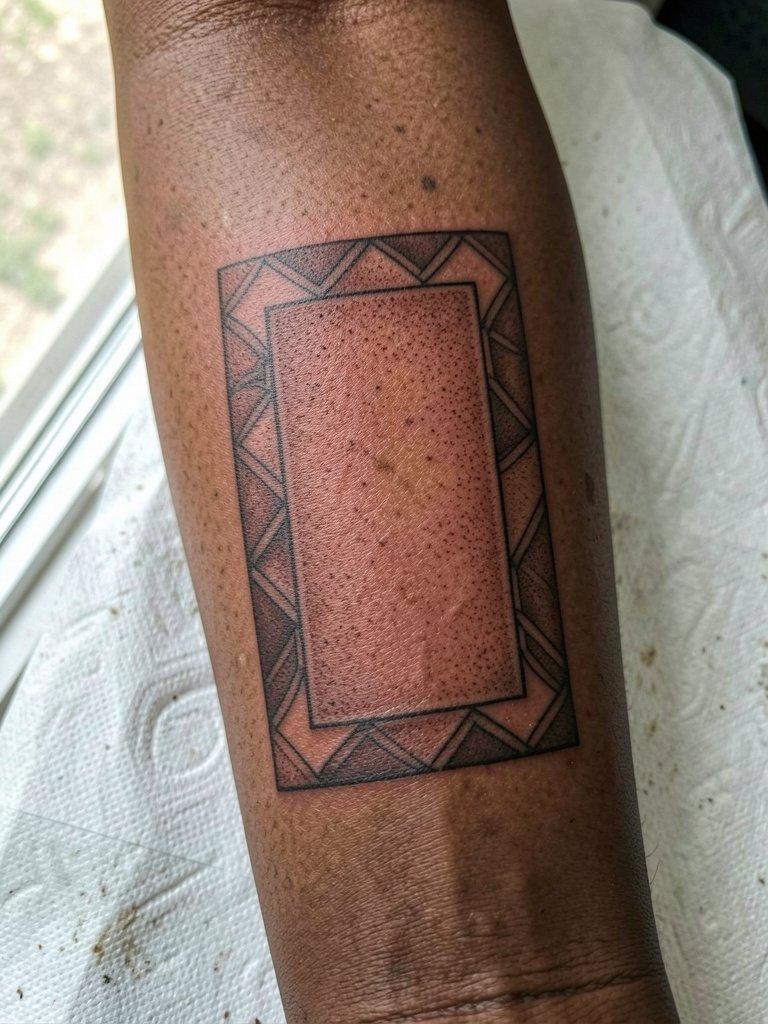
A forearm panel reads well for everyday viewing and photographs cleanly. Ask for slightly heavier linework on border edges to protect the interior stipple from blowout. The common error is using single-needle lines for entire panels; the forearm needs some boldness to age well. Expect a shorter session time than a full sleeve but plan for a touch-up one year out. For showing this placement off, rolled-cuff shirts and slim bracelets on the opposite wrist keep attention on the panel. Wear a short sleeve or easy-roll sleeve for the appointment.
16. Elbow Transition Mandala That Avoids the Crease
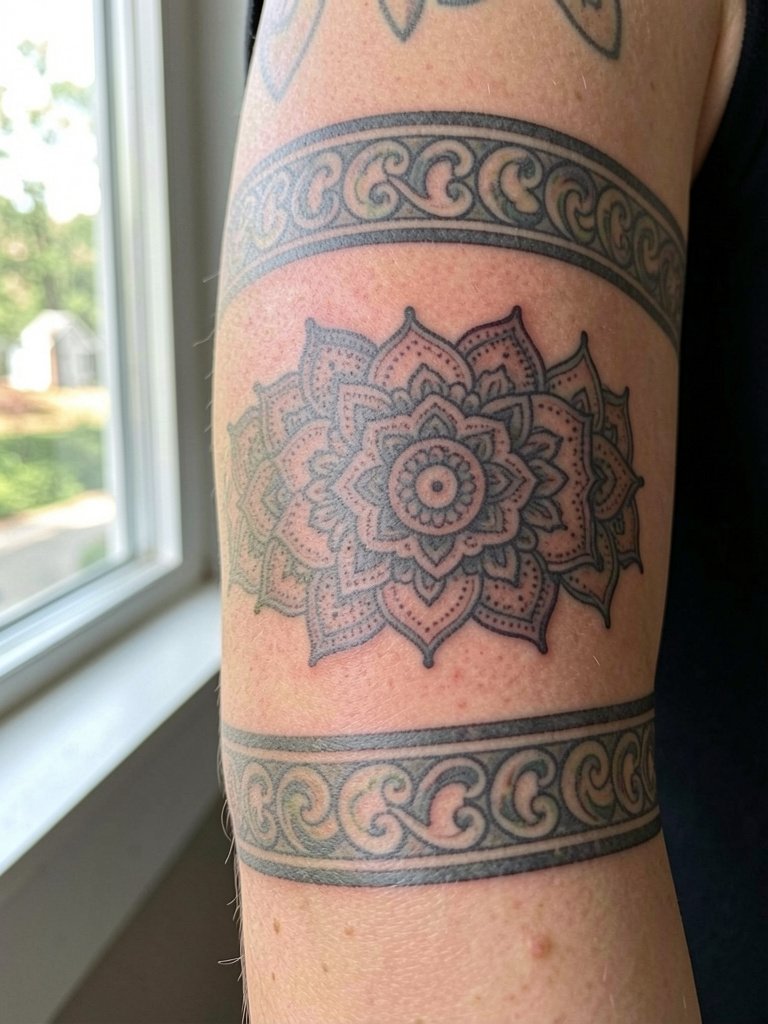
The elbow is a high-movement zone so mandala elements that cross the crease often blur. A good design places the strongest geometry above and below the crease, using the elbow as a negative space break. Tell the artist you want no tight detail directly on the crease to avoid distortion. Mistakes include putting delicate filigree over the crease, which will be the first area to need touch-ups. Session feel here can be sharp around the bony prominence so plan short breaks and consider numbing strategy if you need one.
17. Inner Forearm Medallion with Scriptless Ornament
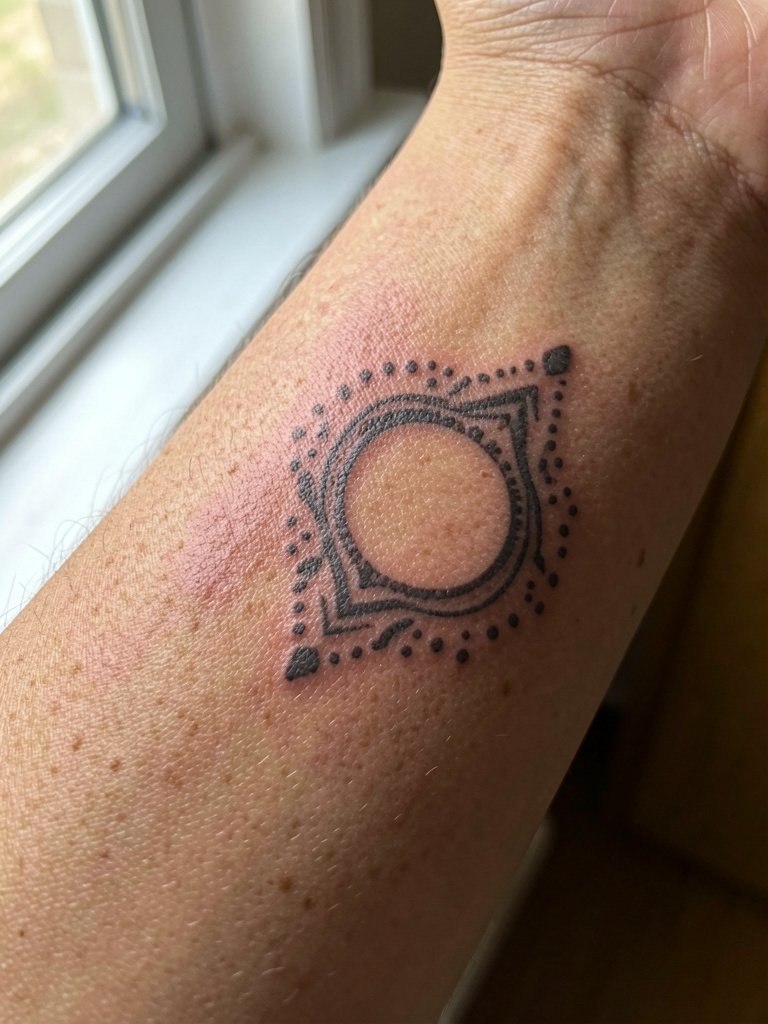
Inner forearm medallions photograph well and are visible daily. For longevity ask for slightly increased spacing between stipple dots in high-friction areas like the wrist. A typical error is packing fine filigree too near the wrist where washing and bracelets accelerate fading. Healed looks at two years benefit from a yearly moisturizer routine. For session comfort choose a shirt with sleeves that can be rolled fully above the elbow and remove watches before the appointment.
18. Forearm Wrap with Negative-Space Lace Filler
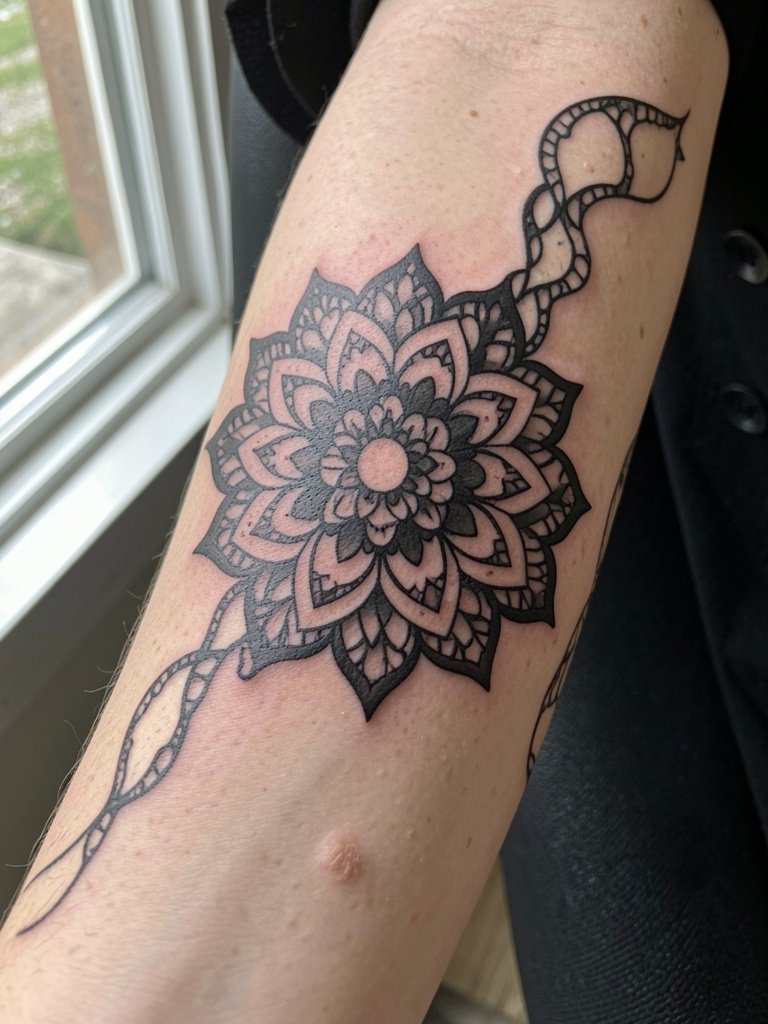
Lace-style negative space gives a sleeve breathable texture and helps avoid an overly dense look. When consulting, bring references that show exactly how much open skin you want. The wrong approach is borrowing a dense lace motif from textiles which reads too busy when translated to skin. Expect multi-session work and plan a touch-up after the initial six-month healing cycle. For styling try rolled-cuff shirts or dainty bracelet sets that do not cover the lace details.
19. Asymmetric Mandala Bands that Follow Muscle Lines
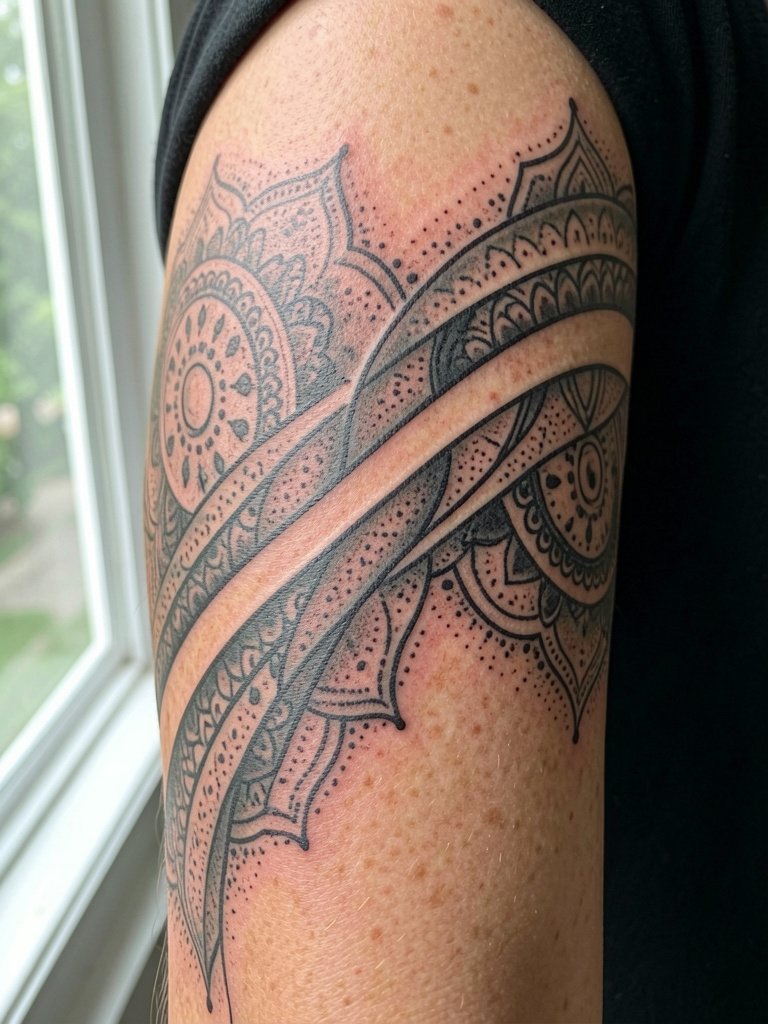
Design bands that respect muscle grain so patterns look intentional when you move. Ask the artist to mark the bands while you flex so they align visually with muscle lines. The common mistake is forcing symmetry onto an asymmetric limb which then reads off on motion. Over time the asymmetric bands tend to age more naturally because they work with the body rather than against it. Session notes include longer stencil timing and brief flex checks. For show-off outfits keep sleeves short and choose neutral palettes that let the pattern stand out.
20. Mandala Cluster for Shoulder-to-Bicep Flow
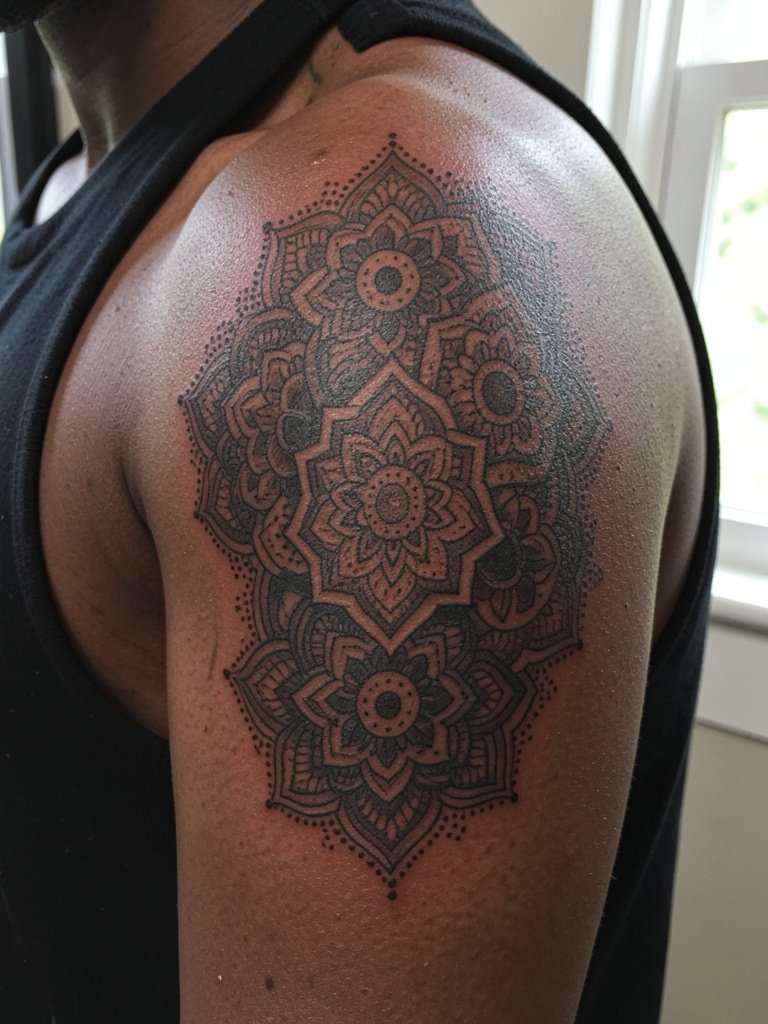
Clusters that flow down the bicep create movement and avoid a single flat plane. In your consultation be clear about where the cluster should stop so shirts do not constantly cover the lower anchors. A mistake is allowing the cluster to drop into the elbow ditch where distortion is inevitable. Healed at two years the cluster will still show depth if mid-tone stipple was staged properly. For wardrobe consider tank tops or wide-neck tees and bring a portable shoulder wrap for travel to and from the studio.
21. Radial Mandala with Thin Negative Lines
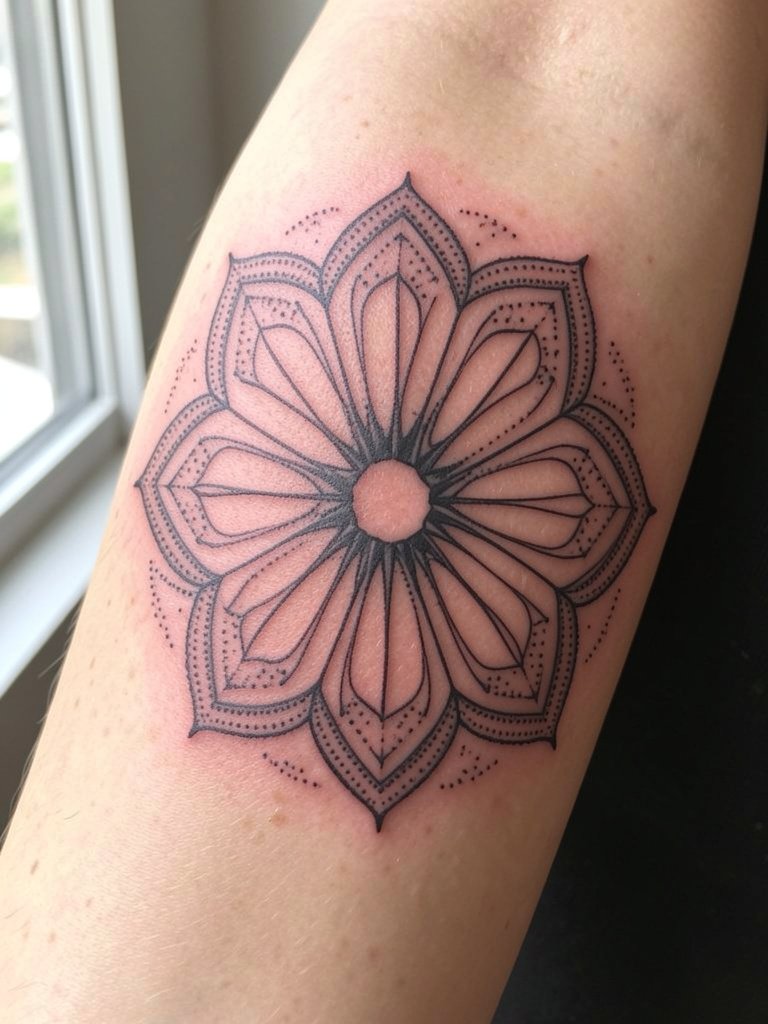
Thin negative lines can create crisp separation between dot-shaded rings, but they must be wide enough to survive skin settling. Ask the artist to lay out negative channels at a minimum visual width recommended for your skin type. The typical error is accepting ultra-fine white space that closes as the skin ages. Expect a touch-up within two to three years to keep negative channels crisp. Session time is moderate and the inner forearm feels more sensitive than the outer, so plan hydration and breaks.
22. Mandala Sleeve with Floral Motifs Woven into Geometry
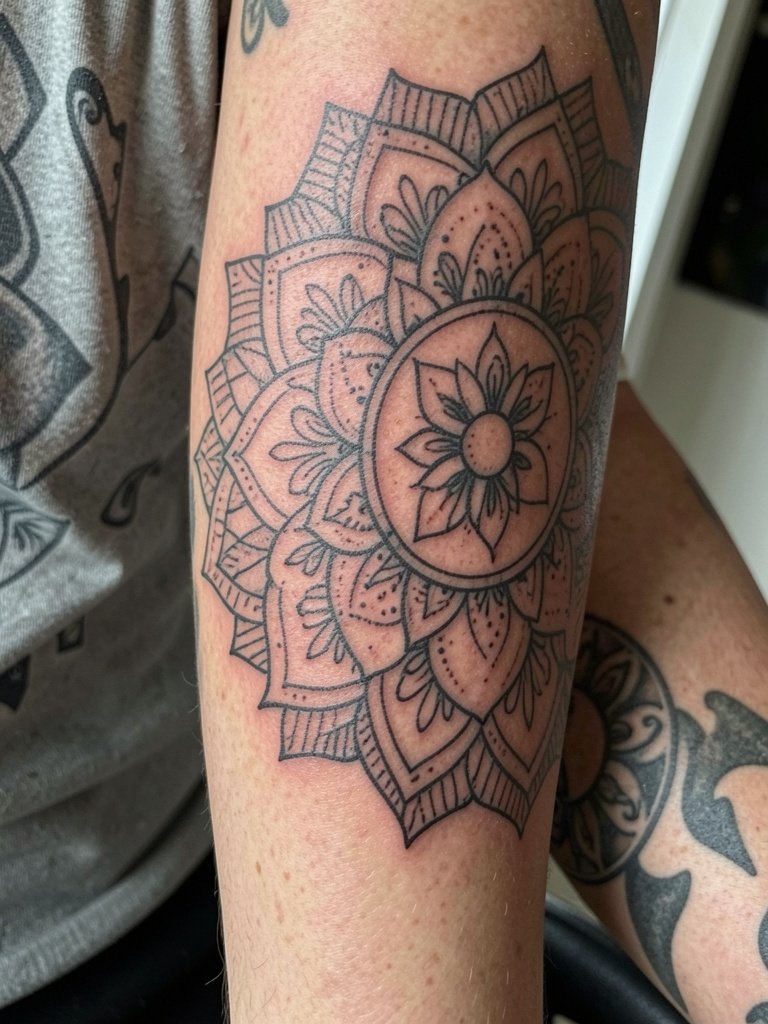
Integrating floral motifs into mandala rings softens the sleeve while preserving geometric structure. During consultation specify which floral elements are symbolic to you and which are purely decorative. A common mistake is over-detailing florals inside dense stipple where petals lose definition. Sessions will mix fine detail with bolder anchors and a touch-up at year one is common for petal edges. For evenings out pair with open-back midi dresses or off-shoulder tops to let mixed motifs read clearly and include a off shoulder top for styling.
23. Minimalist Mandala Panels for Visible Forearm
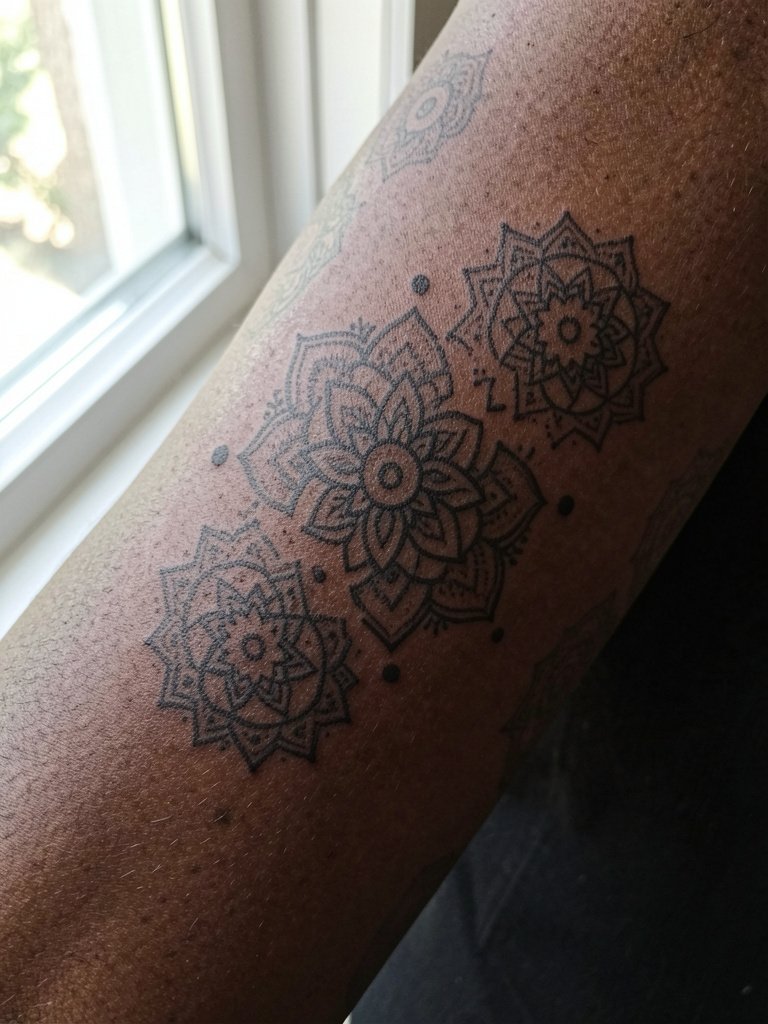
If you want a cleaner look choose reduced ornamentation and larger dot anchors so the design reads at arm distance. Request increased contrast on the anchor dots and slightly wider spacing in the filigree to prevent blur. The most common error is carrying over Pinterest-scale filigree that does not survive regular hand washing and bracelet wear. A minimalist mandala usually needs fewer sessions and touch-ups but may require a small correction in year two. For daily wear pair with rolled cuffs and a minimalist watch to frame the forearm.
24. Full Sleeve with Layered Stipple Depth Plan
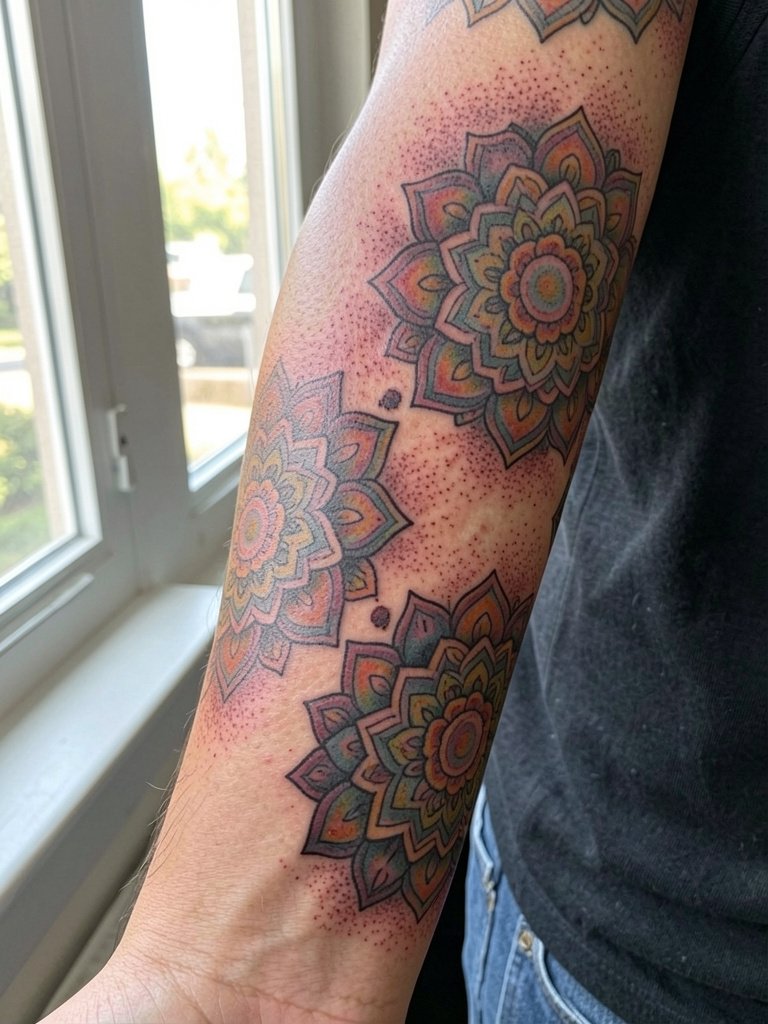
A layered stipple plan maps gradient densities to different arm planes so the sleeve feels three dimensional. During the consult ask the artist to mark darkest, mid, and light density zones on your arm so they match your everyday silhouette. The wrong move is making every zone equally dense which flattens the composition over time. Expect a larger session count and scheduled touch-ups at two to three year intervals. For showing off try cropped work shirts and fitted tees that keep the sleeve visible without patterns clashing. Consider a short sleeve oversized tee for casual looks.
25. Forearm Panel Designed Around Wrist Jewelry
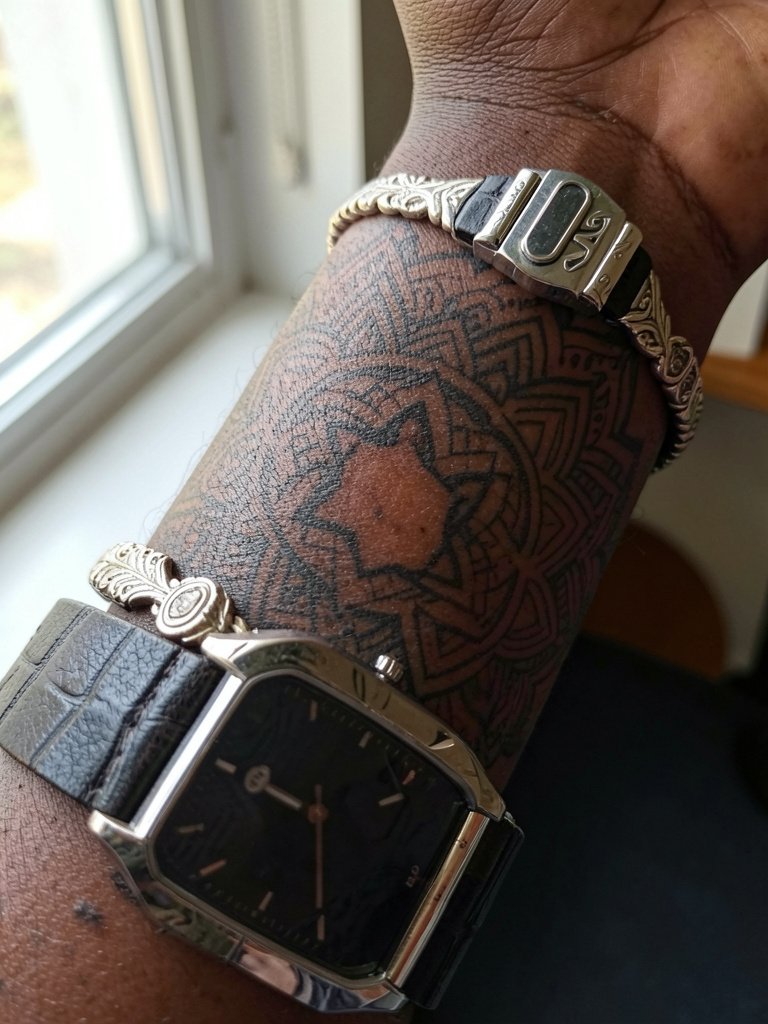
If you wear bracelets or a watch, design the mandala edge to sit just above those accessories so it is not obscured. Tell the artist how you normally wear jewelry and bring the watch or bracelet to the consultation. A common error is placing the panel too close to the wrist where daily washing and accessories cause faster fading. Healed results at one year remain readable if the artist staggers dotwork density away from the wrist. For session outfit remove bracelets and wear short sleeves so the area is clear.
26. Sleeve with Subtle Color Wash Behind Black Dotwork
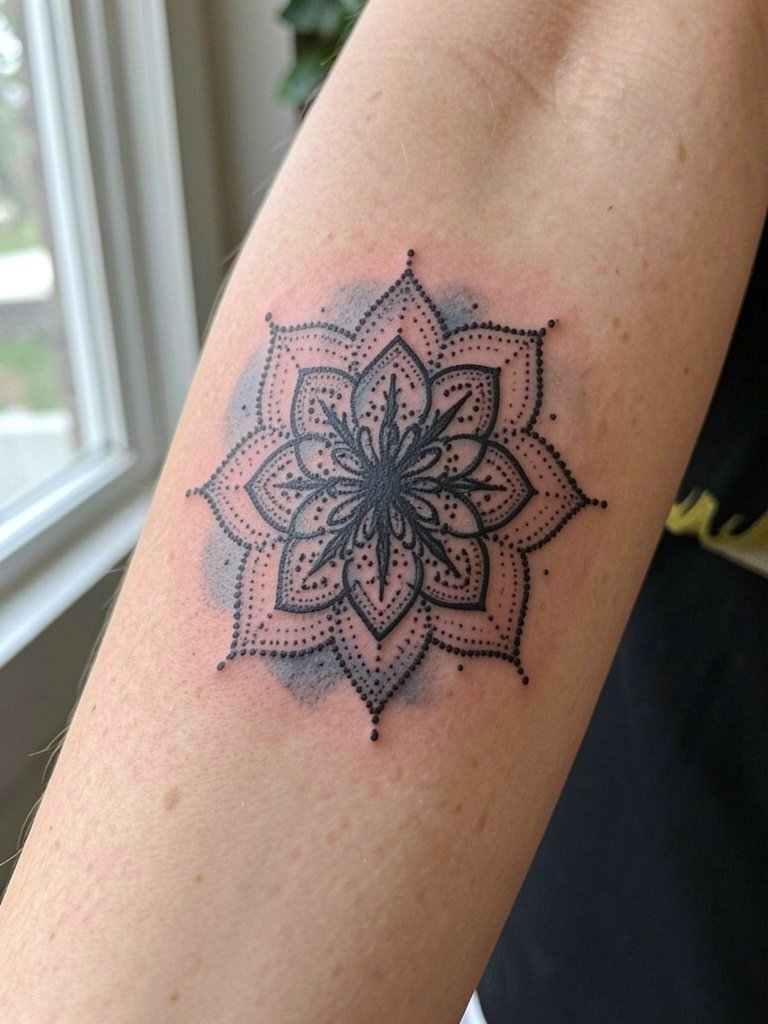
Some collectors want a faint tonal wash behind dotwork to create separation without full color. Ask the artist to keep wash opacity very low and limited to background planes so it does not interfere with dotwork saturation. The error is high-opacity washes under blackwork which can muddy the stipple. Expect slightly longer sessions when adding light wash layers and a possible touch-up to renew wash subtleties after a year. For styling pair with neutral monochrome outfits that let the subtle tone breathe.
27. Modular Sleeve Blueprint for Future Additions
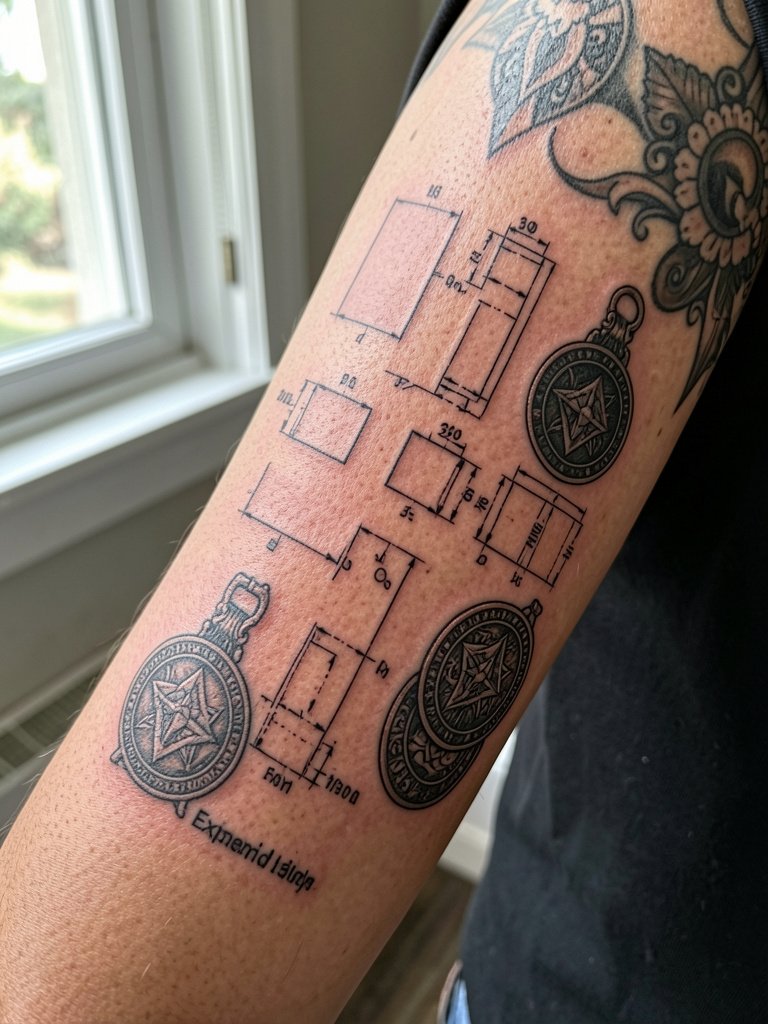
If you are not ready to commit to a full sleeve, ask your artist to draw a blueprint with designated extension nodes and sample medallions so future work slots in without mismatch. Bring long-term goals to the consult so the artist can plan ring sizes and anchor spacing. The common mistake is skipping a blueprint and later having to redraw whole sections to make pieces fit. This approach spreads cost and commitment across sessions while preserving cohesion. For sessions wear a loose short-sleeve shirt and keep a notebook of ideas to share during follow-ups.
Frequently Asked Questions
Q: How much does a dotwork mandala sleeve typically cost and how many sessions will it take?
A: Prices vary based on density and artist rate, but sleeves range from moderate to premium tiers depending on detail. Expect anywhere from a few sessions for panels up to eight or more for a full, highly detailed sleeve. Session count depends on dot density, how much negative space you want, and the artist's pacing. Budget for touch-ups in years two to three.
Q: How do I find artists who show healed dotwork mandala sleeves rather than only fresh photos?
A: Search Instagram and TikTok hashtags like #dotworktattoo, #mandalatattoo, #geometrictattoo, and #blackworksleeve while using your city name to filter for local portfolios. Browse Reddit threads for healed comparisons and ask studios for two-year healed photos when you book a consult. Look for portfolios that post process reels and multiple-angle healed shots rather than only polished hero images.
Q: Will fine-line mandala work hold up on my arm or should I go bolder with dotwork?
A: Artists split into two camps on this. One camp says fine-line mandalas look airy and elegant but risk softening on moving areas like the arm within a few years. The other camp argues that bolder dotwork and slightly thicker anchors age more reliably and retain geometry longer. Decide based on how visible you want the sleeve at five years and the touch-up tolerance you are comfortable with.
Q: What should I wear to a long session for an upper-arm or forearm mandala sleeve?
A: For upper-arm work choose a tank top or a loose short-sleeve tee that can be rolled without tension. For forearm sessions pick a short sleeve or a shirt with sleeves that roll fully above the elbow. Bring layers for comfort during long sittings and avoid tight jewelry on the area being tattooed.
Q: How should I think about sun protection and longevity for a blackwork mandala sleeve?
A: Regular sun protection is essential because UV exposure softens contrast and can reduce dot clarity. After healing, use SPF on exposed areas and lightweight moisturizers to maintain skin health. Expect to schedule touch-ups after prolonged sun exposure or dramatic weight changes.
Q: Can mandala designs cross cultural lines respectfully?
A: Yes, when approached intentionally. If a mandala or symbolic element has cultural or spiritual origin, mention that in the consultation and ask how to honor the motif respectfully. Many artists can adapt ornamental language in a way that nods to origin without copying sacred iconography.
Q: What are realistic touch-up timelines for dotwork mandala sleeves?
A: Expect a small touch-up within the first year in many cases, especially for dense stipple zones. After that, plan for minor refreshes every two to four years depending on sun exposure and skin changes. Healed photos from your artist help set realistic expectations for your skin type.