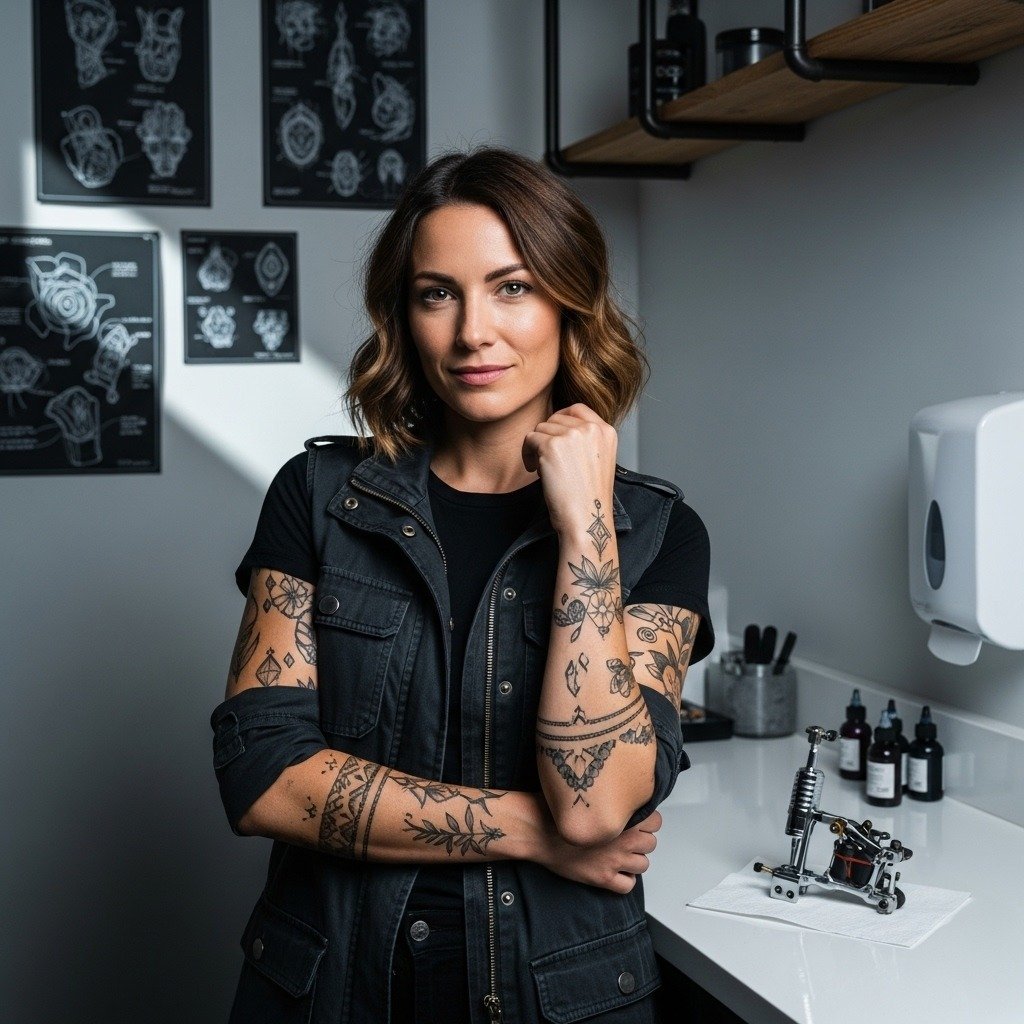
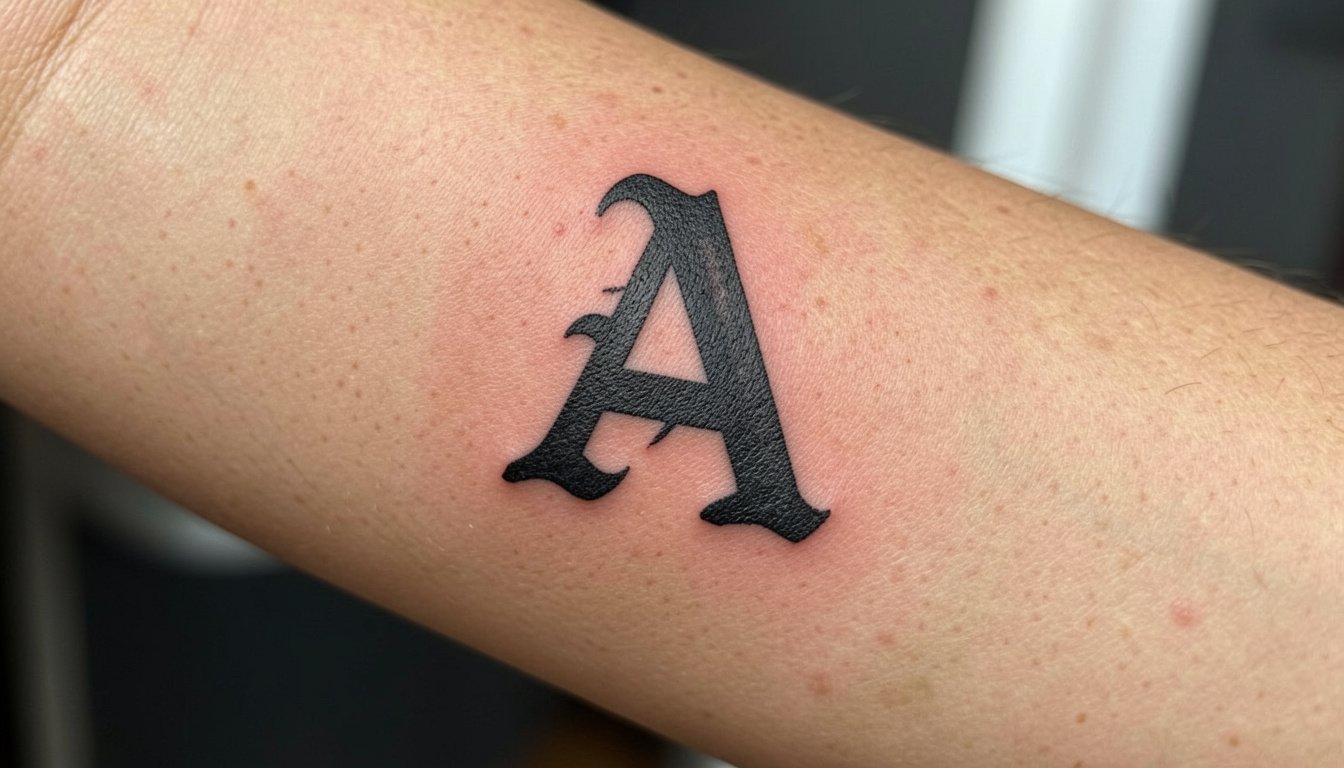
Trends online push tiny scripted initials as the default, but what shows well in a phone photo does not always hold up on skin. Some A designs look glorious the first year and start to fuzz by year three. Others read bold and clear for a decade. Read these 15 A designs with honest notes on longevity, what to ask for in the consult, and practical styling tips that actually work in real life.
1. Minimalist fine-line A on the inner wrist

This is the classic starter initial that lives on bracelet-level skin. Pick a slightly heavier single-needle weight than the thinnest sample in your saved board so the stroke keeps clarity at two and five years. On the consult bring a single reference image at wrist scale and ask the artist to show the design at three different widths so you can see how it reads at one inch versus two. A common mistake is copying micro-calligraphy meant for paper; the artist will widen terminals and shorten hairlines to avoid blowout. Expect a quick 20 to 40 minute session and light, brief soreness. For the appointment wear a short-sleeve top and take off any bracelets. This placement pairs well with a thin watch on the opposite wrist, try thin chain bracelet set to complement the piece.
2. Letter A wrapped in a fine floral vine on the inner forearm
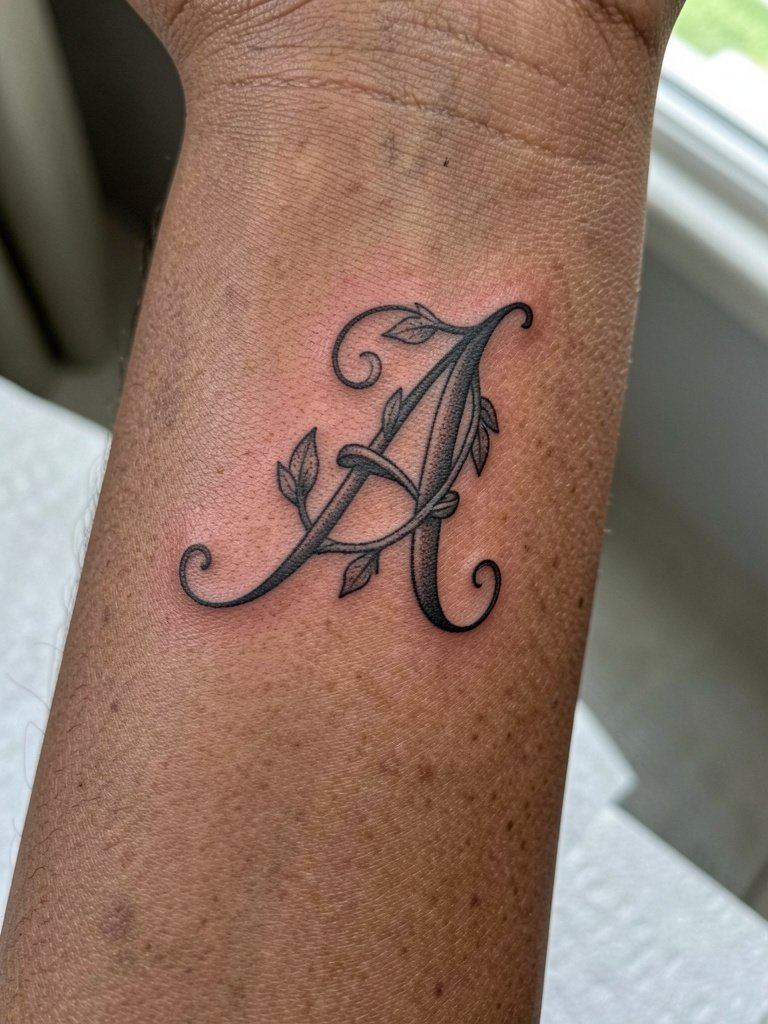
This design gives a solo initial a custom frame without adding bulk. Botanicals read differently by skin tone and location, so bring healed photos of similar vine density on the same forearm plane. Tell the artist you want the leaves to read at two years, not just day one; that usually means slightly heavier stems and tighter spacing for the vine. The aging trade-off is obvious: tiny leaf veins look lovely at six months and often blur by year three if they are paper-thin. Plan for a 45-minute session and a likely touch-up at year two for crisp leaf tips. Wear a loose button-down that you can roll up easily during the session and consider showing it off with a linen button down shirt when healed.
3. Bold blackletter A on the outer forearm
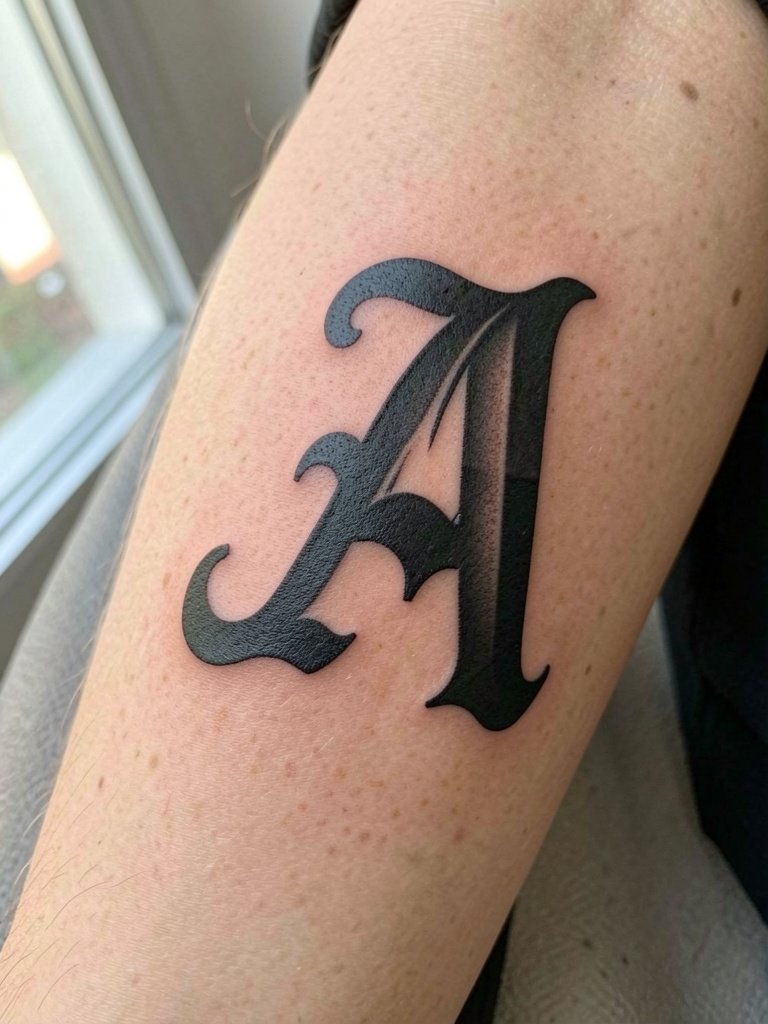
If longevity and legibility are priorities, blackletter or gothic forms are hard to beat. The design choice trades delicate flair for unmistakable read at distance and over time. When you sit with the artist, specify the minimum counter width and ask them to show how the letter looks scaled down to the size you want; counters that are too small will close up as the tattoo settles. A typical session is 60 minutes for a medium-scale outer forearm A, and touch-up needs are infrequent if the black saturation is strong. This placement tolerates bolder wrists and chunkier jewelry, so a vintage denim jacket and solid tee style will help the letter read clearly.
4. Ornamental monogram A beneath the collarbone

A framed monogram reads as jewelry on the upper chest and scales well because the skin there is relatively stable. Ask for mockups showing how the ornament sits when you move your shoulders so the artist can avoid placing fine filigree across a fold. A version that ages poorly puts too much tiny detail into one small plane, which tends to blur into a textured patch. Expect a one-hour session, occasional tenderness under straps for the first week, and a potential touch-up at year two for crispness in the filigree. When healed wear off-shoulder tops or a delicate chain necklace to frame the piece.
5. Tiny single-letter A behind the ear
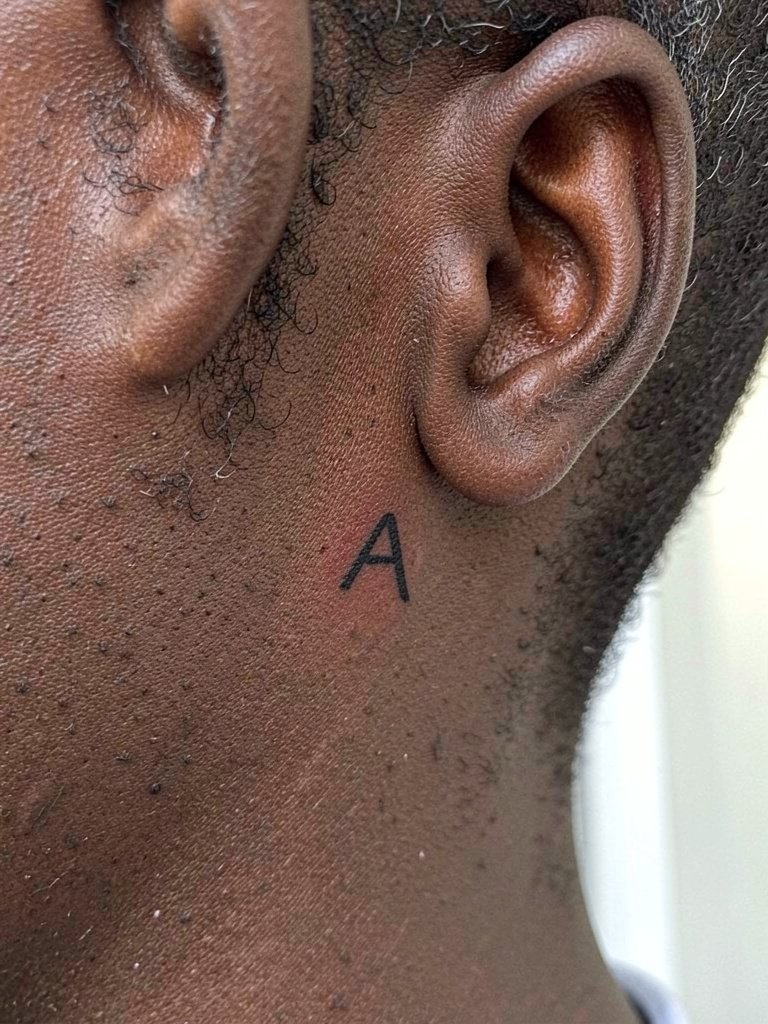
Behind-the-ear initials are stealthy and low-commitment by look, but the area is small and moves with hair and sleeping positions. Ask the artist to stencil the exact millimeter placement while your hair is up so you can see visibility. The common error is requesting ultra-fine script expected to remain high-contrast; in this area slight bolding helps. Expect a 15 to 30 minute session and minimal swelling. For the appointment pull hair into a bun and bring a few small hair clips. To show the piece wear simple hair clips or small studs like these hair claw clips.
6. A with a tiny heart or memorial date on the inner forearm
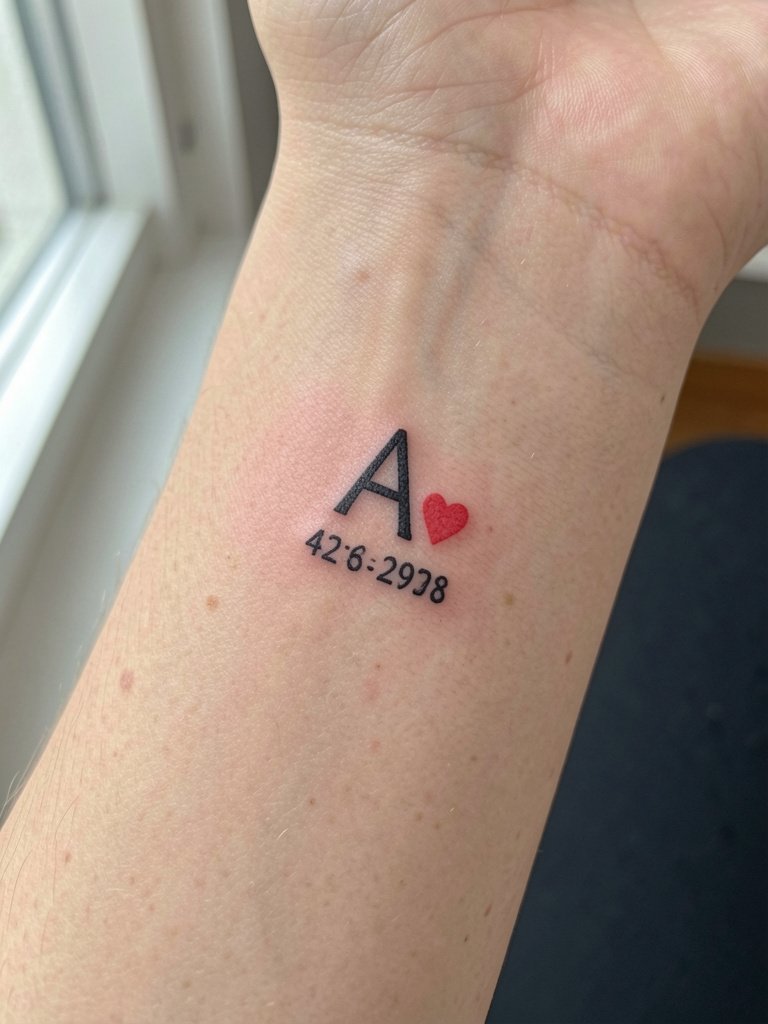
When an initial doubles as a tribute, subtlety is often the goal. Decide if you want the date visible from arm distance or discreetly tucked under the letter; tell the artist to show both scales in the stencil so you can compare at arm's length. There is debate in the community about healing methods. One camp prefers a protective second-skin film because it reduces friction and simplifies early care. Another camp prefers a light dry-healing or thin lotion routine because adhesives can irritate sensitive skin. Each approach has supporters citing different skin reactions. For memorial pieces, a single short session usually suffices and you should plan for a touch-up if fine numeric lines start to soften after two years.
Session Day Picks
The wrist and collarbone designs above are small but precise, so a few items smooth the appointment and the first week of healing.
- Stencil transfer paper kit. Helps the artist preview how line weight and placement will look before any needle touches skin, ideal for fine script and monogram work above.
- Topical numbing cream. Applied per instructions before a sensitive wrist or behind-ear session it eases the chair time for short but tender spots.
- Thin protective film roll. Useful for small forearm and wrist pieces that face friction from clothing and everyday washing during the first 48 hours.
- Fragrance free gentle body wash. Cleans the healing area without added irritants when showering in the first week.
- Aquaphor healing ointment. Thin application in the first few days locks in moisture for linework without heavy greasiness.
7. Matching sibling or couple A on the ankle
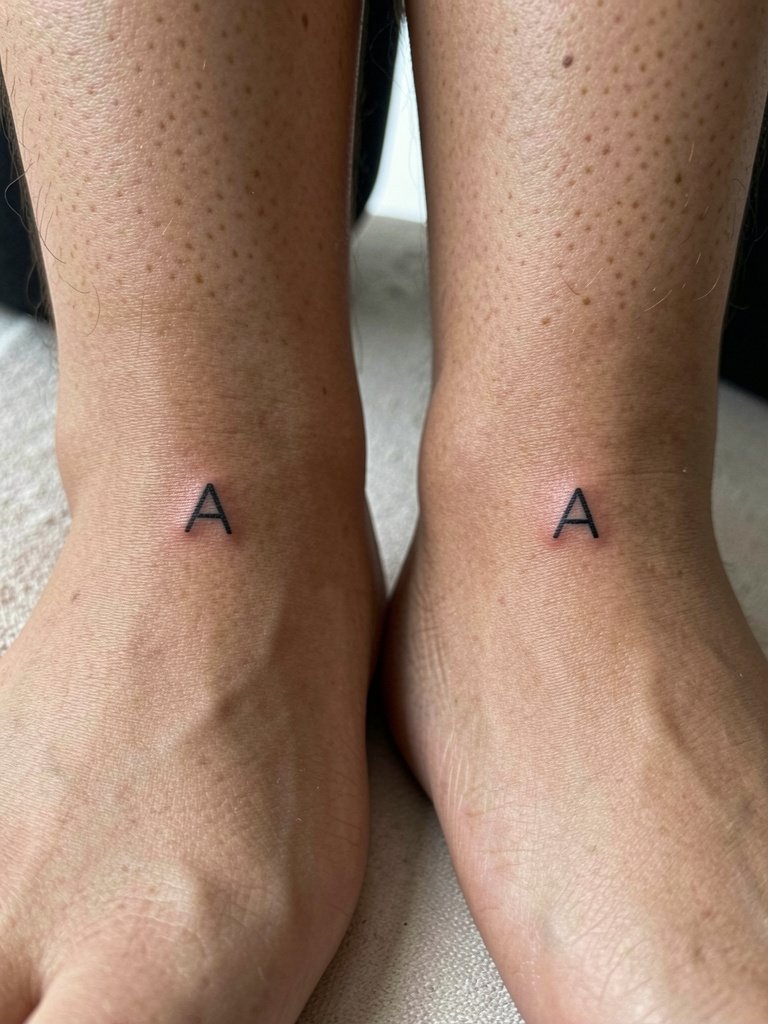
Matching initials are about symmetry and placement. If you want exact mirror placement, bring the same shoe and sock height to the consult so the artist can mark points with footwear in mind. A common mistake is trusting a photo of two initials and assuming body proportions match; request the artist to make a live marking while you stand. Ankles endure friction from socks and shoes, which can soften super-fine detail, so slightly bolder terminals help. Sessions are short and the top of the foot or ankle can be more painful than the outer calf. Pair healed ankles with cropped pants and an anklet like anklet bracelet for a casual reveal.
8. Script A with a flowing cursive flourish on the inner upper arm
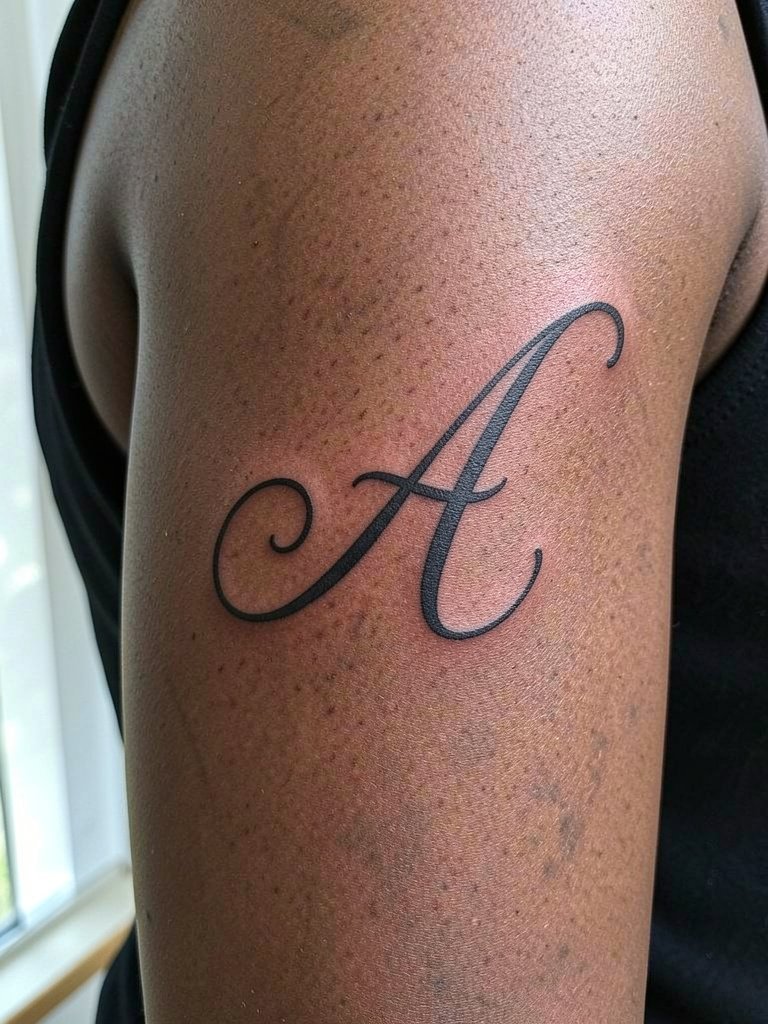
Cursive initials can echo handwriting and feel personalized, but the inner upper arm is a spot that stretches and can slightly blur thin swashes. When you book, show the artist the exact flourish you want and ask them to redraw any hairline strokes thicker where they cross high-movement skin. The risk is that flourishes become indistinct by year three if kept wafer-thin. Expect medium discomfort on the inner arm and a session length of 45 minutes. For the appointment wear a tank top with wide armholes so the artist has full access and the fabric does not rub while healing.
9. Geometric-framed A on the outer upper thigh
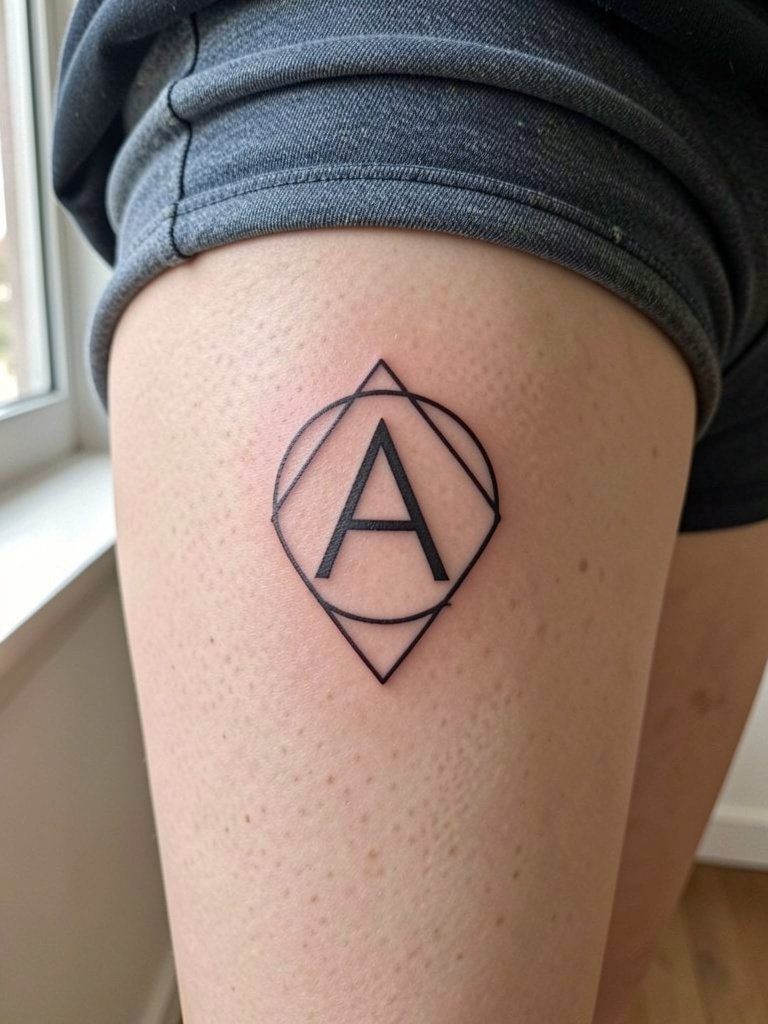
Thigh placements allow slightly larger scale and the geometry helps the initial read as a badge. Ask the artist to mock the negative space widths so the inner A is not lost inside the frame after healing. Designers often place the frame lines too close together for small sizes and the ring collapses visually after one to two years. Plan for a session of 45 to 75 minutes depending on scale, and wear loose shorts to the appointment so the artist can roll the fabric without pressure on the tattoo. For summer show-offs try bike shorts and oversized shirts like these bike shorts.
10. Negative-space cutout A on the inner forearm

Negative-space letters age differently because the black fields protect the letter shape. For this look, the key consult item is the minimum safe width of the negative cutout; ask the artist to show how the void looks after simulated settling. The upside is that when black saturation is consistent the A reads for years, even as edges soften slightly. This approach requires a reliable fill pass and a slightly longer session for even saturation. It pairs cleanly with cuffed sleeves and high-contrast outfits but avoid anything that will rub the area heavily during the first week.
11. Tiny A with crown or sparkle accents on the wrist
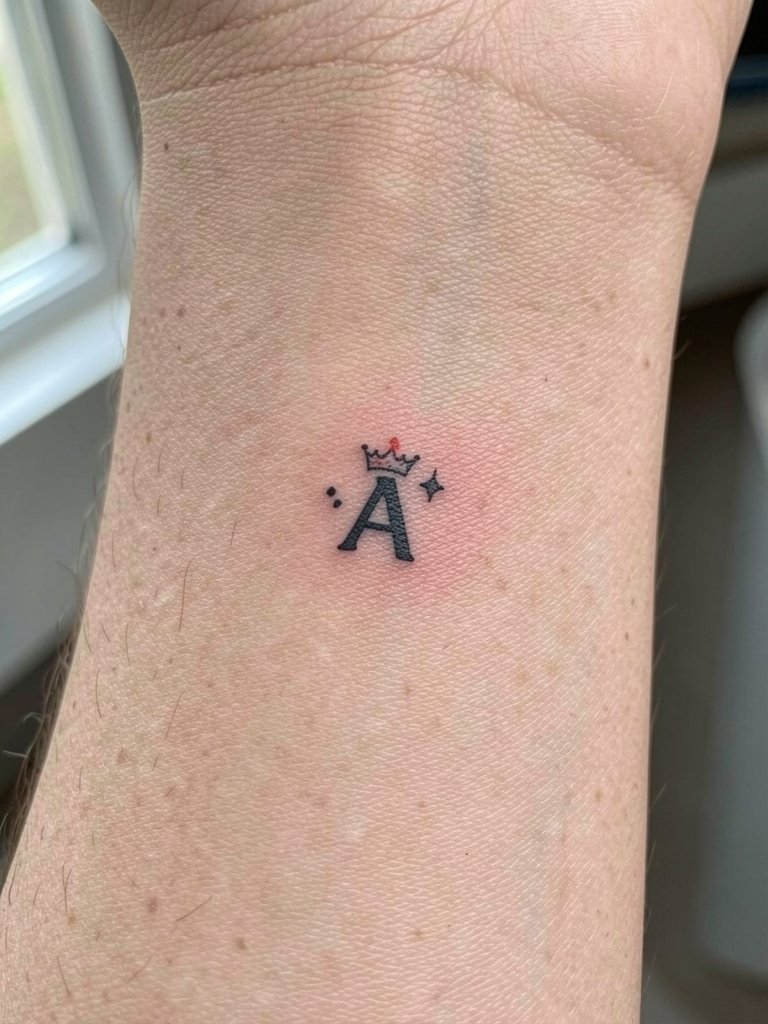
Little accents personalize an initial without dominating it. The common mistake is adding multiple micro-elements that compress the reading of the letter. Ask the artist to show the wrist design at life size and request the crown to be no smaller than X millimeters across so its detail stays readable. Tiny accents often need a touch-up within two years since small color dots can thin out. The session is brief and the wrist recovers quickly if you avoid tight bracelets for the first week. For styling, stacked thin bangles on the opposite wrist and a neutral knit sleeve help the wrist A pop; try rolled sleeve t shirt for casual looks.
12. Bold traditional A with rose or dagger motif on the outer forearm

Traditional flash elements give an initial visual weight and resist aging because of thick outlines and saturated color. If you want a classic flash feel, ask the artist to prioritize outline thickness and flat color fields over tiny ornamental shading. A frequent mistake is shrinking a full flash composition into too small a footprint, which loses the rose petals and dagger detail. Expect moderate session time depending on color and a higher tolerance for sunlight exposure when fully healed if you keep it protected early on. Chunkier jewelry and vintage denim complement this look.
13. Fine-line A with a tiny botanical wreath on the inner forearm
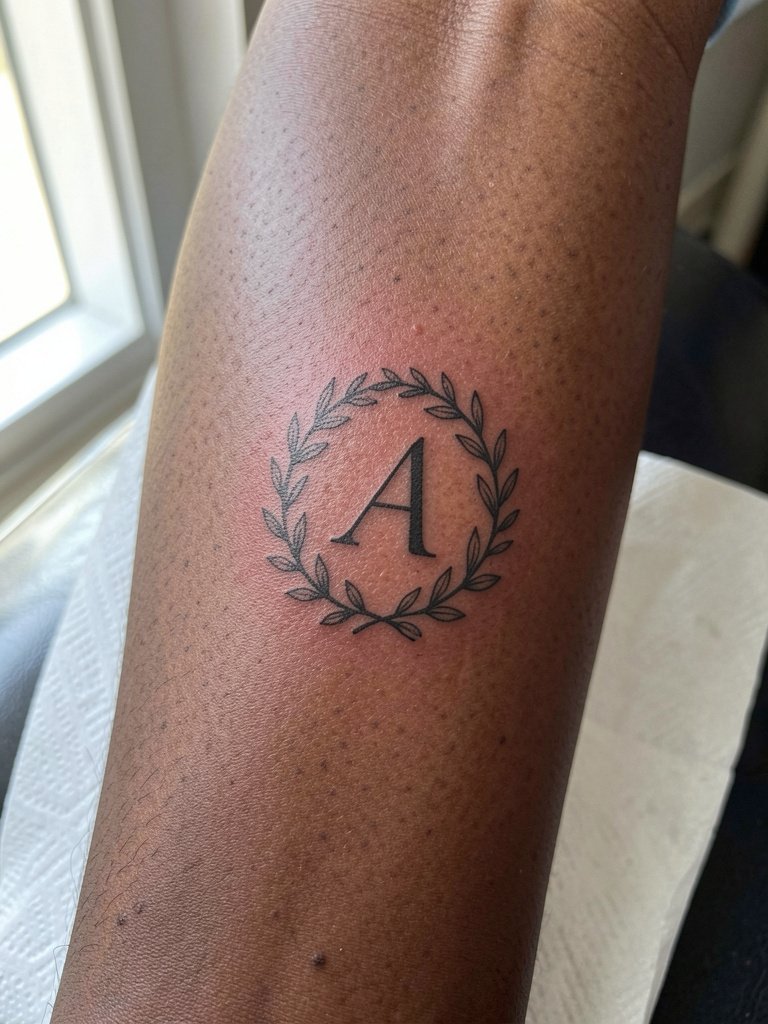
Botanical wreaths soften an initial and create a compact composition. For darker skin tones, ask for higher contrast between the A and the wreath by widening the letter stroke and darkening the wreath outlines slightly. The mistake is keeping everything at the same whisper-thin weight, which can read as a single gray patch after healing. Small wreaths usually need a touch-up at two to five years to refresh the leaf tips. Sessions run 30 to 60 minutes and pair nicely with cropped cardigans and delicate rings; consider dainty ring set when styling.
14. A as part of a patchwork or collage on the outer forearm
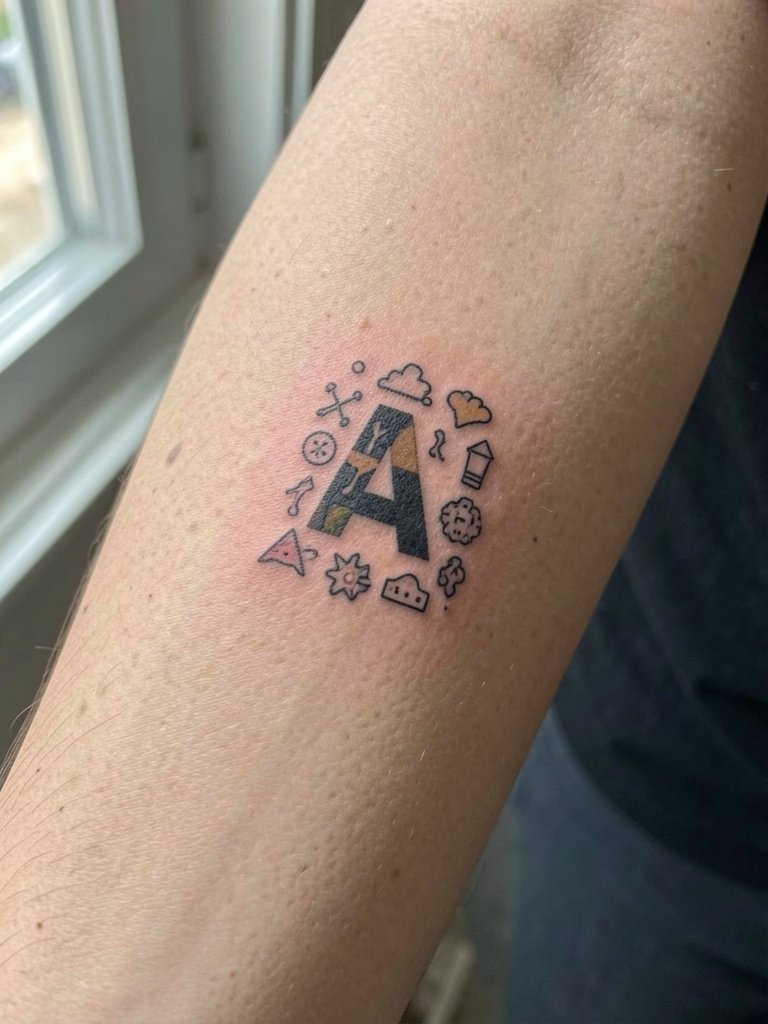
When an initial is one element in a larger patchwork, its scale and negative space must be planned so it does not get visually swallowed by surrounding motifs. Bring multiple reference pieces and ask the artist to show the A both isolated and within the patch so you can approve spacing. A common fail is dropping the A into a crowded area without margins, which quickly dilutes legibility. The session time depends on surrounding pieces, and you may book the initial as a walk-in or tack it onto a larger appointment. Solid-color tees and vintage denim keep the patch readable in everyday wear.
15. Micro-realistic engraved A on the inner forearm or upper arm
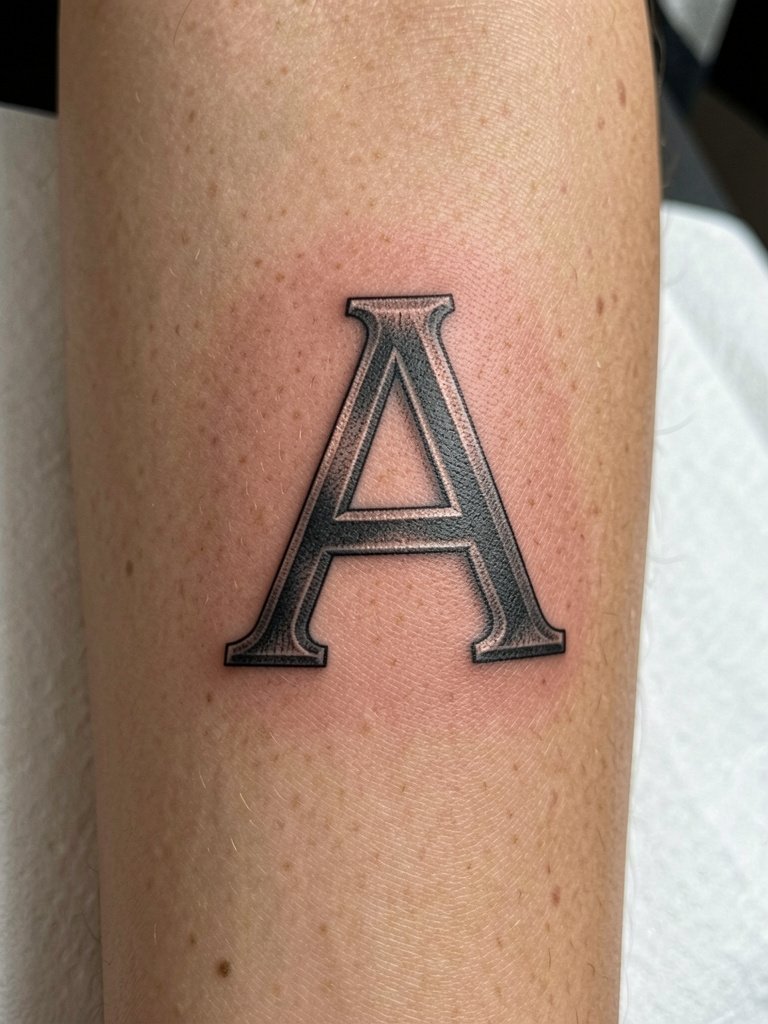
Micro-realistic or engraved treatments make an initial feel luxurious, but they demand scale and a skilled hand. If you want this, ask the artist to confirm the minimum size for pit and bevel shading so the engraving reads as metal and not just gray texture in a year. There is a strong split among artists on fine detail in small pieces. One group argues micro-realism at small sizes will naturally lose fine highlights after a couple of years unless the piece is sized up. The other group says a careful staging of contrast and slightly larger scale can preserve the engraved look long term. Be honest about touch-up expectations and plan for a 60 to 120 minute session depending on detail.
Frequently Asked Questions
Q: How much should I budget for a small letter A tattoo besides the sticker price?
A: Expect to pay a shop minimum and add the standard tip of around fifteen to twenty five percent if you are happy with the work. Small tattoos often hit the minimum so factor that into your budget rather than pricing the needle time alone.
Q: Which A styles age best on darker skin tones?
A: Stronger, bolder letterforms with clear counters and higher contrast shading tend to read better over time. Ask to see healed photos the artist has taken on a range of tones and request slightly heavier stroke width when you want longevity.
Q: Where should I look for local artists and healed examples without naming anyone?
A: Search hashtags like #lettertattoo, #initialtattoo, #finelinetattoo and filter by location on TikTok and Instagram. Browse portfolios on tattoo directories and read recent threads in tattoo forums to find healed photos and real client feedback.
Q: I'm nervous about pain for wrist or rib placements, what helps during the session?
A: Short sessions and topical numbing applied per instructions help a lot for wrists, while strategic breaks and pacing work for ribs. Bring clothing that gives access without tight seams and drink water beforehand to stay comfortable.
Q: How do I prevent a tiny A from becoming an unreadable smudge?
A: Pick a design with a minimum safe stroke width and ask for a life-size stencil. If the artist redraws hairline strokes to be slightly fuller and preserves negative space, the initial will maintain clarity as the skin settles.