
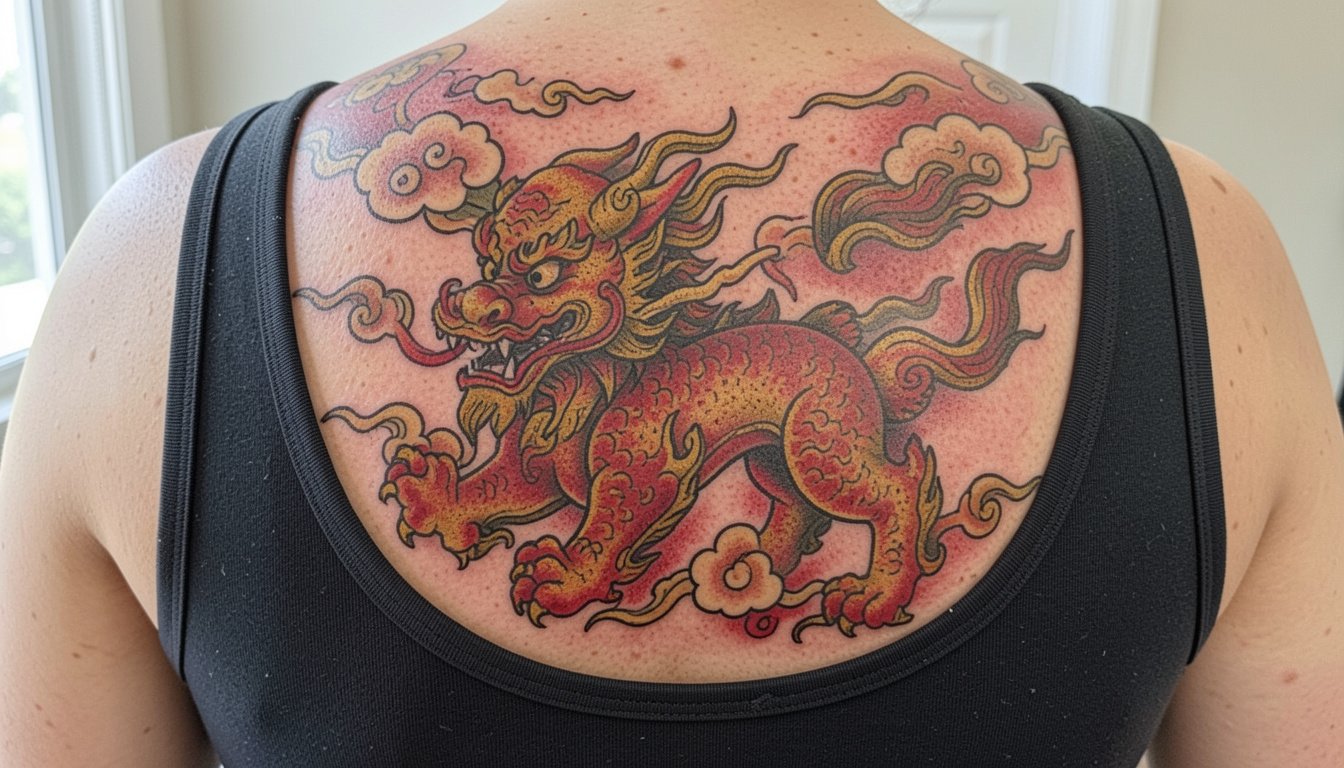
Foo dogs need room to breathe. When the face, orb, and mane are cramped the expression flattens and the whole guardian can read like a generic lion. Pick a canvas that lets the artist preserve linework, plan for saturation, and leave negative space around the face so details still read at year three and year five. The list that follows pairs practical placement advice with stylistic options that hold up over time.
1. Traditional Foo Dog Pair with Orbs and Cub
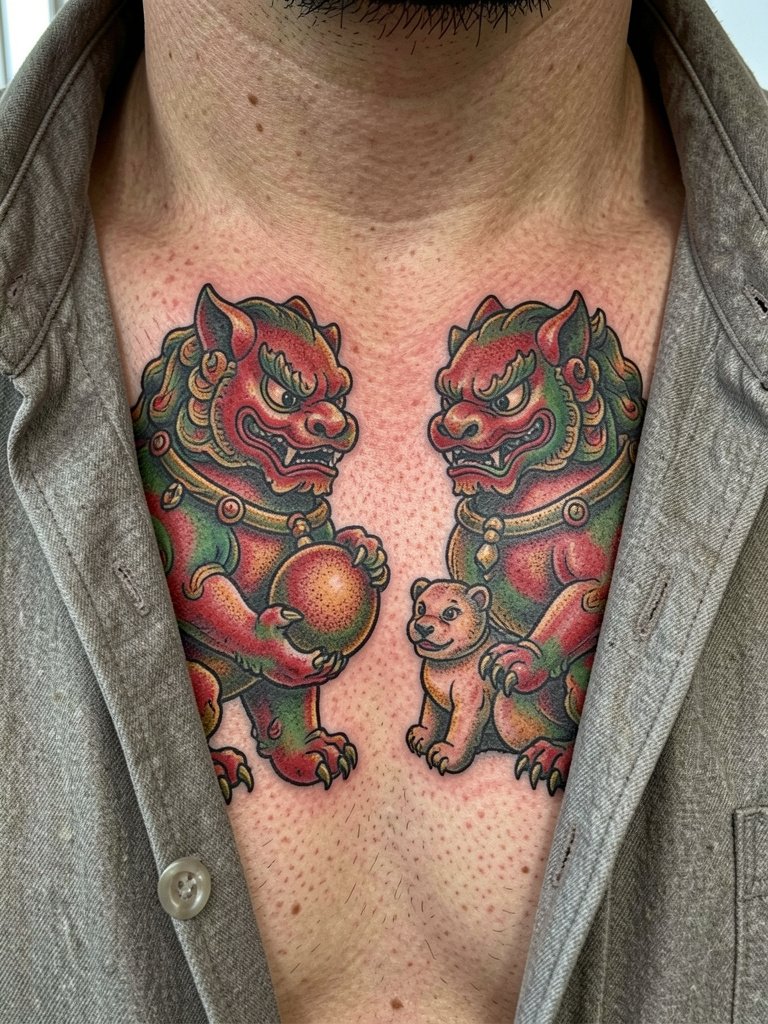
This is the classic composition for people who want the full temple-guardian read. One camp argues pairs are the correct route because the male and female guardians reinforce duality and traditional iconography. Another camp prefers a single guardian because a solo Foo Dog fits forearms, calves, and half sleeves more cleanly while still reading as protective. For a chest or back pair plan for multiple sessions and heavy saturation so the orbs and cub remain distinct over time. Common mistake is shrinking the pair to fit a small canvas, which collapses facial detail and forces extra touch-ups. For the session wear an open overshirt so the artist can map symmetry easily.
2. Foo Dog Forearm Guardian Head

A forearm head keeps the expression clear without committing to a full back piece. I recommend a slightly heavier outline for forearm reads because thin single-needle lines can blur under daily wear. Bring two scale references, one at forearm width and one at double size, so the artist can show how the face reads at three inches versus five. Forearm sessions usually fit into one long appointment. Expect moderate pain where the radius is thin, and plan for a touch-up at 6 to 12 months if you want crisp highlights. Style it with a rolled-sleeve henley when you want to show it off and wear a loose button-up to the appointment for easy access. Short sleeve henley
3. Black and Grey Foo Dog Half Sleeve
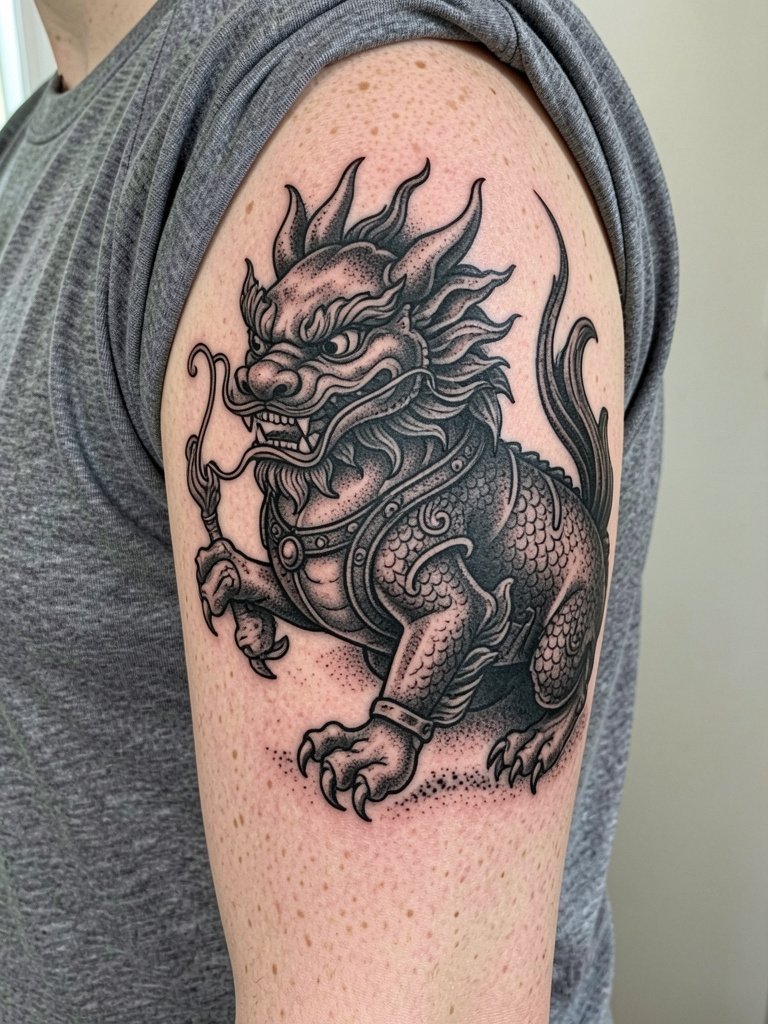
Black and grey sleeves age predictably because saturation and contrast can be tuned to account for future fading. For sleeves I suggest stipple and whip shading rather than flat gray washes, the texture keeps the mane readable as the skin settles. A real mistake is trying to cram too many small details into the bicep curve. Discuss spacing and negative space with sketches that wrap around the arm so the torso flow stays natural. Expect two to four sessions depending on detail. For show-off pairing, a sleeveless tank or fitted raglan tee frames the upper-arm composition well. Muscle fit tee
4. Foo Dog Leg Sleeve
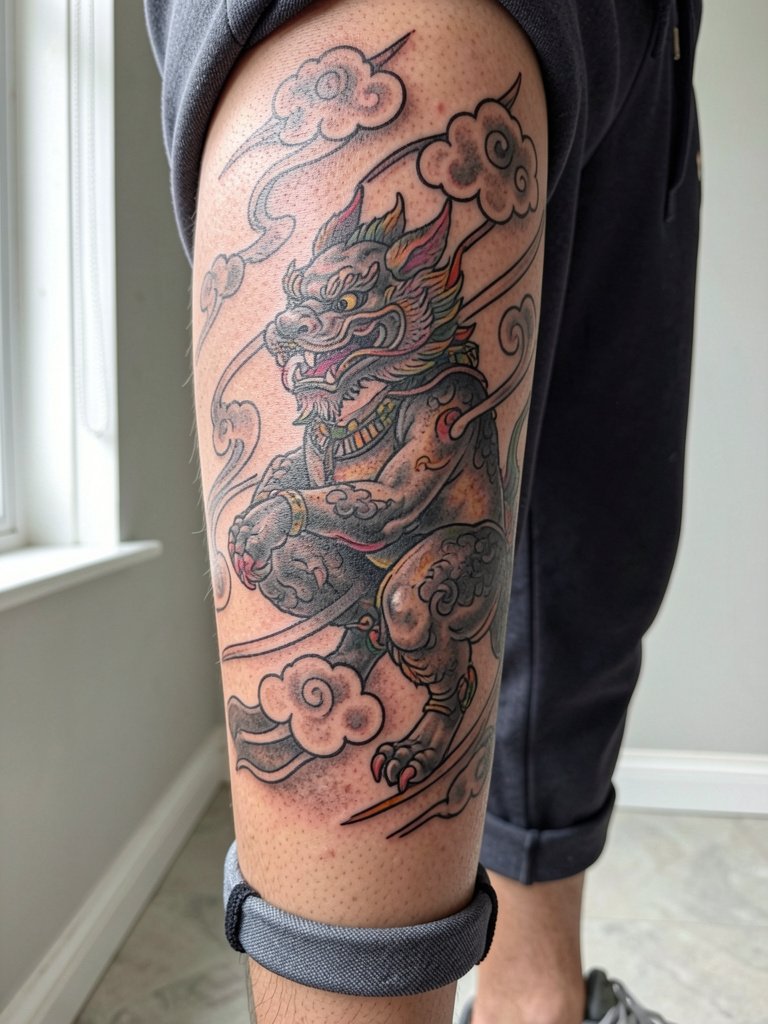
Legs give a vertical canvas that suits a long-bodied guardian and background elements. The calf tolerates more detail than the ankle, and the thigh gives room for a full pose. Common session mistake is neglecting the flow between knee and calf; plan composition that reads when standing and when seated. For session wear choose joggers or shorts you can roll above the calf without pressure on fresh ink. Calf pieces need fewer touch-ups than ankle work because the skin moves less during activity.
5. Foo Dog with Traditional Color Saturation
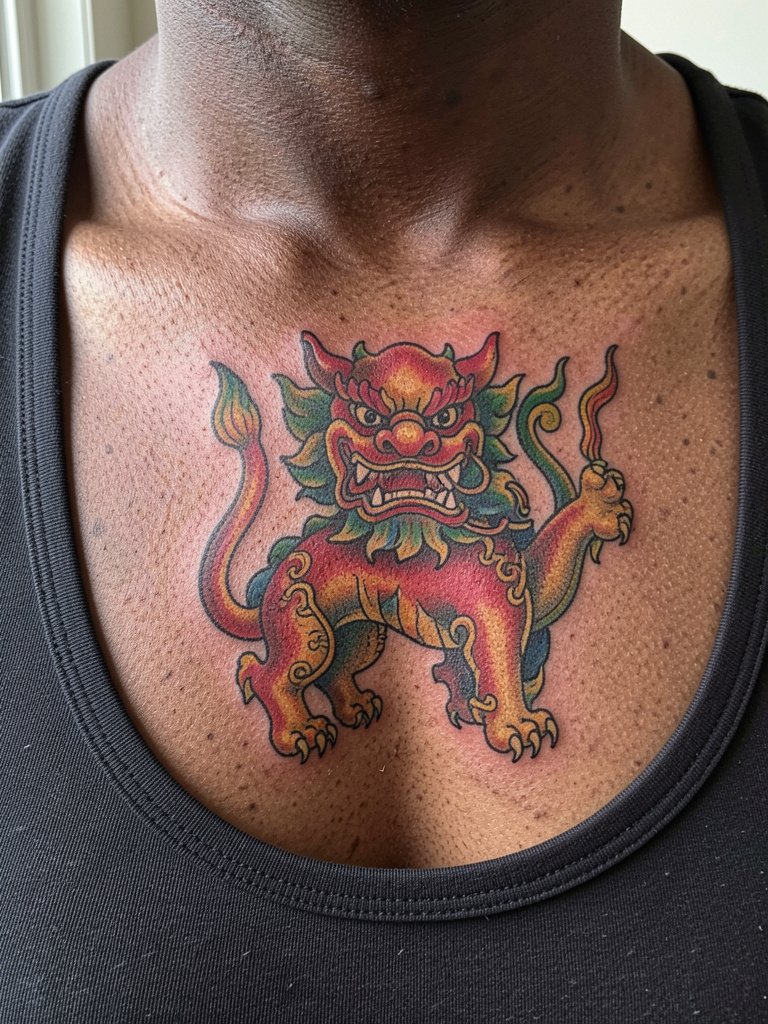
Color sells the temple-guardian look because gold and red cue ceremonial statuary. One camp argues black and grey ages better since strong contrast preserves facial detail over decades. Another camp prefers saturated color because the palette communicates power and wealth in ways monochrome does not. If you pick color budget for layering and multiple passes, especially on the chest where motion and sun exposure differ. A typical mistake is insisting on micro details in a small chest piece when wider color fields would hold up longer. For the session wear a button-down that opens so the artist can stencil and place symmetrically without fabric rubbing the fresh ink. Linen button down
6. Pearl or Orb-Holding Male Foo Dog
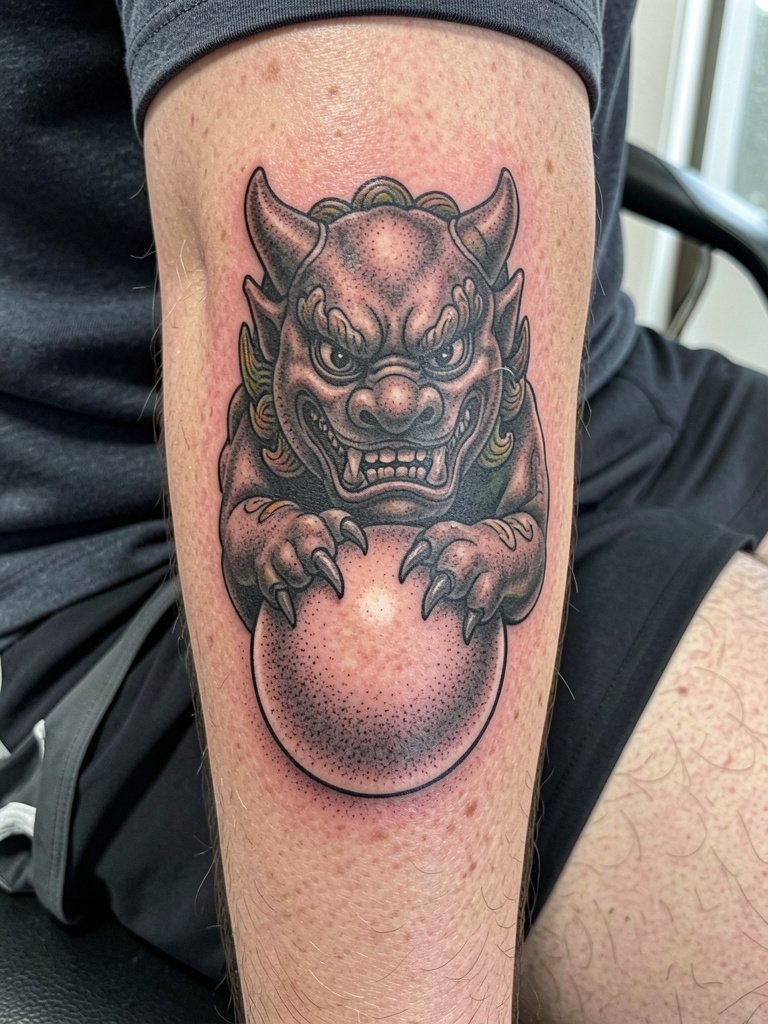
The orb is a gender marker and a strong focal point. For medium placements like the forearm or calf keep the orb size large enough so the surface texture reads after a year. A common mistake is shrinking the orb to fit a pose, which removes the visual anchor. Plan orb highlights and a touch-up at 6 to 12 months for color saturation. If you want to show this off casually, cuffed shorts or tapered joggers keep the calf visible and complementary. Tapered joggers
7. Female Foo Dog with Cub

The cub softens the guardian silhouette and gives a narrative anchor. This version works well on the thigh or upper arm because there is room for interaction between the two figures. One practical tip is to map how the cub reads when the limb flexes, the artist should position limbs so the cub does not compress into folds. Expect one or two sessions for medium pieces. For display, relaxed denim shorts or athletic shorts show the thigh composition without crowding it. Relaxed denim shorts
8. Golden Foo Dog Tattoo

Gold tones can read as wealth and authority when packed correctly. The practical risk is poor saturation if the artist lifts too early during a single pass. Recommend layered sessions for metallic tones so the warmth stays consistent after healing. If you place this on the shoulder cap, plan for a bold outline to keep the silhouette from softening with time. For session wear, pick a tank top the artist can remove from one side without rubbing the fresh shoulder ink.
9. Porcelain Multicolor Foo Dog

The porcelain look is decorative and reads calmer than aggressive guardians. For this style plan on larger panels because the ornate motifs need breathing room. A common aging issue is cloudy color when too many pastel tones are layered in a single pass. Schedule a follow-up to evaluate saturation after six months. For showing the piece off at events, an open overshirt over a plain tee frames the upper arm without stealing attention. Open collar shirt
10. Foo Dog with Clouds and Wind Bars
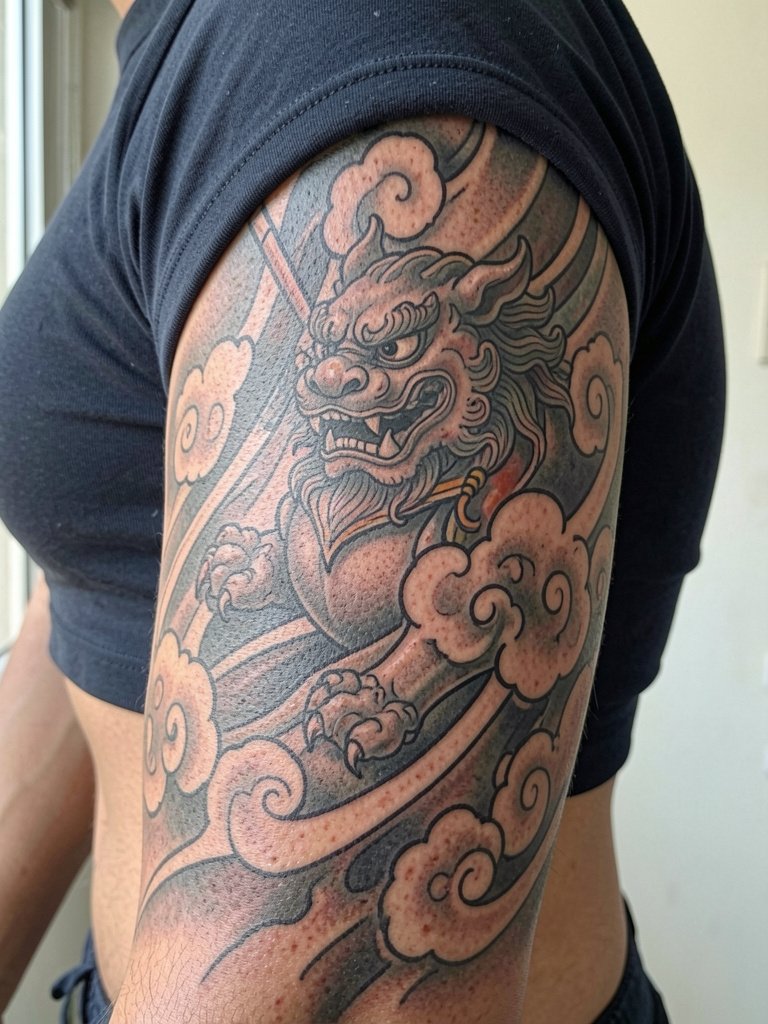
Background elements do the heavy lifting for Japanese flow work. If you want the guardian to look like it is moving, the clouds and wind bars must follow muscle lines and skin folds. Mistake people make is applying flat patterns that ignore where the torso stretches. For ribs and side torso work expect higher pain and longer sessions. Bring a zipper-front hoodie you can remove without dragging fabric across fresh ink when you leave the studio.
11. Protective Foo Dog Chest Piece
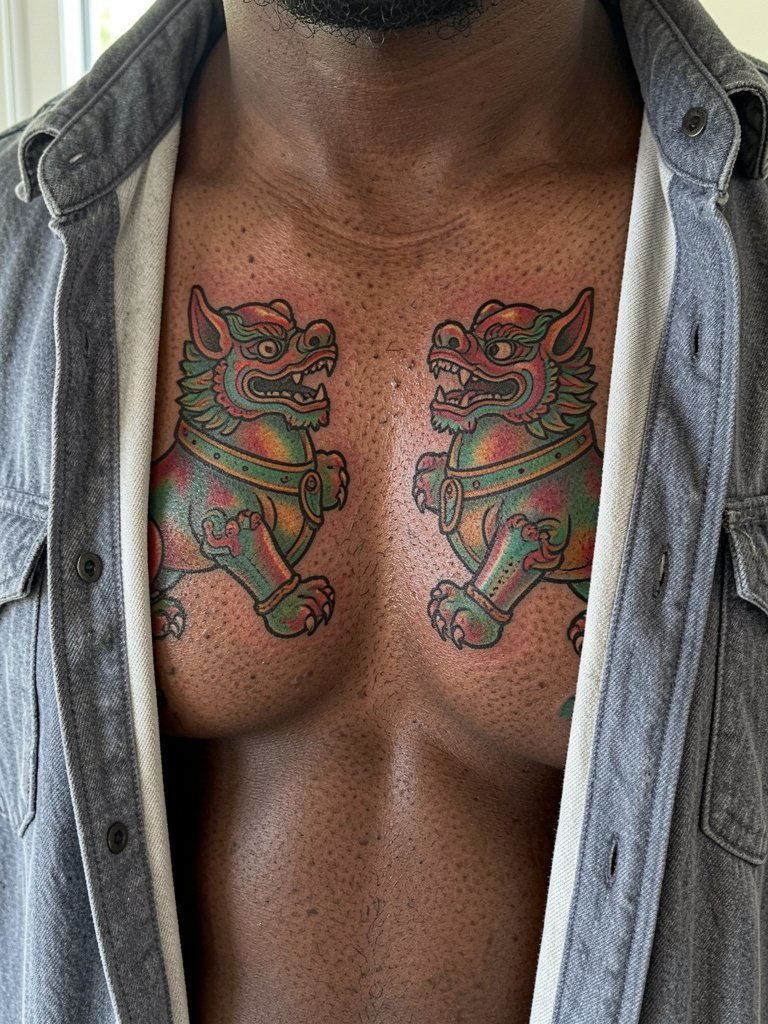
Chest pieces read as intensively personal because of placement. The sternum area is high on the pain scale so plan for breaks and numbing strategy. A frequent mistake is trying to compress a full-face detail too close to the cleavage line which distorts when the chest moves. For session wear choose a button-down that opens fully so stencil placement is exact and the artist can work without fabric friction. A subtle note on cultural origin: treat Foo Dog imagery with respect, and consider references that show traditional gender markers if authenticity matters.
12. Large Back Foo Dog With Detailed Face
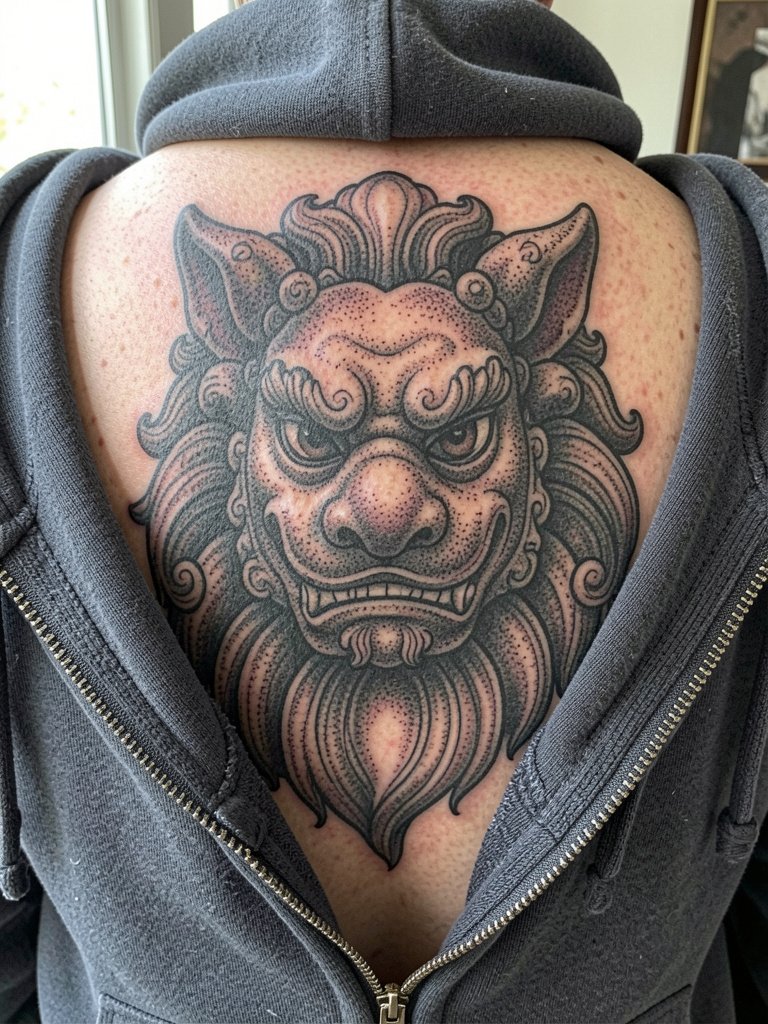
The face is where expression lives, so the back is the best place for maximal detail. For large back pieces plan multiple sessions and leave room for background elements. A common error is compressing eye detail into too-tight shading. Ask for a staged stencil shot so you can verify the scale before the first pass. Back pieces often require a touch-up cycle around the one-year mark when the skin has fully settled.
13. Minimalist Foo Dog Silhouette
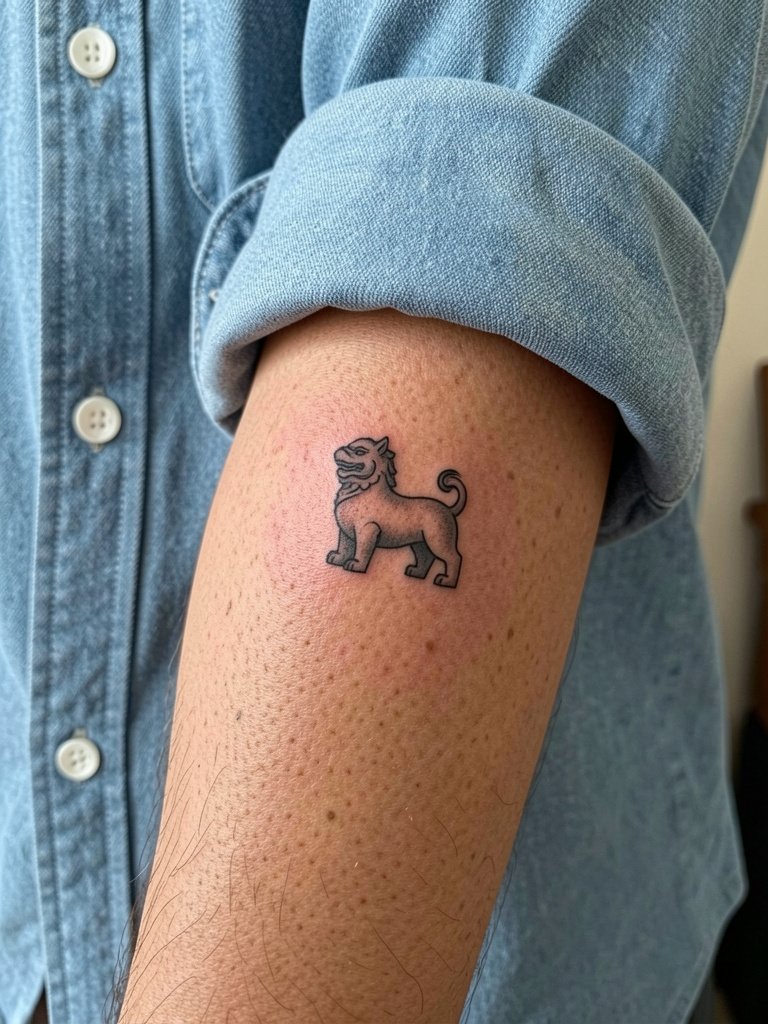
If you want symbolism without a large commitment this silhouette works, but scale is everything. Tiny versions on the wrist or ankle blur sooner than clients expect because single-needle detail can merge at the edges. The right approach is to simplify forms while keeping a slightly heavier contour than a fine-line script. For session wear use a roll-sleeve shirt and bring a reference showing the exact silhouette at life size. Wrist placements will probably need a light touch-up at year two if you use single-needle work.
14. Neo-Traditional Foo Dog With Strong Outline
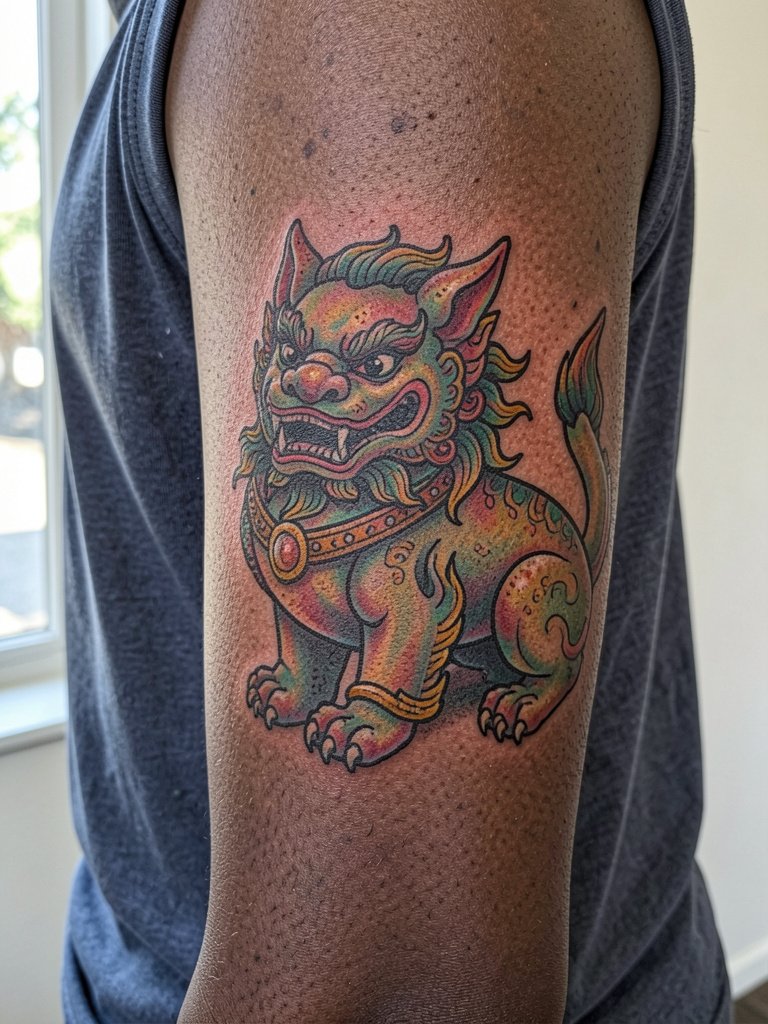
Bold outlines are practical because they preserve shape as the skin changes. Neo-traditional work lets you keep facial expression while using thicker linework that ages more predictably than ultra-fine detail. A common mistake is overdecorating with small flourishes that crowd the silhouette. For the session wear a tank top to give the artist full access to the shoulder and upper arm while keeping the rest of your outfit intact. Sleeveless tee
15. Shoulder Cap Foo Dog Head
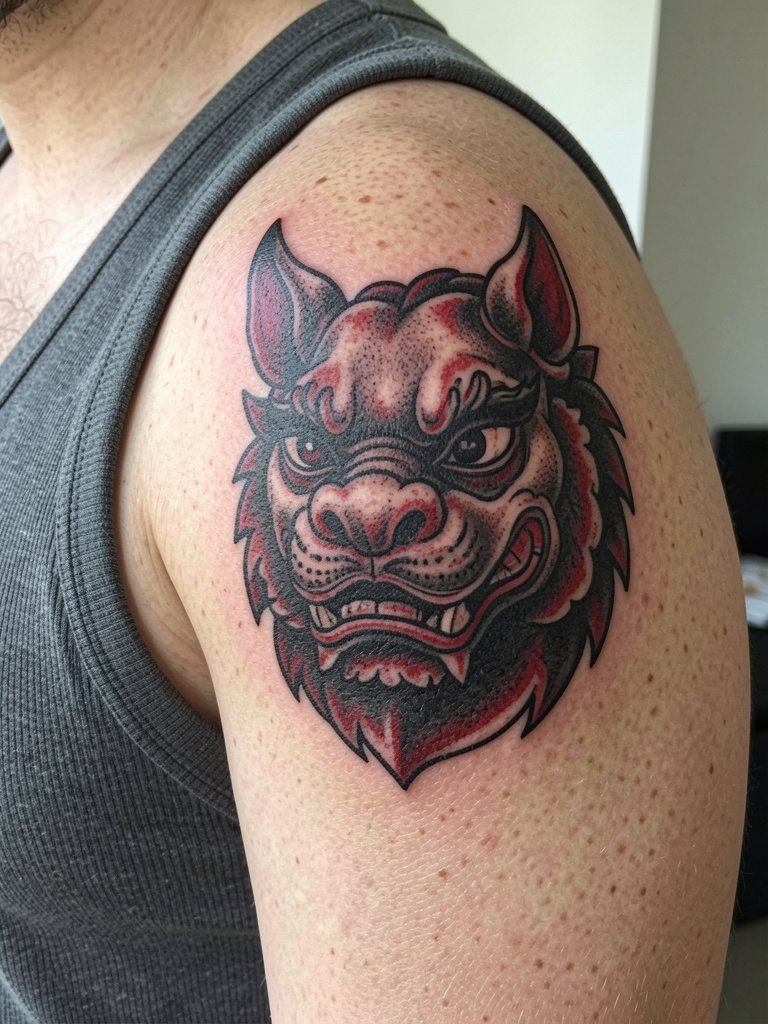
The shoulder cap is one of the easiest placements to show off and to conceal. Pain is moderate and the session is often short, which makes this ideal for first-time collectors who want a bold guardian icon. Watch for blowout risk near the shoulder deltoid edge; keep the linework confident rather than wispy. For session wear bring a tank or button-down that can be removed without pulling across the shoulder.
Session Day Picks
The first six designs above include forearm, chest, and half-sleeve placements that each benefit from light clothing access and simple protective items for the first 48 hours.
- Stencil transfer paper kit. Lets you preview lineweight and placement on the skin, which is especially useful for forearm heads and chest symmetry work from the ideas above.
- Topical numbing cream. Applied about 45 minutes before a long session eases sternum and ribcage discomfort without changing how the artist layers color.
- Thin protective film roll. Keeps low-contact areas like the ankle and hand clean during the first day of frequent movement.
- Fragrance-free gentle body wash. Cleanses fresh ink without irritating saturations or stripping topical ointments when you shower.
- Aquaphor healing ointment. Gentle occlusion for the first night helps color lock in and prevents scab cracking on high-motion placements.
Frequently Asked Questions
Q: How do I choose between a single Foo Dog and a paired composition for my placement?
A: If you want traditional gender markers and balance the pair works best on a large canvas like the chest or back. If you need a practical single-piece that reads daily, a well-scaled forearm or shoulder cap is the better fit. Think about whether you want two moments of detail or one focal face, and ask for staged stencils to compare how each option sits on your body.
Q: Will color or black and grey hold up better for a Foo Dog?
A: Black and grey usually preserves form because contrast stays readable as the skin ages. Full color communicates ceremonial cues and can look richer, but it often needs layering and a mid-term touch-up. Decide by which priority matters more to you, long-term legibility or ornamental palette, and budget for at least one follow-up if you pick saturated colors.
Q: Where can I find artists and healed examples of Foo Dog work without naming people?
A: Search hashtags like #foodogtattoo, #fudogtattoo, #irezumi, and #japanesetattoo on Instagram and TikTok and filter results by your city to find local portfolios with healed shots. Browse Tattoodo and Pinterest for stylistic clusters and use Reddit threads in r/tattoos and r/tattooadvice to see candid healed photos and firsthand accounts. Look specifically for images labeled "healed" or that show natural skin texture rather than fresh redness.
Q: What clothing should I wear to a session for chest or ribcage Foo Dogs?
A: For chest and ribs wear a button-down or zip-front layer that opens fully so the artist can stencil without fabric rubbing the fresh ink. A breathable linen or cotton option in a neutral tone keeps sweat low during long sessions. Linen button down
Q: How small is too small for a Foo Dog face or orb?
A: If the face elements are under three inches across you risk losing separate facial features as the skin settles. Orbs and cubs need room to read, so scale up or simplify the composition into a silhouette if you must keep the piece compact. A staged stencil at life size helps you decide before the first needle hits skin.