

Someone I know spent months saving reference photos before booking a lion head tattoo, only to get overwhelmed by choices. The real worries were about pain, how the design would age, and whether the linework would blur on certain placements. Below are ten lion head ideas that solve those problems by pairing style with placement and real-world tips you can use at your consultation.
1. Micro-Realism Lion Head on Upper Chest
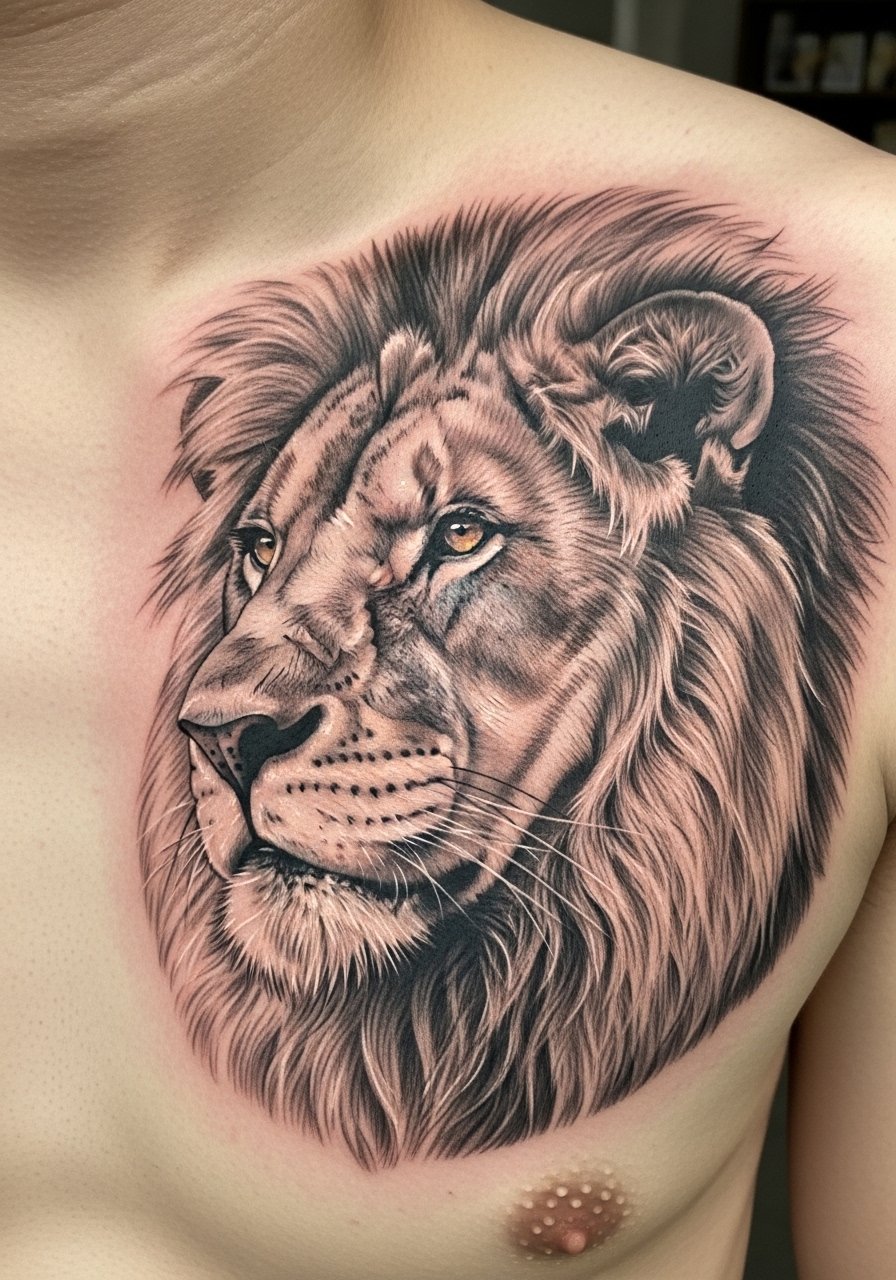
Someone I know chose the chest because there is room for detail and the skin there settles more predictably than ribs. Expect a 2 to 4 hour session and medium pain where breathing is easy to manage. Tell your artist you want defined linework in the mane and layered stipple shading for depth. A common mistake is asking for ultra-fine whiskers too close together, which blur after a couple of years. This version ages well because the design uses negative space and saturation rather than tiny hairlines. Plan a touch-up around year two if you want the whisker tips crisp again.
2. Bold Blackwork Lion Head on Upper Arm
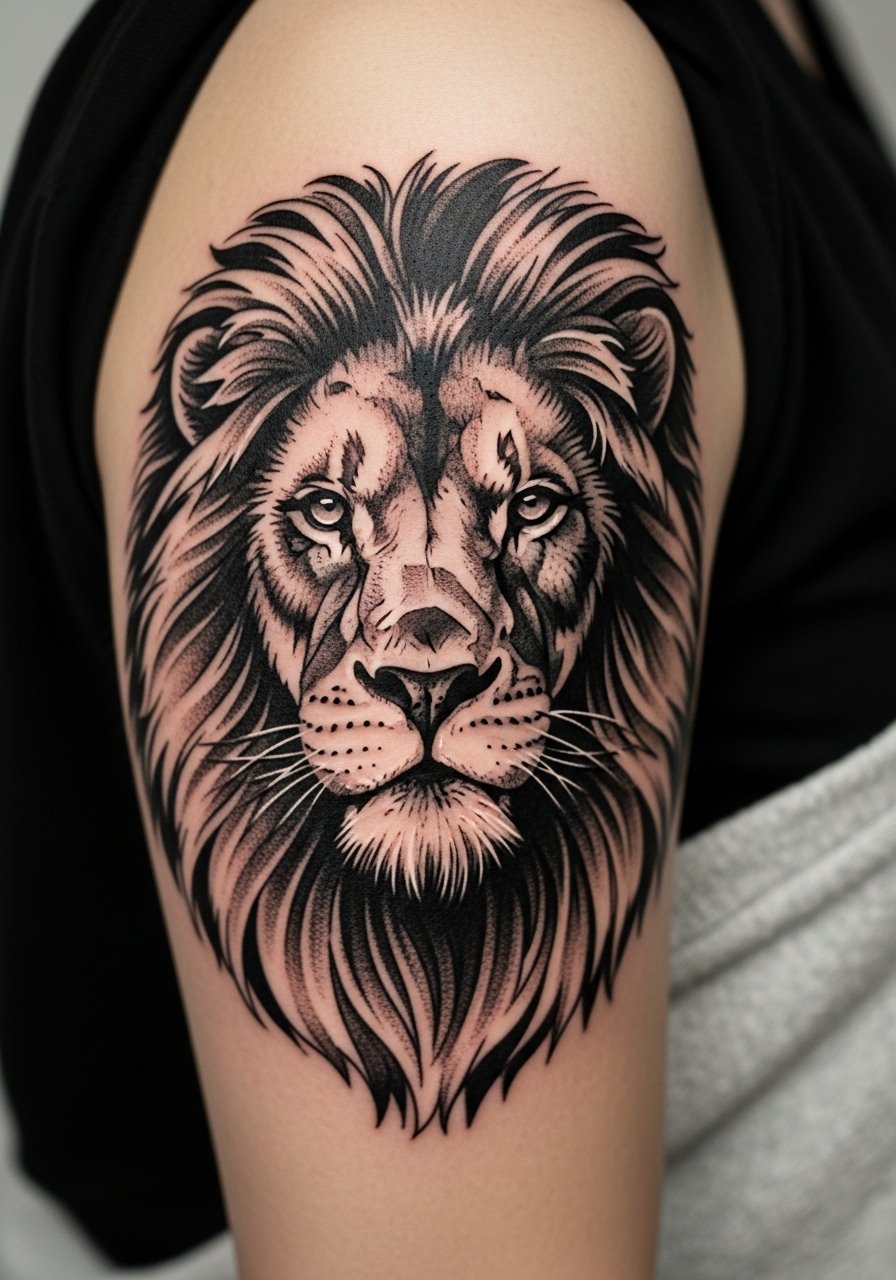
Fair warning, outer arm sessions are forgiving on pain but the result reads from across a room. Session time is often one long block of 3 to 5 hours depending on saturation. This is best for someone who wants a graphic, long-lasting look and low touch-up needs. Tell your artist you want heavy saturation and thick linework in the mane to minimize future fading. One camp favors saturated blackwork for longevity. The other camp argues subtle shading holds more expression. Name both options in your consult and decide based on how often you will reapply sunscreen.
3. Fine Line Lion Portrait on Inner Forearm
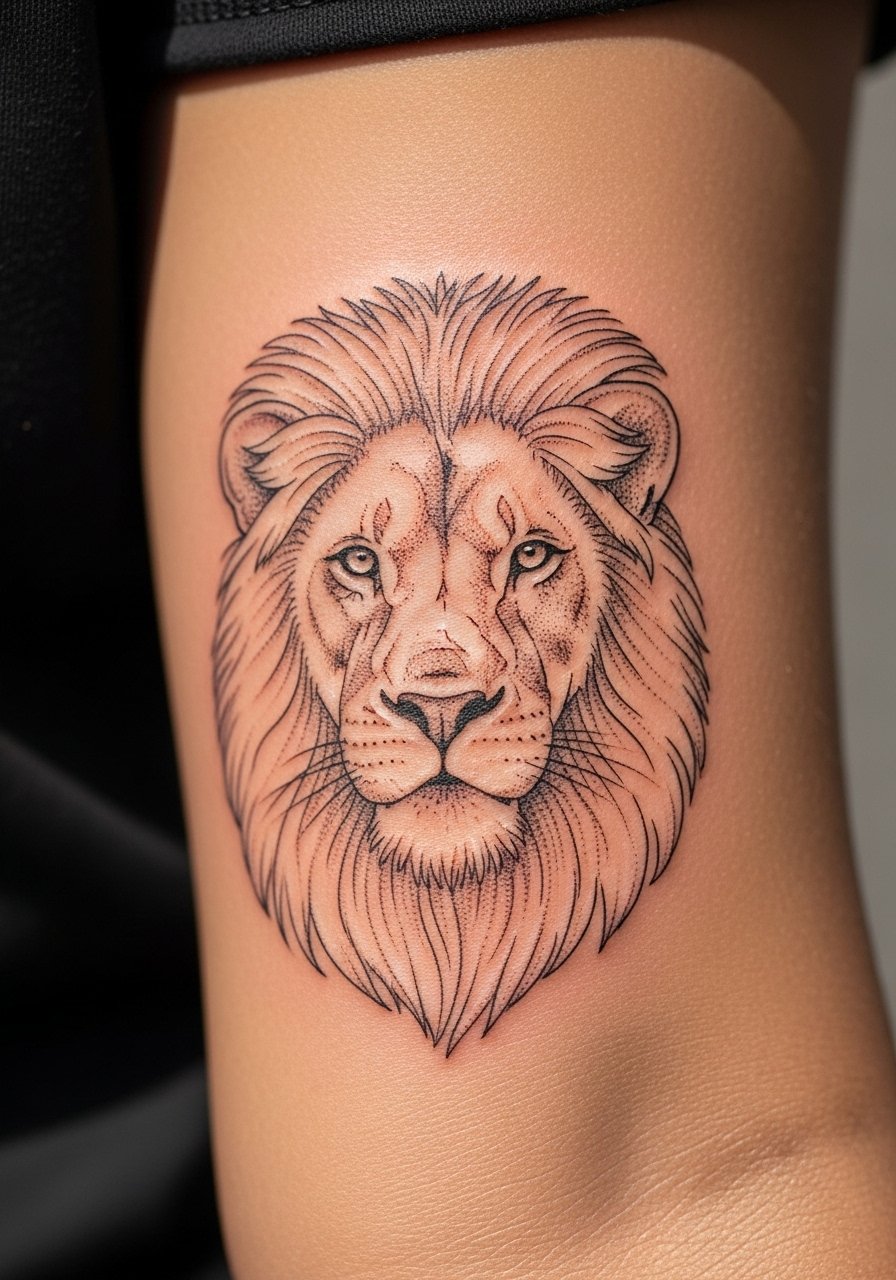
When the inner forearm is chosen for a fine line portrait, expect low to medium pain and a session under three hours for smaller pieces. Fine line has a controversy among artists. One group says fine line blurs faster on moving skin. The other group says with slightly bolder lineweight and careful spacing it can last. Ask your artist how they space facial features and whether they increase lineweight for longevity. The common mistake is requesting ultra-thin single-needle lines without leaving room. At six months the detail reads crisp, at two years tiny lines may soften, and a touch-up around year three is normal.
4. Geometric Lion Head Frontal on Sternum
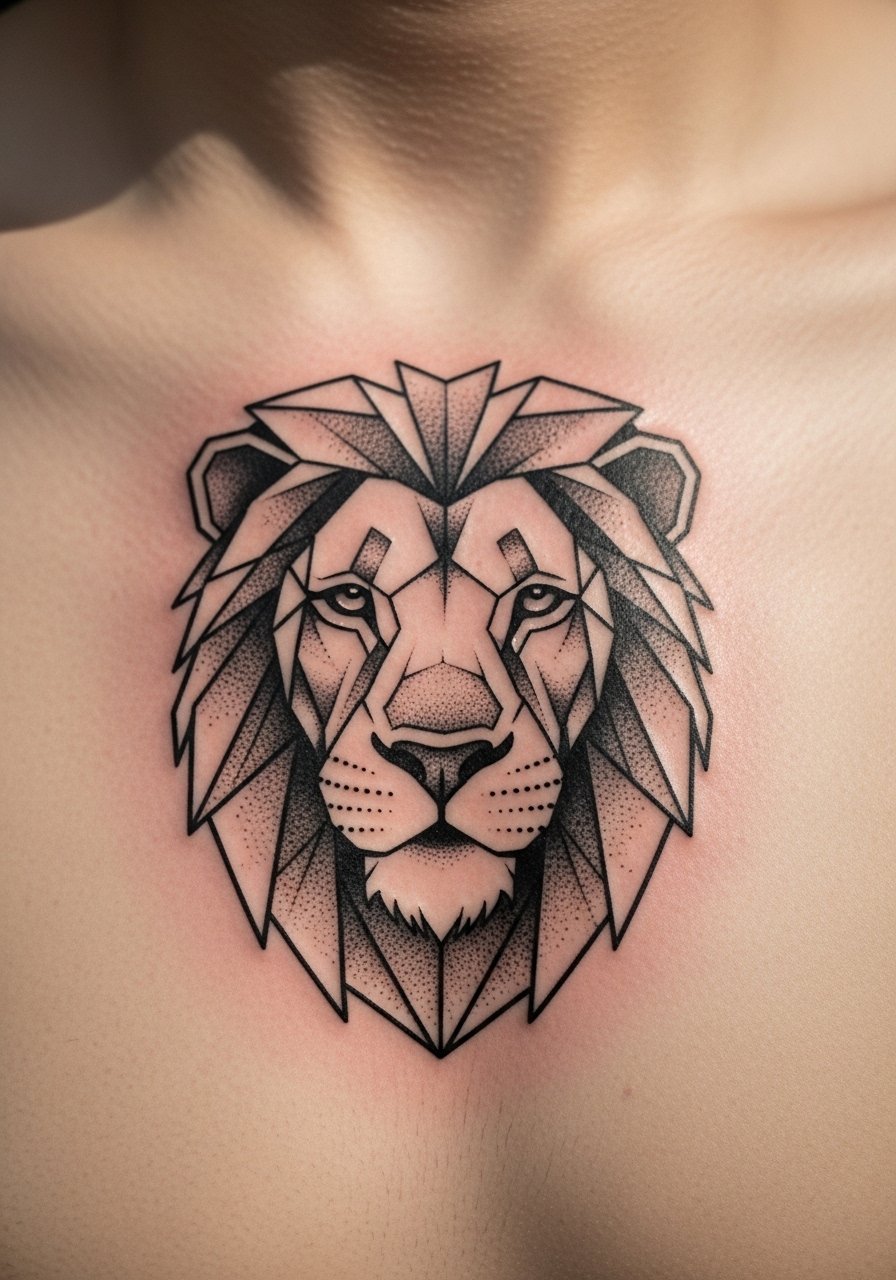
The sternum is a high-pain spot, so plan shorter sessions and breaks. This design pairs symmetrical geometry with stipple shading to keep contrast as it heals. Tell your artist you want bold anchor lines for the geometry and dot work to create midtones. A mistake is making the geometry too fine across the sternum where the skin stretches. Expect the strongest contrast at six months and some softening by year three, especially if you spend a lot of time in the sun. For career-sensitive placements like the sternum not being visible daily is an advantage.
5. Neo-Traditional Lion Head on Thigh with Floral Frame
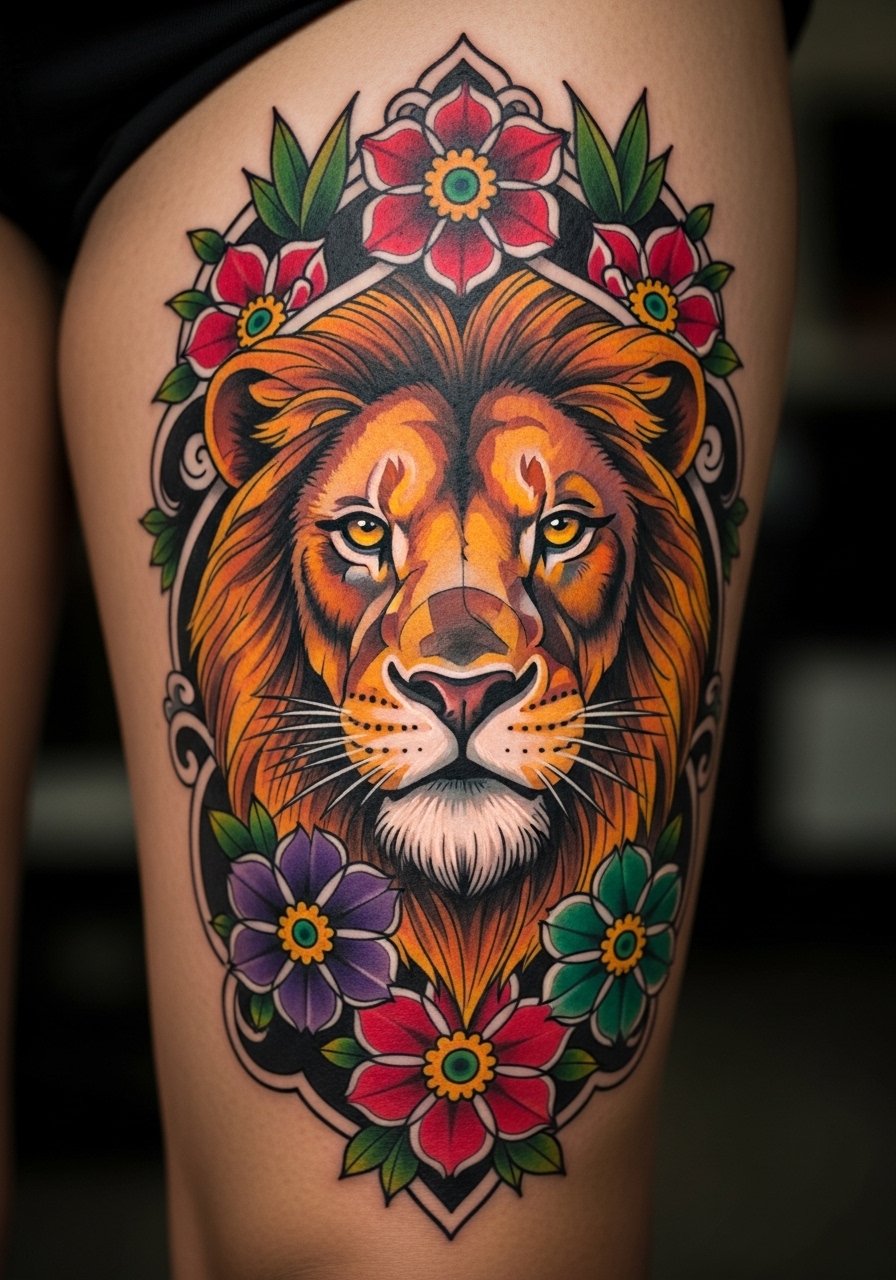
Thigh tattoos handle saturation well and are lower on the pain scale for many people. The neo-traditional route uses bold outlines and saturated fills to preserve readability as the piece ages. Bring reference photos showing the exact floral frame you like and tell the artist the color palette you want. The common mistake is asking for tiny color details without strong black anchors, which fade into a muddled patch over time. Expect a touch-up around year three to refresh color if you often wear shorts and expose the area to sun.
6. Minimalist Linework Lion Head Behind the Ear
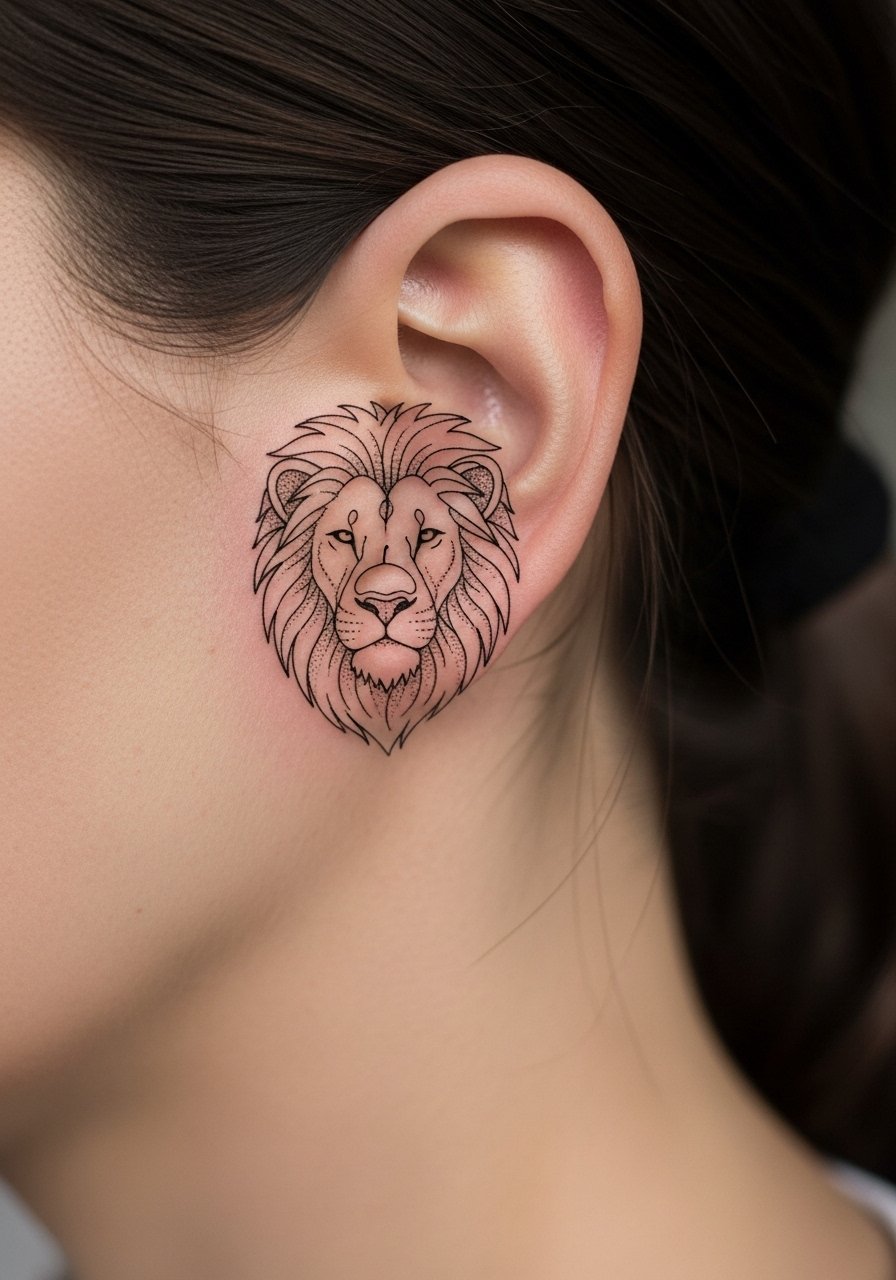
Small behind-the-ear tattoos are quick and painful in short bursts, usually one session under an hour. This is best for someone after a discreet symbol rather than a full portrait. Say you want slightly bolder than single-needle lineweight so the shape keeps over time. The mistake is requesting ultra-micro detail in that tiny space. Skin movement there can cause lines to blur within two years. If you want discrete placement with better longevity, consider placing the same minimalist head slightly larger on the nape.
7. Regal Half-Sleeve Lion Head with Mane Flowing into Waves
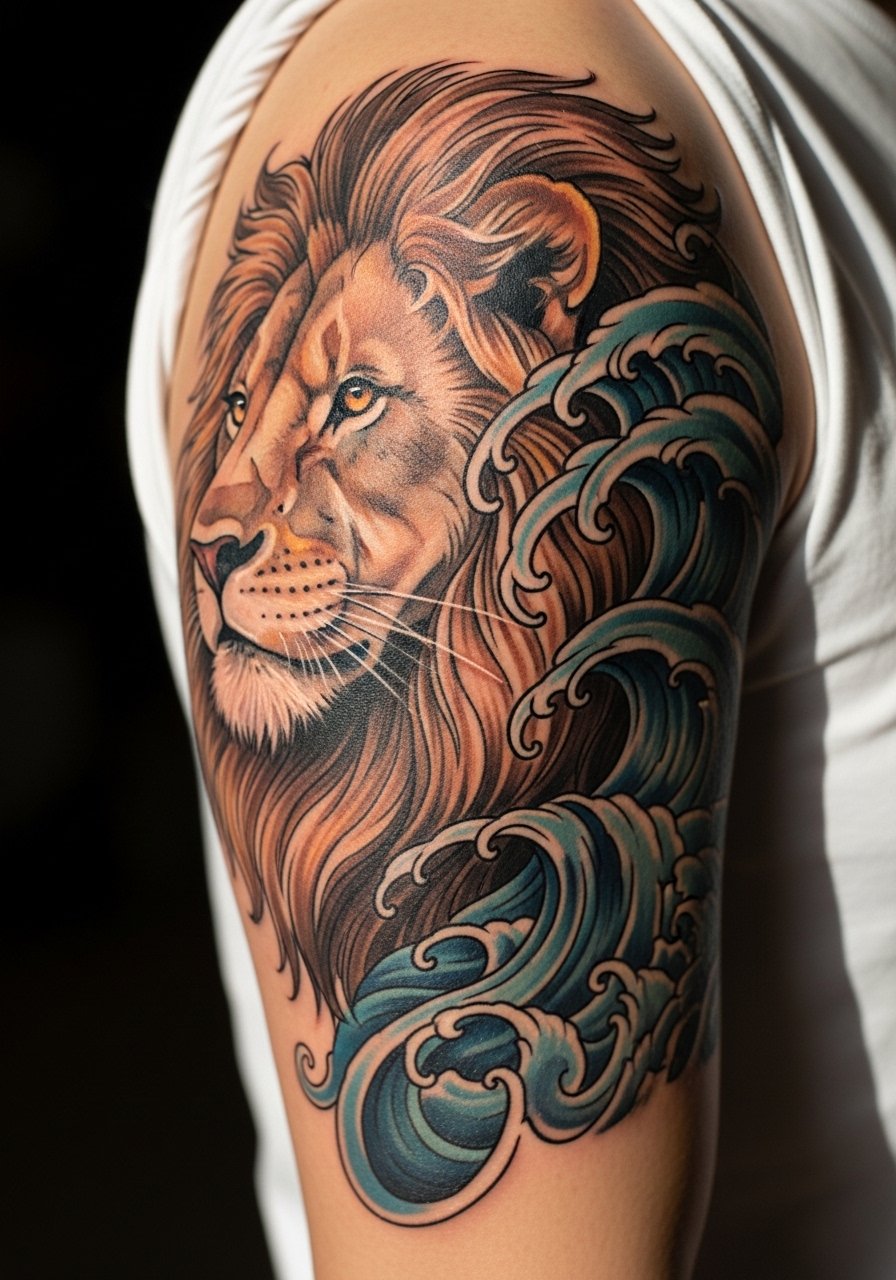
This design reads cinematic on the upper arm and looks intentional from a distance. Expect multiple sessions totaling 6 to 10 hours. Bring ideas for how the mane should flow into surrounding elements and ask about session splitting so saturation stays consistent. A common mistake is letting the mane become too busy with tiny lines, which ages poorly. For people who want statement work that still heals predictably, bold linework in primary sessions and layered color sessions later keeps the piece coherent. Plan on a touch-up in the second year for any softened edges.
8. Black and Gray Lion Head on Ribcage with Shadow Play
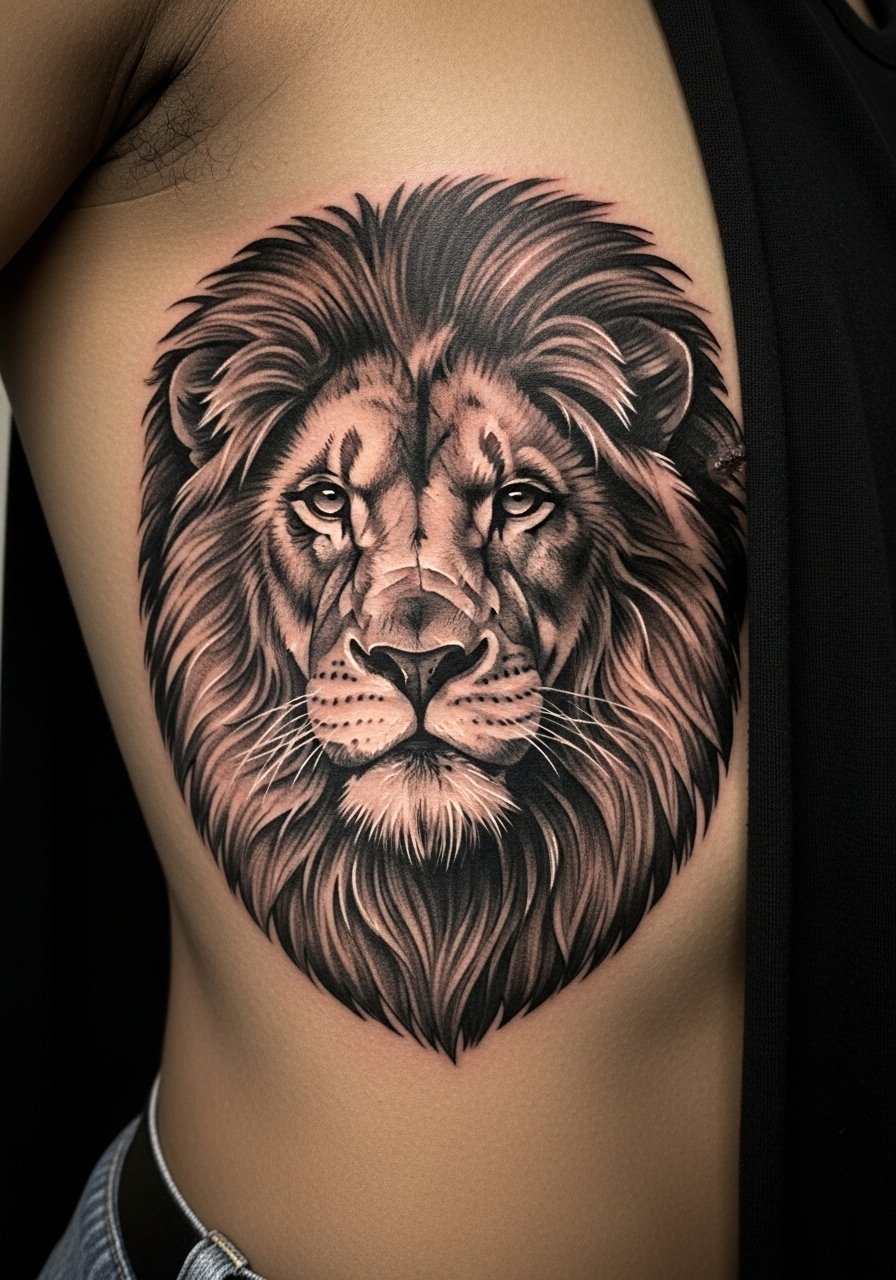
Fair warning, the ribcage rates high on pain but offers a canvas for dramatic contrast. This style relies on saturation and whip shading to create depth. Artists are split on fine detail on ribs. One camp says the constant expansion and contraction can blur micro-detail. The other camp says experienced shading techniques mitigate that. When booking, ask if they recommend slightly bolder facial features. A mistake is insisting on micro-detail across ribs without scheduling staged sessions. Expect strong tonal definition at six months and potential softening by year three that a touch-up can correct.
9. Geometric-Lion Hybrid on Calf with Negative Space Mane
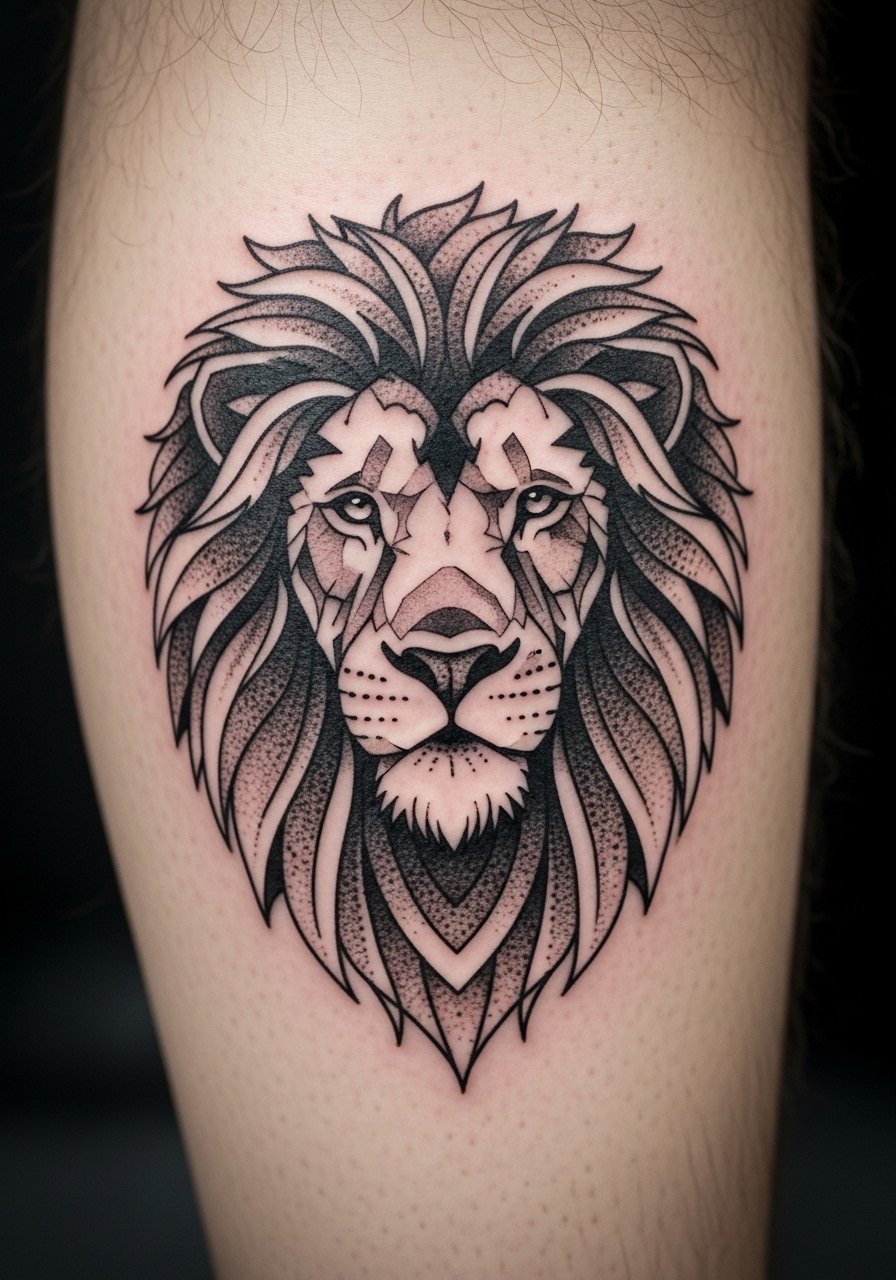
Calf placement handles both linework and saturation well and has moderate pain. This hybrid uses negative space to keep the mane readable even as small dots soften. Tell your artist you want clear spacing between dots and shapes so the negative areas remain crisp. The common mistake is packing too many tiny dots into a narrow band, which merges over time. At two years the pattern keeps shape if spacing is respected. Calf pieces are good candidates for subtle annual touch-ups if you run outdoors regularly.
10. Watercolor-Accented Lion Head on Shoulder Blade
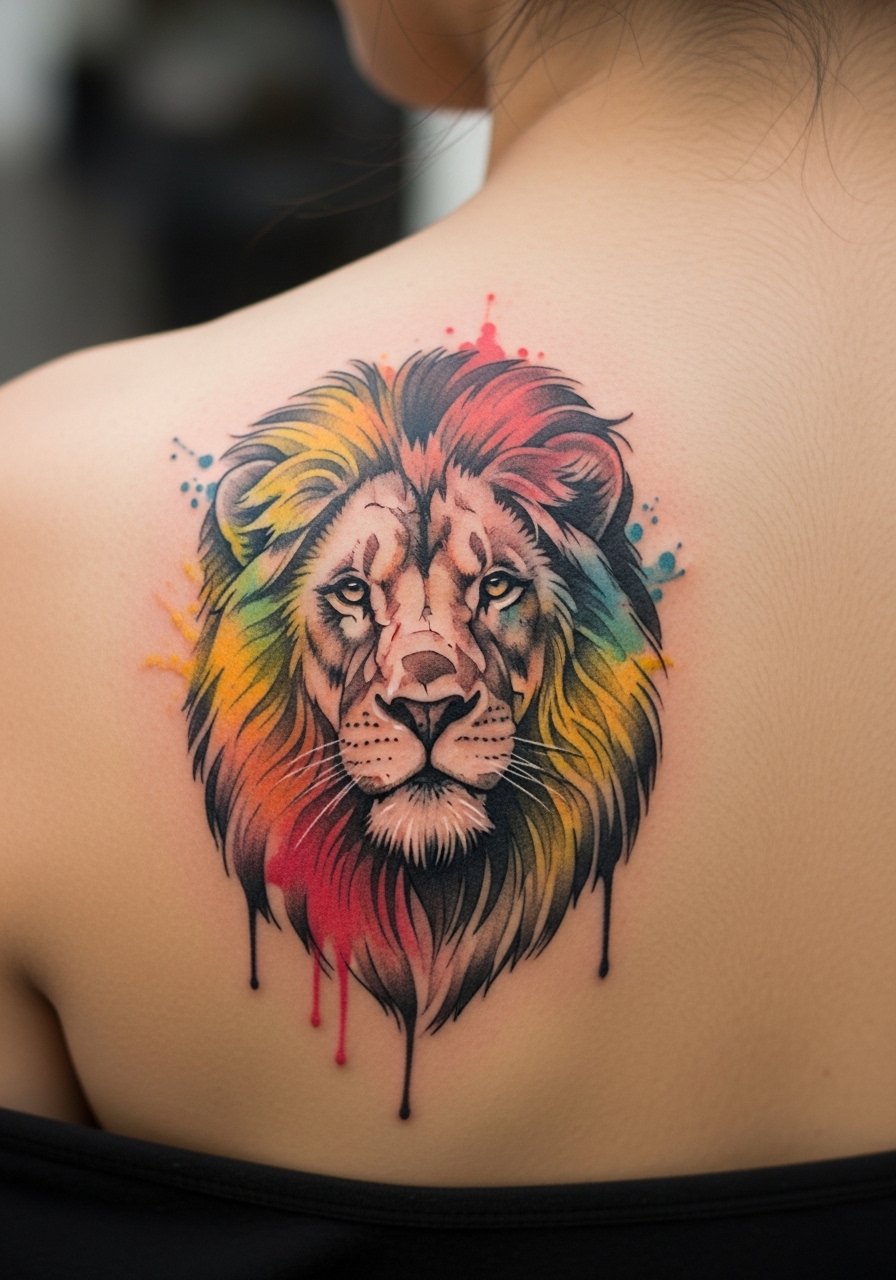
Watercolor accents add motion and personality but they fade faster than blackwork. Shoulders tolerate color well and sessions are usually 2 to 4 hours. Tell your artist you want the core portrait in stable black ink and the watercolor applied as a secondary wash so the face remains readable as pigment shifts. There is a divide in the community about watercolor longevity. One view accepts regular refreshes as part of ownership. The other prefers color placed inside bold anchors to reduce maintenance. If you want the wash to last, plan on touch-ups every 2 to 4 years depending on sun exposure.
Tattoo Prep and Aftercare Essentials
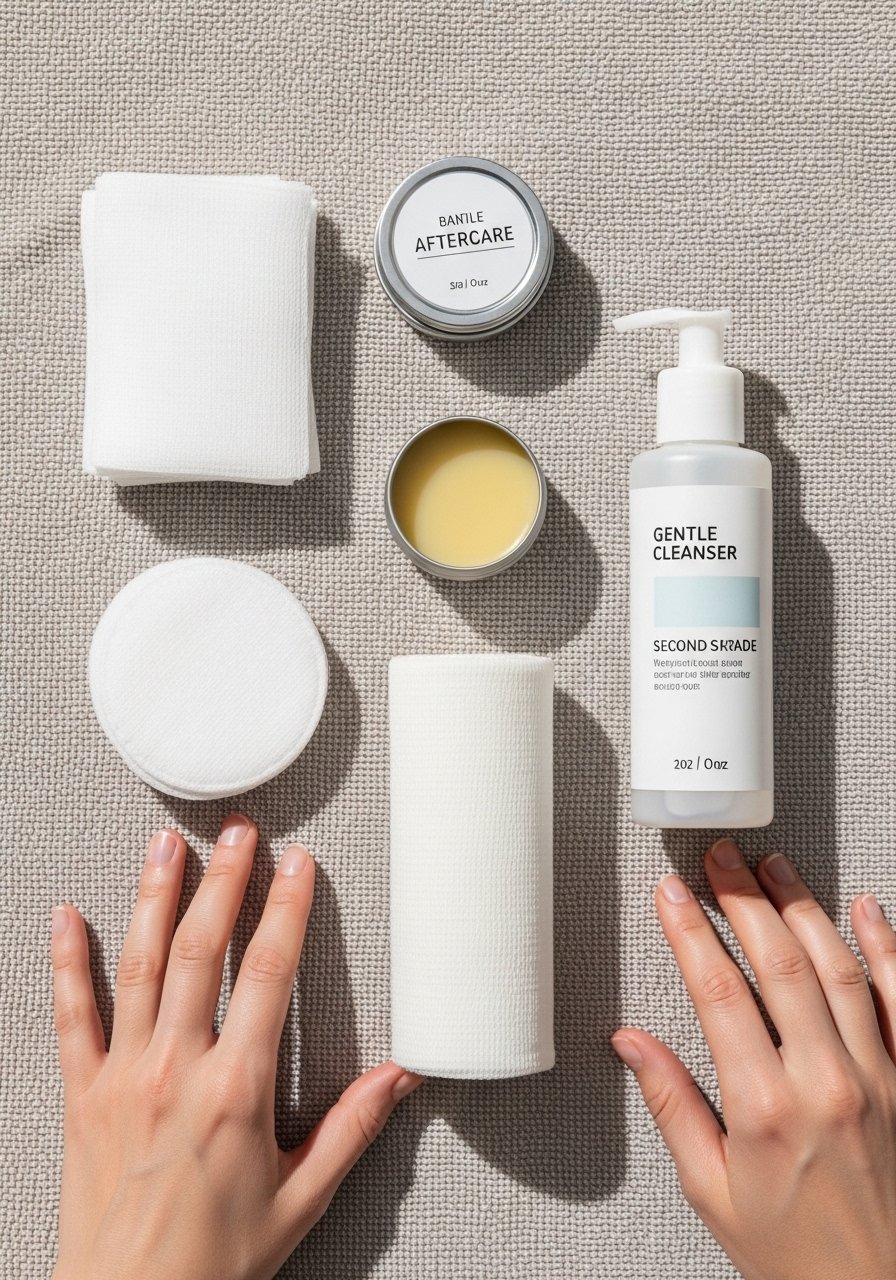
Below are practical items to have on hand from before your session through the first few weeks of healing. Links search Amazon for each item and include the affiliate tag.
Fragrance-free gentle foaming cleanser. Use morning and night to remove sweat and debris without stripping the ink. Gentle cleansers reduce scabbing size and lower infection risk.
Lightweight fragrance-free moisturizing balm. Apply sparingly to keep the area hydrated without clogging pores. Thin layers help prevent overly thick scabs.
Medical-grade second skin bandage, small sheets. Useful for the first 24 to 72 hours when you want a breathable barrier that reduces friction.
Non-comedogenic moisturizing lotion. Switch to a light lotion after initial balm use to keep the skin supple during later healing stages.
Physical mineral sunscreen stick SPF 50. Use after the tattoo is fully healed whenever it will see sun. Mineral formulas sit on top of skin and protect pigment.
Aftercare ointment from a specialty tattoo brand. Pick a small tin for the first week to manage itching and protect new ink.
Saniderm or similar medical adhesive bandage. This is the single mainstream product listed here. When used as directed it can reduce early scabbing. Ask your artist if they recommend it for your specific placement.
Every tattoo is different. Always follow your artist's specific aftercare instructions. Consult a dermatologist if you have skin concerns or unusual healing issues.
Frequently Asked Questions
Q: Will fine line lion head tattoos on the forearm blur quickly?
A: It depends on spacing and lineweight. Fine line can blur faster on active skin if lines are packed too close. Ask your artist to slightly increase lineweight and leave breathing room between whisker strokes. Plan for a likely touch-up around year two to three if you want the fineline details restored.
Q: How should I describe a micro-realism lion to my artist so it reads well on darker skin tones?
A: Say you want contrast prioritized over tiny midtones and ask for stronger anchors in shadow areas. Request reference photos of healed pieces on similar skin tones to see how saturation and negative space hold up. Artists often use deeper blacks and broader stipple to keep facial features distinct.
Q: Are watercolor accents worth it for a shoulder blade lion if I want low maintenance?
A: Watercolor accents look great but fade faster than blackwork. If you want lower maintenance, keep the portrait or linework in solid black and ask for the wash to be soft and secondary. That way the silhouette remains strong as color softens. Expect touch-ups more often for color elements.
Q: Is the ribcage a poor choice for a detailed lion head?
A: The ribcage offers drama but moves with breathing, which can affect micro-detail. If you want detail there, book staged sessions and ask the artist about slightly bolder lineweight for facial elements. Some artists avoid ultra-micro detail on ribs for that reason.
Q: Can I use a transparent adhesive bandage like Saniderm and also apply balm underneath?
A: Yes when used correctly. Many people apply a thin layer of approved ointment, then cover with a medical-grade adhesive for the first 24 to 72 hours. Follow the product instructions and your artist's protocol. If you notice excessive irritation remove the bandage and consult a professional.
Q: How often do geometric negative-space manes need touch-ups compared with saturated blackwork?
A: Negative-space manes rely on precise spacing so they can need touch-ups if dots or small shapes merge over time. Saturated blackwork often requires fewer color refreshes because the heavy pigment holds longer. Your lifestyle and sun exposure affect both, so expect geometric pieces to possibly need attention sooner if you spend a lot of time outdoors.