
Someone I know scrolled for months before realizing the real problem was not finding pretty mockups. It was knowing which elephant and floral combos age well on your skin, how long a 2.5-hour forearm sit actually feels, and whether cherry-blossom color will hold on tan tones after summer. I spent time in five shops across Brooklyn and followed community threads to pull designs that actually heal clean and last.
1. Neo-traditional forearm elephant with cherry blossoms wrapped around the trunk
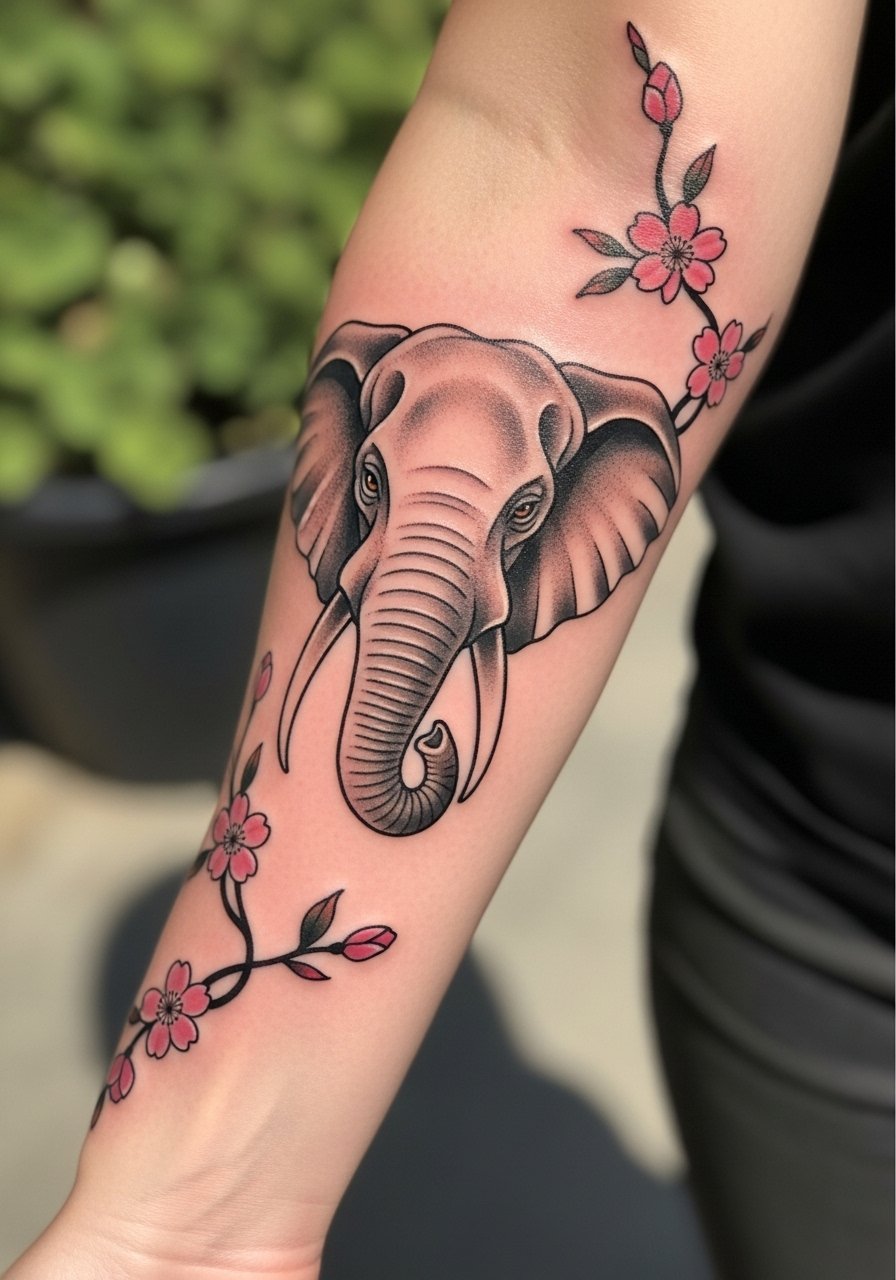
Someone I know picked this after seeing the trunk flow with arm muscles. Fair warning, the outer forearm hits bone near the wrist and feels sharper than the fleshier mid-forearm. For this style, ask your artist for slightly bolder linework and saturated color blocks so the blossoms keep definition after six months. A common mistake is asking for tiny petals and ultra-fine lines. That looks great fresh but can blur on flexing skin, so plan for medium-size petals and a touch-up around year two if you want the pink to pop.
2. Illustrative chest elephant with clustered wildflowers behind the ear of the trunk
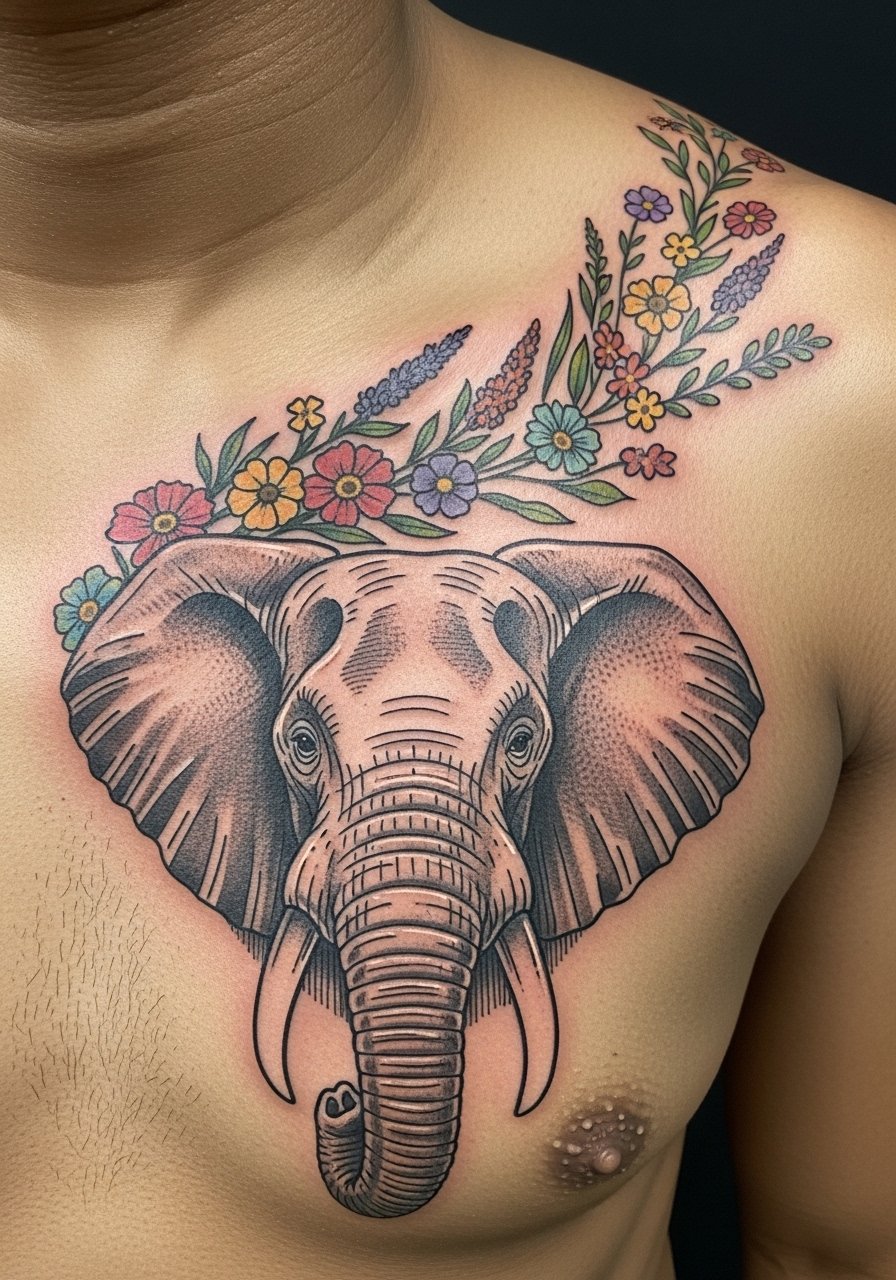
A fair warning lead works here because chest patches sit differently during sleep and sweating. The chest is an 6 to 7 on most pain scales, but the space lets the artist build scale without crowding. Tell your artist you want the flowers to fade into dot work near the shoulder so the composition breathes at long distances. People rush this and cram blossoms too close, which causes muddiness after healing. Expect a softer look at six months and a clearer silhouette if the linework was allowed a little room.
3. Small inner wrist elephant outline with a single daisy

Most fine-line wrist pieces read delicate but age depends on placement. The inner wrist sees friction from shirts and watches so the biggest mistake is going ultra-tiny. When you consult, ask for slightly deeper line placement and a bolder outline around the daisy to protect the bloom’s center. Expect crisp lines at two months and some softening by year two. If you want this small, budget for a touch-up in year one or two so the daisy stays distinct.
4. Black-and-gray thigh elephant with a single bold peony

There's something about black-and-gray saturation that holds up on thighs better than most color work. Thigh sessions are easier to pace and feel less painful than ribs. Tell your artist you want heavy saturation in shadow planes so the peony reads as structure instead of a color patch. A common error is asking for watercolor peony fills on the thigh. They look soft fresh but tend to feather into a wash after heavy movement. Expect stable contrast at six months and slower fade over five years.
5. Mandala-accented elephant outline with floral halo on the upper back

When a design borrows sacred geometry, mention origin respect during consultation. This pattern traces to mandala traditions, so many clients tweak elements rather than copy directly. The upper back gives room for clean stipple shading, but the mistake I see is compressing the mandala into a small patch. That kills detail once healed. Ask for higher contrast in the mandala and stipple shading in the flowers so the whole piece reads at distance and keeps delicate sections intact over time.
6. Calf sleeve fragment: patchwork elephant with mixed florals

I've noticed patchwork sleeves age differently depending on each piece's lineweight. Calf work is forgiving and stands up to bold saturation. During consultation, specify which panels you want bold and which you want stippled, so your artist balances blowout risk. A frequent mistake is combining ultra-fine dot work next to heavy black fills, which heals unevenly. Plan sessions in 60- to 90-minute chunks to keep the skin manageable for long runs of shading.
7. Micro-realism elephant head with a tiny rose on the ankle
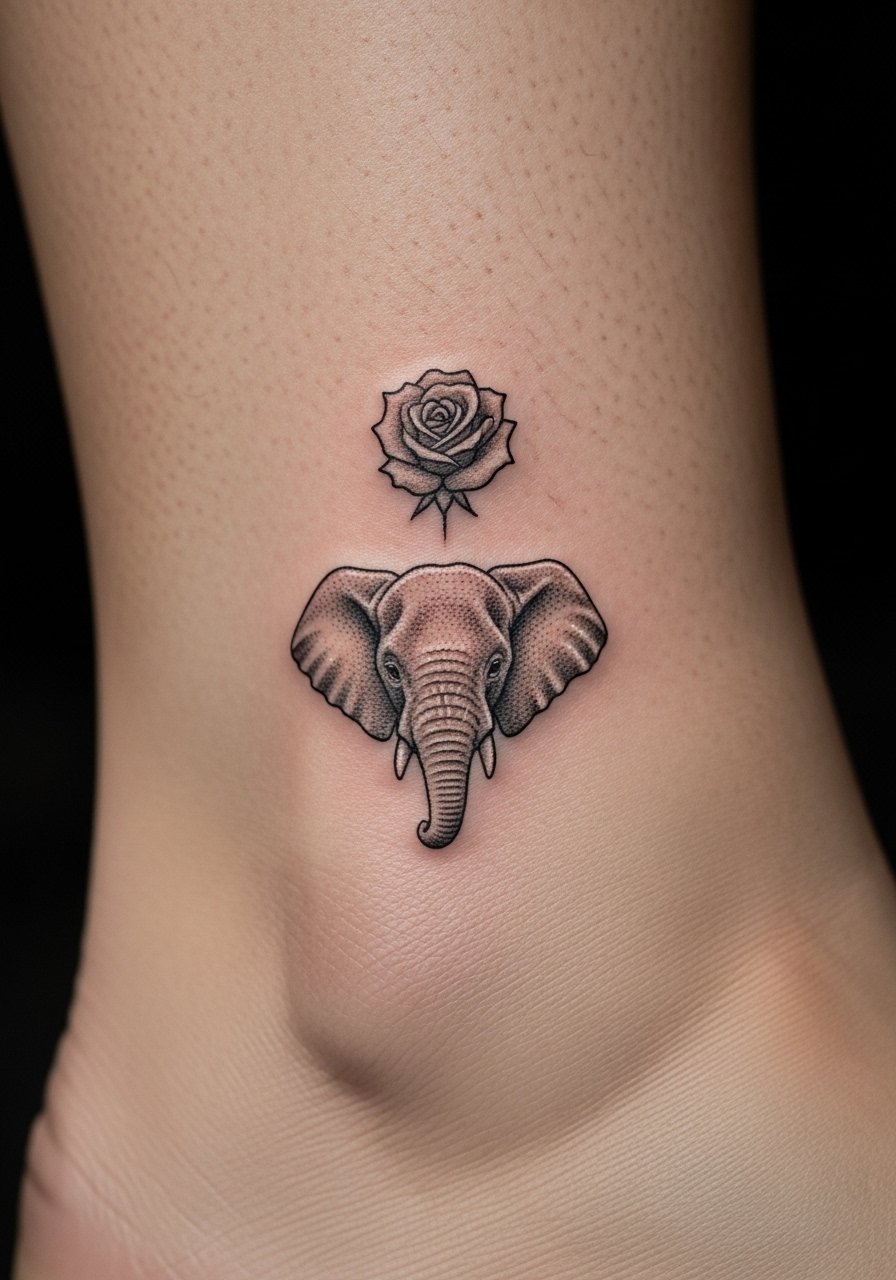
The ankle bruises easily and the bone will intensify pain. Most micro-realism fans underestimate how much touch-up this needs. Ask for slightly larger negative space around the rose so the detail has breathing room. The mistake is requesting micro-etching that sits right on the ankle bone; it scars and spreads. Expect the piece to soften by year one and be realistic about a touch-up to restore tiny highlights.
8. Ribcage elephant silhouette with trailing orchids

Fine-line on ribs splits artists into two camps. One group says the skin stretch blurs lines within two years. The other group says correct needle depth and spacing can hold up fine. Name both camps during booking and ask which side your artist sits on. The ribcage hurts more but allows dramatic negative space, so pick bolder silhouettes if longevity matters. A common mistake is asking for tiny orchids with very thin stems there. They can blur and require touch-ups sooner than expected.
9. Thigh wrap elephant with cherry-blossom cascade and negative space trunk

This design hides well under clothing when you need discretion. Thigh wraps let you use negative space as a design tool, which helps preserve petal detail over time. Tell your artist you want the trunk to breathe as negative space so blossoms sit around it instead of on top. People often overcrowd the area, which breeds muddy healing. A staged 90-minute session works for the main silhouette, then a second shorter pass for color saturation.
10. Sternum elephant with delicate roses across the sternum and sternum note
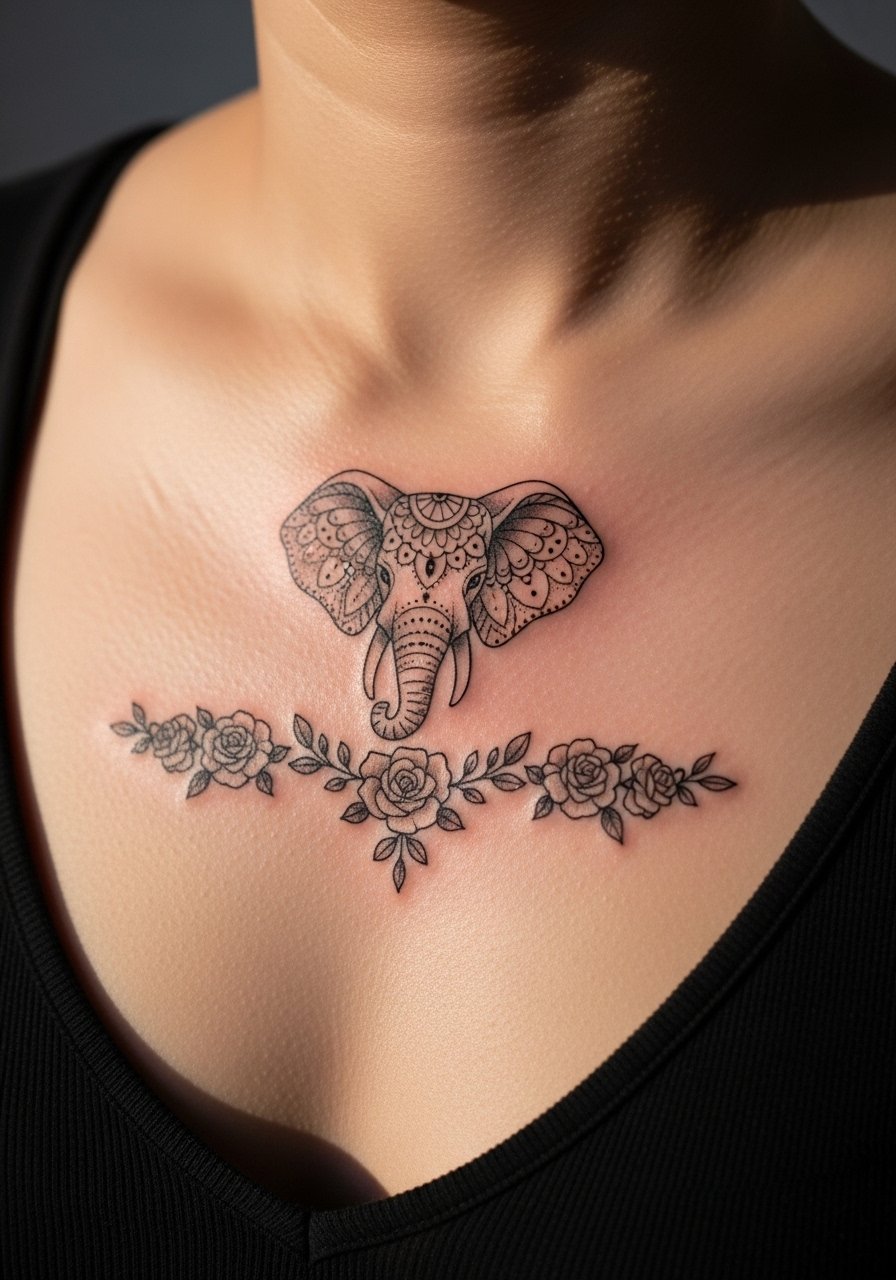
Fair warning: sternum placements are intensely painful and require a specialist’s touch. Hand tattoos and sternum pieces can affect hiring and comfort, so consider the professional implications before committing. For ornamental work here, ask for slightly heavier anchors at the base of floral elements so they do not migrate. The common mistake is cramming fine detail into a bony zone. Expect a slow healing process and plan sessions around rest days.
11. Hand-side elephant with a single marigold on the thumb side and professional note

Hand pieces still affect hiring in some industries, so think about career path before committing. The side of the hand gets heavy wear and spots fade faster. Ask your artist for stronger outlines and ask where they usually place ink to survive daily friction. People who go ultra-fine here regret it within a year. Plan for touch-ups and choose flowers with simple centers to avoid early loss of detail.
12. Watercolor-style elephant silhouette with large lotus on the shoulder blade

Most watercolor trends softened a lot over five years across feeds. If you like watercolor, ask for stronger black anchors and a hint of black-and-gray underlayer so the lotus keeps definition. The mistake is trusting pure watercolor without black structure. At six months it will likely look soft, and at two years the color may need refreshing. Shoulders are low-friction, which helps longevity, but UV protection is crucial.
13. Geometric elephant with stipple-shaded flowers on the forearm

There is visual satisfaction in lines and dots, but forearms flex. Forearm tattoos need room between geometric lines to avoid merging. Tell your artist you want measured spacing and test the design across your arm orientation. The common mistake is compressing geometry to fit a small area. Expect strong clarity at six months if spacing is generous, and budget a touch-up at two to three years for stipple highlights.
14. Neo-trad calf elephant with bold roses and whip shading
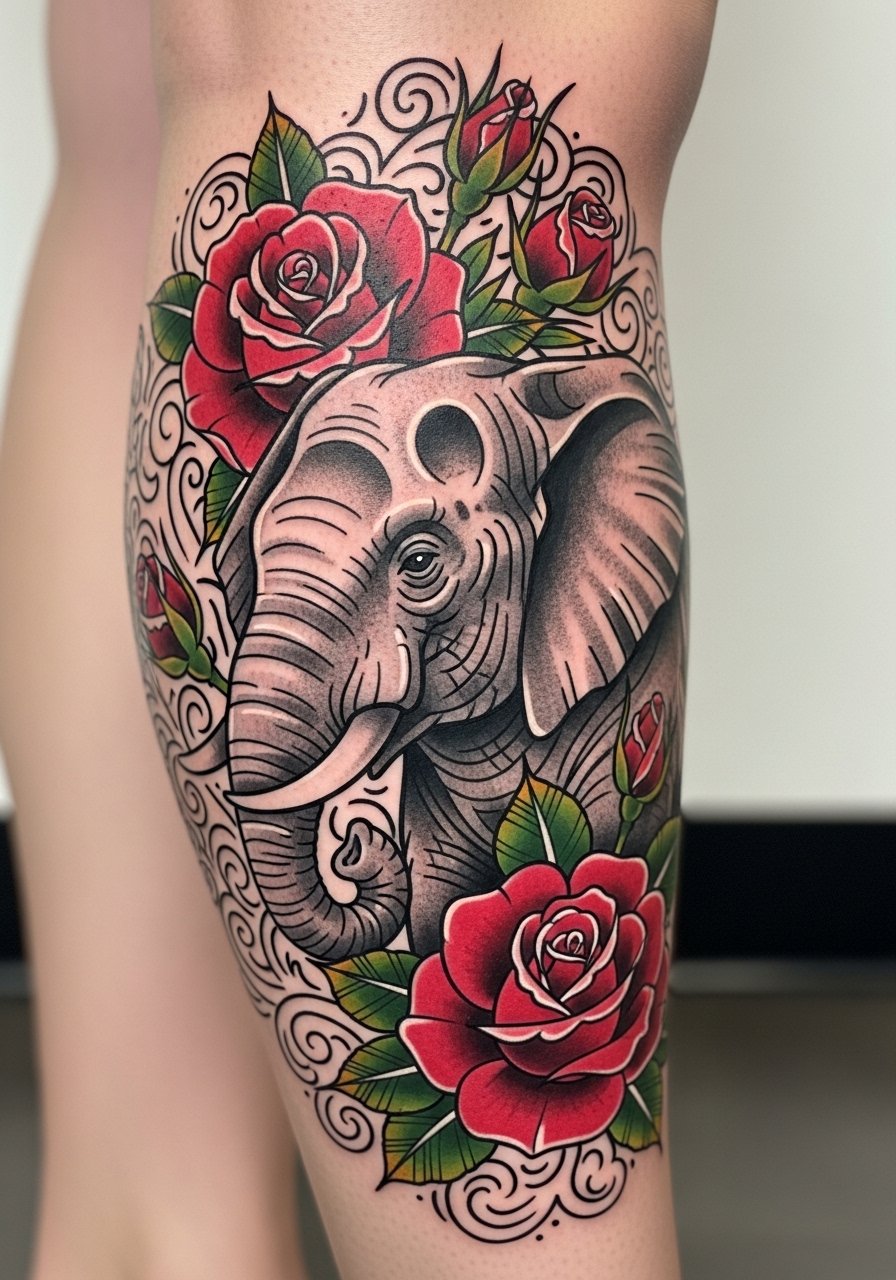
There is something about whip shading plus bold outlines that reads far away. Calf work tolerates heavy saturation and is a good place for neo-traditional palettes. When consulting, ask for dense saturation in shadowed areas and lighter passes for the rose petals. A mistake is asking for blended watercolor petals right next to heavy black, which heals unevenly. Plan for a 90- to 150-minute session depending on coverage.
15. Floral elephant sleeve starter patch with single-stem peonies

When building a sleeve over time, start with anchor pieces that allow negative space between future panels. A common misstep is committing to full sleeve color on the first visit. Tell your artist you want an anchor elephant and simple peony stems to map future panels. Expect longer sessions when fills are added, and plan touch-ups for color transitions as the sleeve completes.
16. Tiny behind-the-ear elephant with a little forget-me-not

Behind-the-ear tattoos are discreet and heal quickly if done carefully. The mistake is tiny intricate shading in a curved spot. Ask for a minimal outline and a tiny solid dot for the flower’s center. Expect softness after a year, and be honest with your artist about how often you wear glasses or hairstyles that rub the area.
17. Floral crown elephant on the upper arm with poppy accents
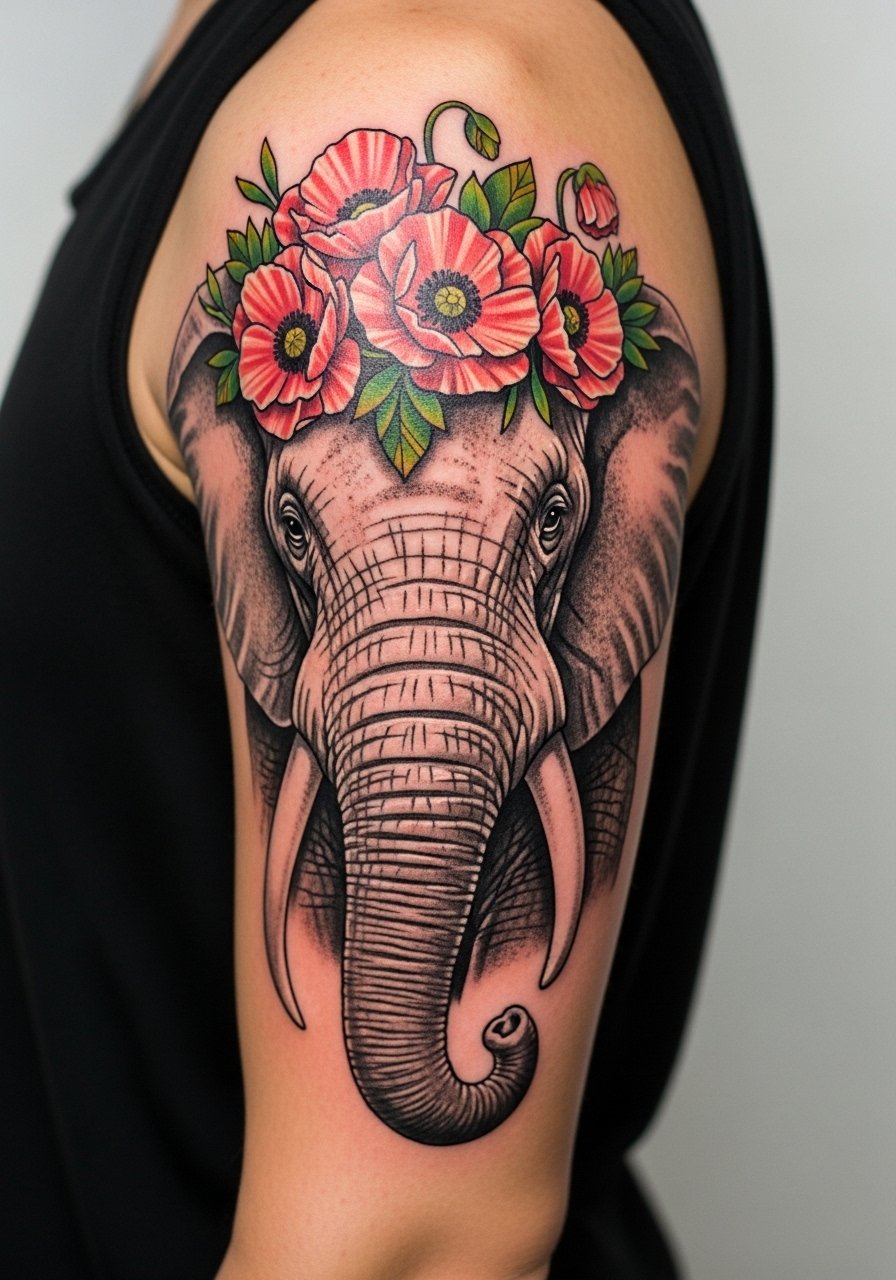
When you want a bold crown composition, the upper arm offers enough flat area for saturation. During consultation, show examples of crown spacing so each poppy has breathing room. People often compress blooms to fit a tight space which causes muddiness. Expect strong color at six months and gradual softening; a single touch-up pass can revive poppies without reworking the whole piece.
18. Scar-overlay floral elephant where blossoms camouflage healed tissue

Using florals to work over scars needs a specialist discussion. Scar texture changes needle depth and saturation. Tell your artist where the scar sits and ask for a test patch or a conservative shading plan. The mistake is assuming full saturation will behave the same over scar tissue. Expect more sessions and slower saturation, but thoughtful floral placement can visually soften the area long term.
19. Single-bloom trunk wrap on the bicep with stipple highlights
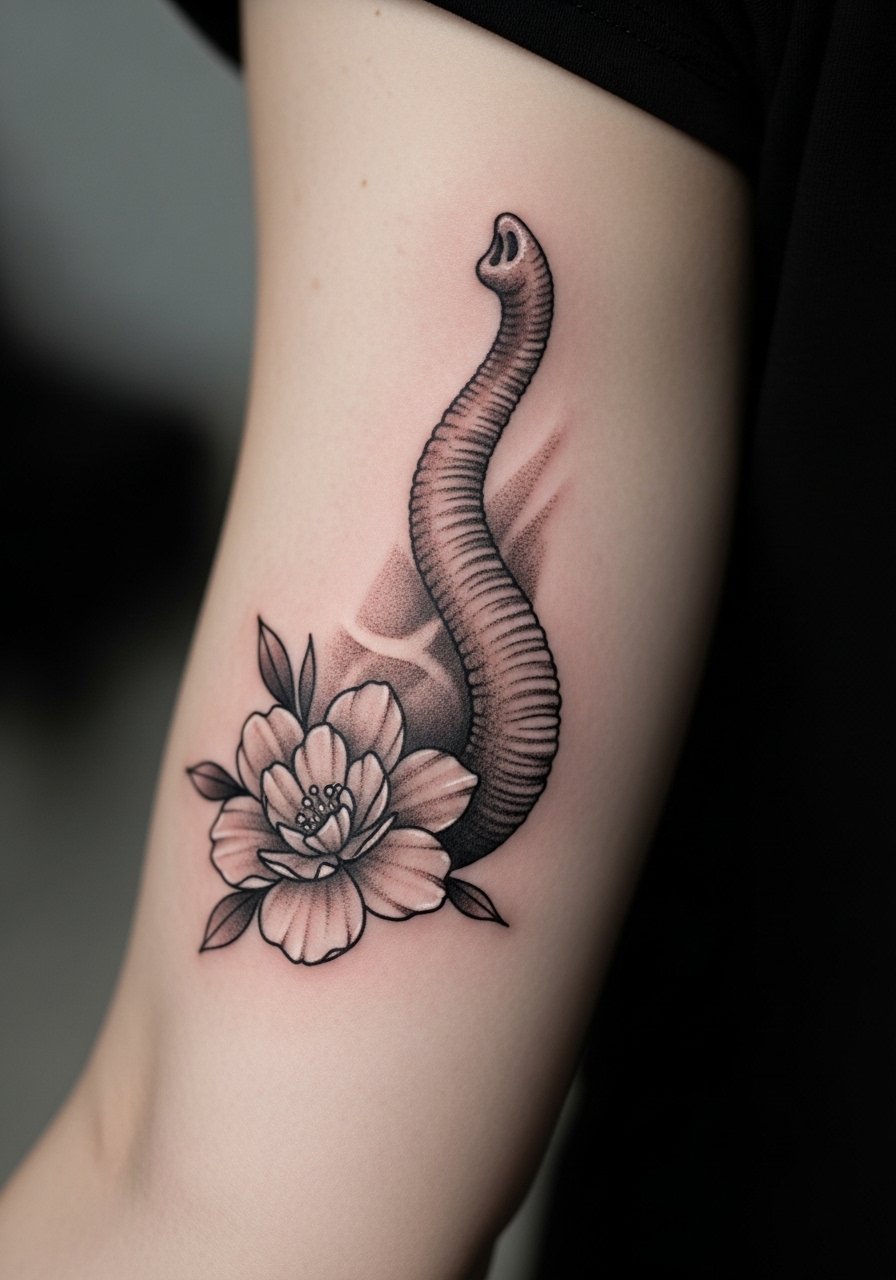
The bicep is an easier pain zone and flex changes less than the forearm. For a trunk wrap, request clear anchors at the start and end points so the curve reads with muscle movement. People often cut corners by making the bloom too detailed in a narrow wrap. A good rule is to keep the bloom bold and let stipple do the texture work. Expect clean edges at two months and gradual fade in high-motion areas.
20. Full-back elephant scene with mixed seasonal flowers

Full-back pieces let you tell seasons with different blooms across planes. When planning, describe which flowers represent which memories and where you want pops of contrast. The mistake is trying to finish the entire back in a single marathon session. Break this into logical passes so saturation sets properly. Expect the first pass to establish silhouettes and follow-ups to add depth.
21. Mini mandala elephant on the sternum edge with cultural note
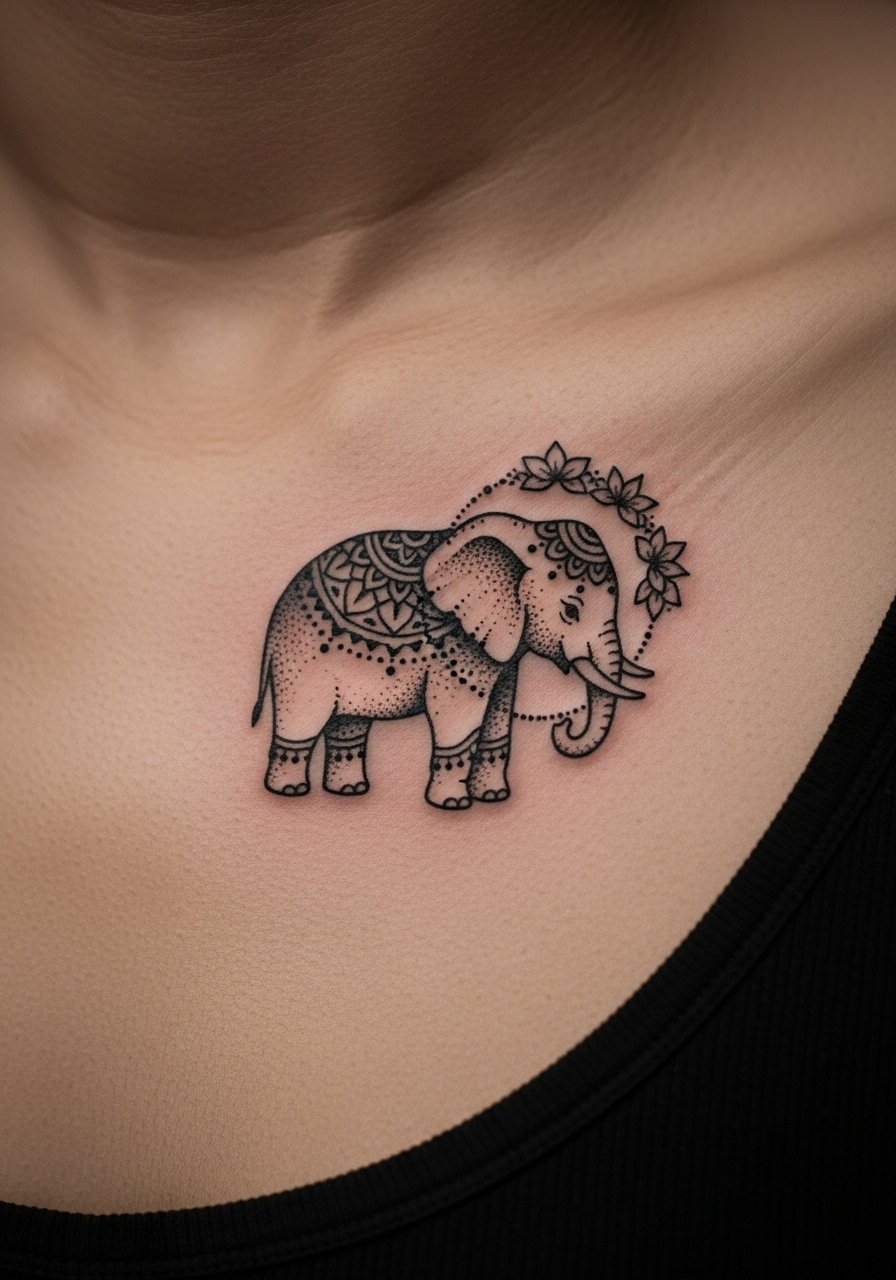
This ornamental piece draws from mandala traditions so consider respectful variations rather than direct copies. The sternum edge is bony and sensitive, so ask your artist how they handle anchoring dots in that zone. People who request full mandalas without room for breath risk losing center detail. Expect slower healing and plan for a short follow-up to sharpen center dots.
22. Ankle-to-foot elephant with trailing jasmine and foot note

Feet and ankles suffer heavy wear and can fade fast because of shoes and friction. If you do this, request bolder anchors in the jasmine stems and simple petal shapes. The biggest mistake is tiny shaded petals on the top of the foot. Expect visible softening by year one and accept that touch-ups are common for foot pieces.
23. Sleeve connector: small floral elephants to bridge flash panels
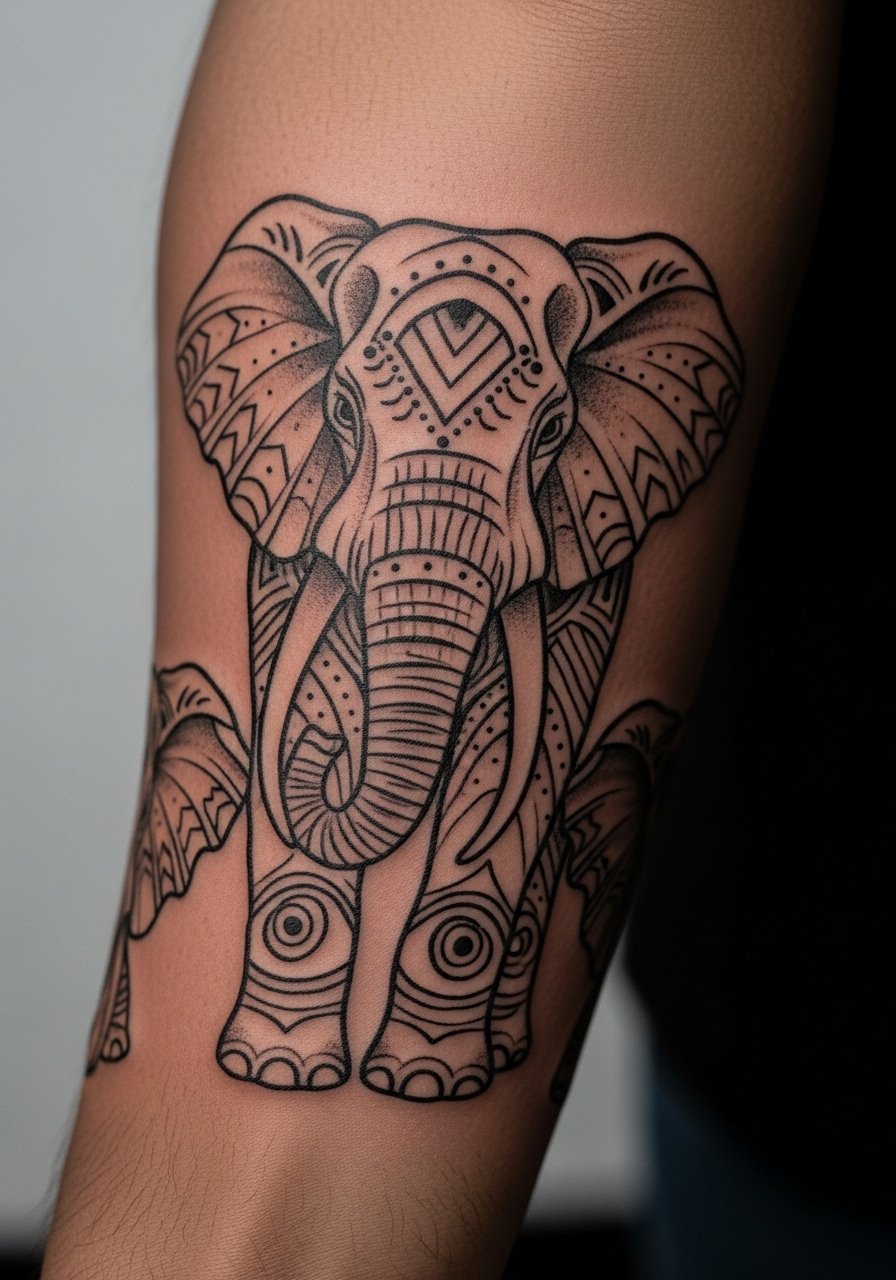
When connecting a sleeve, use repeated small motifs to unify style and tone. A consultation tip is to bring the flash pieces you want to link and ask the artist to design three connector elephants of varying sizes. People skip this planning and end up with awkward transitions. Expect shorter sessions for connector work and possibly a later color pass to balance saturation.
24. Micro-ink single-stem lotus with a tiny elephant silhouette on the rib
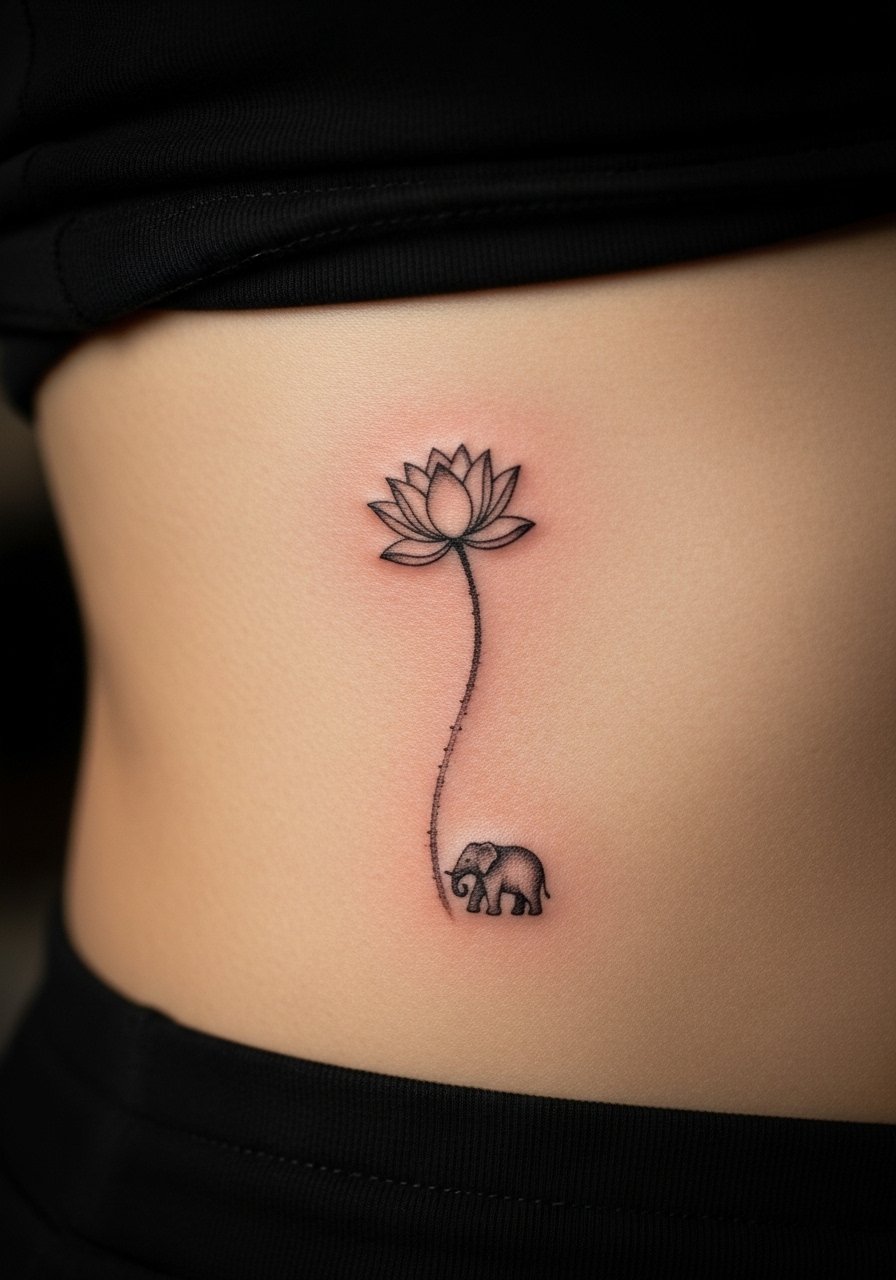
Rib micro-ink is high risk for blowout and fading because of the skin's movement. If you want this, ask for stronger negative space around the elephant silhouette and slightly bolder stem lines for the lotus. Artists split on whether ultra-fine work holds on ribs. Name both camps and ask where your artist stands. The common mistake is trading longevity for a microscopic aesthetic that vanishes after a year.
25. Collector’s piece: micro-realism eye of an elephant framed by tiny forget-me-nots
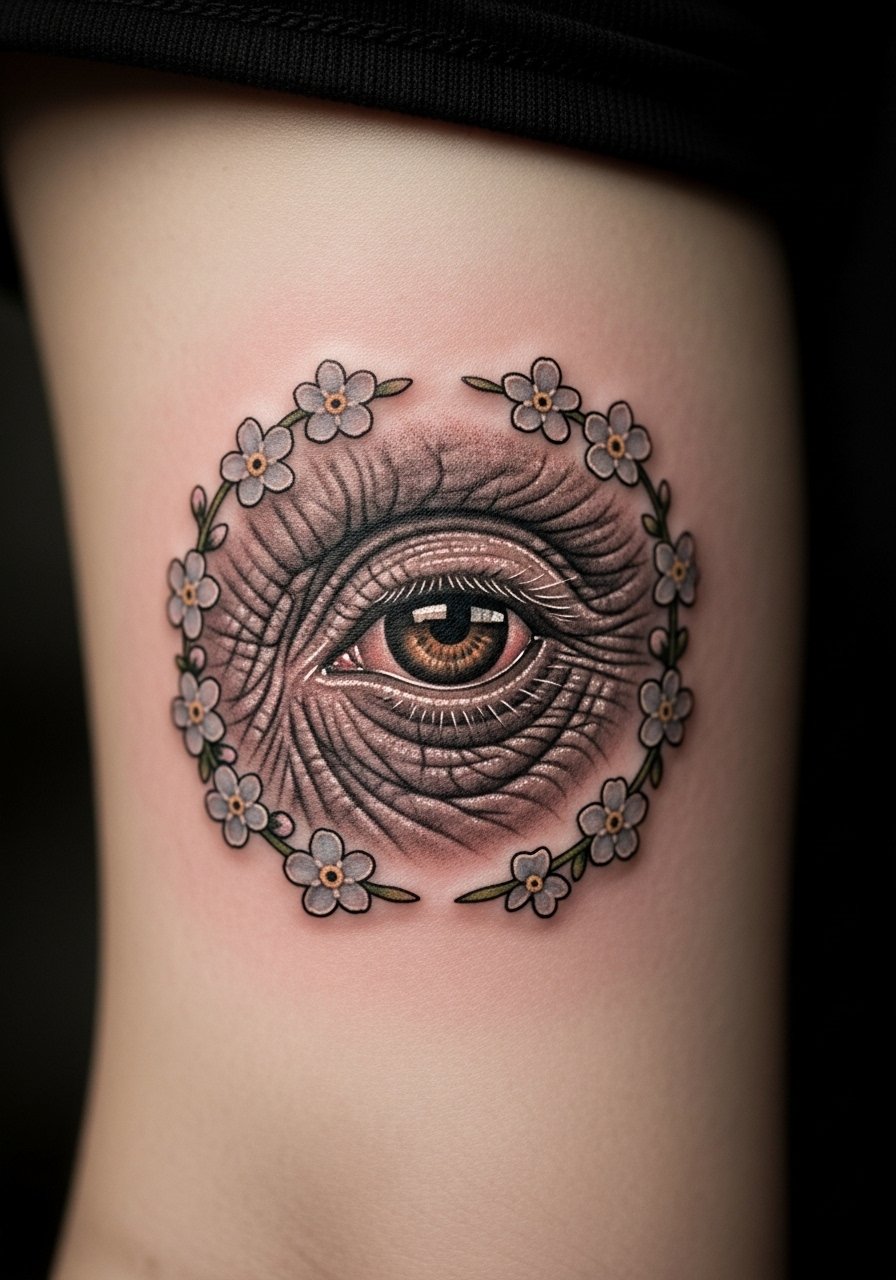
If you collect micro-realism, expect a high-detail touch-up schedule and precise shading that must be done by someone who does consistent micro work. When booking, ask for healed photos of similar-scale pieces. The mistake is assuming any artist who does portraiture can scale down to micro-realism. Anticipate a follow-up at year one to restore highlight points.
Tattoo Prep and Aftercare Essentials

- Thinleaf Balm, small unscented tin for humid climates. A lightweight balm many people cite for not clogging pores. Use it in thin layers during the first week when you need hydration without heavy shine.
- UV Ink Shield Spray for color protection. Spray on healed forearm pieces before sun exposure to help preserve bright flowers. Apply after the healing window and only on fully healed skin.
- Halo Healing Wrap breathable second-skin bandage. A breathable occlusive used by people who want an alternative to heavy films in mild climates. Not ideal for very oily skin.
- Lightweight fragrance-free balm, travel tin. Good backstop if you cannot access a niche product while traveling.
- Medical-grade second skin bandage, 6-inch roll. Use this on detailed floral work for the first 24 to 48 hours if your artist recommends occlusion.
- Aquaphor Healing Ointment, small tube. Traditional ointment some shops still use. Note that newer balms feel less shiny while giving similar protection.
- Broad-spectrum SPF 50 sunscreen, reef-friendly. Long-term color maintenance relies heavily on sun protection for forearm and calf pieces.
- Gentle fragrance-free foaming cleanser. Use for daily washing during the healing phase and for long-term gentle care.
Every tattoo is different. Always follow your artist's specific aftercare instructions. Consult a dermatologist if you have skin concerns or unusual healing issues.
Frequently Asked Questions
Q: Will cherry-blossom color fade fast on tan skin and what helps it last?
A: Cherry-blossom pinks can soften faster on medium to dark tones because contrast is lower. From what I've gathered, adding a subtle black-and-gray underlayer and asking for UV-protectant care after healing helps color read longer. Use sunscreen on healed pieces and plan a color touch-up in one to two years for bright pinks.
Q: How should I pace a 2.5-hour forearm session if I am nervous about pain?
A: Break the time into two hour-long passes with a 10- to 15-minute rest in between and bring protein-rich snacks. Many artists will accommodate that plan. If an artist prefers to work straight through, discuss shorter sessions up front so you do not start stressed.
Q: Do fine-line elephant tattoos blur faster than bold neo-traditional work on forearms?
A: Artists and collectors split into two camps on this. One camp says fine line blurs quicker on flexing forearm skin. The other camp says depth and spacing can make fine line settle well. Ask your artist which side they favor and request medium line weight for longevity if you are unsure.
Q: Is Saniderm safe for floral detail work or is dry healing better?
A: There are both camps. Some artists swear Saniderm speeds clean healing for tight floral detail. Others say on humid skin it traps moisture and risks gunk. I advise asking your artist what they have observed in your climate and skin type, and follow their protocol for the best outcome.
Q: Can flowers help camouflage scarred skin when combined with an elephant motif?
A: Yes, well-placed blossoms and flowing trunk curves can soften scar texture. Be upfront with your artist about scar age and texture. Scars often need conservative saturation and more sessions, but the floral layout can visually integrate the area without forcing heavy fills.