

A friend of mine booked a tiger lily after months of hunting for the right style and then realized the real problem was not the picture. It was knowing which approach would still look crisp after sweat, sun, and life changes. I spent time in five shops across Brooklyn and chatted with artists who specialize in fine line and neo-traditional work. Below are 20 tiger lily tattoo directions that actually answer those longevity and placement questions.
1. Fine Line Single Tiger Lily Stem on the Ankle
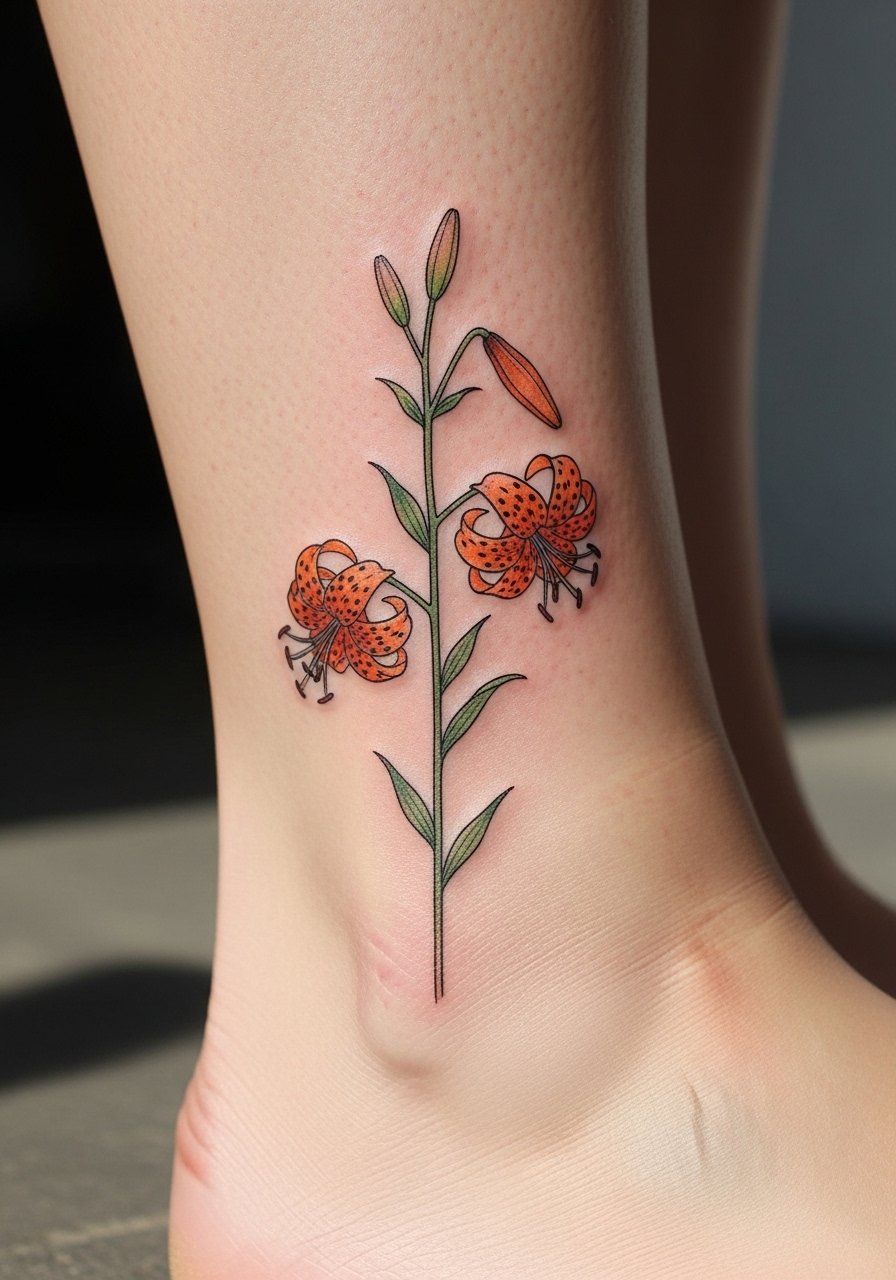
Someone I know went with this after their first tattoo turned into a blur. Fine line is low-profile and quick to sit, but on an active ankle expect touch-up at year two. Tell your artist you want slightly heavier linework near intersections so the outline keeps definition. Avoid asking for ultra-micro stems that merge when the skin flexes. Pain is mild for most people and the session is short. Best for first-timers who want a discreet mark, not for anyone who plans heavy ankle jewelry that rubs during healing.
2. Neo-Traditional Tiger Lily with Curled Petals on the Forearm
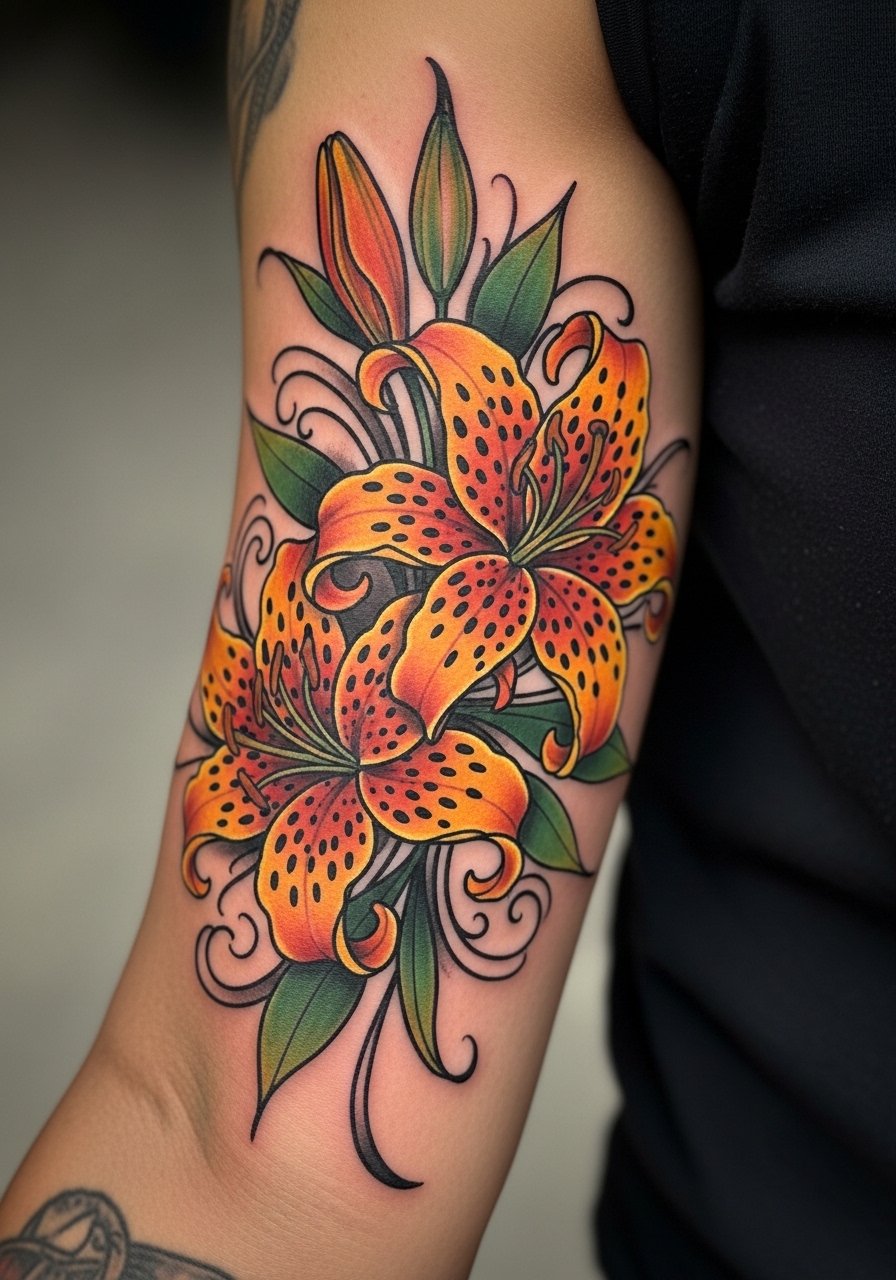
There is something about solid outlines paired with saturated fills that reads from across a room. This style holds up because artists pack saturation and leave breathing room between petals to prevent early muddiness. When you consult, ask for mid-weight outlines and layered shading rather than tiny stipple inside the petals. Forearm placement shows off the bloom and heals mostly clean, though heavier activity and sun exposure mean a touch-up at year one is common. Expect moderate pain and a one to two hour session depending on size.
3. Watercolor Bloom with Soft Splashes on the Upper Arm
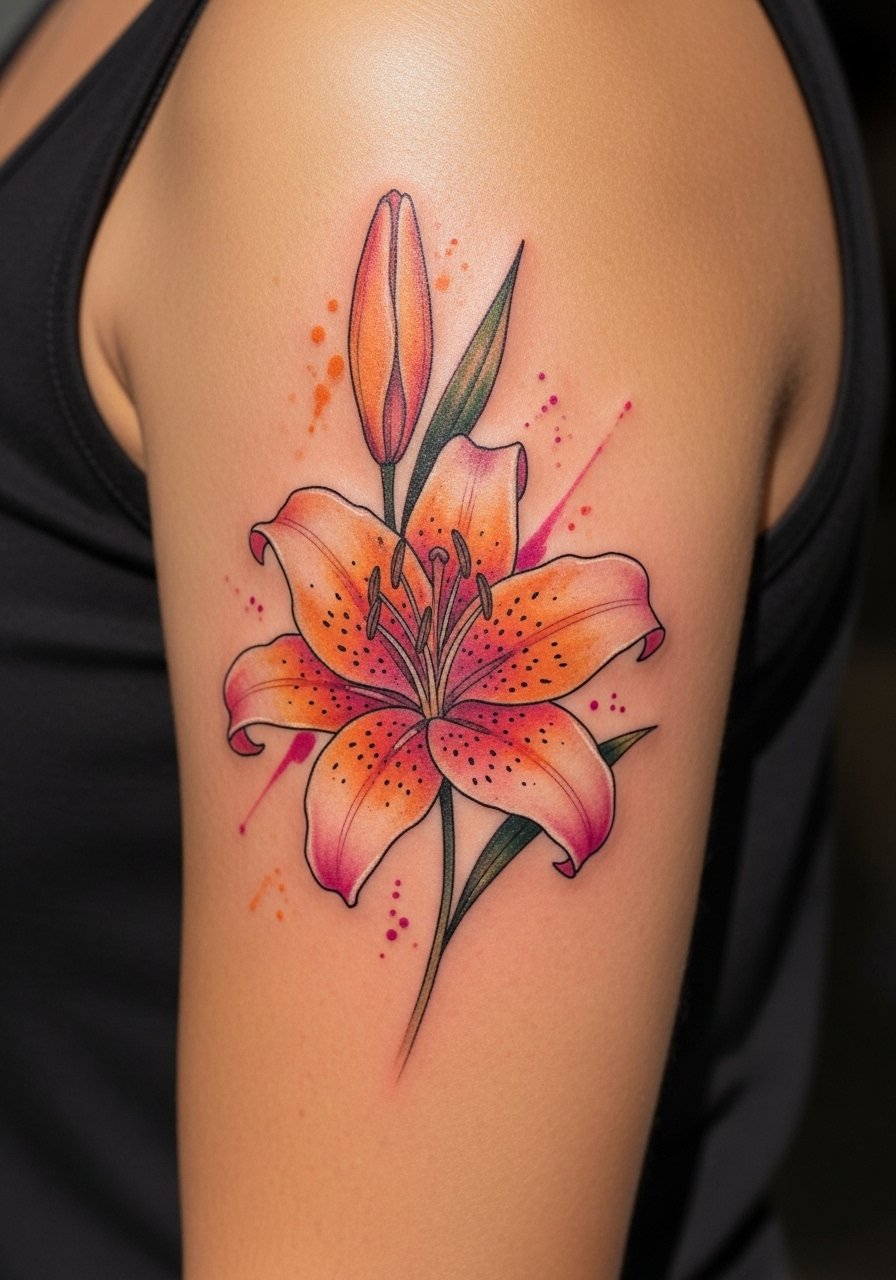
Most watercolor tiger lilies from a few years ago faded into pale washes on arms. This version holds up when artists anchor the watercolor with subtle linework and slightly denser saturation at petal edges. There are two camps on watercolor longevity. One camp says wrap the piece in barrier film for five days and use light balms to lock in color. The other camp favors dry healing and slow moisturization to let scabs form and detach naturally. Ask your artist which approach they prefer and schedule a six to twelve month touch-up if you want the colors to stay punchy.
4. Blackwork Outline Cluster on the Thigh
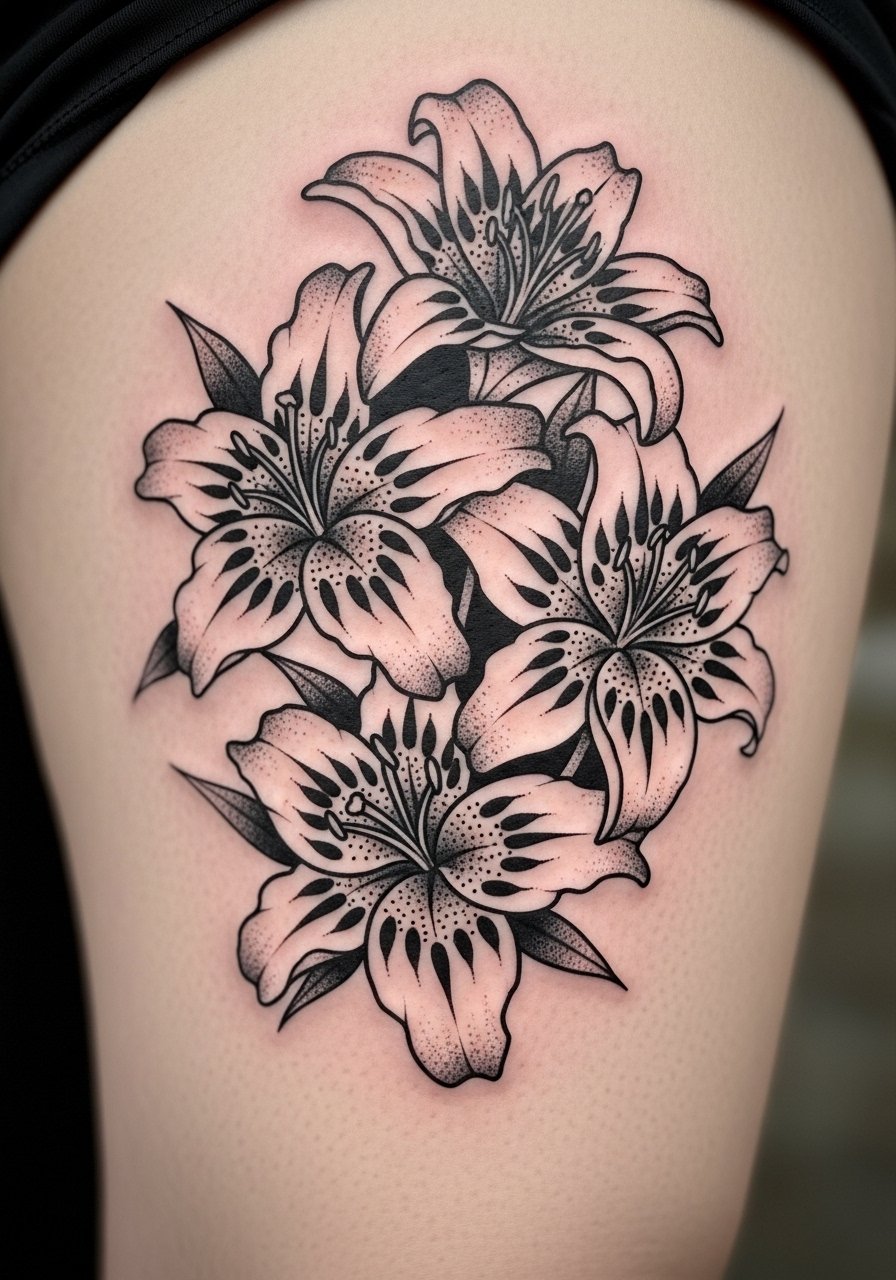
Blackwork is the practical choice if you want a lily that ages well with little maintenance. Thigh skin tolerates heavier linework and shows low blowout risk when the artist spaces stems properly. A common mistake is shrinking a cluster too small, which causes petals to fuse over time. Tell your artist you want clear negative space between blooms and a plan for future expansion if weight fluctuation is a concern. Sessions are comfortable for most and usually wrap in one sitting for medium pieces. Expect touch-up at year two for crisp edges.
5. 3D Realistic Tiger Lily with Textured Petals on the Shoulder Blade
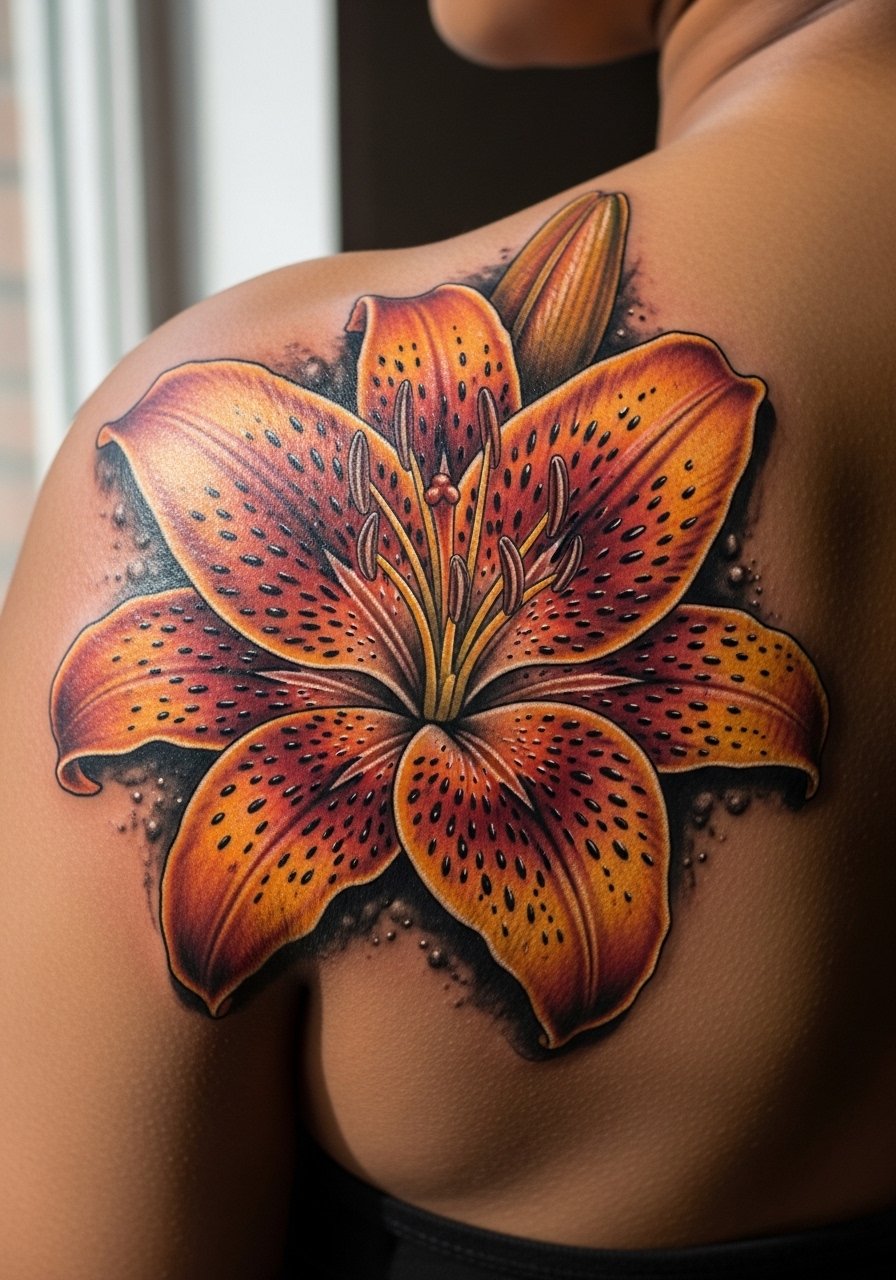
A client at a Brooklyn shop who specializes in micro-realism mentioned that this approach requires layered sessions to build texture. The payoff is depth that stands up on darker tones when contrast and saturation are handled correctly. Avoid flat photo references that rely on tiny highlights alone. During consultation, ask how many passes the artist plans and where they place highlights so the form reads after healing. Shoulder blade placement is forgiving and low pain for most people, but expect two sessions and a possible touch-up at year one.
6. Pink-Orange Gradient Tiger Lily on the Inner Forearm
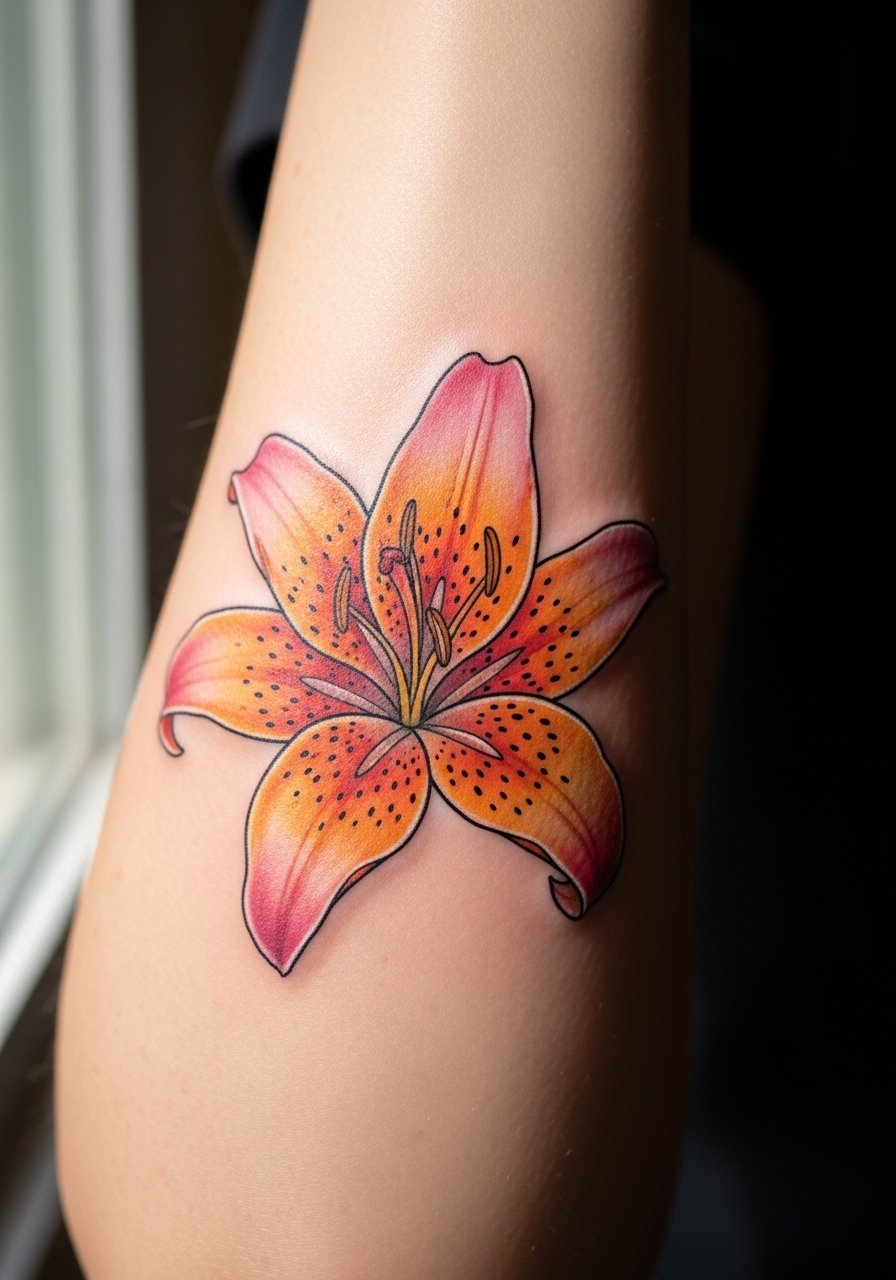
Pink variants have been trending for people who want softer color without losing presence. The trick is controlled saturation at the petal edges so the fade looks intentional rather than a washed-out heal. A frequent error is over-blending colors in one pass, which leaves little pigment to settle. Tell your artist you want layered glazing so the pigment sits. Inner forearm heals predictably and is a lower pain spot. Expect one session for a small to medium bloom and a touch-up at year one if you spend a lot of time in the sun.
7. Black and White 3D Lily for High-Contrast on Dark Skin
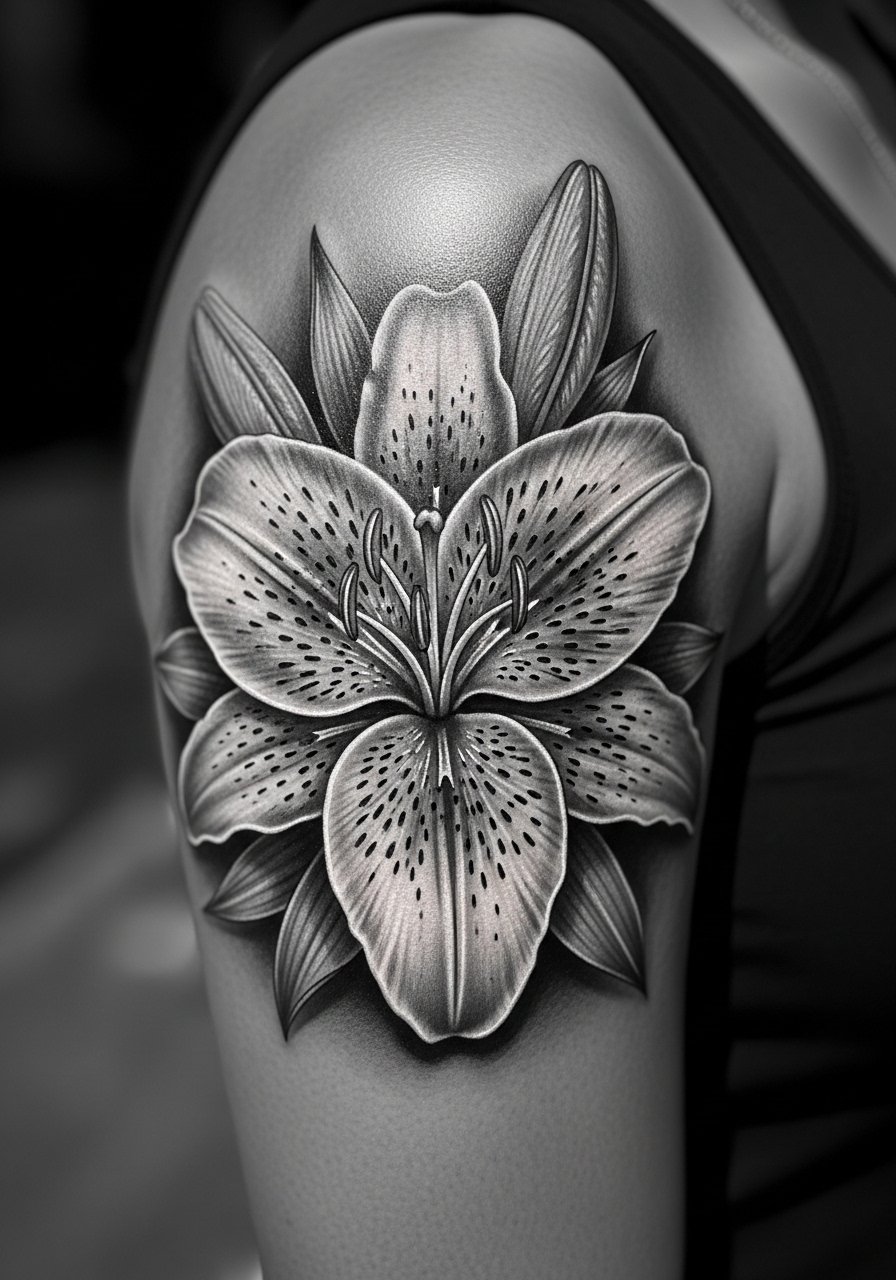
This idea fixes a gap I saw in galleries where color attempts sometimes lose definition on darker tones. High-contrast black and gray with a punchy highlight strategy makes the petals pop and avoids early color abandonment. Mention you want the artist to test healed photos on similar skin tones if possible. Expect longer sessions to layer shading and a touch-up scheduled at one year. The result reads crisp in daylight and holds up well with proper sun protection during healing.
8. Geometric Tiger Lily Mandala Fusion on the Calf
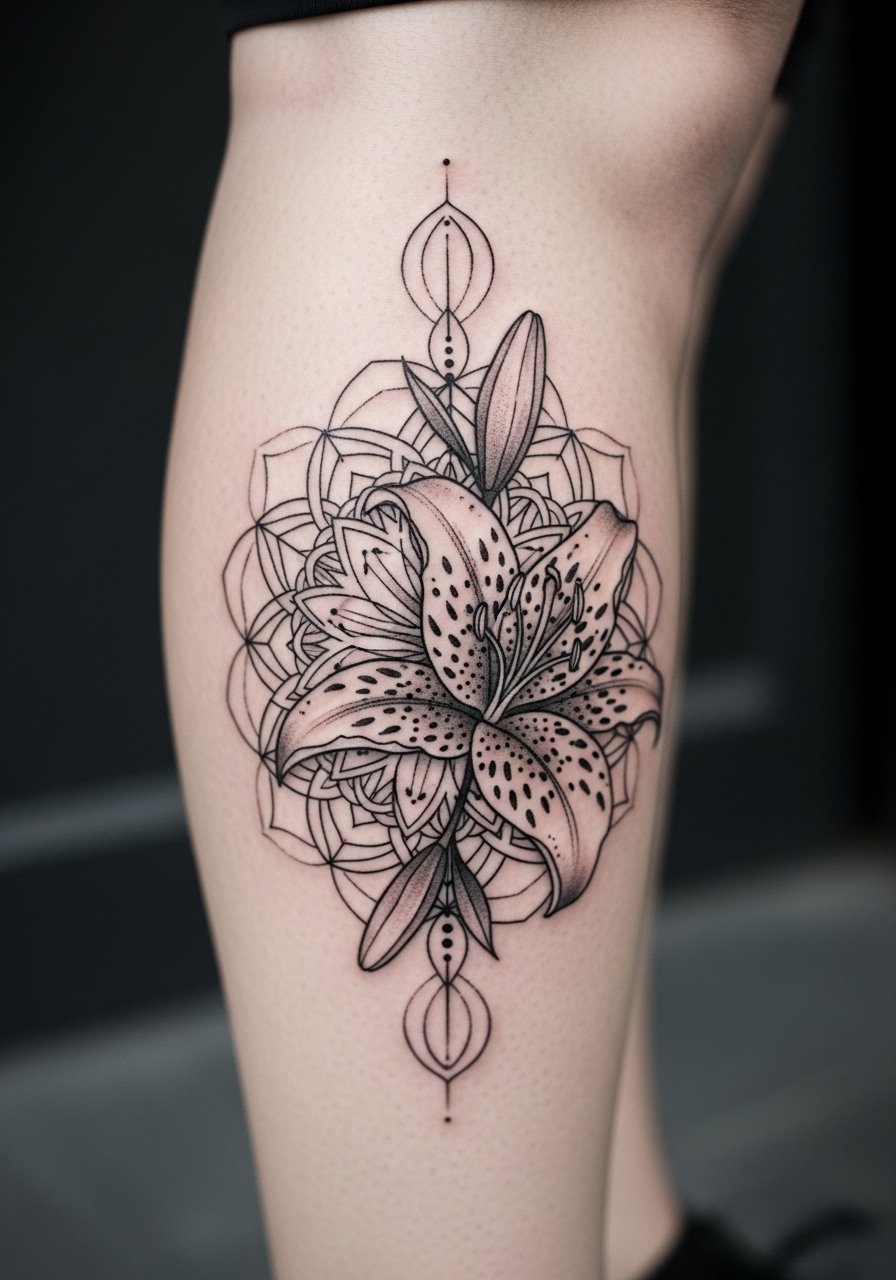
Fair warning about scale. The biggest mistake with geometric work is going too small. Lines need space to breathe or the mandala will crunchy after a few years. One practical consultation tip is to request a bolder minimum line weight and a central axis that aligns with the calf contour. This placement offers lower blowout risk than inner thigh but can feel tight during longer sessions. Also note that mandala patterns trace back to ritual designs in some cultures, so consider respectful variation rather than a direct copy.
9. Vibrant Cluster with Fiery Tangerine Saturation on the Upper Thigh
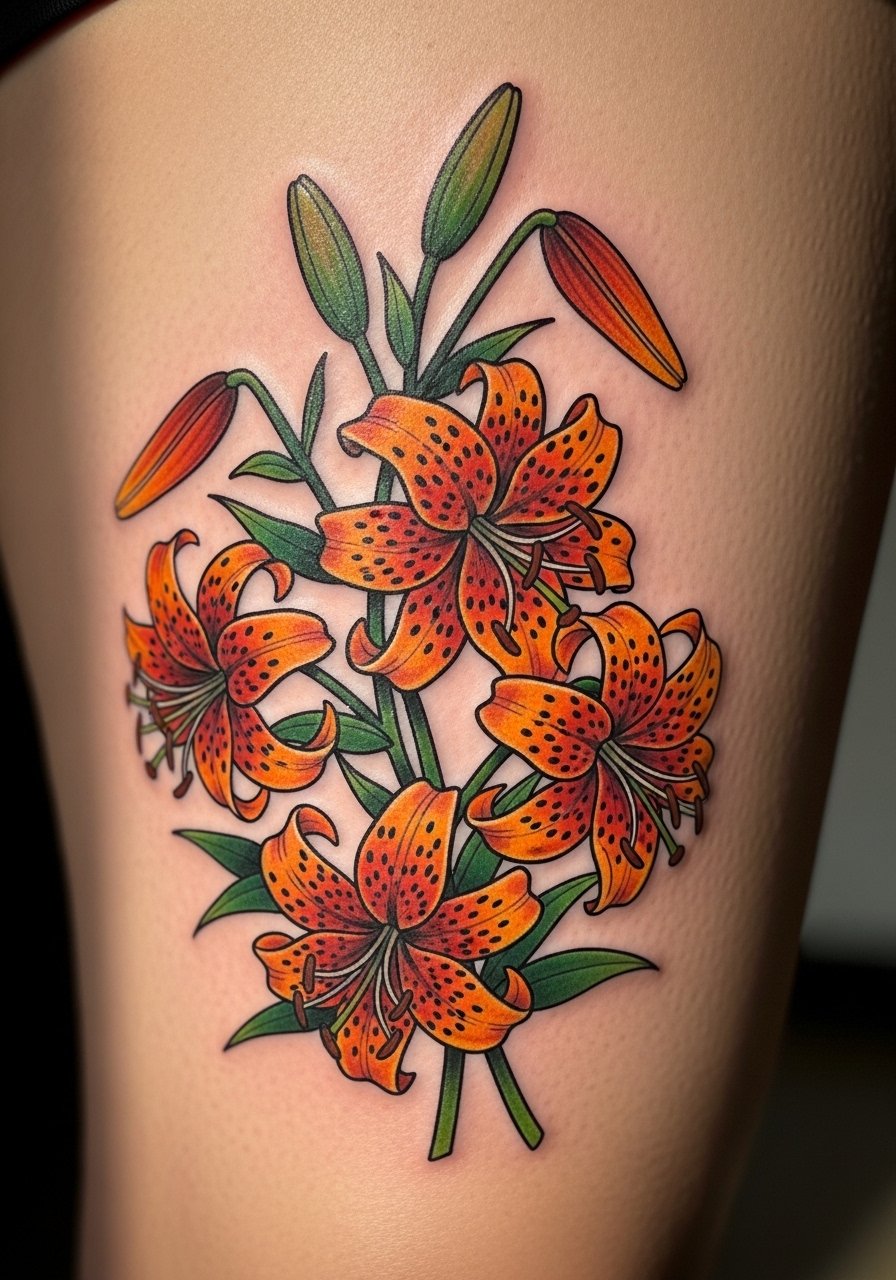
There are two reasons people choose a thigh cluster. One is display control, and the other is the cushion the thigh provides during long sessions. For big color work ask for staged saturation so the artist can layer without overworking the skin. A common regret is under-sizing a cluster then wanting an expanded sleeve later. Discuss future extensions with your artist before the first session. Expect moderate pain and multiple sessions for dense saturation. Schedule a touch-up at year one to refortify mid-tone areas.
10. Shoulder-Flowing Tiger Lily Vine That Wraps the Upper Arm
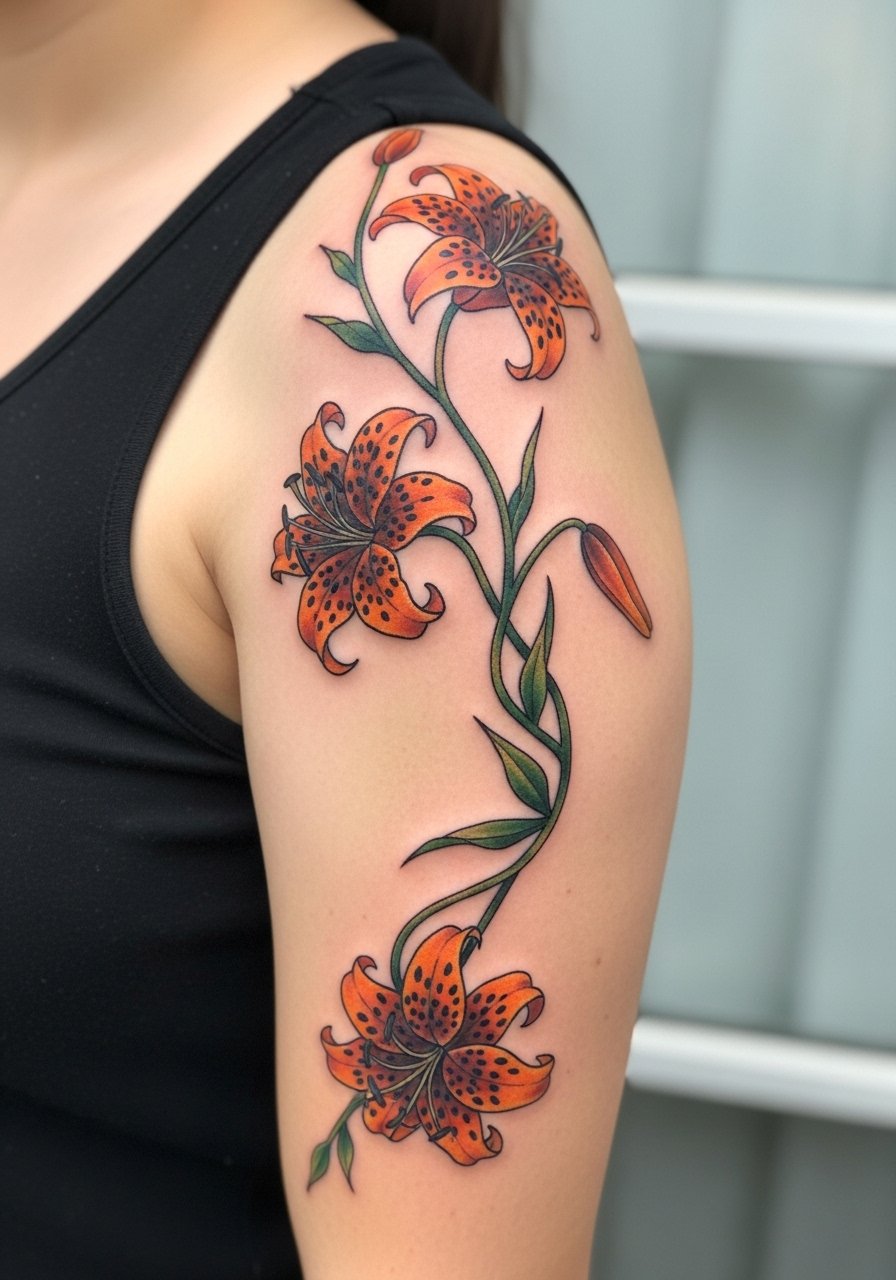
There is real value in a flowing piece that follows muscle lines. It reads more organic when stems taper and leaves follow anatomical curves. During consultation bring photos of the movement you want and point to where a petal should face when your arm hangs. This placement heals well but needs sun avoidance while fresh. Sessions are usually two long sittings if you want continuous color. Expect a touch-up at year two for saturation that gets the most wear from clothing friction.
11. Collarbone Tiger Lily for Graceful Aging with Movement
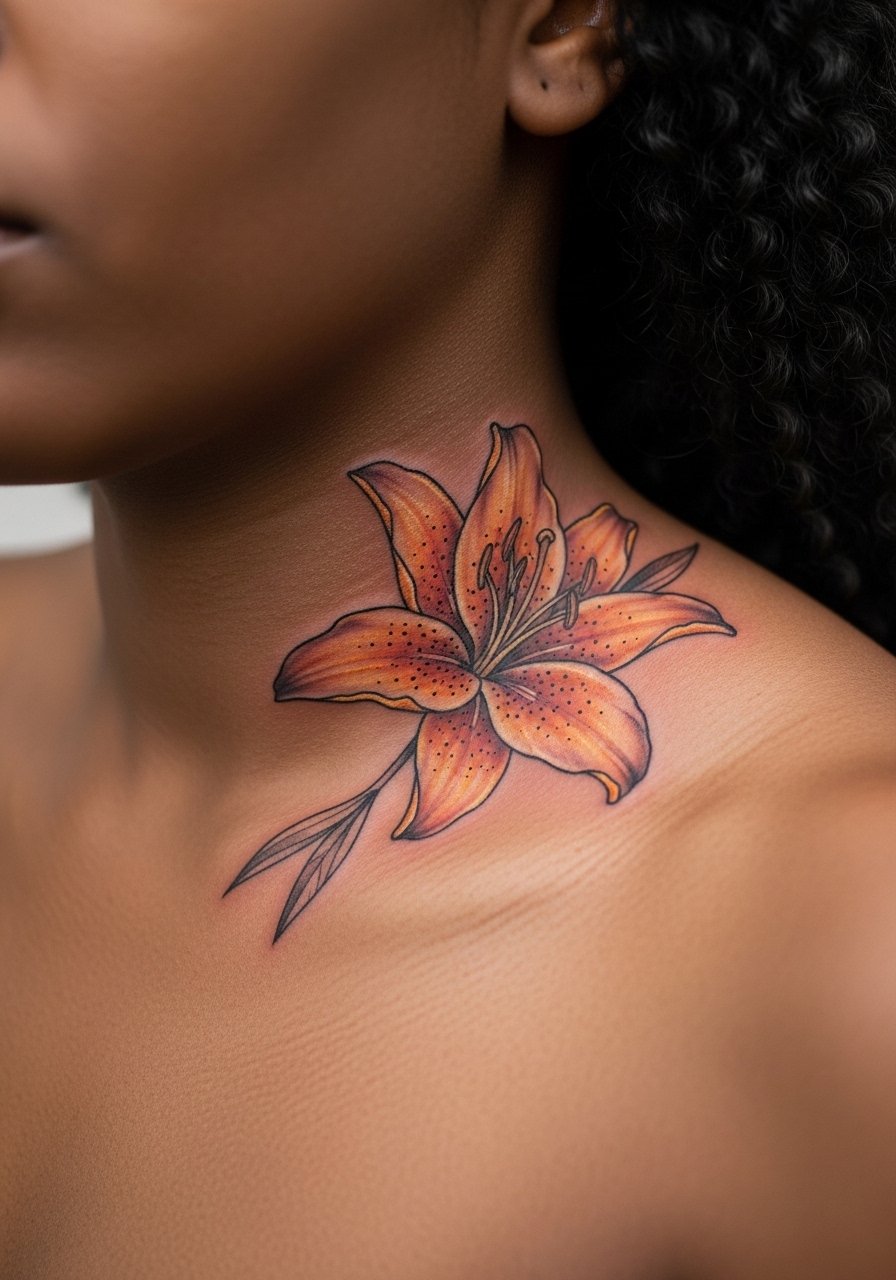
Most people overlook the collarbone as a smart spot for portraits of blooms. It moves with the chest and settles into a flattering lie over time. One source of regret is tight fine line work that blurs as the skin ages. Ask for slightly increased line weight and anchor points near the bone to keep edges clear. Expect higher sensitivity during the session and a short healing window that benefits from loose clothing. This placement will age with you in subtle ways, which is part of its appeal.
12. Fine Line Stem Cluster for Ankles and Wrists
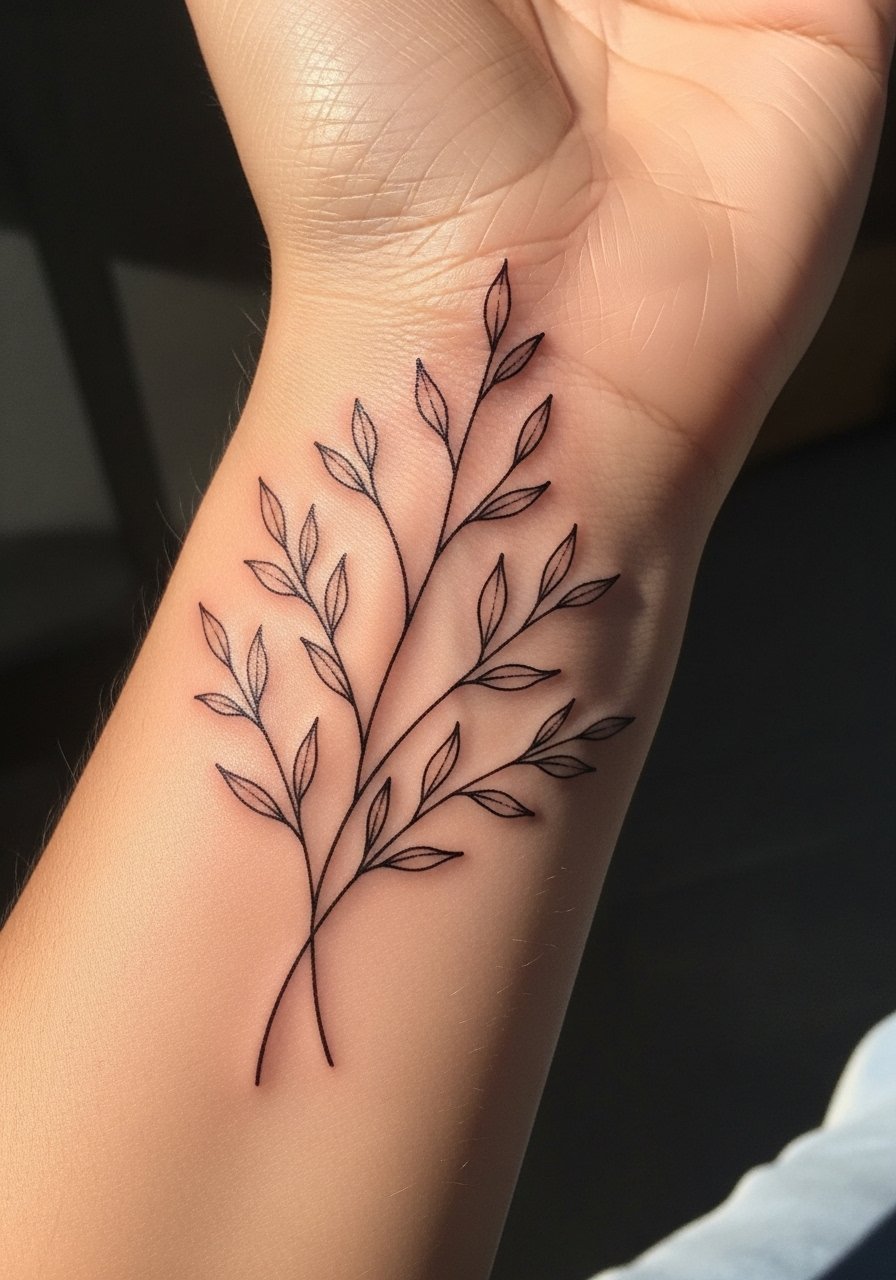
Fine line at small scale can look elegant but it can also blur if you pick a highly mobile spot. With ankles and wrists, the skin moves and accessories rub during healing. A reliable approach is to request slightly thicker stems at junctions and avoid too many intersecting lines. Sessions are short and the pain is low. Plan for a possible touch-up at six to twelve months, especially if you have a lot of daily wrist movement. For first-timers this is a gentle way to start with botanical flash.
13. Watercolor Sleeve Accent That Ages Like a Painting
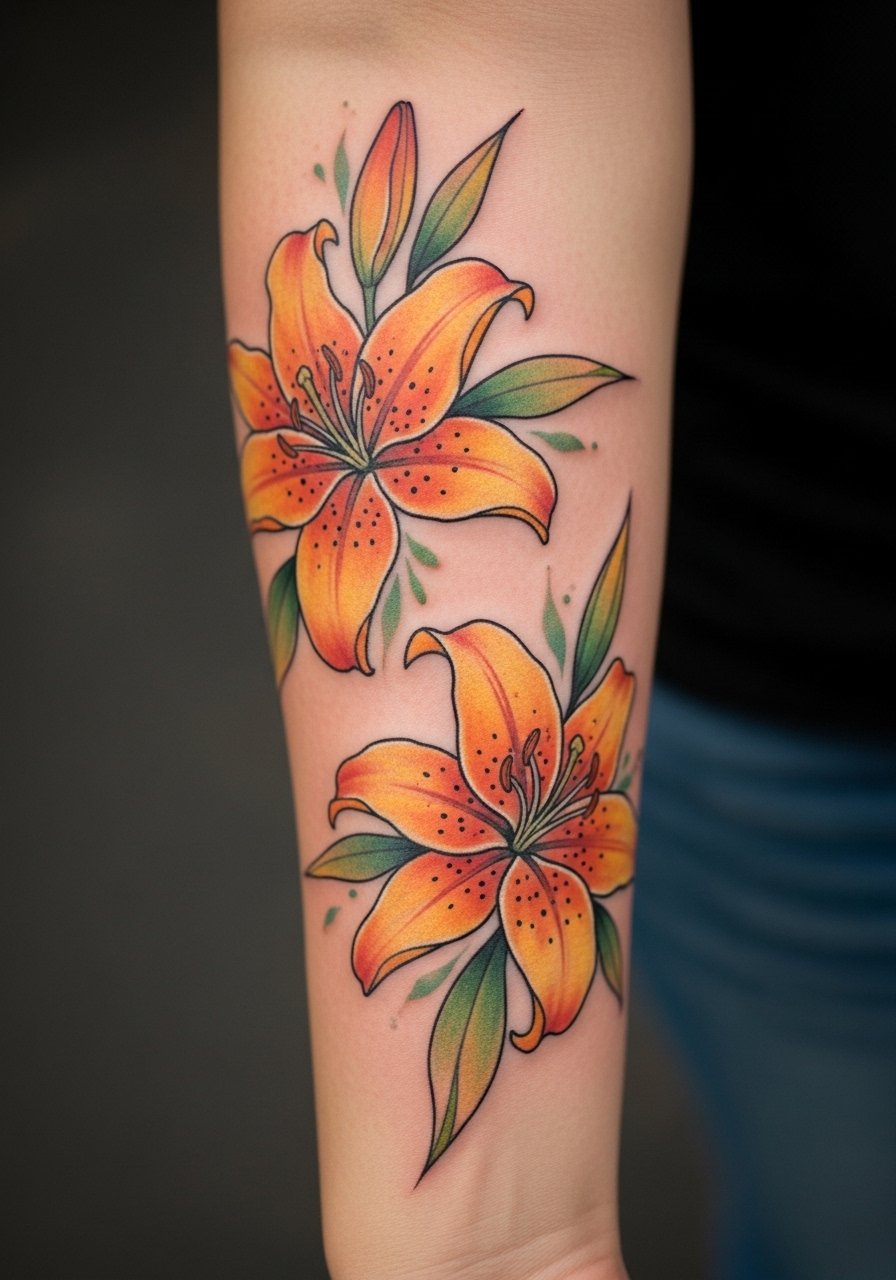
Watercolor sleeves split artists into camps. One group treats watercolor like pigment glazing that needs layered sessions to anchor color. The other group prefers looser application to preserve the visual wash. If you want the look to age better, ask for hidden line anchors that retain form when pigment spreads. Expect multiple sessions and active aftercare focused on light moisturization. Cooling the area during summer heals prevents pigment migration. Touch-ups are common at year one for any watercolor-heavy areas.
14. Vine-Wrapped Tiger Lily for Patchwork Sleeve Starters
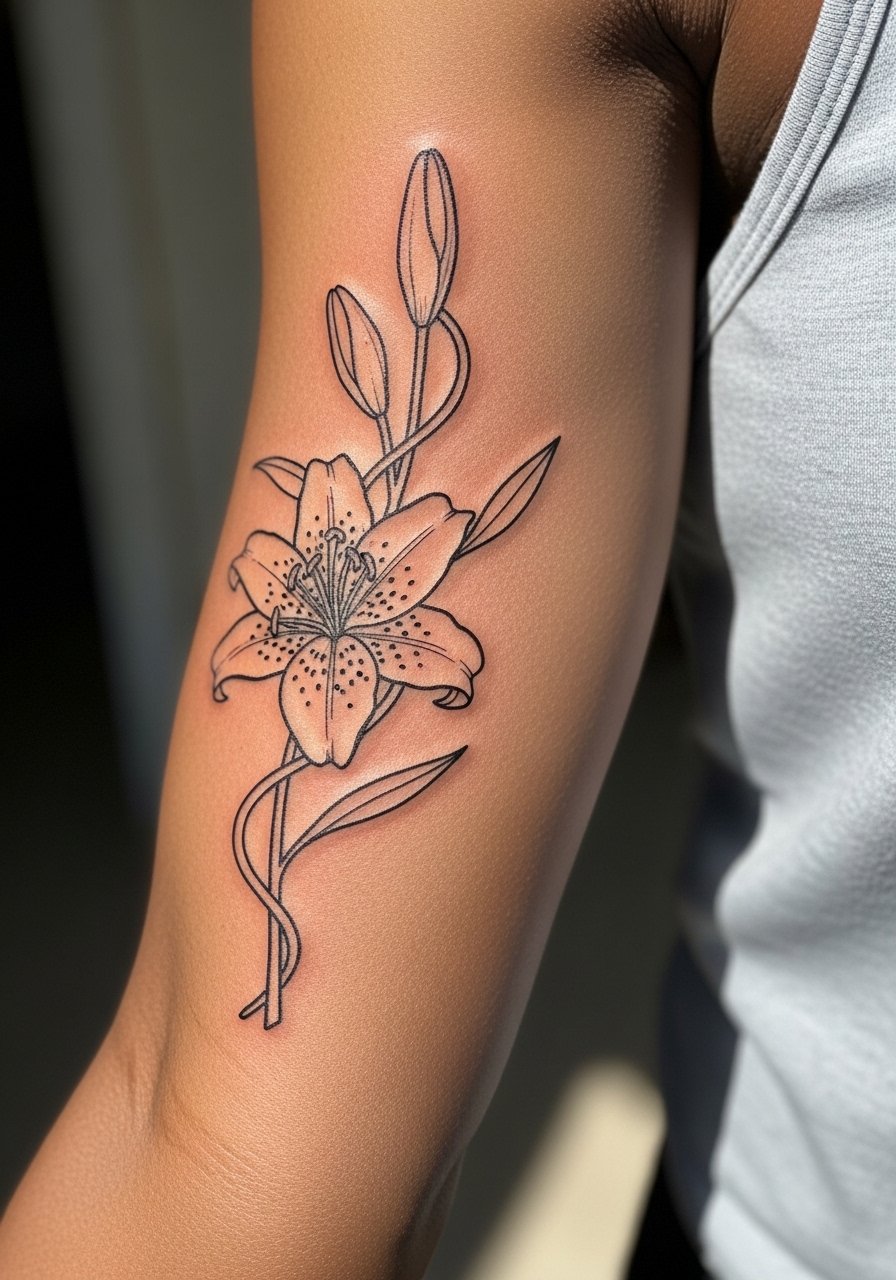
This is one of the under-covered ideas that works well for people who plan incremental sleeve work. The aim is to place negative-space pathways for future flash or custom pieces. A common mistake is asking for a finished composition when you actually want a modular starter. Tell your artist you plan to add to it and ask for clear spacing and anchor points. Sessions are comfortable on the bicep and usually finish in one sitting for a medium piece. Expect touch-ups if the piece gets expanded.
15. Ribcage Pink-Orange Gradient for Private Resilience
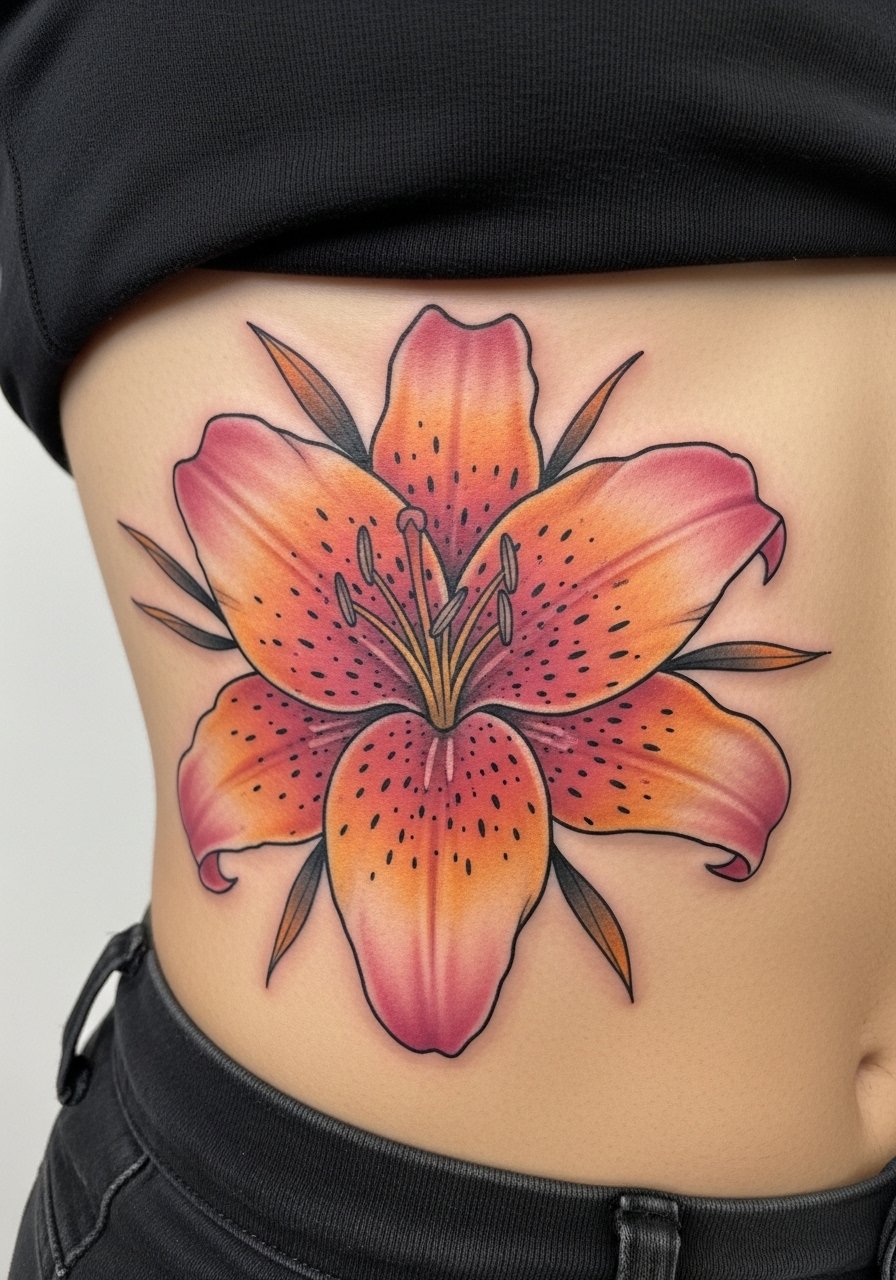
Fair warning. The ribcage is often a 7 out of 10 on pain scales. People pick ribs for privacy and the way color sits along the body. Fine line fans argue the ribs blur due to skin stretch. The opposing camp says proper needle depth and spacing prevent this. If you go for a gradient here, request layered glazing and book a longer session with breaks. Healing needs gentle clothing choices. Expect at least one touch-up between six and twelve months if you want the gradient to stay crisp.
16. Minimalist Black and White Lily for the Rib or Sternum
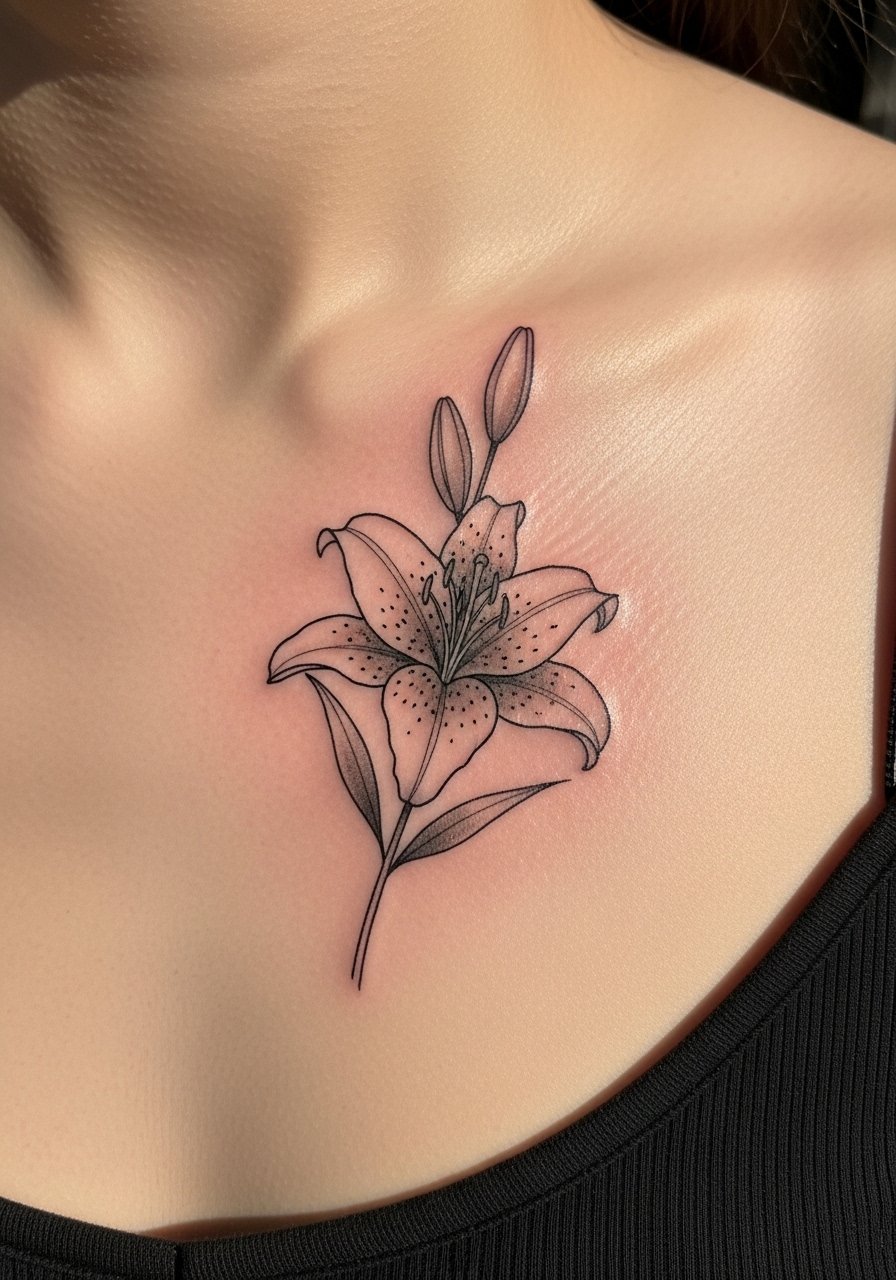
Minimalist work on the sternum or ribs can look refined but it is sensitive territory. The main mistake is pushing scale too small, which causes details to disappear. Ask for slightly increased spacing and modest shading rather than tiny hatch marks. Sternum tattoos require an artist experienced with that placement because of the skin tension there. Sessions are shorter but uncomfortable for some. If career considerations matter, note that chest tattoos can be hidden easily under clothing.
17. Illustrative Shoulder Blade Lily with Vine Extensions
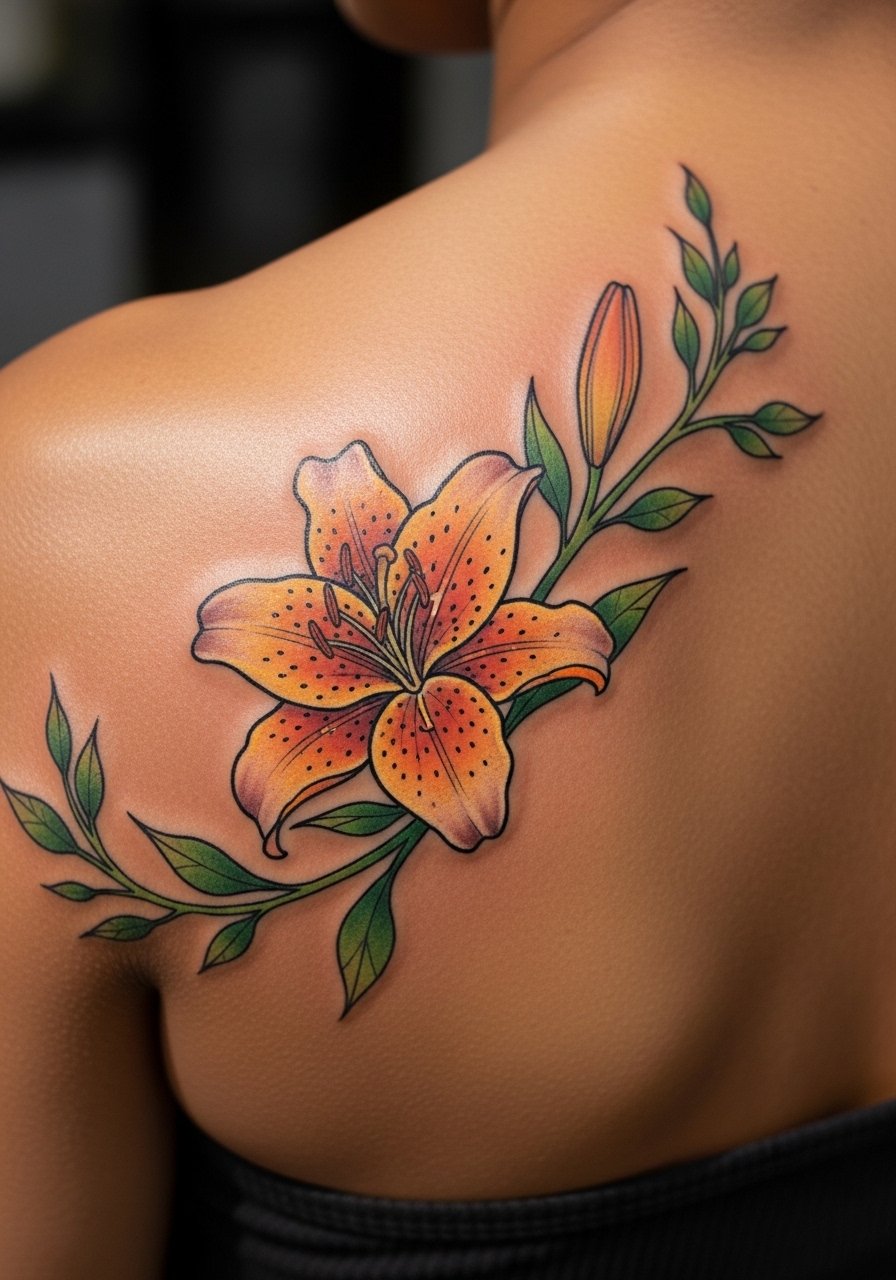
Illustrative pieces blend traditional linework with painterly fills for a lived-in look. A frequent error is crowding vines too close to the spine or armpit where movement causes early wear. During consultation point to where you want the vine to stop and where you may add leaves later. Shoulder blade placement risks less friction than the rib or hip, so saturation holds better. Expect a one to two session job and a touch-up at year one if you spend a lot of time in direct sun.
18. Geometric Lily Badge on the Calf as a Starter Flash
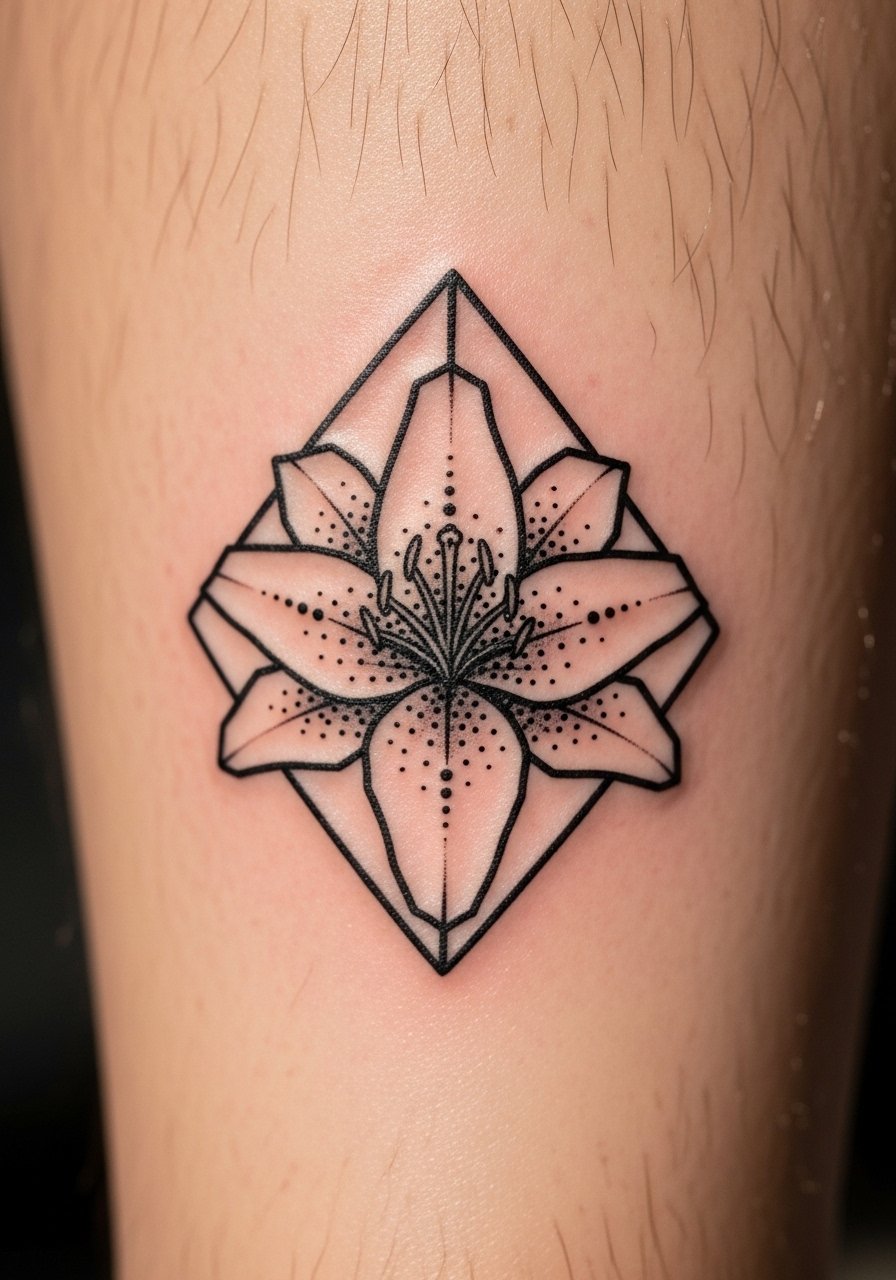
When starting a larger project, a geometric badge on the calf is forgiving and easy to tile later. The consultation trick is to request a minimum line weight so the geometry ages cleanly. The most common mistake is trying to cram too many geometric elements into a small footprint. Sessions are quick and pain is manageable. Calf placement avoids lots of daily friction and the piece holds saturation well. Touch-up at year two is typical for fine geometric detail.
19. Black and White Minimalist Ribcage Lily with Stipple Shading
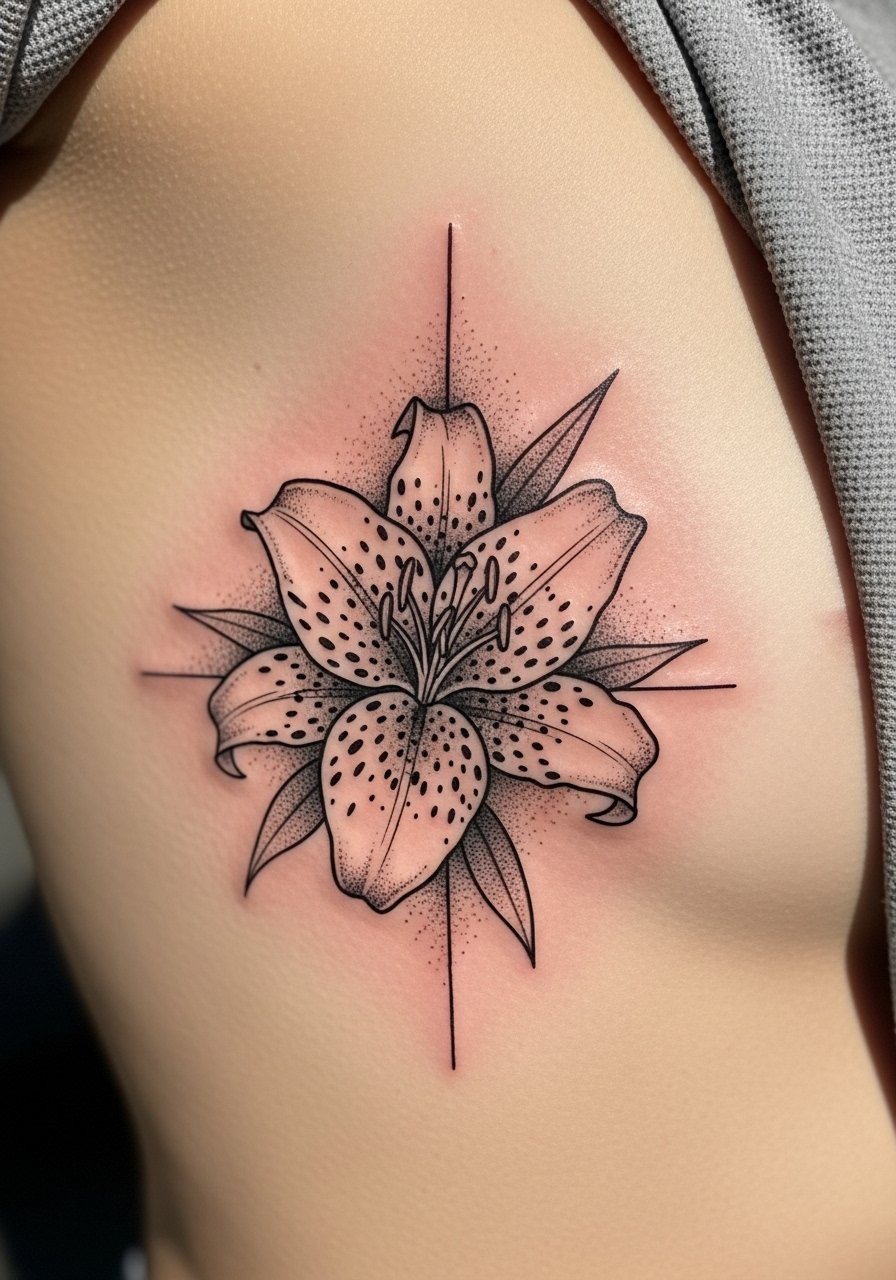
Stipple shading can give a delicate volume without color, which suits people who want low-maintenance pieces. A common problem is underestimating how stipple reads on movement-heavy skin. Ask for heavier dot density near high-contrast edges so the form survives stretching. Pain will be higher on ribs but many clients say the session is quick. This approach is low fuss long-term and avoids color fade concerns entirely. Schedule a touch-up if dots soften after two years.
20. Collarbone-to-Shoulder Vine with Small Lily Accents
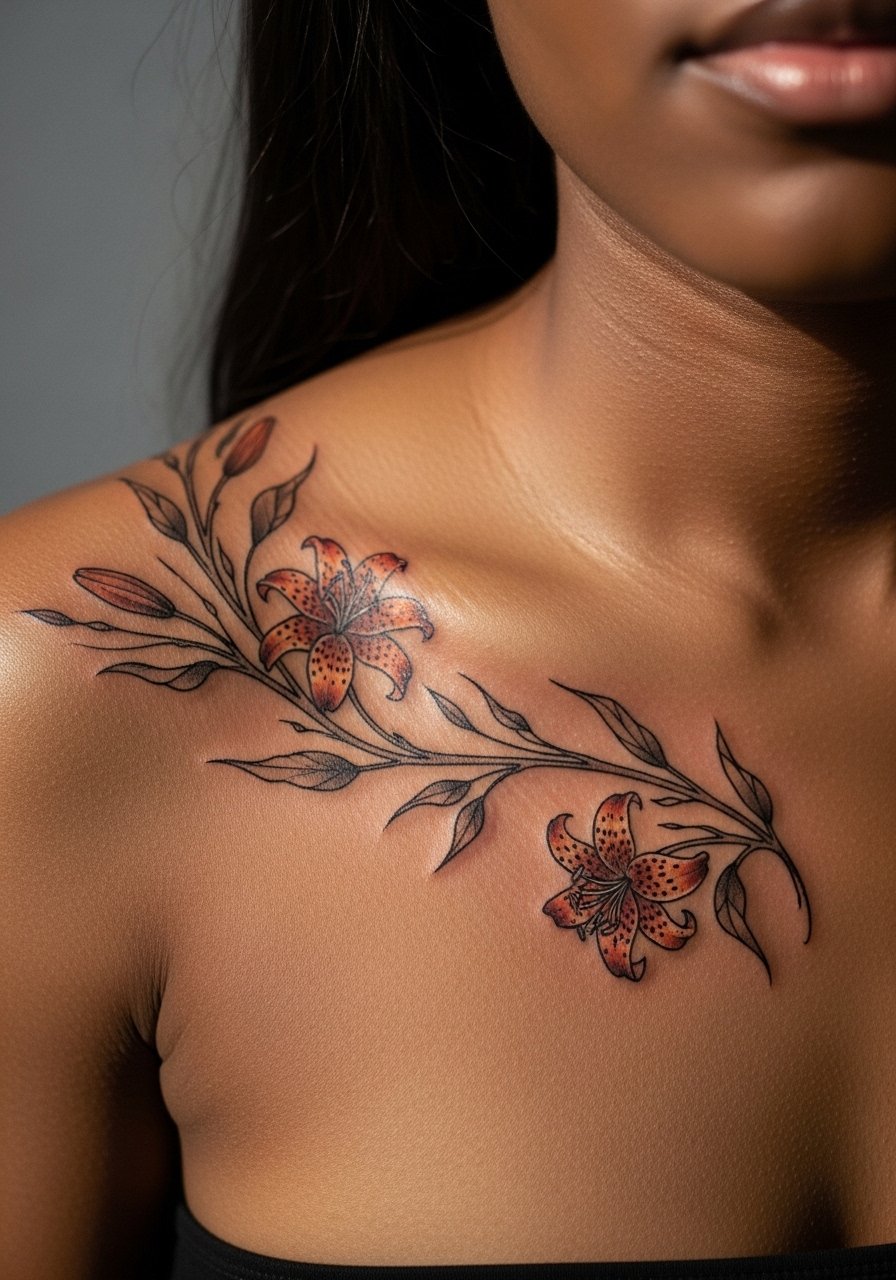
This placement is graceful for how it follows bone structure and movement. The danger is requesting too many micro details close to the collarbone where skin is thin. Ask your artist for slightly bolder anchors at petal bases and to map the flow when you move your arm. Sessions are sensitive but often short. If you might wear low necklines for work, keep in mind the visibility trade-offs. Expect a light touch-up at year one if you spend a lot of time outdoors without SPF.
Tattoo Prep and Aftercare Essentials
Tea tree balm favored by artists for humid climates, search indie UK brands on Amazon.. Use during days 3 to 14 for non-greasy hydration that beats heavy petroleum on sweaty heals.
Manuka honey salve in a small jar for antibacterial protection during early healing, search Manuka honey tattoo salve.. Apply sparingly after initial washing when the artist clears you to moisturize.
Japanese rice bran oil moisturizer in lightweight pump format, search rice+bran+oil+moisturizer.. Use for fine line lilies because it leaves no shiny film and avoids clogging pores.
Indie soy-based aftercare stick, search soy tattoo aftercare stick for portable reapplication.. Great for short sessions outdoors and during summer rehearsals.
Lightweight fragrance-free balm for everyday moisturizing, search fragrance-free+tattoo+balm.. Swap this in after day 7 to keep saturation without greasy residue.
Medical-grade second skin bandage in single rolls, search second+skin+bandage+tattoo.. Useful if your artist recommends occlusive coverage for the first few days.
Saniderm single-use transparent dressing, search Saniderm tattoo bandage.. This is the one mainstream product I include because some artists and clients prefer it for color retention. Note the debate I mention below.
Mineral SPF 30+ sunscreen for healed tattoos, search mineral+sunscreen+SPF30.. Use after the skin fully heals to protect pigment from UV fading.
Every tattoo is different. Always follow your artist's specific aftercare instructions. Consult a dermatologist if you have skin concerns or unusual healing issues.
Frequently Asked Questions
Q: Will a fine line tiger lily blur on medium to dark skin faster than neo-traditional work?
A: It depends on line weight and placement. In my experience, ultra-fine stems on medium to dark tones can lose definition within a year if the artist runs lines too close together. Ask for slightly stronger anchors at intersections and plan a touch-up at six to twelve months to keep edges crisp.
Q: Do watercolor-style tiger lilies need different aftercare than traditional color pieces?
A: Yes and no. The core steps are the same, but watercolor pieces often benefit from layered sessions and gentler moisturization during days 3 to 14. Some artists favor Saniderm for short-term occlusion, while others prefer dry healing. Decide with your artist which camp they belong to before you book.
Q: How should I prepare if I want a thigh cluster but worry about weight fluctuation?
A: Pick placements on the upper outer thigh where skin stretches less and discuss future cover or extension plans with the artist. Larger compositions with clear negative space are easier to adapt later. Consider forearm alternatives if you expect significant changes.
Q: Are black and white 3D lilies a good choice for dark skin tones?
A: Yes. High-contrast black and gray with thoughtful highlights tends to translate better than some color attempts. Ask the artist for healed photos on similar skin tones and to plan contrast rather than relying on pale pigments that might disappear.
Q: If my artist recommends Saniderm but Reddit threads prefer dry healing, who should I listen to?
A: Both camps have valid points. Saniderm users report less mess and preserved saturation when applied correctly. Dry healers argue natural scab release prevents maceration. Your best move is to follow the method your booked artist uses and ask for a detailed aftercare plan so you are prepared.
Q: How long should I expect color to need a touch-up for a neo-traditional forearm tiger lily?
A: Most people see color soften by year one and often schedule touch-ups between twelve and twenty-four months to refresh midtones. If you spend a lot of time outdoors without SPF, expect earlier color loss.
Q: Can I find guest spot artists who specialize in tiger lily styles without waiting months?
A: Use hashtag searches and booking services. I follow #TigerLilyTattoo and #NeoTraditionalLily and use Booksy or Tattoodo filters to catch guest spots. Artists travel a lot, so signing up for alerts helps more than constant scrolling.