

Someone I know booked a delicate fine line eagle for their ribs and ended up with a blurry patch at three months. I kept hearing the same complaints about fading, consults getting ghosted, and forearm pieces stretching after weight gain. These twelve eagle designs solve those exact headaches, from options that actually age well to placement choices that avoid stretch and blowout. Start here to match the right style to your skin, schedule, and tolerance for pain.
1. Realistic Bald Eagle Head on the Outer Forearm
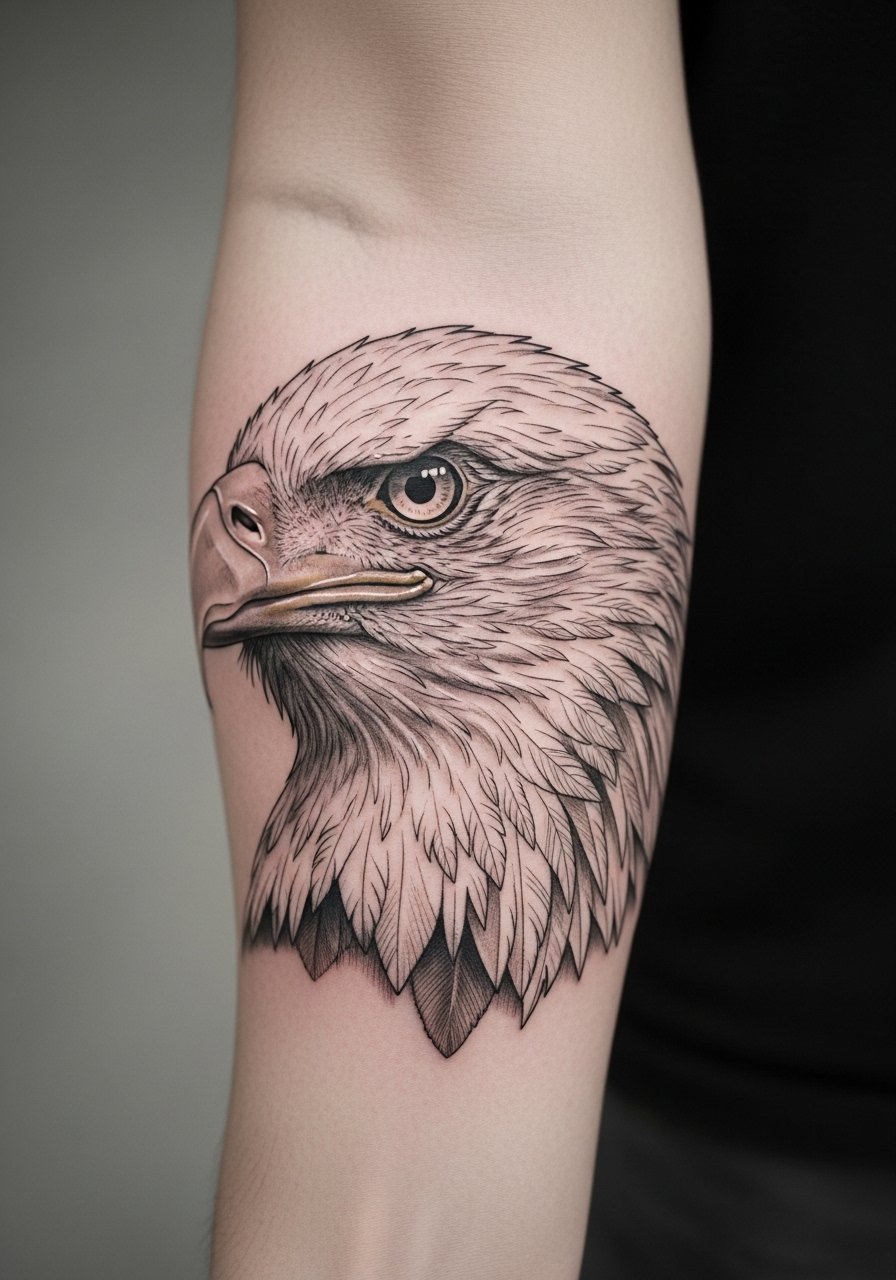
Someone I know got this exact forearm portrait and still points to the eye detail two years later. Forearm feels like a 4 to 6 on common pain scales, and a medium session usually lasts 2 hours. Tell your artist you want dense feather texture in the first inch from the beak, lighter stipple shading toward the neck, and deeper saturation near the eye so the contrast survives a year or more. The common mistake is asking for ultra-fine feather lines too small for a 4-inch canvas. Expect a touch-up around 6 to 12 months for micro-realism pieces, and plan placement so the elbow crease does not bisect the design.
2. Neo-Traditional Bald Eagle in Flight on Upper Arm

Fair warning, the outer upper arm can throb near nerves during longer color fills. Neo-traditional wings with thick outlines read from distance and tend to age better than fine color washes. Ask for bold linework around talons and wing edges and request color saturation packed in layers during the second session so the hues do not thin out in the sun. A common version that ages poorly uses watercolor washes inside thin outlines. If you plan a sleeve later, this design slots easily into a modular plan where the eagle becomes a central panel.
3. Blackwork Bald Eagle with Geometric Wings on Chest
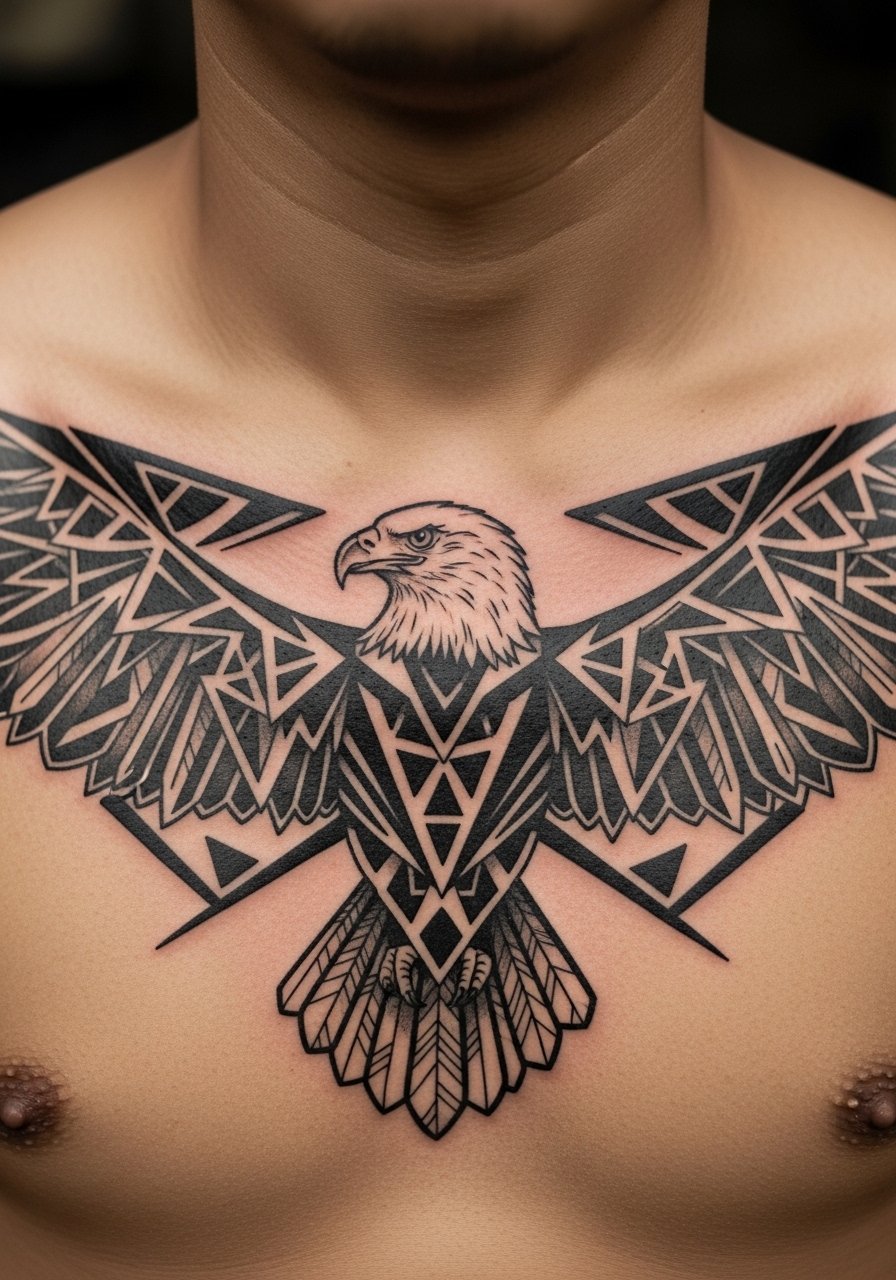
Most blackwork on chest heals fast but carries higher blowout risk near softer tissue. If your concern is visibility on darker skin, this style is the solution because high-contrast solid fills show up clearly in photos. During the consult, ask for crisp negative-space separation between geometric feathers and the body so the shapes do not merge as the skin ages. A rookie error is shrinking those geometric panels to fit a small chest spot. Expect a one to two session job with a possible light touch-up at year two if any fill softens.
4. Watercolor Bald Eagle Soaring over Mountains on Upper Back
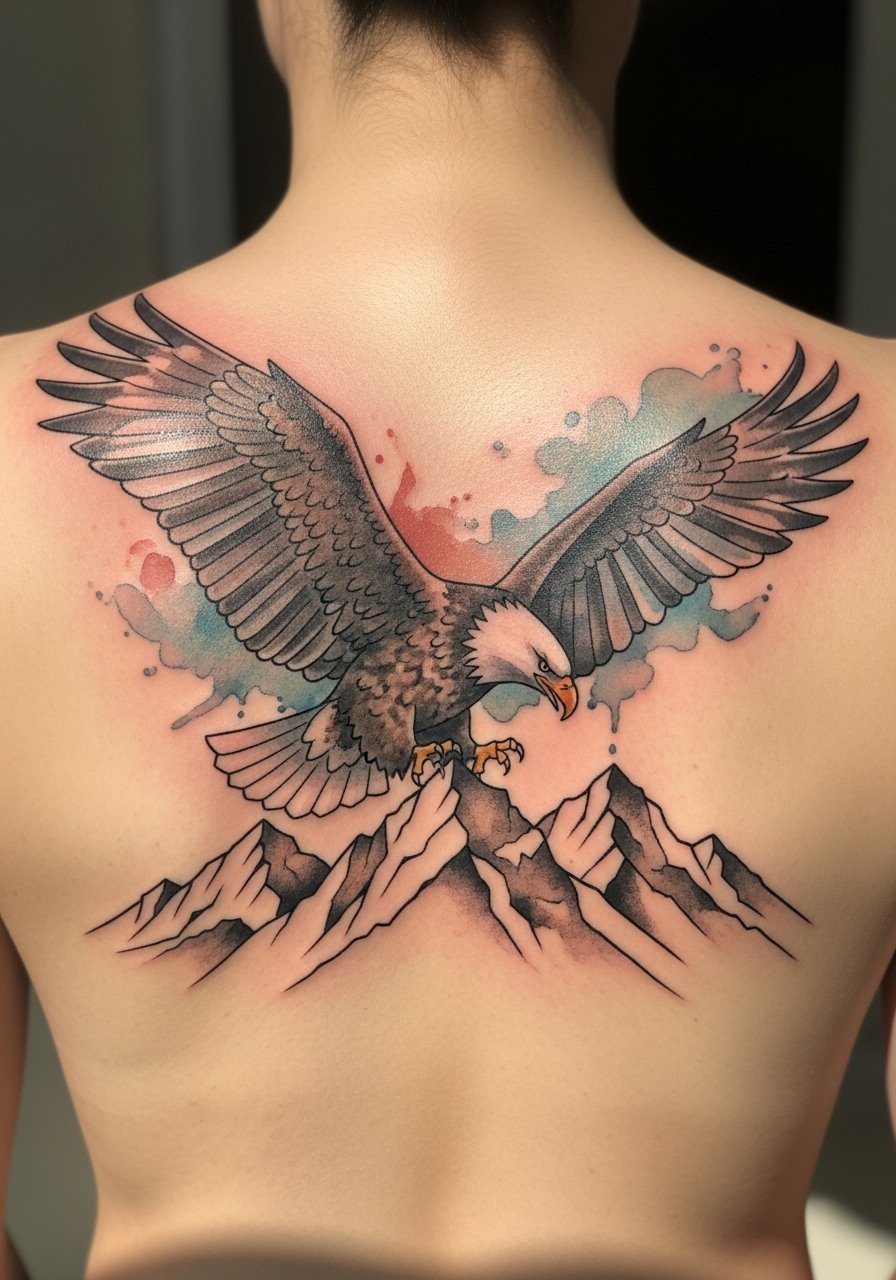
Most watercolor pieces can look patchy after heavy sun exposure, and summer sweat accelerates bleeding. I mention that because the washed edges that make watercolor appealing also make it prone to fade. Ask your artist to anchor the composition with subtle linework around the beak and talons so the form remains readable as pigments shift. If you live in a sunny climate, consider placing this higher on the back where sun exposure is lower. Plan on re-saturation at two to three years if you want the original vibrancy kept.
5. Tribal Bald Eagle with Claw Details on Outer Thigh
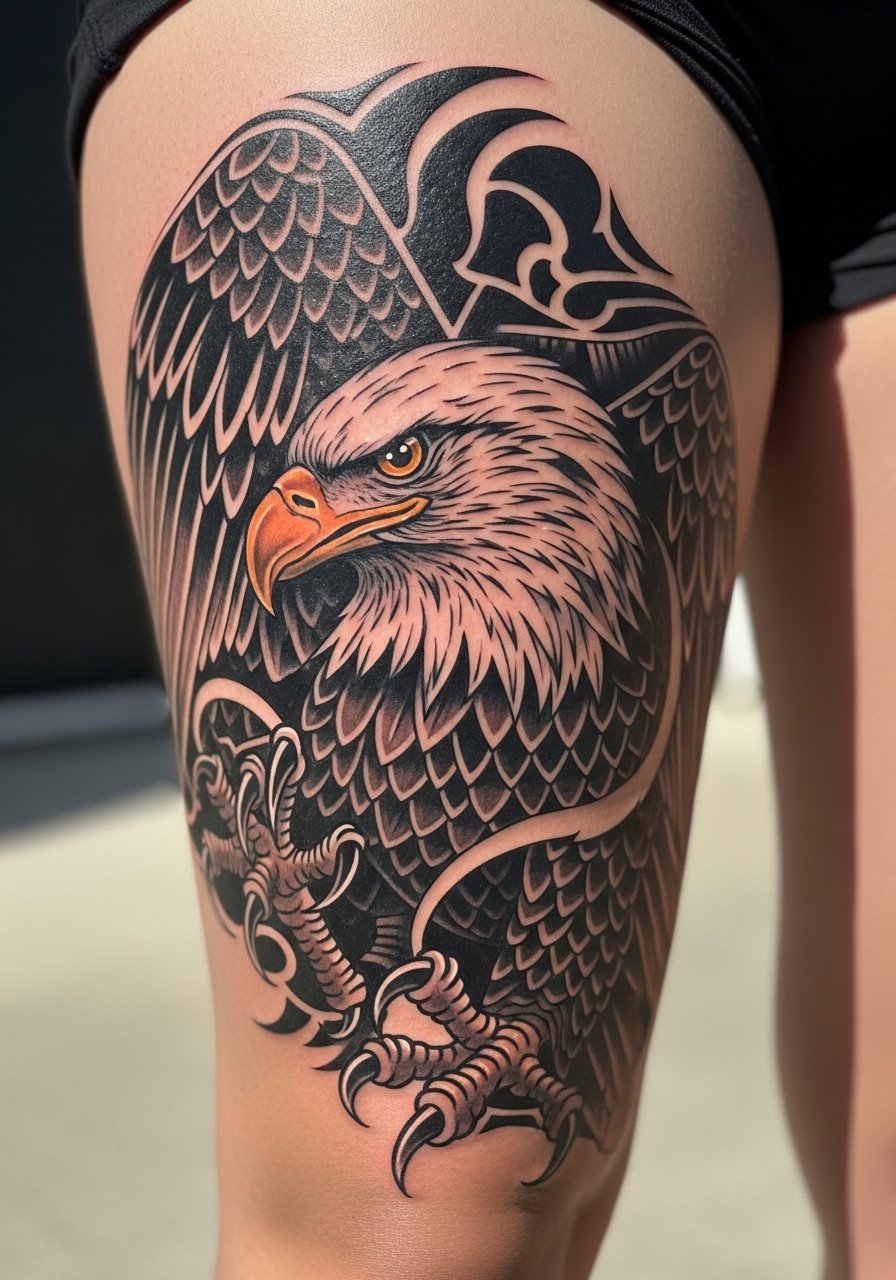
The thigh is one of the better spots for dense blackwork because it tolerates large fills without much blowout. A frequent mistake is compressing complex tribal patterns into too small a patch which makes the design read as muddled. Tell your artist you want flow lines following the muscle so the wing patterns move with your leg when you walk. Sessions are usually two hours and the pain rate sits around 3 to 5. If you plan future cover-ups, the heavy blackwork here actually gives you options for layered storytelling.
6. Minimalist Bald Eagle Silhouette on Inner Wrist
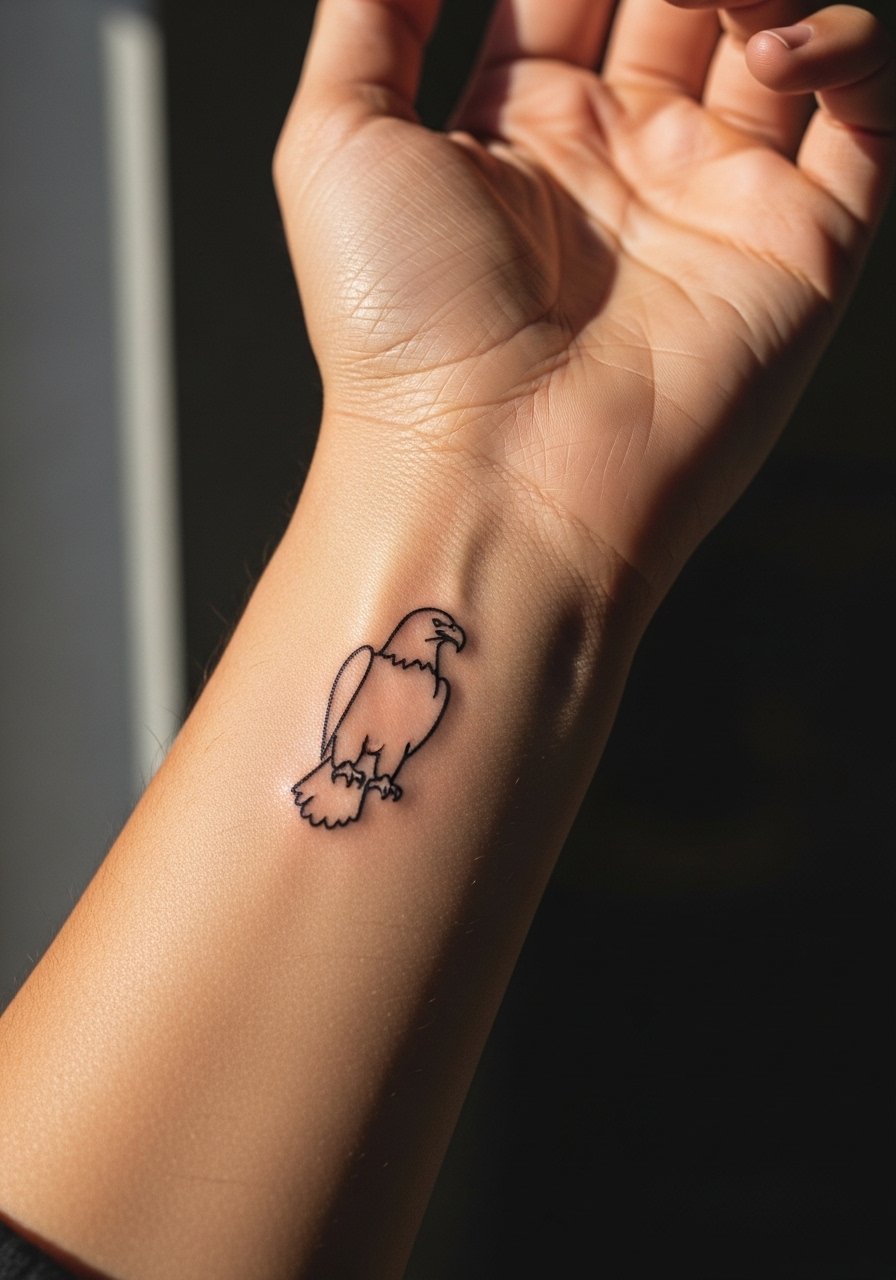
When you sit with an artist for this one, bring exact size references because tiny silhouettes either blur or look too bold. The wrist is a one-session spot that can feel sharp near tendons, pain around a 5 out of 10 for many. The thing that ages poorly is asking for extremely thin contour lines under two millimeters. Ask for a slightly heavier lineweight and a clean negative-space margin so the silhouette keeps shape after a year. This is great for first-timers who want a subtle nod without a long commitment.
7. American Flag-Wrapped Bald Eagle Head on Calf
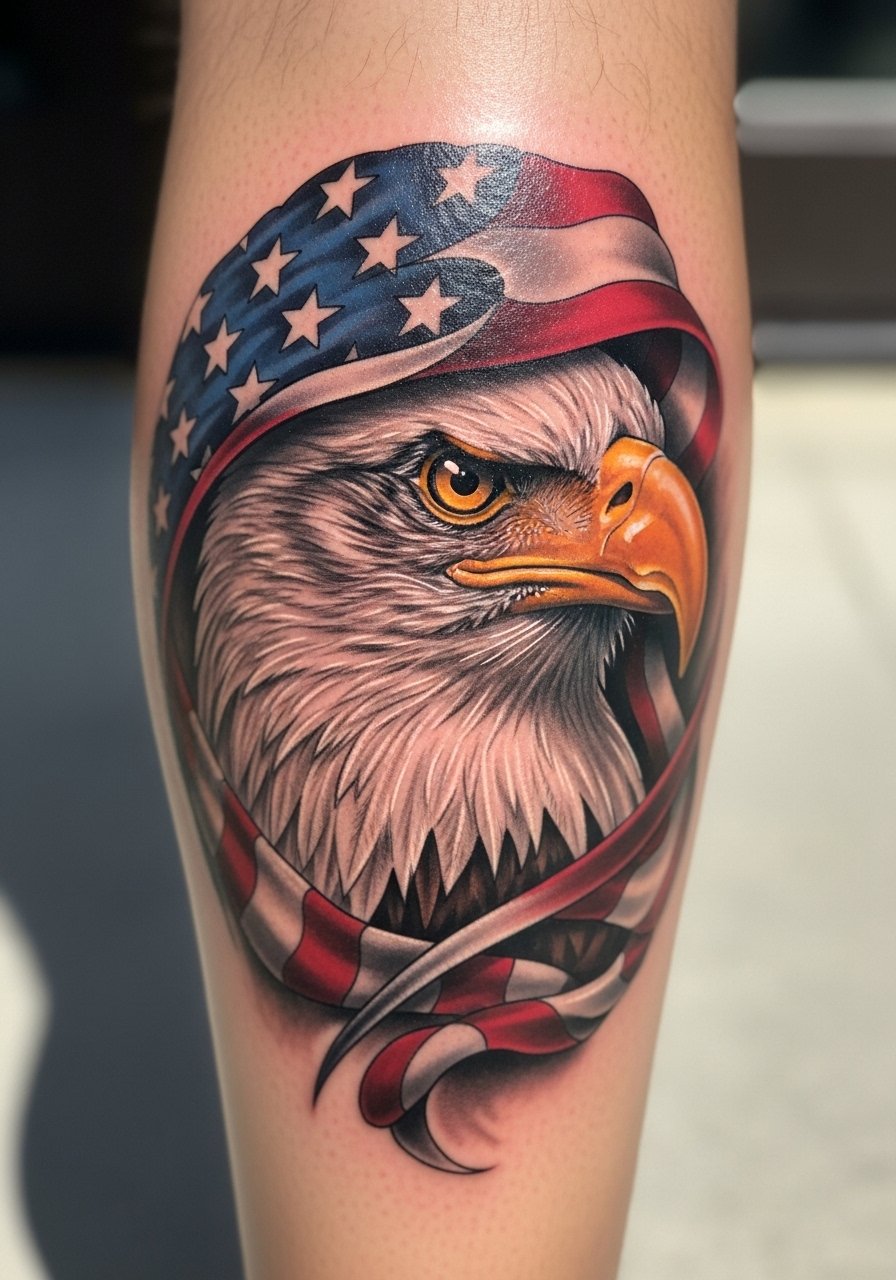
Artists split on overt flag motifs into two camps. One camp encourages explicit combinations and thinks it reads as clear symbolism in seasonal photos. The other camp prefers subtler personalization and warns that flag detail can date fast. If you choose this route, ask for integrated shading so the flag sits under the feathers instead of looking pasted on. Calf sessions tend to be longer but more tolerable than ribs, and a three-session plan helps manage saturation and contrast. Also think about how that flag will look in shorts over time.
8. Fine Line Bald Eagle Feather Cluster on Ribcage
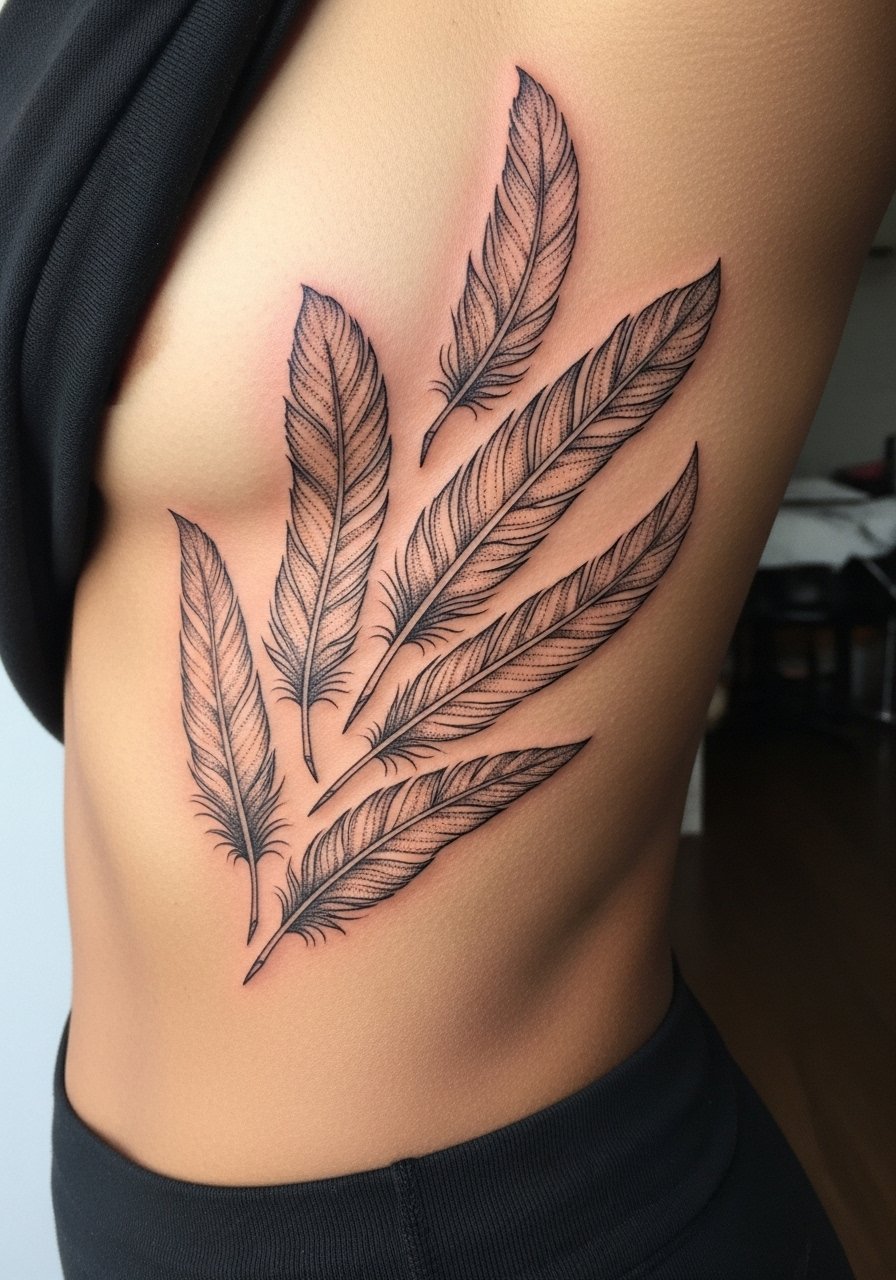
Fair warning: ribs are a high-pain zone and they also stretch with weight changes more than limbs. Fine line on ribs splits artists into two camps. One group says the stretch and thin skin blur these lines within two years. The other group argues that with correct needle depth and spacing, fine line can settle beautifully. When booking, ask where the artist falls and look for healed rib photos showing spaced feather shafts. Expect a shorter session for the first pass and a touch-up at six to twelve months if you want crisp shafts to remain.
9. Ignorant Style Bald Eagle with Skull on Outer Bicep

A common mistake here is asking for excessive tiny shading inside the naive blocks. Ignorant style thrives on confident, broad marks and minimal shading. The outer bicep is forgiving on pain and allows the cartoonish boldness to read from across a room. Tell your artist to keep fills flat and avoid delicate gradation inside the skull because that undermines the aesthetic. Sessions typically span two shorter appointments so you can preview the contrast before full saturation.
10. Ornamental Bald Eagle Mandala on Upper Back

There is cultural context to mandala patterns rooted in eastern spiritual arts, and some collectors adjust motifs to avoid direct replicas. The upper back offers room for large mandala geometry and dot work that ages predictably. Ask for negative-space guides in the composition so the central eagle head does not get lost as stippling fades. A mistake is cramming too many small dots into tight bands which can blur into gray patches. Expect multiple sessions and a planned touch-up schedule to keep dot work crisp.
11. Patchwork Bald Eagle Sleeve Elements on Full Arm
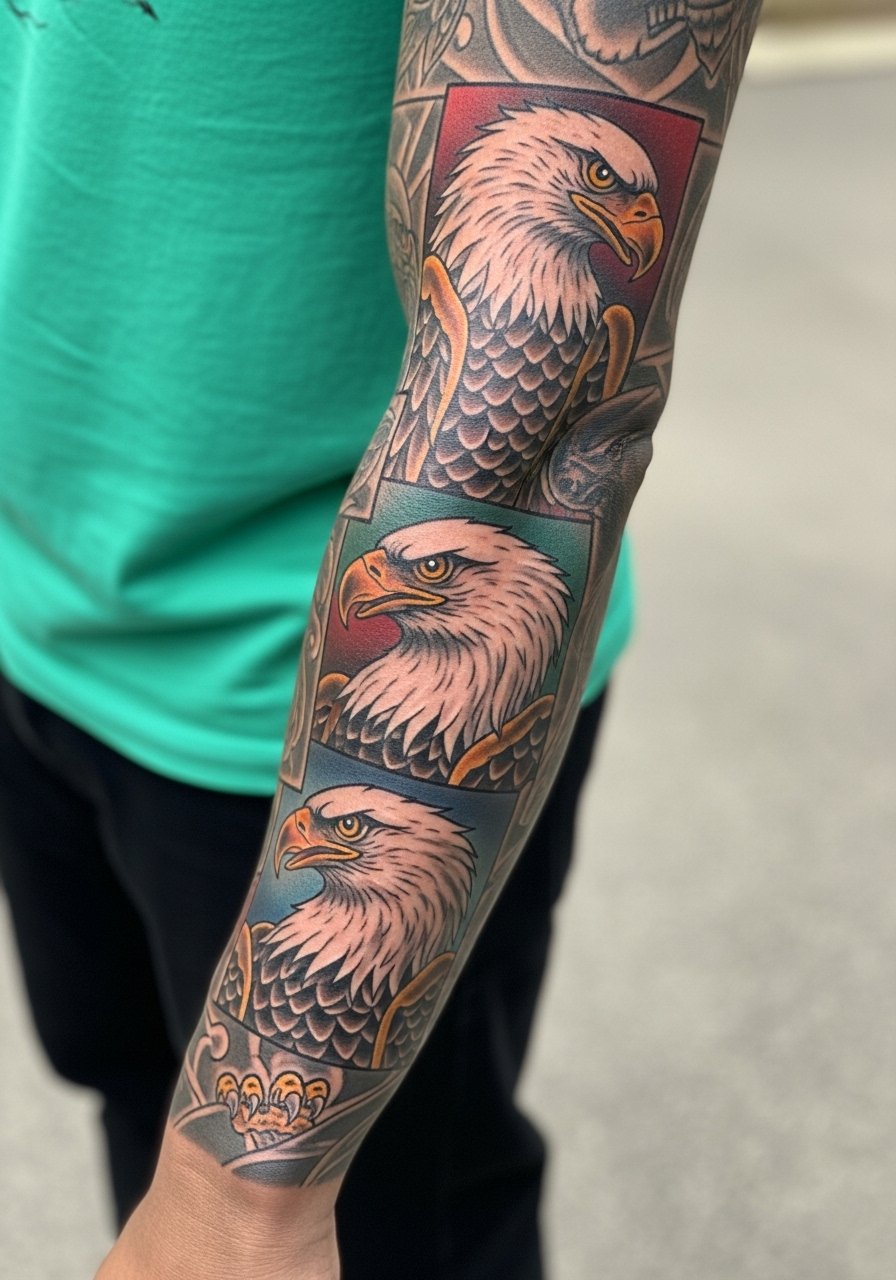
When you build a sleeve from modular eagle elements, the biggest pitfall is mismatched scales between panels. Start with a strong anchor motif, like a large eagle head near the shoulder, and map smaller wing fragments down the arm so the eye naturally flows. Sessions will be numerous and range from two to four hours each depending on saturation. If you plan travel guest spots, use conventions and Tattoodo filters to find artists who specialize in cohesive patchwork. A realistic plan includes scheduled touch-ups in year two to even out saturation across panels.
12. Micro-Realism Bald Eagle Eye on Inner Forearm
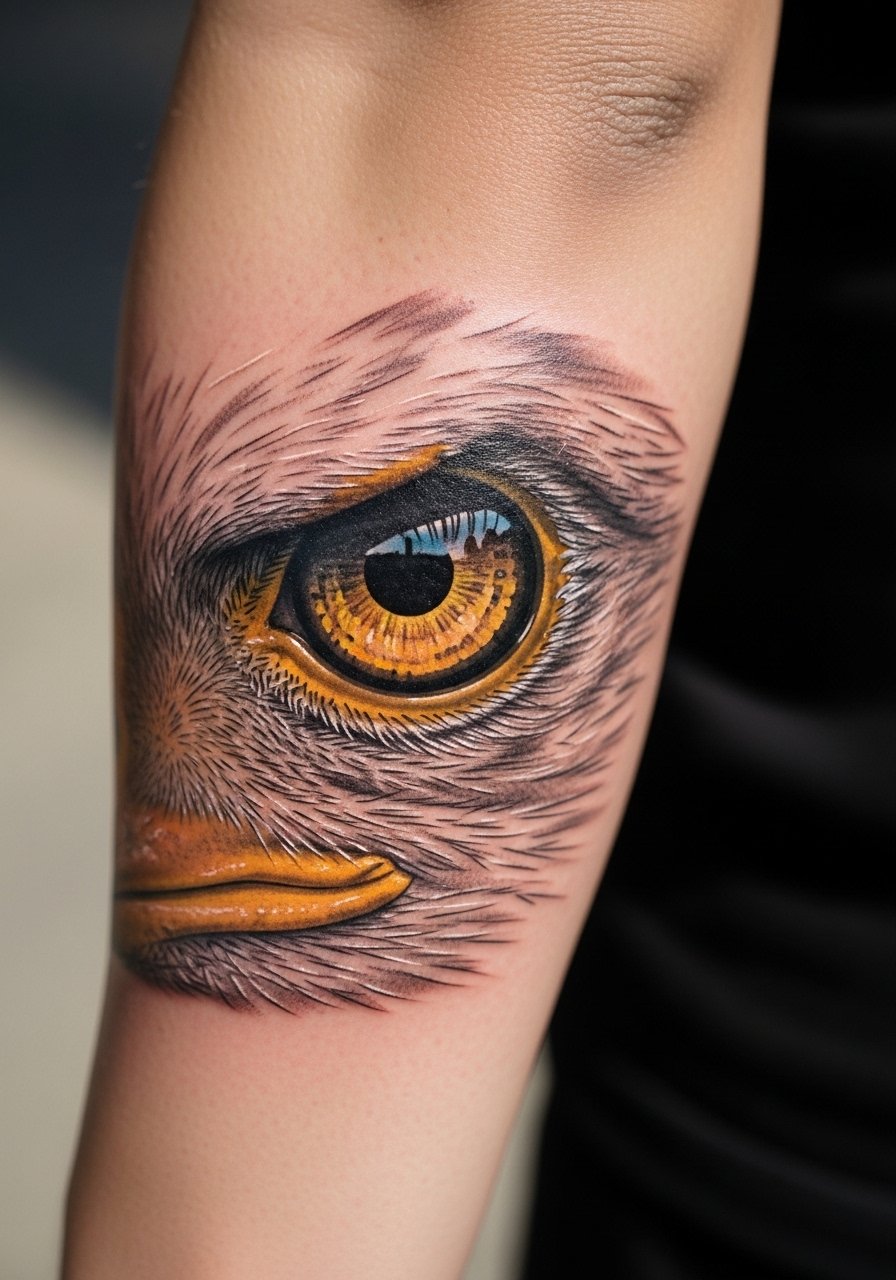
Most micro-realism eyes need space to breathe at roughly 4 to 6 inches so the iris and feather barbs read over time. The inner forearm is a low to moderate pain spot and ideal for this kind of focused portrait. The frequent mistake is shrinking the eye to a thumbnail size which loses all the micro detail once healed. Ask your artist for layered sessions that lock value in the first pass then refine highlights in the follow-up. Plan on a touch-up at the six to twelve month mark, especially if you want that catchlight to stay sharp.
Tattoo Prep and Aftercare Essentials
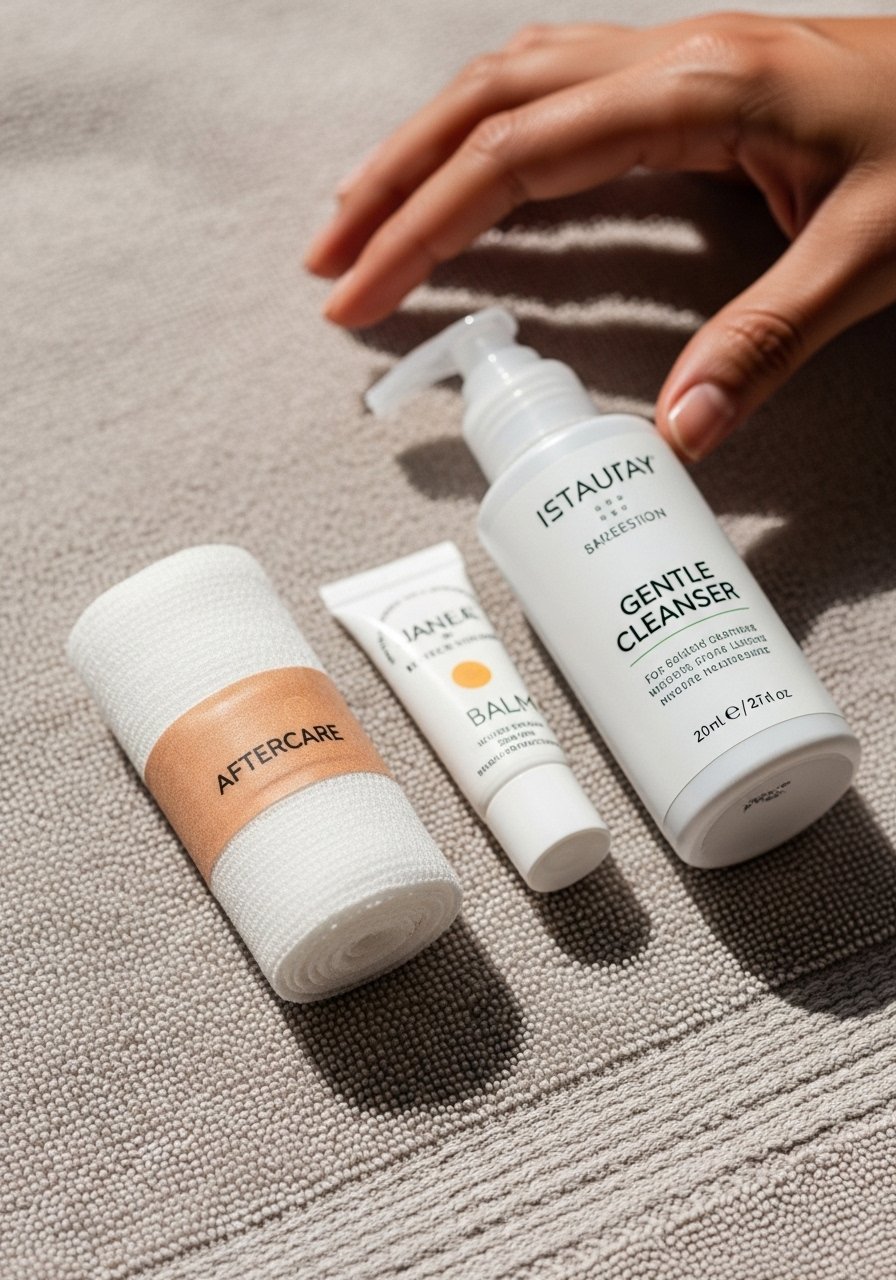
Here are core items I recommend for eagle tattoos, with when to use them and what problem each solves.
CeraVe Healing Ointment search results. A thinner ointment many people prefer over heavier balms during the first few days. Use sparingly day one and blend lightly thereafter.
Australian Gold Antimicrobial Spray search results. Handy for summer heals to reduce surface bacteria without leaving white residue.
InkSafe Balm search results. Indie balm recommended for fine line pieces because it is lightweight and absorbs fast.
Hada Labo Lotion search results. Great for winter when tattoos need hydration without oily buildup.
Lightweight+fragrance-free+balm search results. Generic descriptor for a thin, non-clogging balm to reapply during the 3 to 14 day phase.
Medical-grade+second+skin+bandage+6+inch+roll search results. Useful for tattoos on curves that need extra protection for the first five days.
Hustle+Butter+Deluxe search results. The one mainstream balm here because some color work benefits from a product that locks vibrancy after initial scabbing.
Every tattoo is different. Always follow your artist's specific aftercare instructions. Consult a dermatologist if you have skin concerns or unusual healing issues.
Frequently Asked Questions
Q: Will a fine line feather cluster on the ribs blur faster than a bold blackwork feather on the thigh?
A: It depends on skin stretch and placement. Ribs move with breathing and weight shifts so fine shafts are at higher risk of blur. Bold blackwork on the thigh uses heavier saturation and negative space, and that tends to keep crispness longer. Ask your artist about spacing and plan a touch-up at six to twelve months for rib fine line pieces.
Q: If artists keep canceling my consult, where should I look for reliable appointments for an eagle tattoo?
A: Try booking through platforms with cancellation policies like Booksy or searching hashtags and location filters on TikTok and Instagram for guest spots. Tattoo conventions are another route to lock a guest artist without repeated reschedules. Also ask studios about their waitlist procedures so you know what to expect.
Q: Do watercolor eagle tattoos need different aftercare than neo-traditional color eagles?
A: Yes, watercolor relies on softer pigment laydown and can fade faster with heavy exfoliation or sun. Keep watercolor pieces out of direct sun longer and avoid aggressive ointments that smear pigments during scab phase. Neo-traditional color benefits from occlusive care early on to lock saturation, then light moisturizers after peeling.
Q: How should I adapt an eagle design for darker skin tones so it photographs well?
A: High-contrast blackwork, solid fills, and selective white highlights help the design read in photos. Consider geometric framing or thicker outlines around key features like the eye and beak. Test a temporary ink or henna sketch if you want to preview visibility before booking.
Q: What's a realistic touch-up timeline for a micro-realism eagle eye and a neo-traditional sleeve?
A: For micro-realism pieces expect a touch-up around six to twelve months to retain tiny highlights. Neo-traditional sleeves often need incremental sessions for saturation and then a possible even-out touch-up in year two. Long-term maintenance plans work best if you schedule check-ins after major seasonal changes.
Q: Saniderm vs dry healing: which camp should I pick for an eagle with heavy color?
A: Artists and collectors are split. One camp uses occlusive wraps like Saniderm for faster initial healing and less daily mess. The other prefers dry, breathable healing to avoid trapping moisture and potential complications. My advice is to ask your artist what they use successfully for color work and follow their protocol for the best outcome.