Someone I know spent months pinning planet tattoo ideas, then realized the real problem was picking a style that would still look good after a year of sleeves, sun, and gym gains. These 15 simple planet tattoos focus on linework, placement, and realistic aging so you can pick something that reads well now and later. The first few show clean, single-orb designs that scale into fuller systems if you want to build over time.
1. Minimalist Saturn Outline on the Inner Wrist

Someone I know first noticed this in a flash sheet and booked it for the wrist because it reads clean in small sizes. It's best for people who want a short session and low commitment. Tell your artist you want slightly bolder lineweight than a single-needle fine line so the rings hold for two years. Common mistake is asking for ultra-tiny rings that merge after six months. Expect a medium pain level on the inner wrist and plan for a 30 to 60 minute session. At six months it will keep shape but may need a light touch-up at year two if you wear a lot of sun or friction.
2. Fine Line Solar System Arc across the Forearm
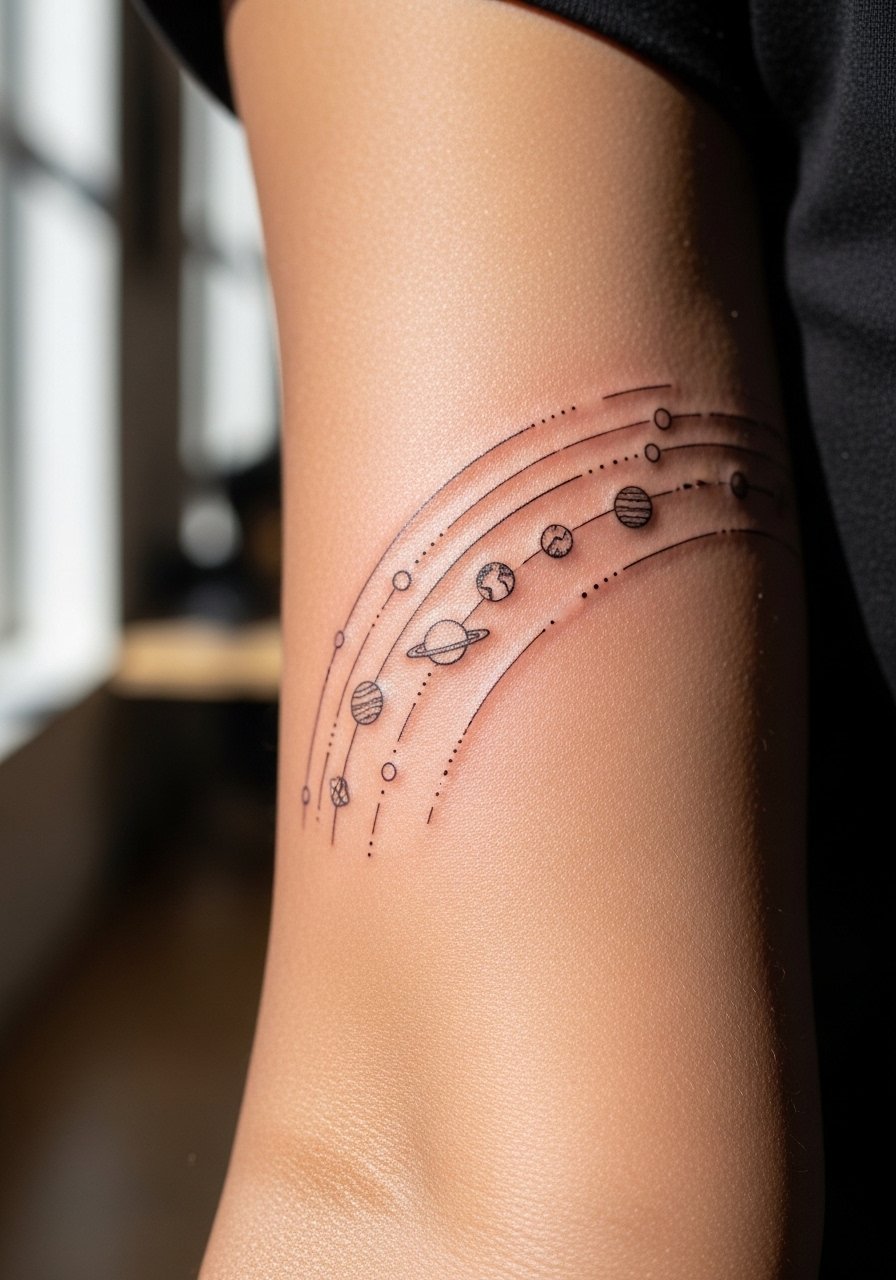
Fair warning: forearm fine line gets tested by sun and sleeves. Artists split on whether fine line holds up on forearms. One camp says the skin and frequent sun exposure make thin needle work fade faster. The other camp says with proper spacing and slightly deeper placement, it settles well. When you book, ask the artist where they land and show examples of healed fine line on similar skin tones. This design works for astrology fans who want a readable arc without a full sleeve build. Session time is usually one visit under two hours. Touch-ups at year one are common for ultra-fine setups.
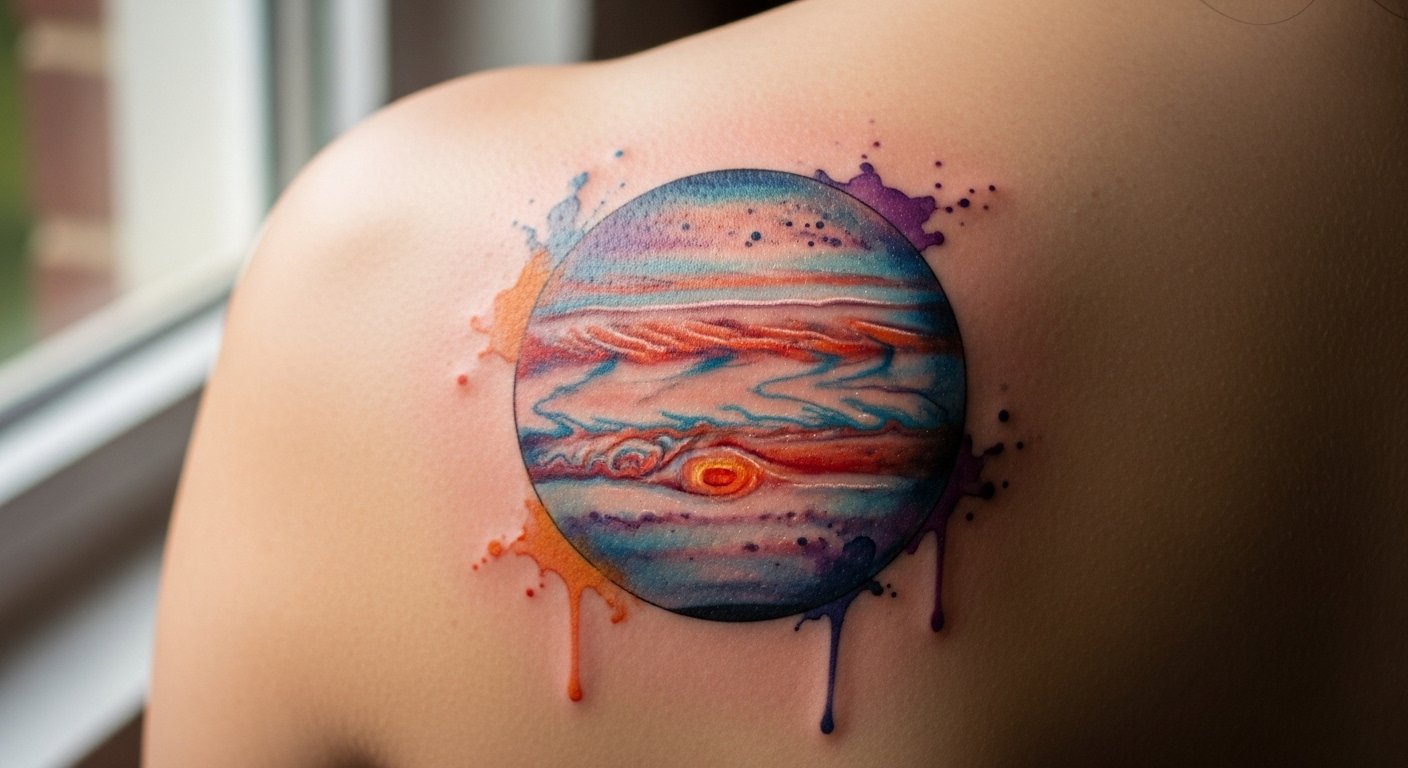
3. Watercolor Jupiter Portrait on the Shoulder Blade
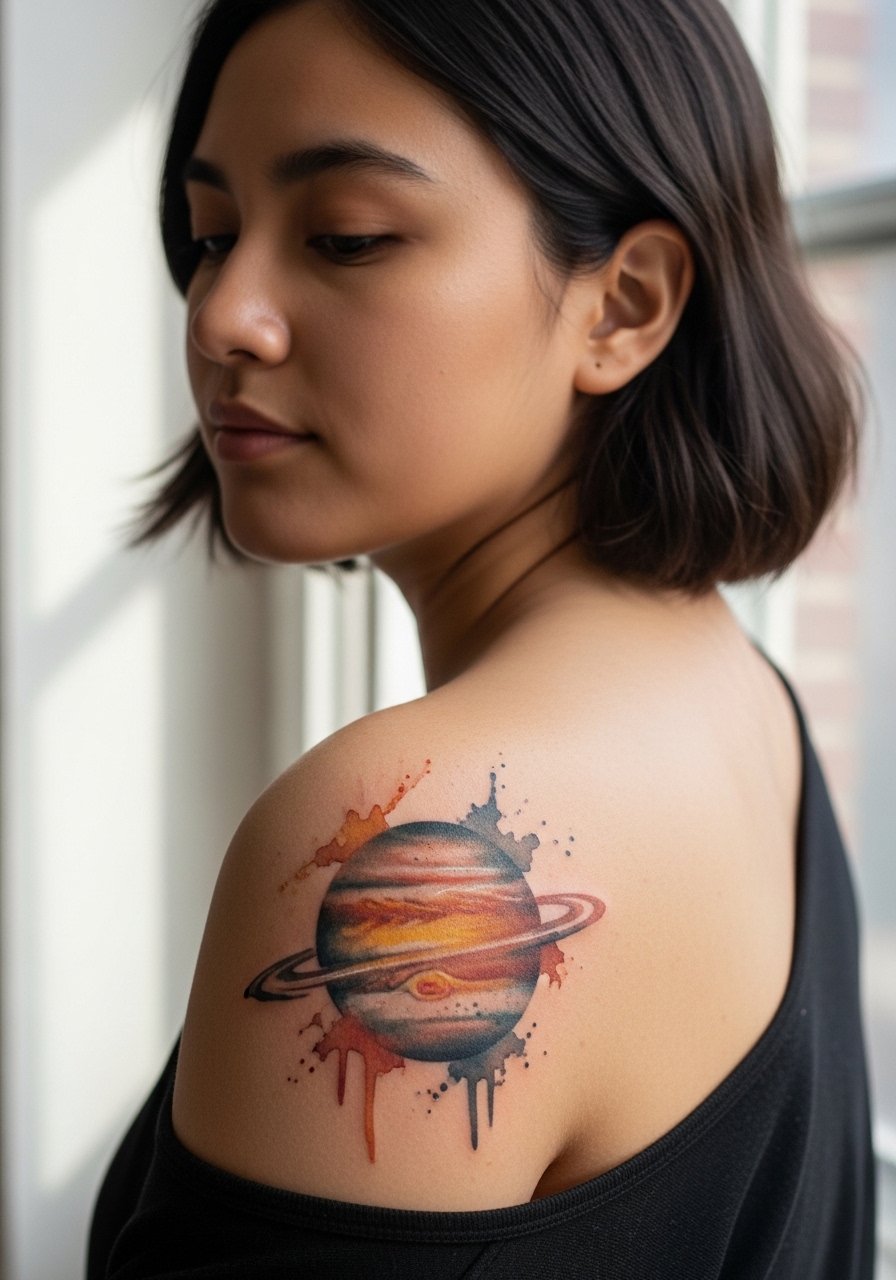
Most watercolor planets from years ago faded into muddy patches because artists used too little black anchoring. This Jupiter version pairs soft color washes with a clean black contour so you keep vivid swirls without early bleeding. When you consult, ask your artist for color maps that show where black or dark brown will hold the edges. Shoulder blade placement helps color last because it avoids constant rubbing. Pain is mild to medium and the session usually takes around 90 minutes to two hours. Expect visible color at six months and slower fading if you avoid sun.
4. Blackwork Earth with Moon Phases on the Ribcage
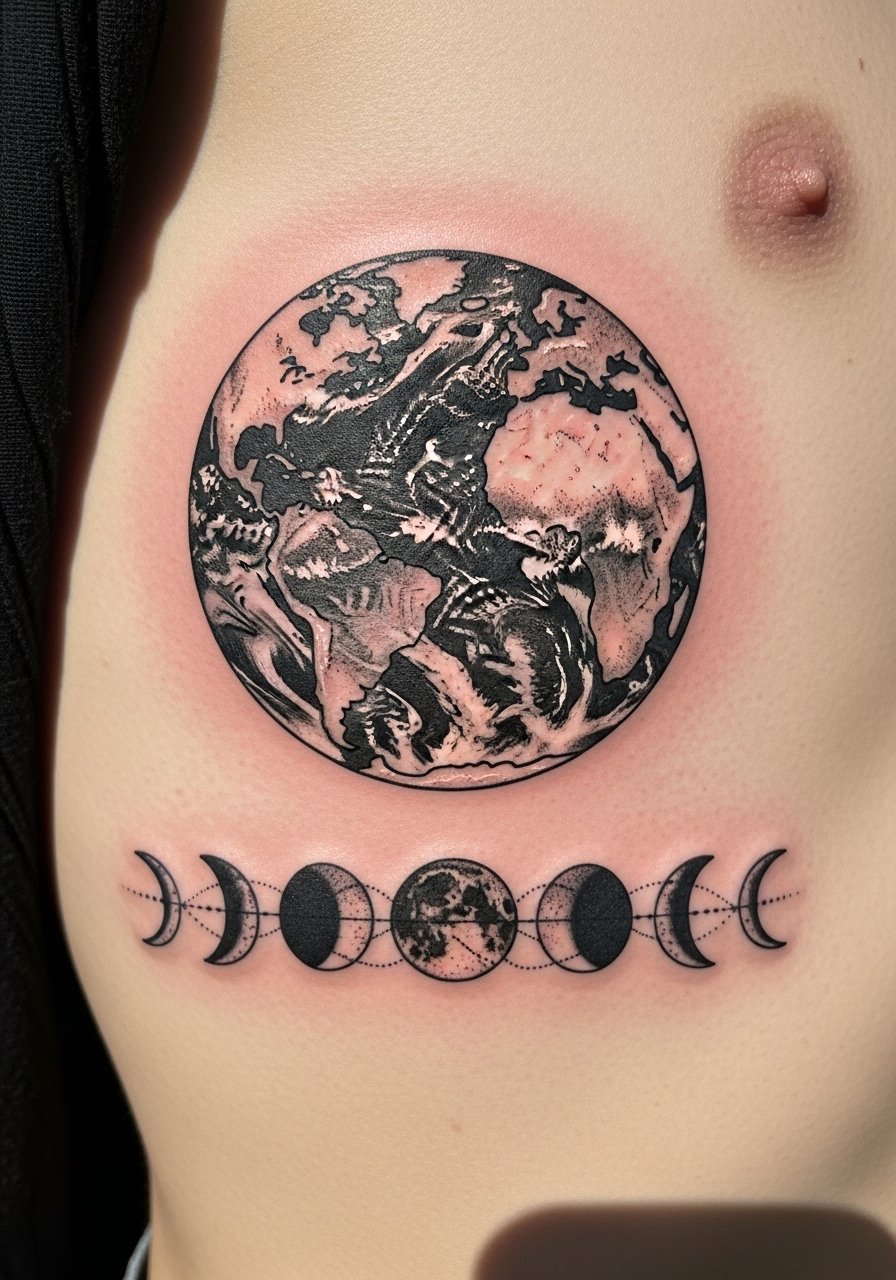
Fair warning: the ribcage is a 7 out of 10 on most pain scales but the payoff is dramatic contrast that ages well. Blackwork reads strongly on many skin tones and the moon phases add narrative without extra color maintenance. Tell your artist you want heavy saturation and crisp negative space so the phases stay legible after weight changes. The common mistake is compressing the phases too close together which blurs over time. One session can usually do a 3 to 4 inch piece but plan for a touch-up if you gain significant weight in the area.
5. Micro-Realism Mars Surface behind the Ear

When you want a tiny badge of character, micro-realism gives crater detail in an inch or less. Behind the ear is low friction so micro texture holds better than on fingers. Tell your artist you want contrast in the craters rather than lots of thin surface lines. The biggest mistake is trying to pack too much detail into a dot-size orb. Pain is low to medium and sessions are short. At six months the texture should still read clearly but expect a small touch-up at year two if you wear headphones that press on the area frequently.
6. Neo-Traditional Neptune Waves on the Thigh

There is something about bold outlines and illustrative shading that reads from across a room, and the thigh gives enough canvas to keep color saturation alive. Ask for good black outlines around color fills so those pigments do not disperse with time. The common aging issue with color on large flats is sun exposure, but the thigh stays mostly covered which helps. Sessions run longer, often two to three hours, and comfort makes touch-ups easier if you plan to build the piece into a leg panel later.
7. Ornamental Mandala Saturn on the Upper Arm
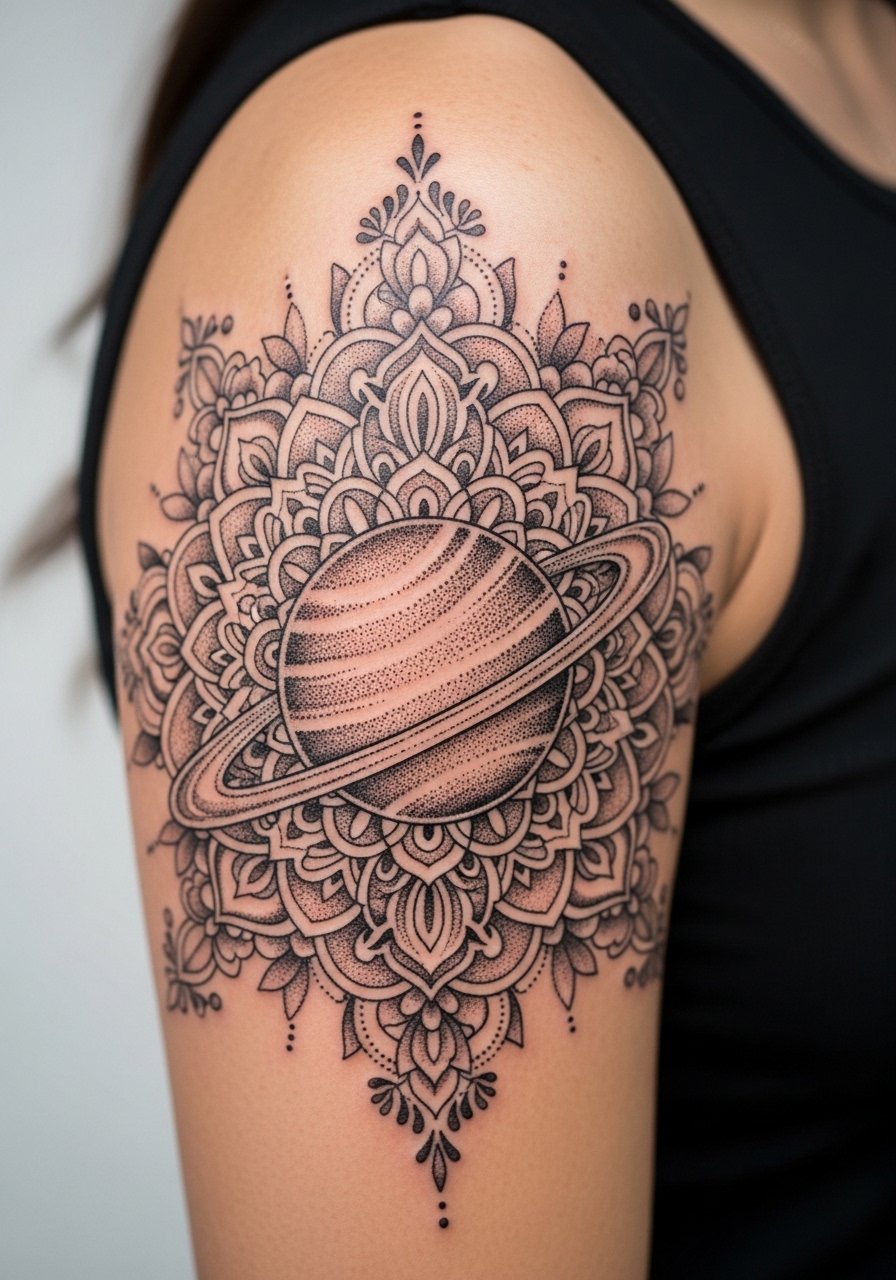
When you want symbolism with structure, ornamental mandala approaches provide geometric balance that plays well on the upper arm. Mention to your artist that you want clear spacing between dots and mandates for stipple shading so the mandala does not fill in as it heals. A mistake is shrinking mandala elements too small, which leads to blurring in two years. Upper arm placement keeps blowout risk low and pain moderate. Expect a one-session piece for a 4 inch diameter and possible touch-up after a year if the stippling softens.
8. Ignorant Style Uranus on the Calf
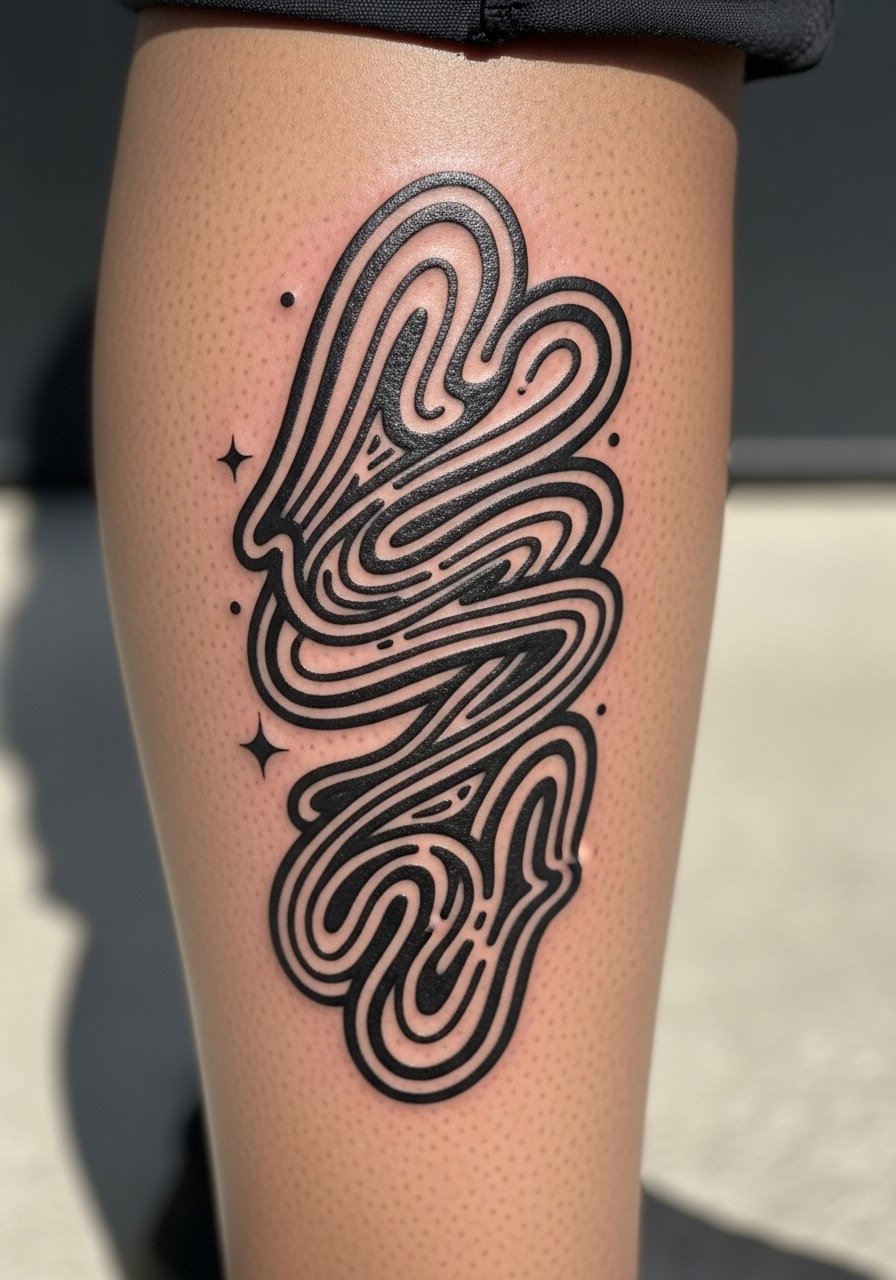
If you want rebellious, naive energy, ignorant style uses bold, primitive marks that age like classic flash because the lines are meant to be thick. Tell your artist to keep lineweight chunky and spacing intentional so the "childlike" look survives time rather than collapsing into a smear. Calf placement is forgiving for swelling and movement so the design keeps shape. Sessions are typically short and the style naturally masks minor blowout. This one is flattering for people who prefer bold graphic reads over delicate detail.
9. Minimalist Venus Heart Orbit on the Collarbone

When you want something that peeks from a neckline, collarbone placement gives movement with clothes. The aging issue is repeated friction from shirts, so ask for a slightly stronger line without losing the minimalist look. A common mistake is placing the orbit too close to bone which makes touch-ups trickier. Pain is medium on collarbone and sessions are short. At six months you should see clean contour and by two years you might need a small touch-up if you regularly wear necklaces or open collars.
10. Fine Line Mercury Winged Orb on the Inner Wrist
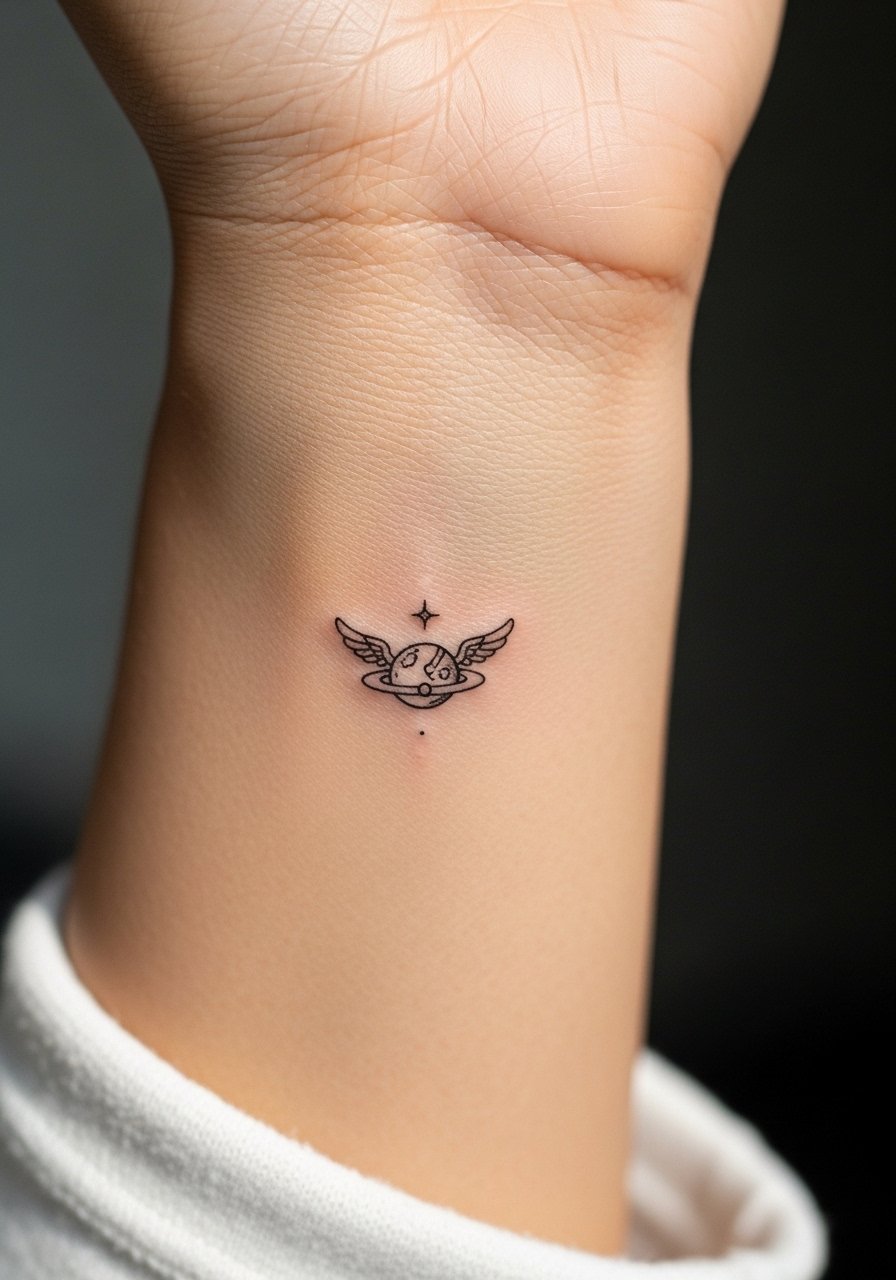
Consultation lead: when you sit down with your artist for a winged orb, bring close-up healed examples that show how the wing feathers hold on wrists. Fine line advocates argue for the graceful aging of thin strokes and minimal fill. Bold line supporters say hands and wrists need heavier strokes to survive two years. Both camps matter for this placement. Ask your artist which side they favor and request a slightly heavier feather base so the wings keep structure. Pain is medium and plan for a touch-up within 6 to 12 months if you type or wash hands a lot.
11. Blackwork Full Solar System Sleeve Start on the Forearm
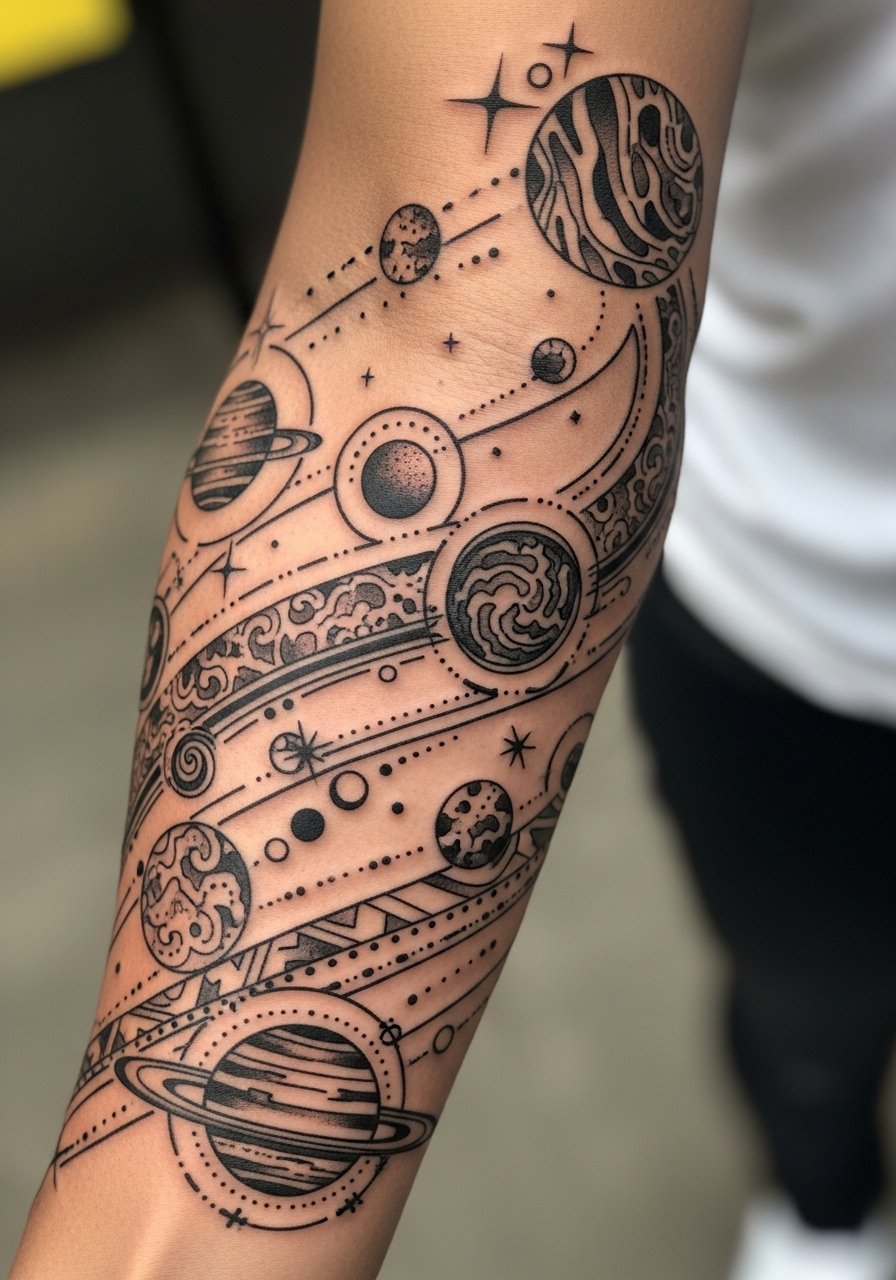
There is visual impact in building a modular map across the arm because you can add planets over years without mismatched styles. Tell your artist you want each planet to have its own readable negative space so future additions slot in cleanly. A common mistake is starting planets too close together, which makes later expansion awkward. Blackwork holds up strongly on hands and arms, but expect multi-session work and planned touch-ups as you expand. Forearm placement keeps blowout risk moderate when done by an artist experienced in solid saturation.
12. Watercolor Galaxy with Planets on the Upper Back
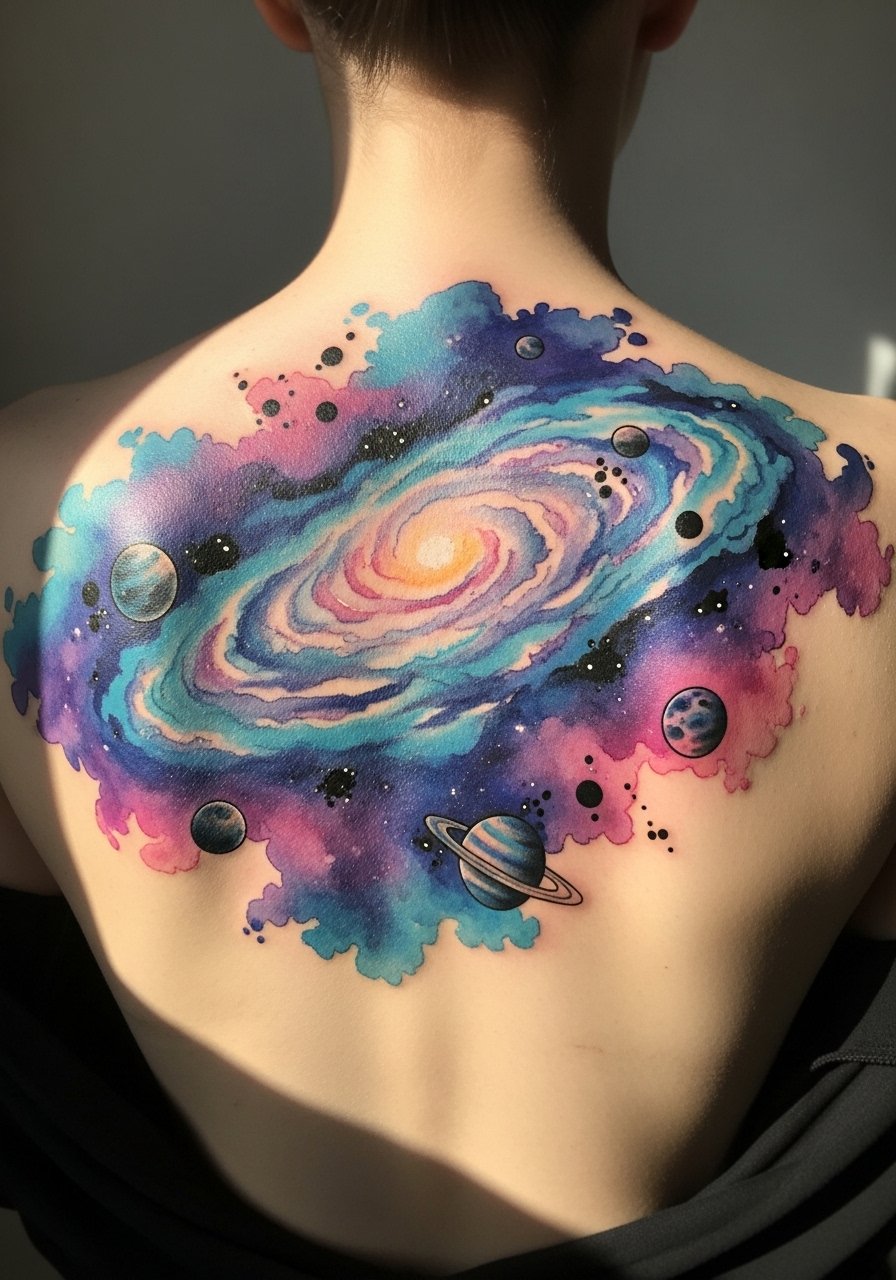
Most people forget that large color blends need sun protection while healing. For a back galaxy, ask the artist to pin key stars with crisp black dots so the composition keeps a framework as pigments soften. The back is a great canvas for two-session pieces and pain is moderate. A mistake is requesting fully feathered color without any anchor points. Expect healed color at six months to be vibrant if you avoid sun and use a good aftercare routine.
13. Micro Planet Cluster on Fingers
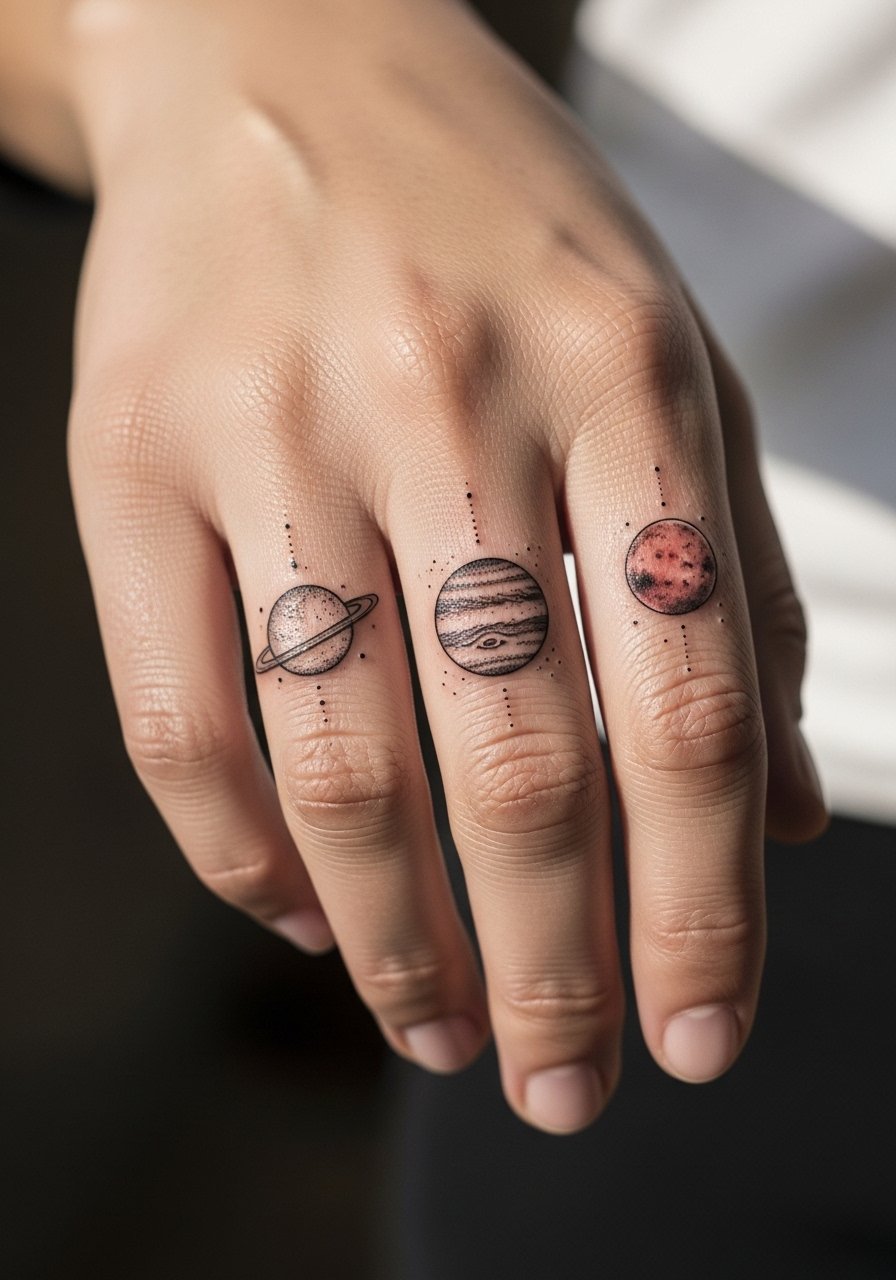
Mistake lead: the biggest error with finger planets is making them too small or too close. Fingers move, swell, and get washed constantly which challenges fine line. If you want this cluster, ask for slightly thicker dots and spacing so the orbs remain distinct after a year. Pain is higher on fingers and touch-ups are common at six to twelve months. Also know that hand and finger tattoos still affect hiring in some industries, so think through placement with your career in mind.
14. Metallic Silver Planet Accent for Darker Skin Tones
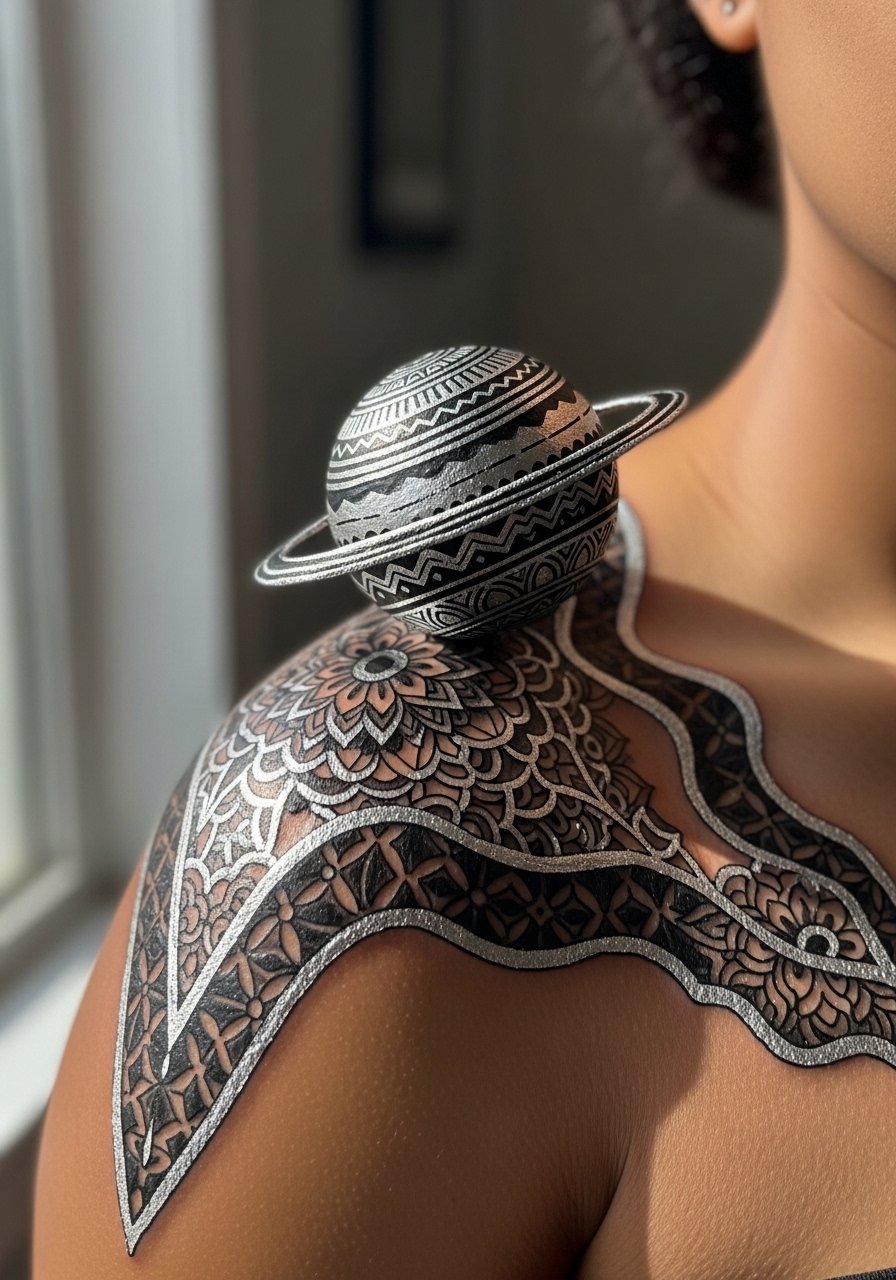
When color photos on darker skin feel flat, a high-contrast black base with a metallic silver accent can make a tiny planet pop in pictures. Mention to your artist you want discreet metallic placement rather than full metallic fills since reflective inks age differently. The technique is under-covered but people with deeper tones report great photo results when contrast is the priority. Sessions are short and pain is low for shoulder or upper arm. Ask about healed examples on similar skin tones during the consult.
15. Ankle Planet with Constellation Wrap to the Foot

Aging lead: ankle-to-foot lines can stretch or distort if you pick a design that crosses joints. For a planet with a constellation wrap, tell your artist to use slightly heavier connecting lines and avoid ultra-fine dots on high-flex areas. The ankle is lower pain for many and keeps small designs readable if you wear shoes that do not rub the ink while it heals. A common mistake is letting the constellation start too far under the shoe line which causes friction. This placement works well for modular additions later down the foot.
Tattoo Prep and Aftercare Essentials
When I help people prep for a first planet tattoo I recommend a few specific items that match common healing problems: fading fine lines, itchy scabs, and sun-related color loss. I also use discovery pathways like browsing #FineLinePlanet and checking Booksy or Tattoodo for artists who post healed photos rather than flash-only shots.
Healing and aftercare essentials (3-4 items)
CeraVe Healing Ointment for initial thin protective layer. Use a small pea-sized amount for the first 48 hours on fine line pieces. It generally leaves less greasy residue than thicker balms and helps prevent premature scabbing.
Indie coconut-based tattoo balm for breathable color-friendly healing. Best for watercolor areas because it reduces yellowing while keeping pigment hydrated.
UK tea tree salve for itchy spot treatment on darker tones. Apply sparingly if you develop localized itch; it has mild antibacterial properties that many people find soothing.
Lightweight fragrance-free balm for daytime moisture. Use a thin layer twice daily after the initial ointment phase to prevent flaking.
Pre-appointment prep (1-2 items)
Gentle fragrance-free foaming cleanser to use before your session. Clean skin helps tattoo artists trace and reduces complications.
Medical-grade second skin bandage, 6-inch roll, for active lifestyles. If you work out or need to keep the area clean during travel, this helps for the first 24 to 48 hours.
Long-term maintenance (2-3 items)
Hada Labo Gokujyun lotion to hydrate without film for micro work. Thin hydration keeps fine detail from looking dull over time.
Broad spectrum mineral sunscreen SPF 50 for long-term color protection. Apply once healed whenever the tattoo will be exposed to sun.
Every tattoo is different. Always follow your artist's specific aftercare instructions. Consult a dermatologist if you have skin concerns or unusual healing issues.
Frequently Asked Questions
Q: How much does a small planet tattoo cost?
A: Expect a typical range for small simple planets of about 100-300 depending on shop minimums, line weight, and placement. Finger and hand work often bumps the price because artists plan for faster touch-ups and higher maintenance.
Q: Will a fine line solar system arc blur if I get a full sleeve later?
A: It depends on spacing and how the sleeve is built. If each planet has clear negative space and slightly bolder anchors, the fine line arc can be integrated into a sleeve. Ask your artist to design modular spacing so later pieces do not crowd the original work.
Q: Do watercolor-style planets need different aftercare than blackwork ones?
A: From what I've seen, watercolor pieces benefit from avoiding thick greasy balms during healing because those can trap pigment and yellow light colors. Use a breathable coconut-based balm or thin ointment early, then switch to a fragrance-free lotion. Sun protection is critical for color longevity.
Q: Are metallic inks safe for darker skin tones and do they last?
A: Metallic accents can look great on deeper tones when used sparingly. They require careful placement and healing observation because reflective pigments can oxidize differently. Ask to see healed photos on similar skin tones and plan for a possible color refresh after a year.
Q: Which placements give the best longevity for tiny planet tattoos?
A: Low-friction areas like the shoulder blade, upper arm, and behind the ear tend to hold detail longer. High-motion or high-wash areas like fingers and inner wrists often need touch-ups at six to twelve months. Consider placement in light of your daily routine and clothing.
Q: Is Saniderm better than dry healing for a small planet on the wrist?
A: Artists and healers are split. One group prefers Saniderm for active folks because it keeps the area clean and reduces scabbing. The other group says dry healing breathes better and avoids trapped bacteria. Your lifestyle matters here. If you sweat a lot or need a protective barrier for travel, ask the artist about short-term use of a medical occlusive.