

Someone I know booked a tiny sun and moon wrist pair and came back furious after six months when the fine line ghosted into a smudge. I have seen the same pattern in forums and shops across five neighborhoods in Brooklyn. This list pulls together the sun and moon tattoo ideas that keep getting booked right now, plus realistic notes on how each one heals, where it lasts, and what to say to your artist.
1. Minimalist Sun and Moon Wrist Pair
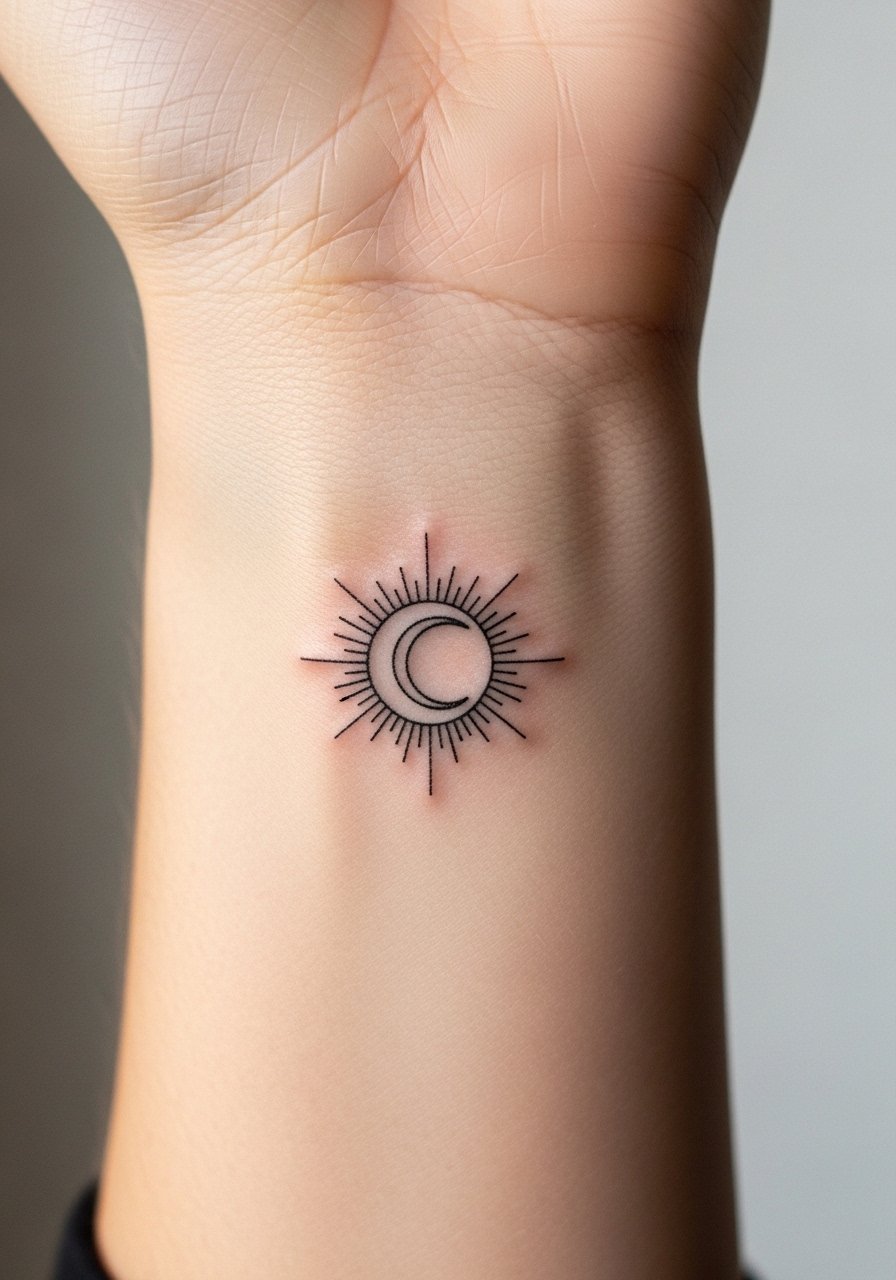
Someone I know picked this for a first tattoo because it reads small and neat. Fair warning, wrists move constantly so fine needles can blur here sooner than on forearms. If you want the minimalist look but more longevity, ask for slightly heavier linework and wider spacing between rays so the lines do not merge as the piece heals. Session time is usually short, like 20 to 40 minutes, and pain is low to moderate. Expect a touch-up window at six to twelve months for tiny fills and crisping. A common mistake is asking for single-needle tiny rays on the wrist and wondering why they vanish when you wear watches or bracelets.
2. Fine Line Celestial Sun Over Moon on Outer Forearm

I noticed this on a forearm while waiting at a convention and the clean contour read well even from a distance. The outer forearm is forgiving for fine line because it sees less stretching than wrists or ankles. Tell your artist you want negative-space highlights in the moon and that you want the sun's rays slightly tapered rather than pin-sharp. Expect one to two sessions depending on size. Fine line fans and bold-line advocates are split on durability. One camp says thin work suits the aesthetic while the other says a little extra line weight is insurance. Ask where your artist stands before booking.
3. Blackwork Geometric Sun and Moon Back Piece

There is real visual payoff to a blackwork back piece because saturation and contrast read on darker tones and in photos. This one benefits from large fields of solid black and careful negative-space geometry so the moon maintains shape. Plan multiple sessions for shading and a final pass for edge sharpening. Pain on the upper back is moderate, but you should expect several hours across sessions. For collectors building toward a larger back project, this design works as a bold centerpiece that will hold up far better than watercolor on the same area.
4. Watercolor Sun with Moon Phases on Inner Ankle

Most watercolor pieces age faster when exposed to summer sweat and friction from socks or shoes. The inner ankle can hide color shifts well if you plan for annual maintenance. Ask your artist for denser saturation near contrast points so the color does not bleed into the moon phases as it heals. Expect two sessions and a stingier healing period because the ankle is bony and prone to scabbing. If you travel a lot, consider adding a thin black outline around key elements to extend legibility between touch-ups.
5. Neo-Traditional Floral Sun Moon Sleeve Start on Inner Bicep
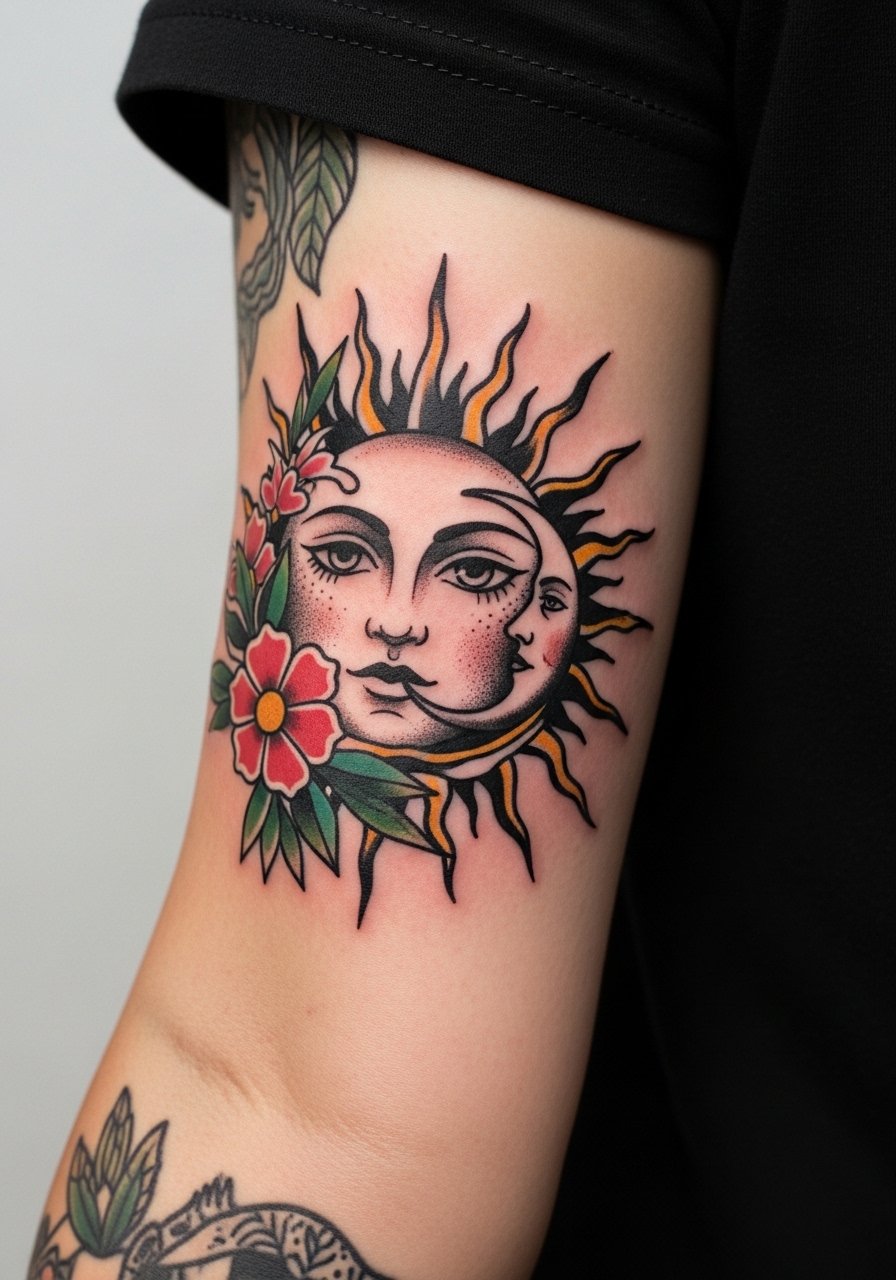
When starting a sleeve, the inner bicep is a smart first stop because it gives the artist room to compose florals around a central sun and moon motif. In the consult, bring reference shots that show the exact color balance you want and note where you want the moon to recede behind petals. Sessions are longer and require comfort breaks. A common mistake is committing to tiny flowers that will lose detail once the arm stretches and ages. For longevity ask for solid outlines around small motifs and keep dense color blocks away from high-friction spots.
6. Micro-Realism Sun Moon Collarbone Pair
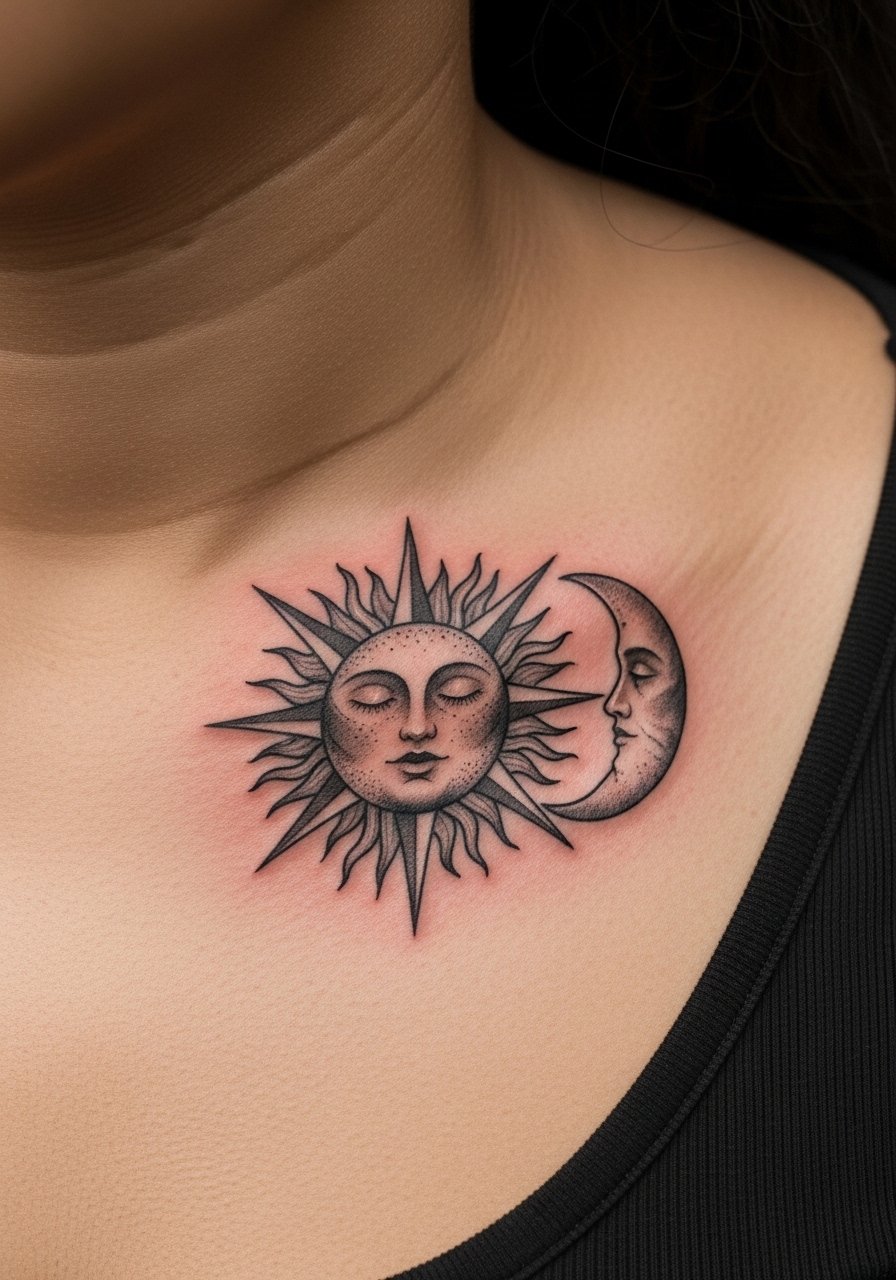
Mistake alert. Micro-realism needs space and contrast to hold tiny highlights and soft shadows. The collarbone gives that delicate interplay but is unforgiving if the reference photo is flat. Tell your artist you want crisp contrast between the sun's highlights and the moon's shaded face so the pieces read separately in photos. Expect two sessions and sharp pain over bone. Touch-ups are common at the one-year mark to refresh tiny highlights that soften with time.
7. Ornamental Mandala Sun Encompassing Moon on Outer Thigh
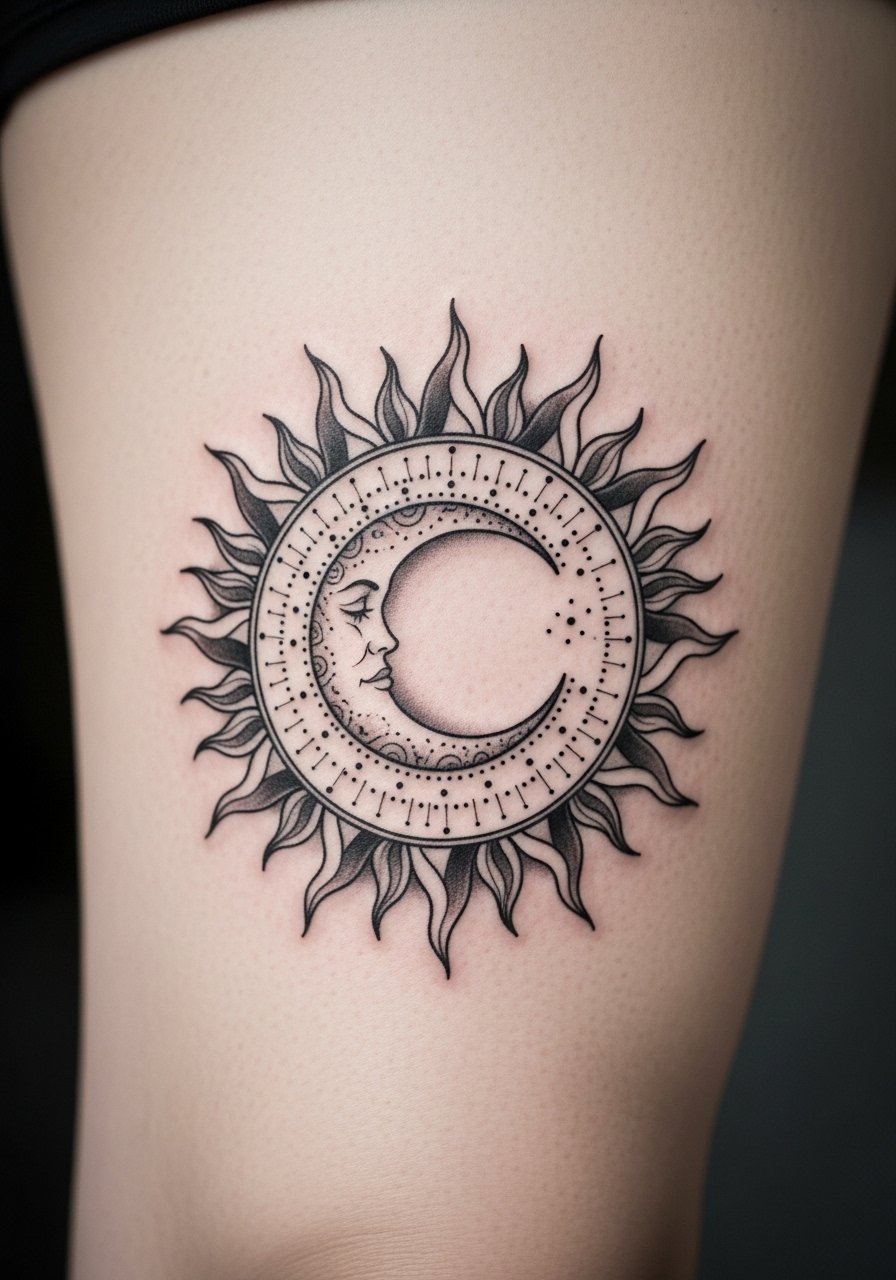
This pattern borrows mandala geometry that traces back to Buddhist-inspired ornamentation, so some clients choose small adaptations rather than direct cultural replicas. The thigh is ideal because it gives the artist room for symmetry and the skin there tends to hold linework well through weight changes. Plan three sessions for linework and shading. A common error is shrinking a mandala too small; the lines need breathing room to avoid early blur. If you want it to age gracefully, ask for slightly increased line spacing and stipple shading rather than very tight black fills.
8. Ignorant Style Abstract Sun Moon on Ribcage
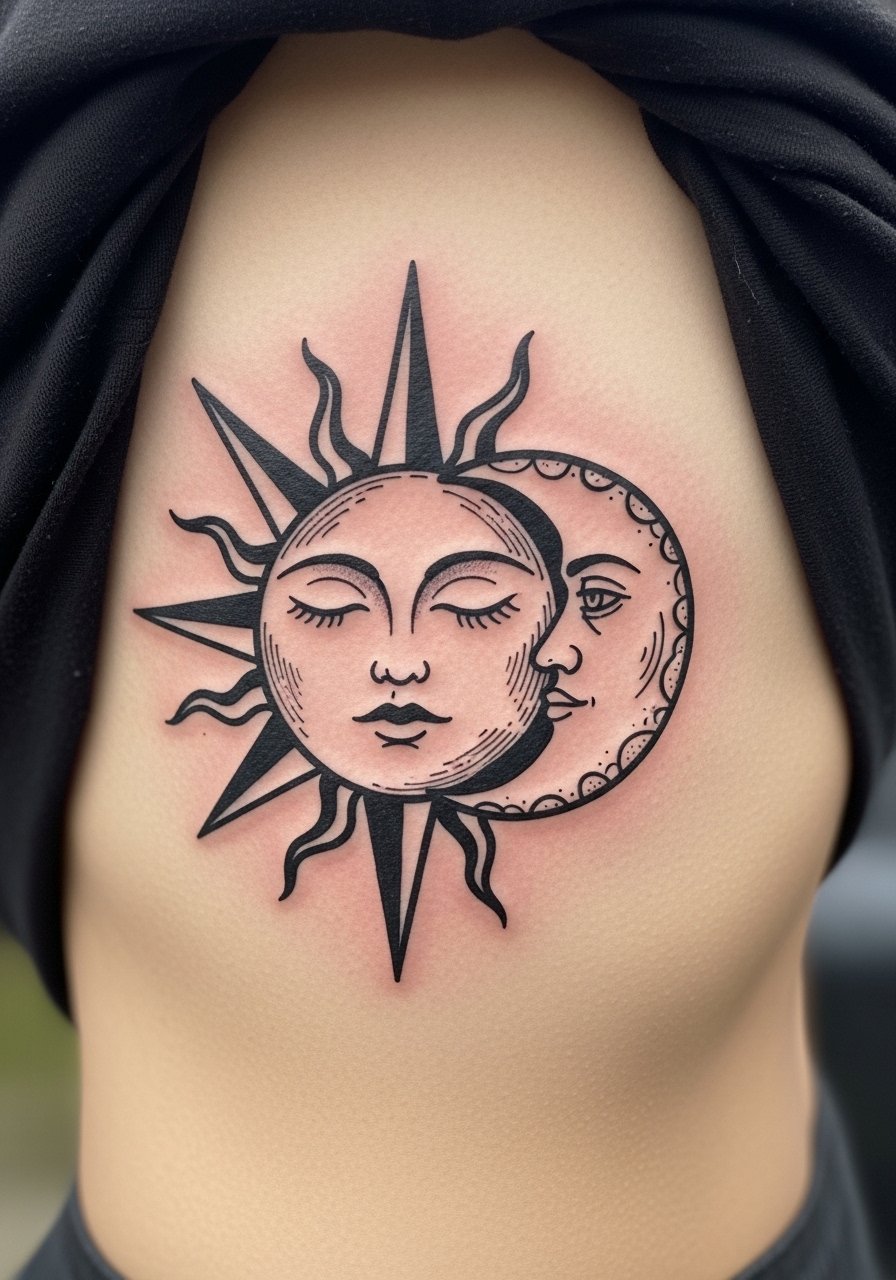
Fair warning. The ribcage is a seven to nine on most pain scales for many people, but ignorant style is perfect for those who want raw, sketchy energy that reads bold even as it ages. Artists split on whether fine line suits the ribs. One camp says skin stretch and movement blur thin details, while the other says careful depth and spacing will hold. If you want the rough look without early fade, ask for heavier outlines and reserve tiny internal details for a later touch-up session. Expect two sessions and significant aftercare attention because scabbing on ribs can be annoying.
9. Traditional Flash Sun Moon with Stars on Shoulder Cap

I kept seeing this at walk-in flash days. The shoulder cap reads classic because bold linework and saturated color age predictably and are easy to retouch in one session. If you want a nostalgic look, bring a few vintage flash plates to show the exact line weight and star shapes you like. Pain is low to moderate and a single session often does the job. A common oversight is asking for tiny color gradients that wash out over time, so stick to solid fills and strong outlines for clarity in photos and at distance.
10. Dotwork Sun and Crescent Moon Vertical Spine Piece
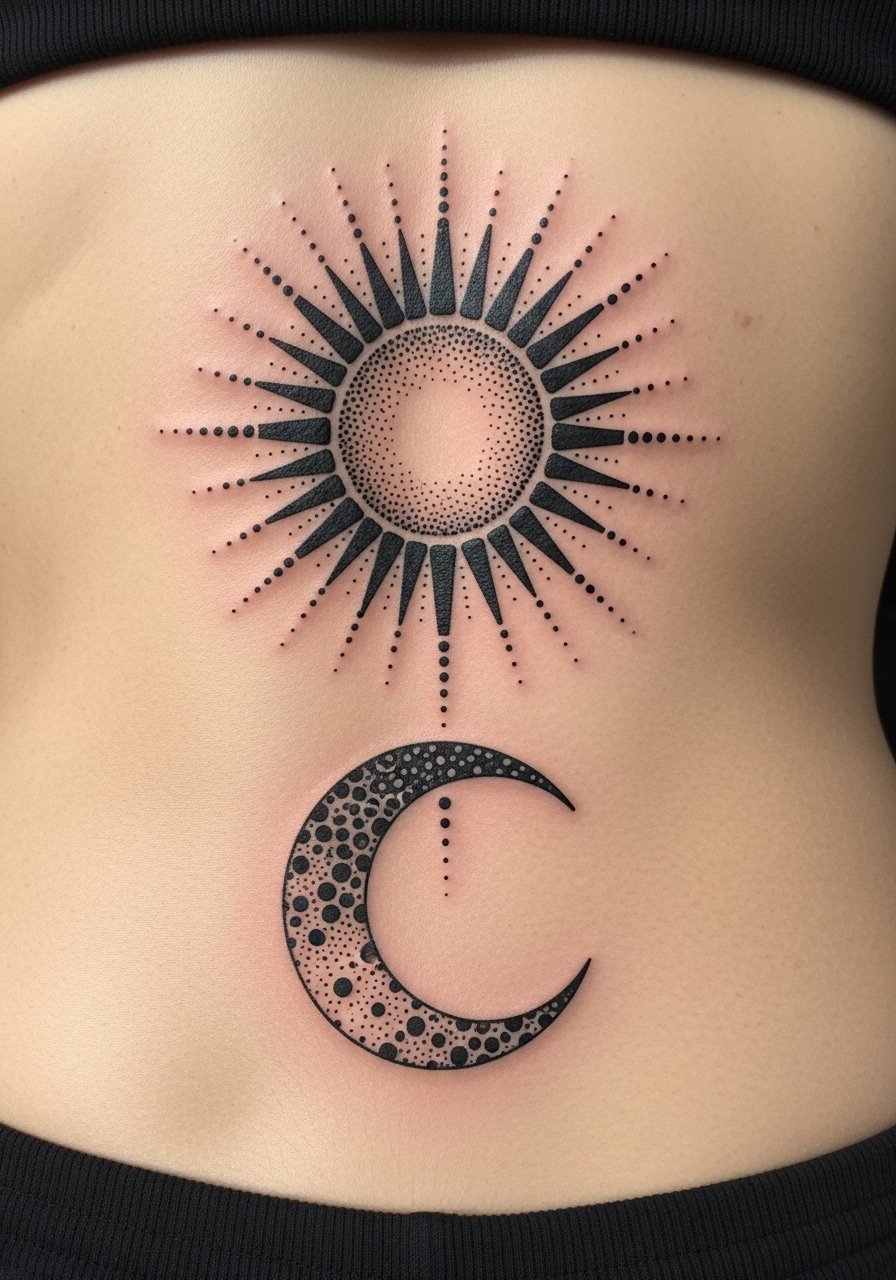
There is a meditative rhythm to dot work along the spine because the vertical flow complements the body's line. Expect three sessions for layout and density control. The spine can be sensitive, with sharp needle sensation near bone, so plan for breaks. Blowout risk is lower with dot work if the shading is built slowly and not packed too deep. Ask your artist for a healed timeline and plan a touch-up around year two to refresh contrast. For careers that require conservative dress, know that spine pieces can be easy to conceal.
Tattoo Prep and Aftercare Essentials

When I talk to artists and people in forum threads the same points come up. Keep fresh ink out of direct sun for two weeks. Clean with a gentle unscented cleanser and moisturize lightly two to three times a day. Decide ahead of time whether you will use an occlusive bandage for the first few days or go dry, because shops and clients fall into two camps on that choice. If a guest artist is involved insist on written deposit terms. Below are items I reach for or see recommended most often.
Hada Labo Gokujyun Hyaluronic Lotion, lightweight hydrating lotion. Use a small amount once the initial scab phase passes to keep skin supple without shine. Works well on sensitive skin and under light clothing.
Australian Gold Aftercare-style alcohol-free spray, no-touch spray for ankles and wrists. Helpful for areas that hate constant rubbing since you can mist without touching the tattoo.
Fragrance-free lightweight ink balm, fast-absorbing balm for winter healing. Pick a thin formula rather than a petroleum-heavy ointment for humid months.
Ink-Illustrated type color retention balm descriptor, faster-absorbing formula that artists mention for watercolor pieces. Use sparingly for color pieces to avoid clumping.
Medical-grade second skin bandage, clear occlusive dressing roll. Useful for the first 24 to 72 hours if your shop recommends an occlusive method.
Saniderm adhesive tattoo bandage search page. If you choose the occlusive camp, this is the common branded option. Note that some clients prefer dry healing and shops are split on best practice.
Lightweight fragrance-free foaming cleanser, pH friendly. Use for the first two weeks to clean the area gently and pat dry.
SPF 50 mineral sunscreen, broad spectrum, reef safe. After healing, sun protection is the single most important thing for color retention and black saturation.
Every tattoo is different. Always follow your artist's specific aftercare instructions. Consult a dermatologist if you have skin concerns or unusual healing issues.
Frequently Asked Questions
Q: Will a fine line wrist sun and moon blur faster than one on the forearm?
A: Yes, wrists see more movement and friction, so fine needles can lose crispness sooner. If you want the same look on a wrist ask for slightly heavier linework and plan a touch-up at six to twelve months.
Q: For dark skin tones which option pops best in photos, watercolor or blackwork?
A: In my experience high-contrast blackwork reads best on darker skin and photographs with more clarity. Watercolor can be beautiful but needs denser saturation and strategic outlines to avoid looking washed out in pictures.
Q: Are there real pros and cons to using adhesive bandages like Saniderm versus dry healing?
A: Yes, artists and clients split into two camps. One group likes occlusive dressings because they reduce picking and keep the surface moisturized. The other group prefers dry healing for airflow and scab formation. Decide with your artist based on your skin type and the shop's proven workflow.
Q: How painful is a ribcage ignorant-style sun and moon compared with a forearm piece?
A: Ribs tend to be significantly more painful than forearms because of bone proximity and less muscle padding. Ignorant style often uses bolder strokes which can be quicker, but expect a tougher session and plan rest and numbing options if you need them.
Q: If I want a mandala-encompassing sun on my thigh should I worry about future weight changes?
A: The outer thigh holds linework well through moderate weight fluctuation. For big changes consider spacing lines a touch wider and avoid packing micro details that could distort. Thigh placement gives you room to adapt the design later if you want expansion into a larger piece.
Q: Where can I find artists who specialize in these styles without following specific handles?
A: Search hashtags like #SunAndMoonTattoo and #FineLineCelestial on Instagram, filter TikTok by location for blackwork sun moon tags, and check directories such as Tattoodo or Booksy by city. Also spend time on r/tattoos weekly threads for peer recs and recent healed photos.