
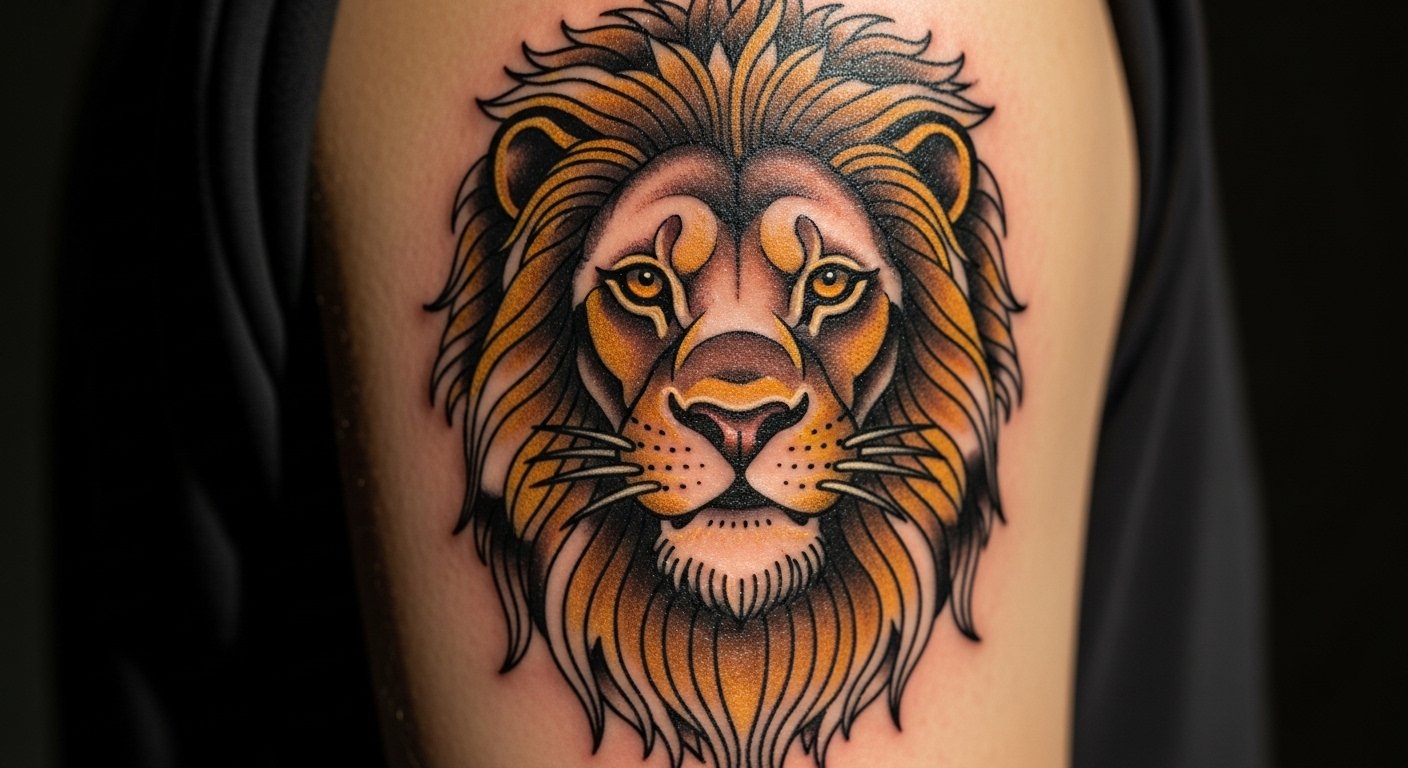
Someone I know spent eight months saving designs and still booked the wrong style for their skin. I learned that the real decision is picking a sign motif that fits your body, heals well, and still reads after a few years. I visited five shops across Brooklyn and watched which zodiac pieces people kept coming back for. Read on for 15 sign-forward tattoo ideas, what to ask your artist, and which versions tend to age better.
1. Virgo glyph woven into a wildflower stem, wrist placement
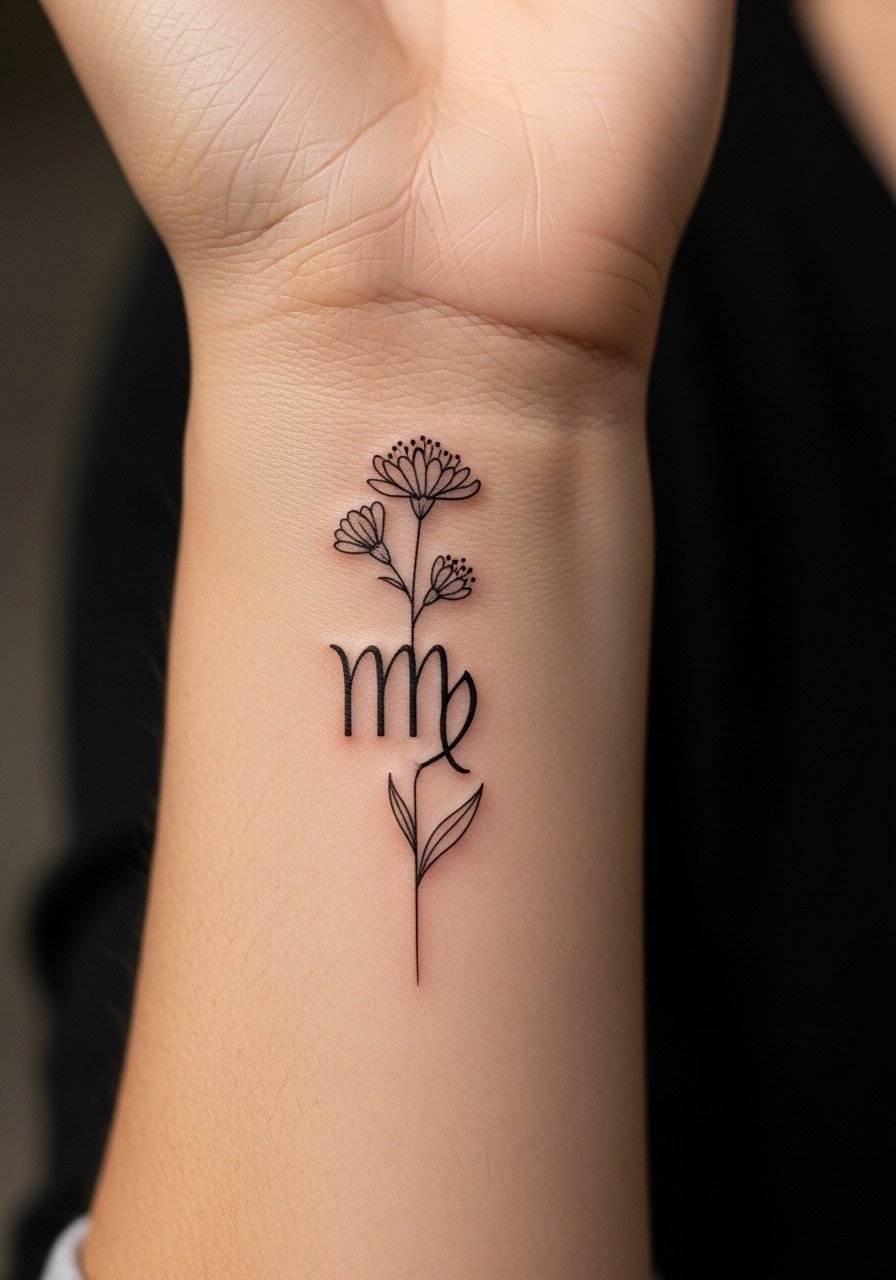
Someone I know chose this after realizing a tiny glyph alone reads like a temporary. The flower stem gives the mark context so it reads as a finished piece at small scale. Tell your artist you want a single-needle line weight and visible spacing between petals so the design does not blur at year two. The wrist is a low-pain area but the skin moves a lot, so expect a light touch-up around year two. A common mistake is shrinking the motif below one inch. At that size the negative space collapses and the glyph swells into a smudge.
2. Bold ram horns with constellation accents on the forearm
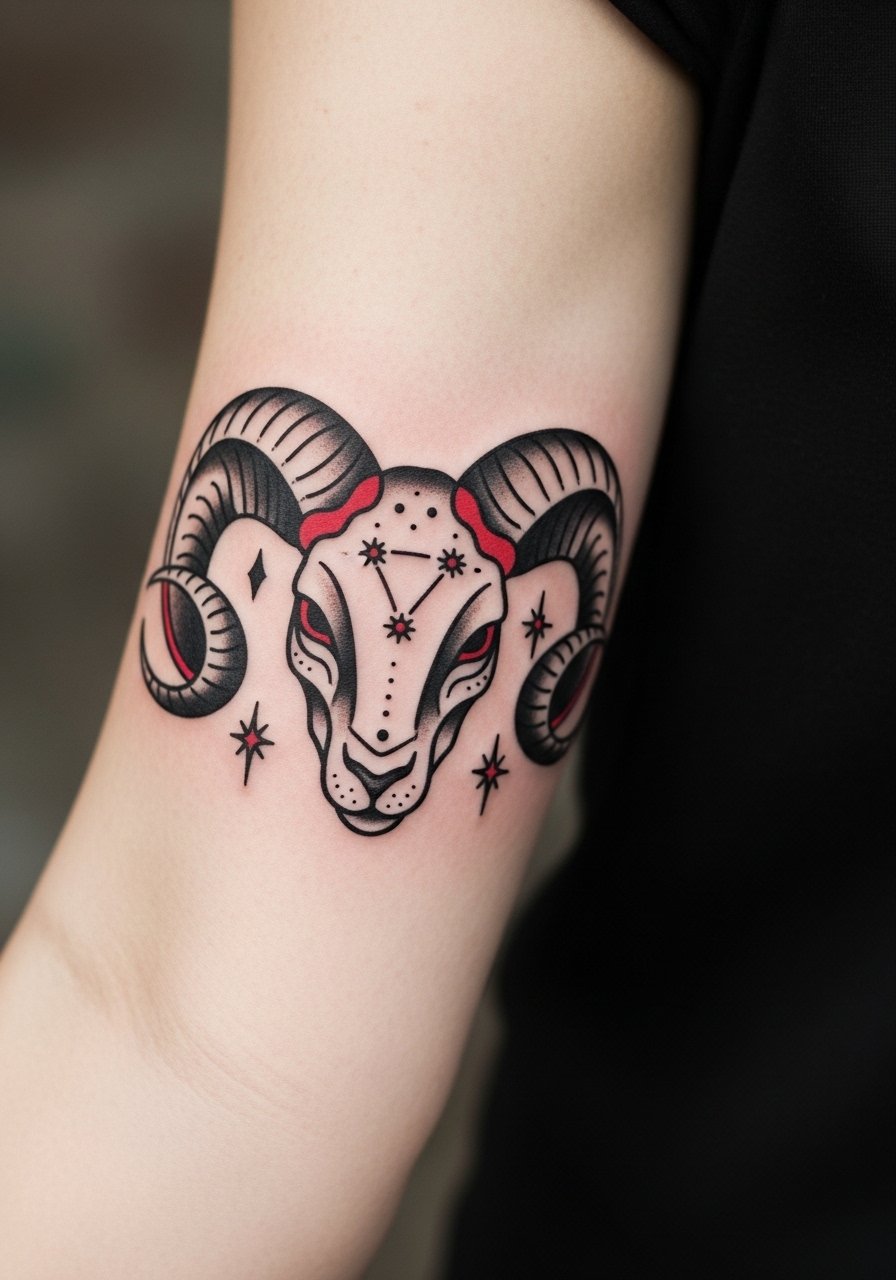
I saw this on a forearm at a convention and the linework read from across the room. Ask for heavier outline weight and solid saturation in the horns rather than tiny interior detail. Forearm sessions usually take one to two hours depending on size. Expect more longevity than thin linework, but colored areas will need a touch-up around year three if you spend a lot of time in the sun. A mistake people make is asking for tiny stars in between the horns. Keep stars slightly larger so they do not turn into dots that disappear.
3. Libra scales with pastel blooms at the collarbone

Collarbone pieces look delicate and they move with breathing. When you consult, bring color chips that show how saturated you want those pastels to land. Watercolor pigments tend to fade faster than black ink so plan on a color refresh by year two to three. The collarbone can be a sharp pain spot because the needle crosses bone. A typical session lasts about an hour. Artists sometimes disagree on how pastel packs hold up on lighter skin tones. Ask your artist how they layer pigments for longevity.
4. Scorpio scorpion stylized as an M with an arrow, paired with a phoenix on the thigh
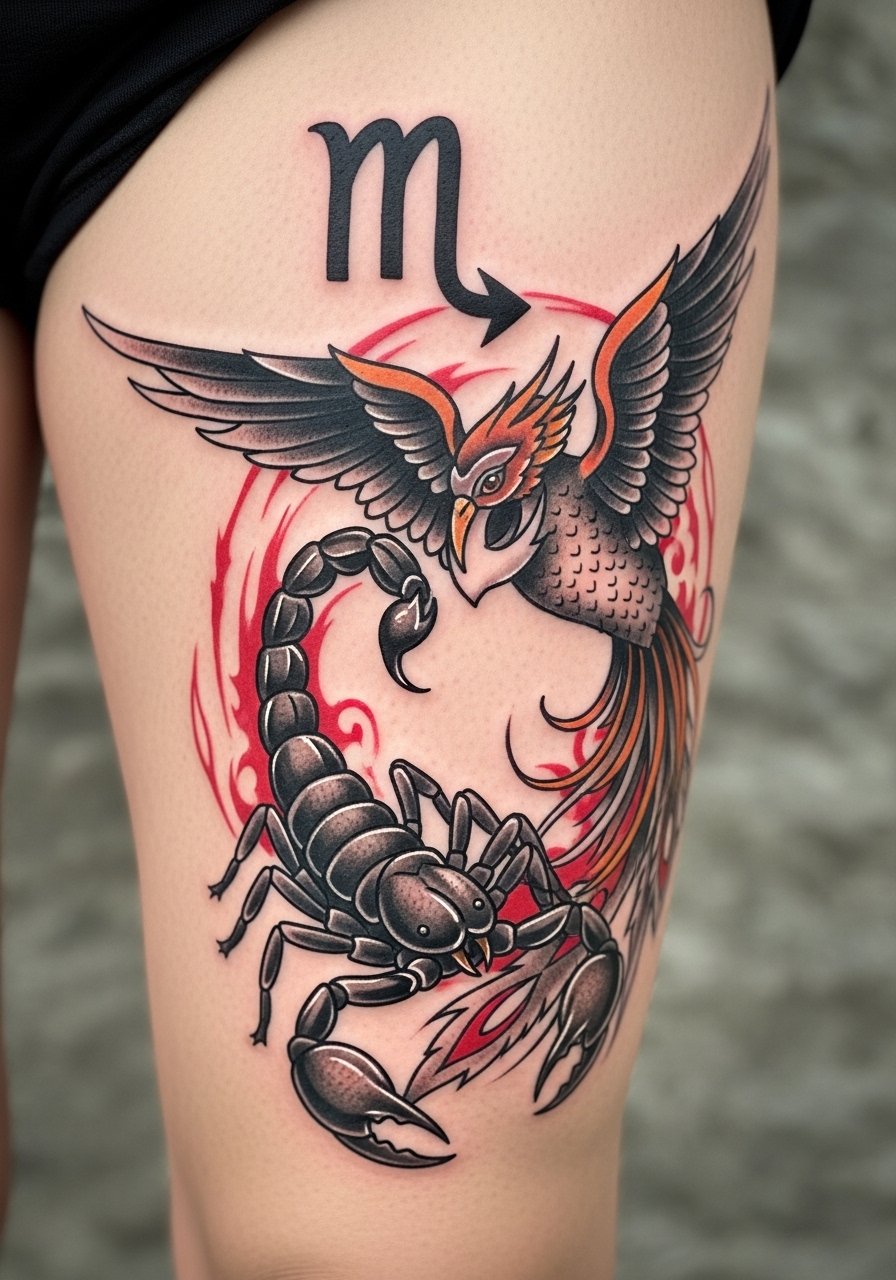
Thigh tattoos have a forgiving canvas and they usually heal with good saturation. One advantage is placement privacy, which makes layering a phoenix feasible if you want symbolism that can grow. During your consultation say you want dense black in the glyph and gradual stipple shading in the phoenix to keep contrast. Expect two sessions for a medium piece and a touch-up at year two for any red accents. A common error is crowding the phoenix wings too close to the scorpion tail. Give each element breathing room so neither blurs into the other.
5. Sagittarius archer bow reduced to a minimalist arrow outline on the ankle
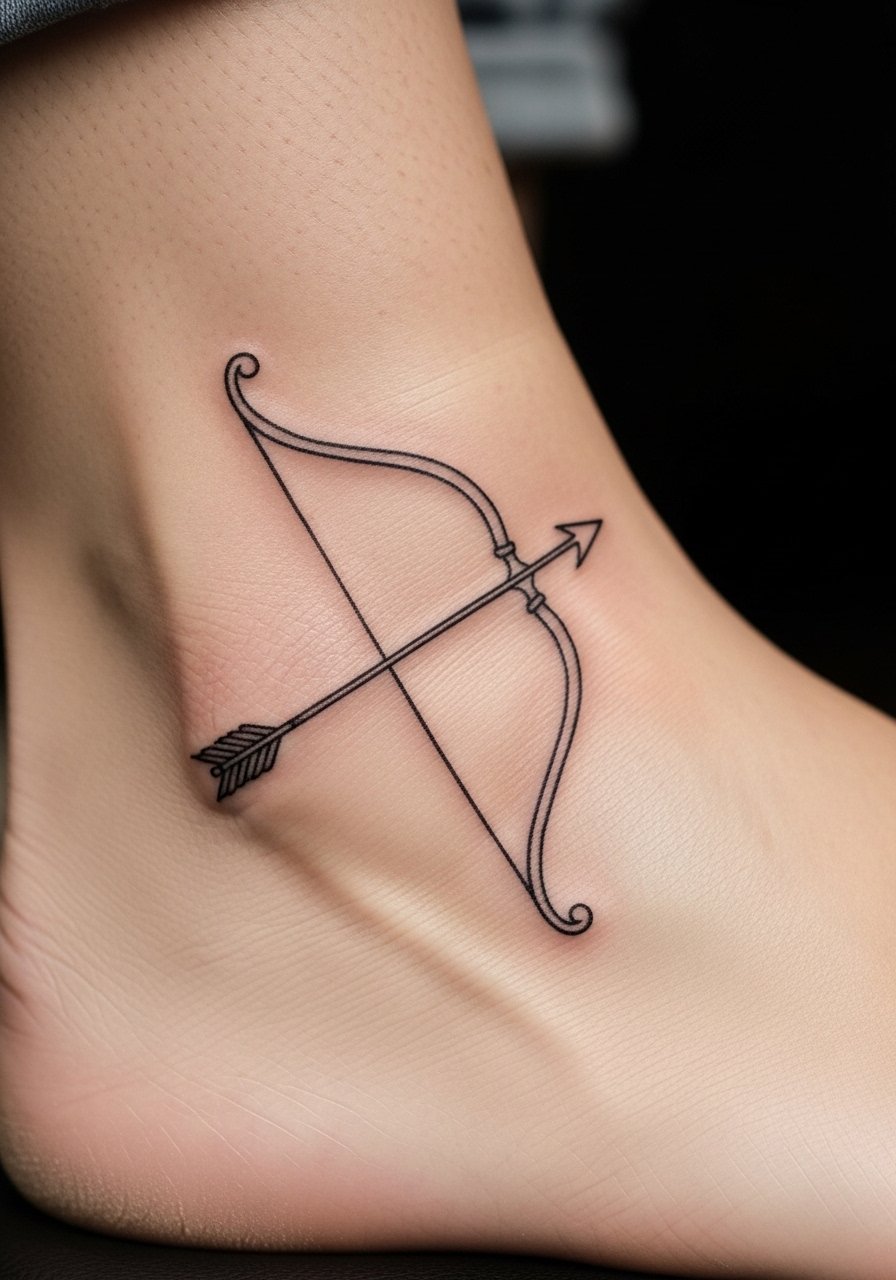
Fair warning the ankle is not painless, but the result reads crisp when done with consistent line depth. Ask for 1.8 to 2 mm line spacing in your reference so the needle depth can be matched. Fine line on the ankle often blurs first because of friction from socks and shoes, so plan a touch-up at year two. The biggest mistake is asking for an arrow smaller than one inch. Too small and the shaft will merge inside a year.
6. Capricorn goat horn constellation framed by mountain motifs on the shoulder

Shoulder placements tolerate denser blackwork and tend to age well with a single session for medium pieces. When you talk to your artist ask them to place tiny constellation dots slightly apart to avoid blowout as the skin stretches. Session time is commonly one to two hours for this composition. Expect the mountain silhouettes to hold shape longer than ultra-fine constellation dots. A common mistake is compressing mountains and dots into a tight square. Spread elements along the shoulder curve so the design flows with anatomy.
7. Taurus bull head softened by a delicate rose on the inner forearm
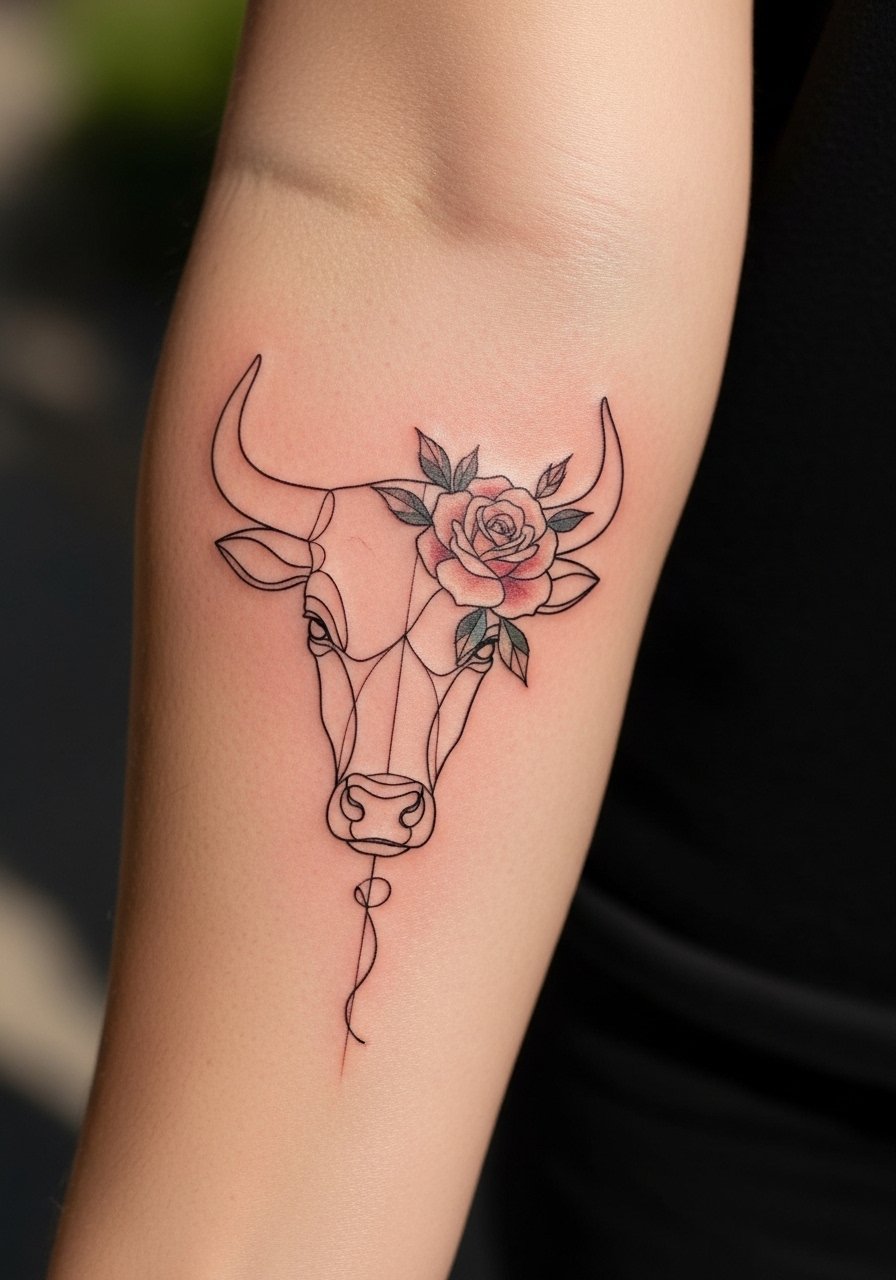
The inner forearm is forgiving and shows off linework. Ask your artist for slightly heavier petal outlines so the rose retains form as colors fade. A single session often suffices for a small-medium piece. Expect light touch-ups on color areas by year three if you wear sleeveless clothing and spend time in sunlight. A rookie move is requesting ultra-thin petals with color filling that is too soft. That version will blur into a pale wash over time.
8. Cancer moon phases with a crab silhouette, ribcage or back placement
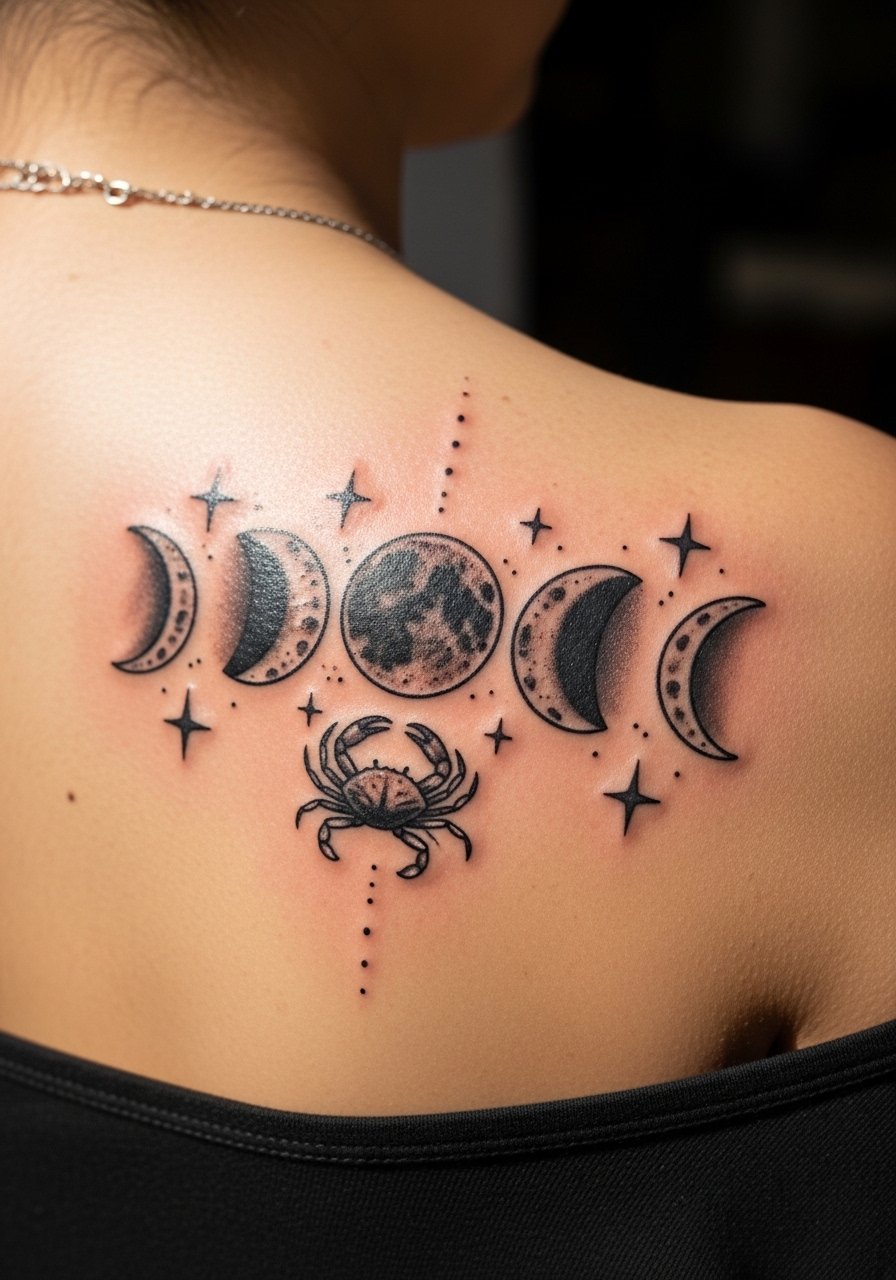
Most moon phase pieces look intentional when spaced evenly across three to five inches. Ribs are a higher pain area but the back provides room and a gentler session. Artists are split on fine line on ribs. One camp says the skin stretch blurs lines within two years. The other camp says with correct needle depth and spacing it settles fine. Ask your artist which approach they prefer and why before booking. Expect one session for a back piece and possibly two for a rib design. A common mistake is cramming five tiny moons into one inch.
9. Leo lion head flanked by sun rays and a crown on the upper arm

There is something about saturated black and a touch of warm color that keeps this one legible for years. Upper arm skin holds pigment well and sessions usually run one to two hours. Tell your artist you want heavy linework in the mane and reserved gold highlights so the piece reads as a silhouette from a distance. Overworking tiny hair strokes inside the mane is a frequent mistake because those lines can merge over time. Expect a touch-up at year three if you want the gold to pop again.
10. Aquarius water bearer pouring geometric waves on the forearm
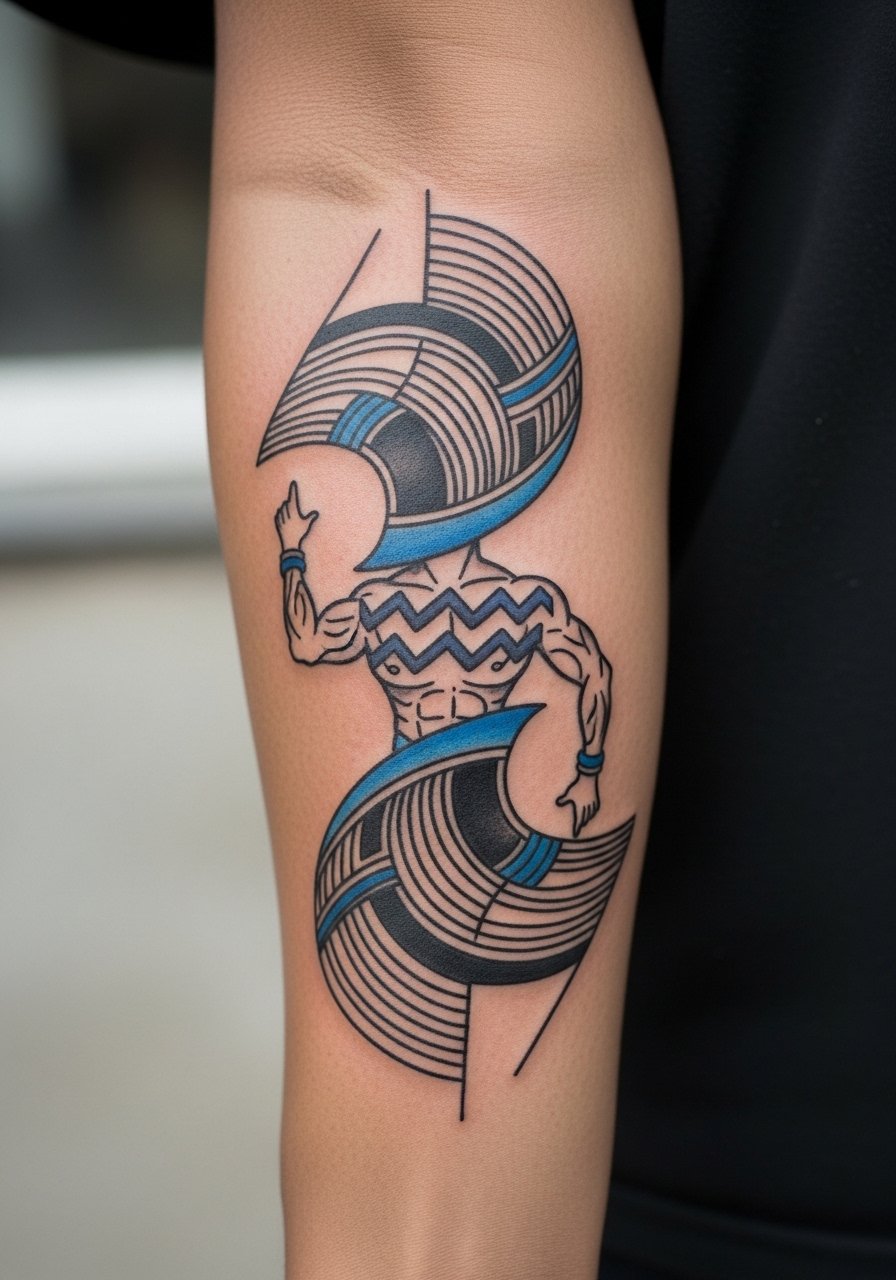
Geometric pieces need room to breathe so lines do not crowd each other as the skin settles. I recommend bringing scaled reference images that show exact line spacing so your artist can map needle depth. Forearm placement means this will be visible and often exposed to sunlight, so blue accents will need a refresh sooner than black. One common mistake is compressing concentric circles into a small patch. Give each band at least two millimeters of negative space for longevity. Sessions typically are one to two hours.
11. Pisces twin fish in flowing watercolor swirls at the wrist
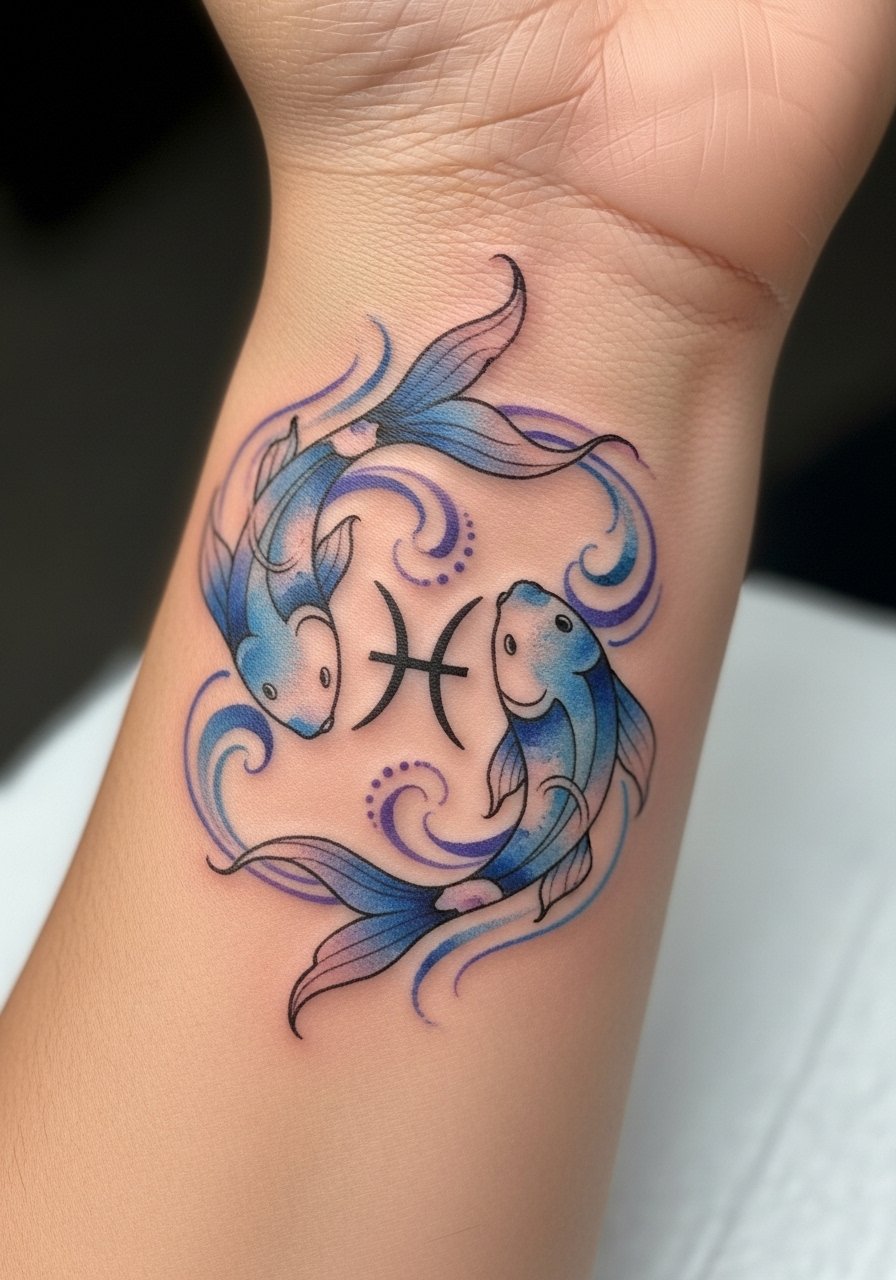
Wrist watercolor tattoos are lovely but they fade faster than blackwork. If you want color longevity ask the artist to anchor the swirls with fine black outlines rather than purely washed pigment. Sessions are usually under an hour for a small wrist piece. Expect color refreshes around year two if you frequently wash hands with harsh soaps. A mistake I see often is asking for zero black in a watercolor wrist piece. That look is ethereal at first and then becomes a faint bruise over time.
12. Gemini mirrored twins with a small butterfly, collarbone placement

Collarbone pieces read like jewelry and benefit from mirrored symmetry. During consultation bring images showing the exact spacing you want between twins and butterfly so the composition complements the clavicle. The collarbone is sensitive and may take an hour for a small piece. A common error is asking for perfect symmetry without accounting for bone asymmetry. Ask your artist to lay the stencil and check alignment while standing upright.
13. Aries ram with fiery geometric triangles on the shoulder blade

Geometric fire motifs need balance between solid fills and negative space to keep the design from feeling heavy. Shoulder blade skin is thicker and takes ink well which is good for saturated color. Tell your artist you want triangles that maintain at least three millimeters of negative space between color blocks. Sessions often take one to two hours. A common mistake is crowding triangular elements together. Spread them along the blade so the geometry reads even as the piece ages.
14. Virgo maiden with wheat stalks for an organic forearm piece

This botanical take gives Virgo a classic, wearable narrative without feeling ornate. The forearm provides room to elongate wheat stalks and keep line spacing consistent. When you meet your artist, specify that the maiden should be drawn with simplified features and that wheat stalks keep two to three millimeters of spacing. Expect one to two hours depending on size. A typical mistake is over-detailing facial features at small scale. Simplified faces age better and preserve the piece's readability.
15. Sagittarius travel map or compass integrated with an archer arrow on the ankle
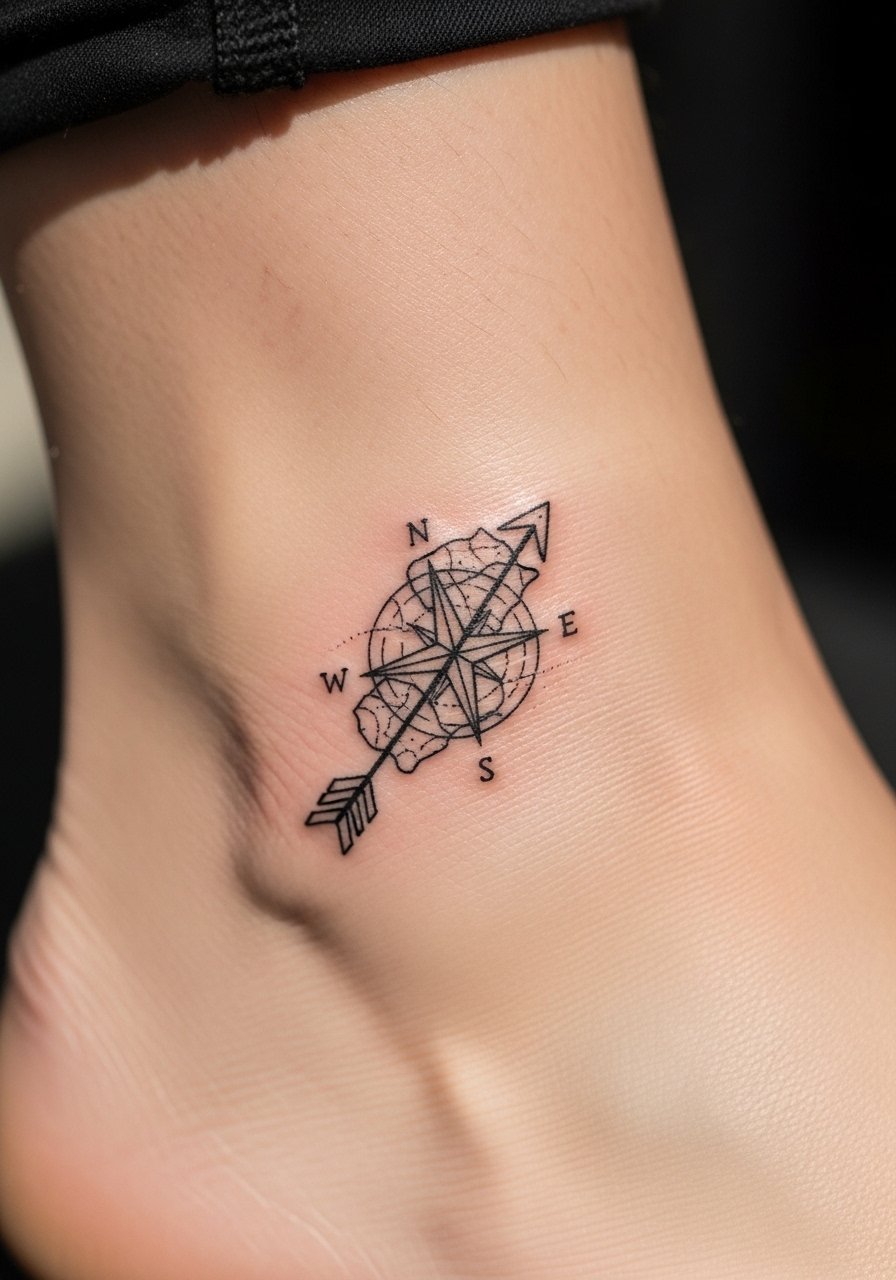
Travel-inspired Sagittarius marks make great first zodiac tattoos because they combine personal coordinates with a simple arrow. The ankle is higher pain but highly visible when you want it to be. Bring the exact coordinates or map fragment you want tattooed and ask the artist to keep line spacing generous so map lines do not merge. Sessions usually last under an hour. The mistake people make is cramming a full map into a tiny ankle patch. Pick one recognizable element, like a compass or a single latitude and longitude, so it stays crisp.
Tattoo Prep and Aftercare Essentials
Fragrance-free gentle foaming cleanser for tattooed skin. Use for first week cleanses to remove ointment residues without stripping pigment. Gentle foam cleansers cut oil and keep the area light and dry without abrasive suds.
Lightweight fragrance-free balm for tattoo healing. Apply a thin layer after the initial bandage comes off to lock in moisture and prevent scabs from cracking.
Medical-grade second skin bandage, 6-inch roll. Useful for large back or thigh pieces when you need a breathable barrier during the first 24 to 48 hours.
Aquaphor Healing Ointment. One mainstream, widely available option that absorbs slowly and protects fresh ink. Use sparingly and only if your artist approves.
Silicone scar sheets for long-term maintenance. These help even out raised healing and can reduce uneven texture on older work.
Fragrance-free moisturizing lotion with light SPF. Use after the tattoo has fully healed for daily UV protection.
Medical-grade saline spray. Gentle saline helps clean hard-to-reach placements like rib tattoos without scrubbing.
Lightweight breathable compression sleeve for forearm and calf placements. Useful when you need to protect a fresh forearm piece while working out or traveling.
Every tattoo is different. Always follow your artist's specific aftercare instructions. Consult a dermatologist if you have skin concerns or unusual healing issues.
Frequently Asked Questions
Q: Will fine line work on ribs blur faster than on the forearm?
A: It depends. Ribs move and the skin stretches more, so fine line there has a higher risk of softening. From what I've gathered, artists who favor ribs use slightly deeper needle depth and wider spacing to mitigate blur. If ribs are your only option, expect a touch-up within two years.
Q: Do watercolor-style zodiac tattoos need different aftercare than traditional blackwork?
A: Yes. Watercolor relies on softer pigment placement so protecting color from early sun exposure matters more. I recommend diligent SPF after healing and avoiding heavy exfoliation on those spots. Using a fragrance-free balm during healing helps, but check with your artist first.
Q: How much does placement affect pain for zodiac pieces like ankle, ribs, and thigh?
A: Placement is the main pain variable. Ankles and ribs rank higher for most people, while forearms and thighs are gentler. Sessions on the thigh and shoulder usually feel longer but are less sharp than rib or ankle sessions. Plan breaks and book a studio known for steady pacing.
Q: When should I schedule a touch-up for pastel or watercolor elements?
A: From my experience, color refreshes commonly land between year two and year four depending on sun exposure and skin type. Lighter pastels fade sooner. If you want the hue to stay vivid, annual sunscreen and a possible touch-up every two to three years keeps color steady.
Q: Are geometric zodiac tattoos risky for blowout on the shoulder blade versus the forearm?
A: Geometry needs precise spacing. Shoulder blade skin is thicker and usually tolerates crisp lines better than thin-skinned areas. On forearms the risk of blowout rises when lines are placed too close. Ask to see healed examples from your artist for similar placements.
Q: Can I include coordinates or a short word in a zodiac design without it turning into illegible text?
A: Absolutely, if you keep characters large enough. Exact numbers and short words should be at least three to four millimeters tall and set in a readable font. Tiny script at one inch often blurs into an indistinct mark after a few years.
Q: How do I find artists who specialize in zodiac motifs without naming anyone?
A: Use style-specific tags like #ariestattoo or #fineLineZodiac, search studio collections for "zodiac" and filter by city, and visit local directories like Tattoodo. Spend time looking at healed photos in portfolios and ask studios for healed examples of similar placements before booking.