
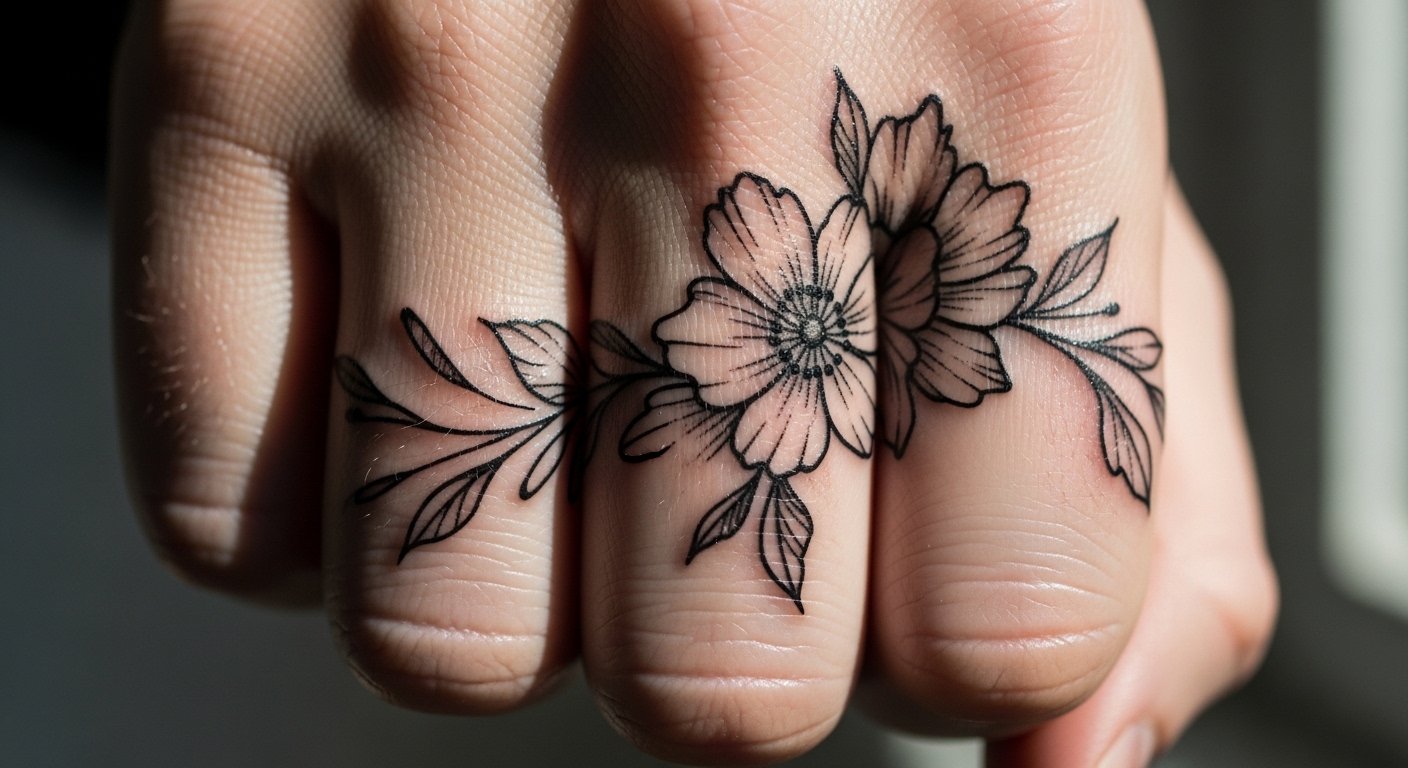
Someone I know spent months staring at hand tattoos that blurred into smudges before finding a blackwork knuckle mandala that still read after two years. I have sat in five shops across Brooklyn and watched artists convert flash into healed pieces that survive daily wear. If you want blackwork that performs on hands, these 15 designs focus on saturation, linework, and placement choices that actually last.
1. Blackwork Gothic Cross on the Back of Hand
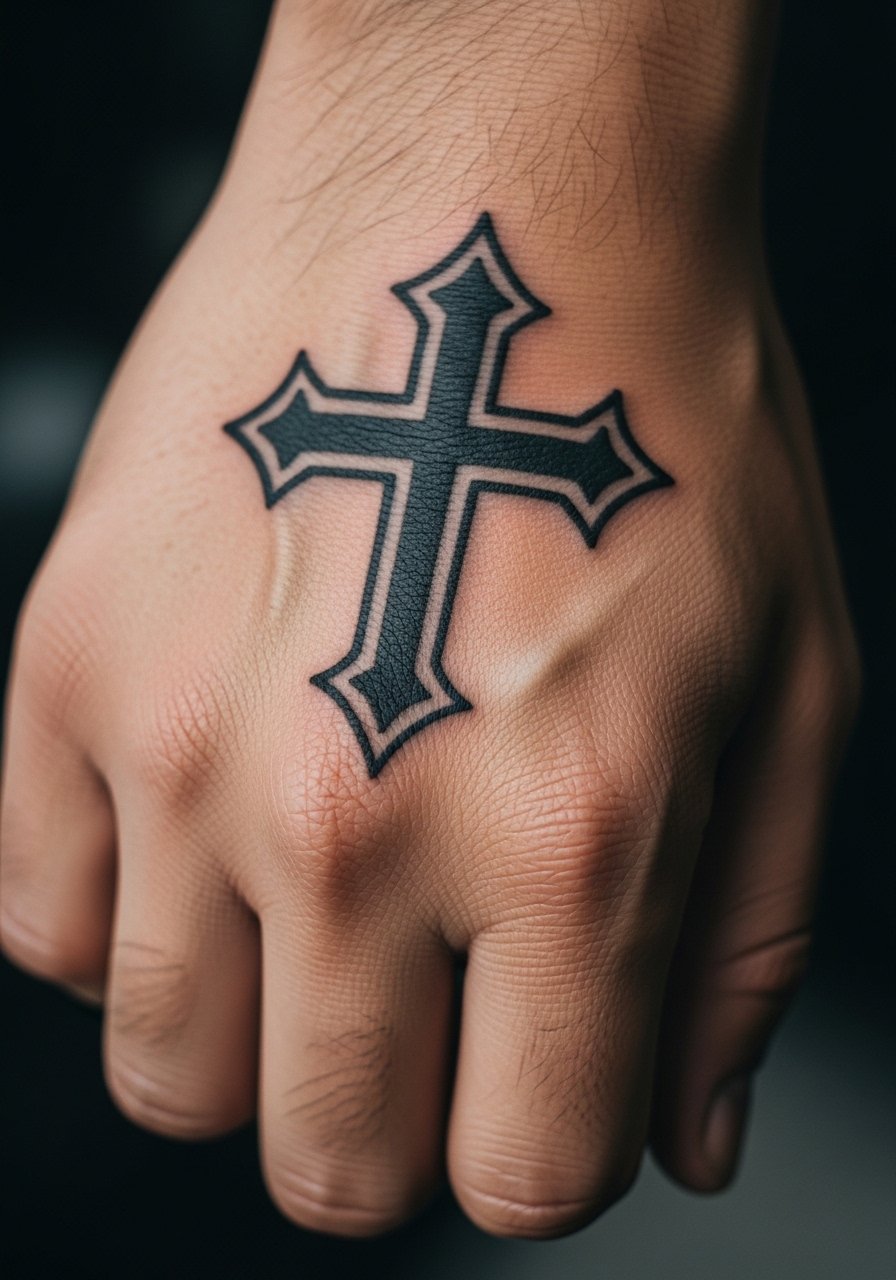
Someone I know picked this placement for visibility and meaning. Expect moderate pain and a single longer session or two short sittings depending on saturation. Tell your artist you want dense saturation in the core and thinner outer linework so the cross keeps its silhouette as the skin ages. A common mistake is asking for ultra-fine outlines across the whole piece. Those lines can blur on the back of the hand, so insist on contrast between heavy fill and defined linework. Over time the center will hold better than tiny details. This design is best for someone who wants a visible, bold symbol and plans for a touch-up around year two.
2. Raven Outline on the Palm Side
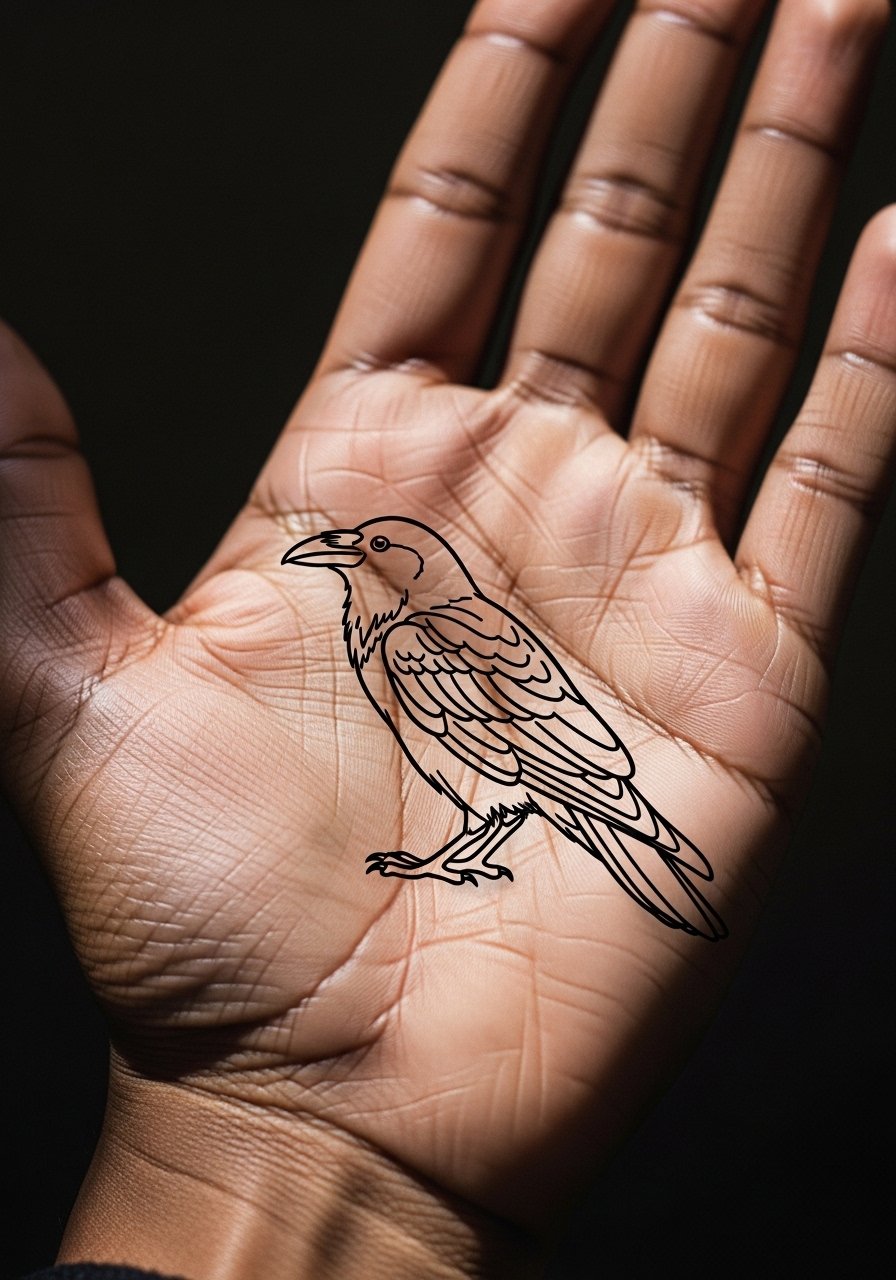
Fair warning, palm work behaves differently from other hand areas. Artists split into two camps on palm longevity. One camp says palm skin is too thick and constantly regenerates, so fine outlines often disappear within a year. The other camp argues that a bold, simplified silhouette with heavy saturation can last several years before a touch-up. When you consult, ask which camp your artist follows and why. The session feels abrasive because the palm is sensitive in a different way, and healing can take longer with more flaking. This style suits someone who wants a hidden, tactile motif and accepts possible yearly touch-ups.
3. Solid Black Floral Mandala Across Knuckles
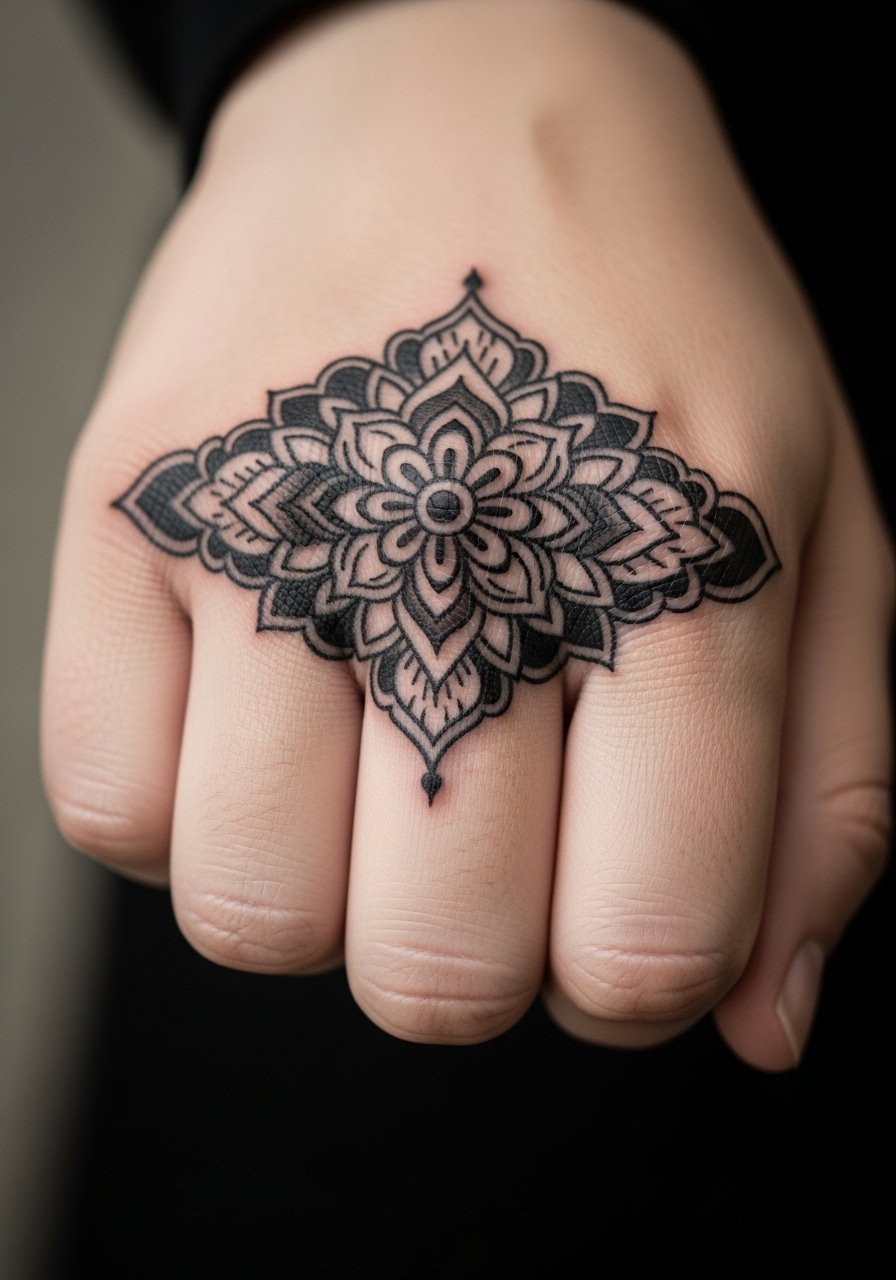
A mandala that reads on knuckles needs room and saturated blocks. When I saw a healed version in person it still read at arm's length after two years. Pain is sharp but quick because knuckles are bony. Ask your artist to scale the central petals larger than they sketch for flash. The common mistake is packing in tiny filigree that disappears as the skin moves. Expect shorter sessions but more frequent touch-ups because knuckle tattoos lose crisp edges faster. This is best for someone who wants a meditative pattern that sits right where gestures show it.
4. Intricate Skull with Thorns on the Side of Hand
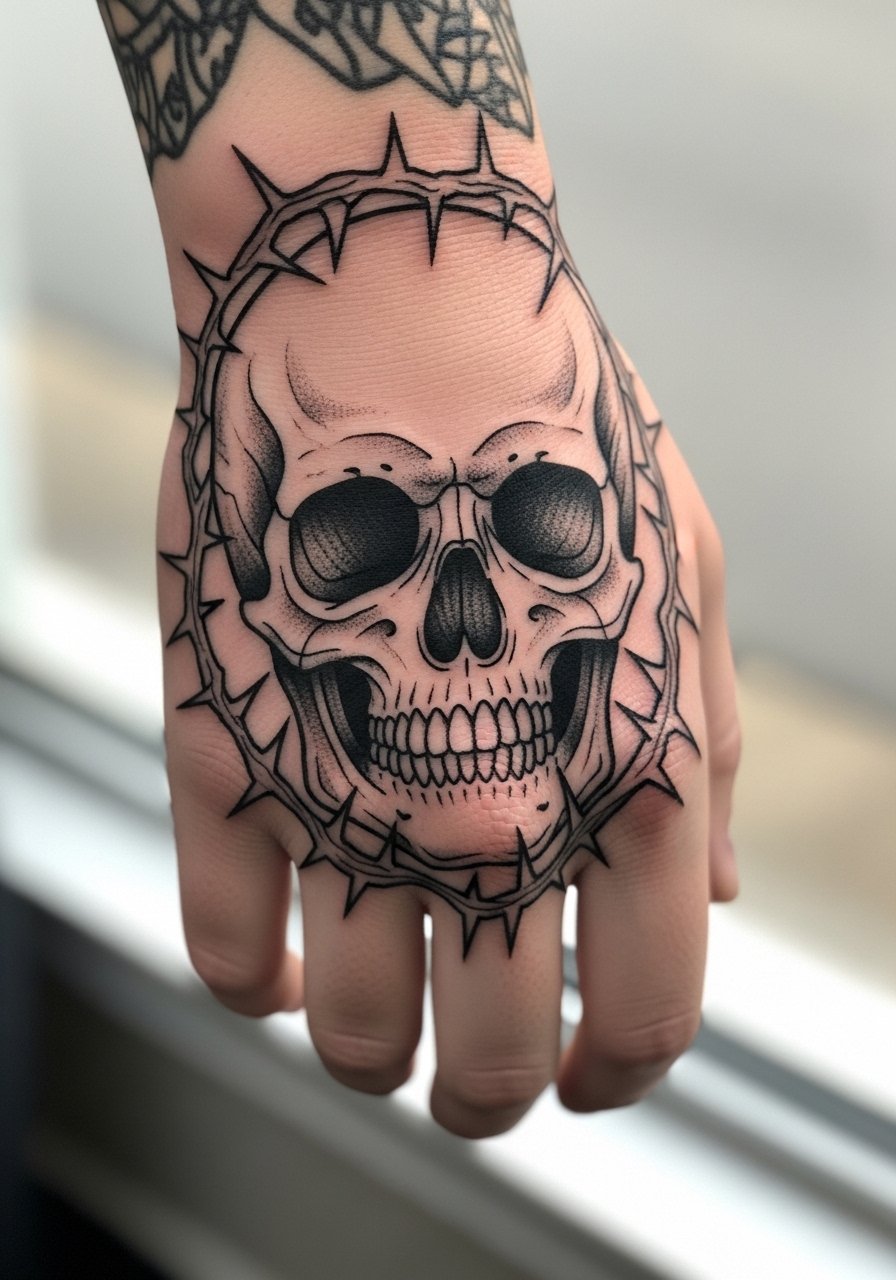
Most people underestimate how often the side of the hand rubs against surfaces. The pain is moderate and the session lasts about 60 to 90 minutes for a four-inch composition. Tell your artist you want bold shadow blocks and a simplified thorn pattern near edges so it does not bleed into a blur. A typical mistake is asking for tiny tooth details and soft gray washes in that spot. Those washes migrate faster. This design fits someone who wants edgy iconography but plans for a touch-up at the two- to three-year mark.
5. Bat Wing Silhouette Arcing Across the Upper Hand
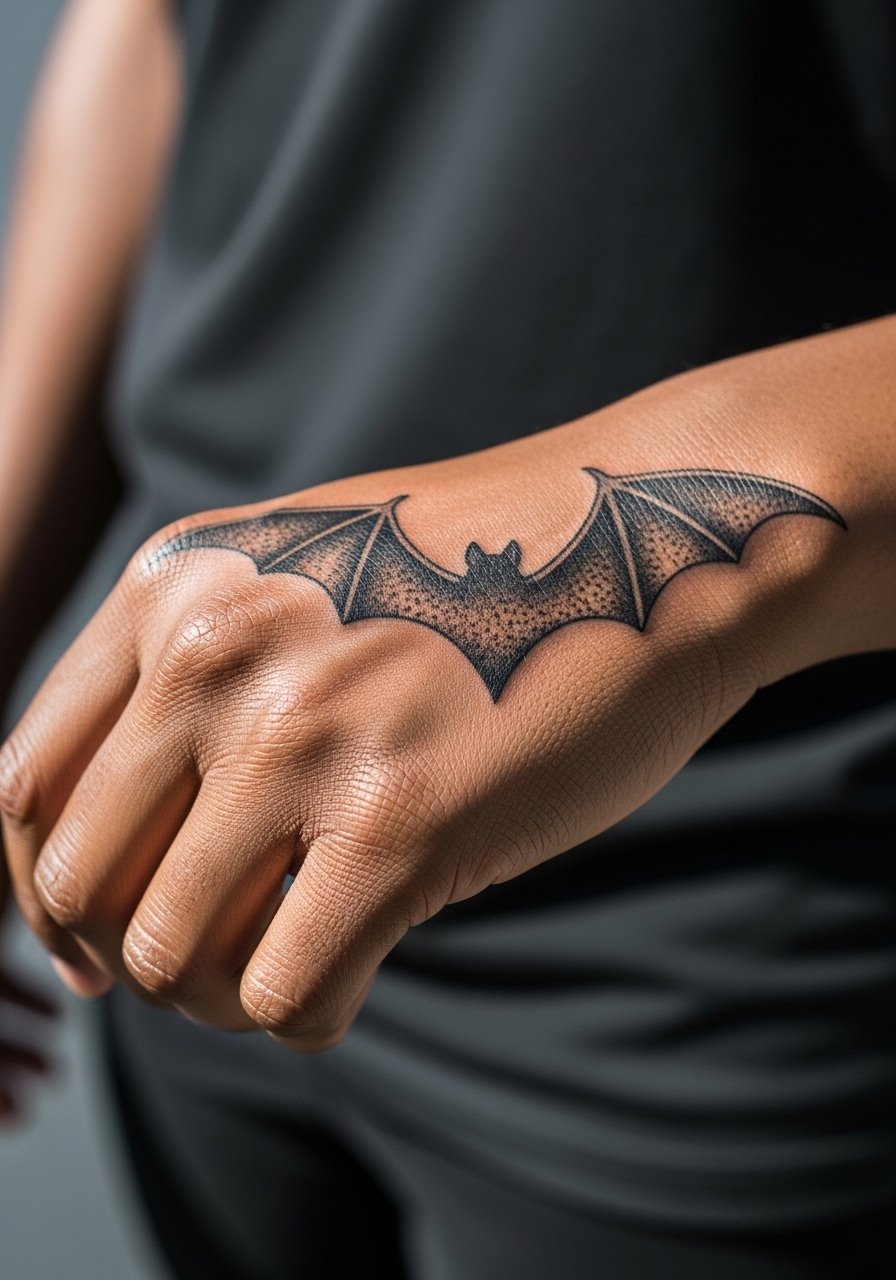
There is a visual payoff with silhouettes on the upper hand because they read from a distance. Expect medium pain and a single session if the design stays clean and bold. During the consult, specify solid fill for the wing and negative-space veins rather than thin linework. A common error is adding too many small internal lines that will disappear. This placement sees frequent sun and friction, so plan for annual touch-up checks. Choose this if you want a graphic shape that keeps its punch as it heals.
6. Coiling Blackwork Snake from Thumb to Wrist
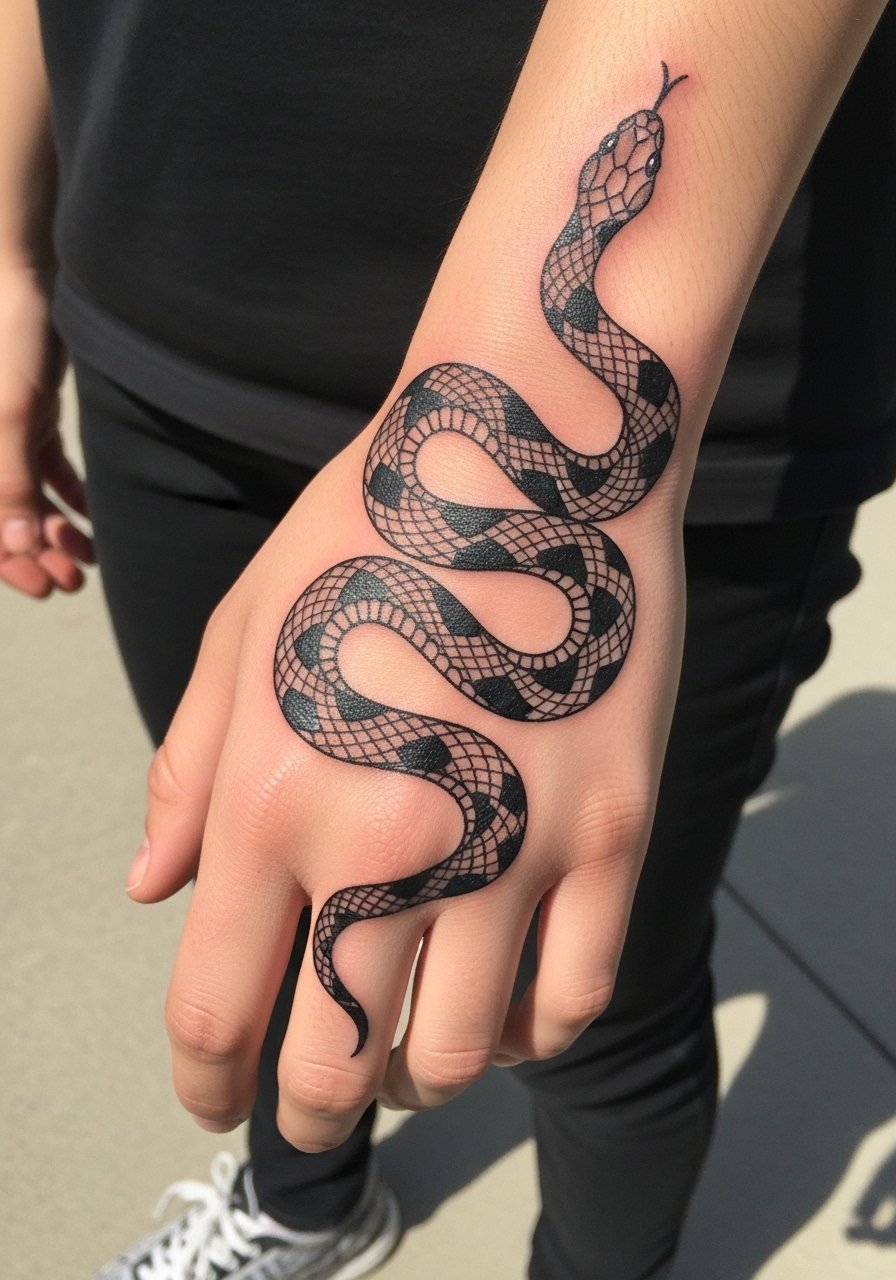
When you wrap a snake around moving joints, the session will be hands-on and feel tight as the artist works across angles. Pain varies because you cross bony and fleshy zones. Ask for bolder head and tail saturation with thinner scales in the middle so the silhouette remains clear. The biggest mistake is requesting ultra-detailed scales along the whole coil. Those details tend to flatten. At six months expect the coil to read well. At two to five years you may need local touch-ups where friction is highest. This suits someone who wants flow and movement on the hand.
7. Ornamental Lace Cuff That Spills Onto the Hand
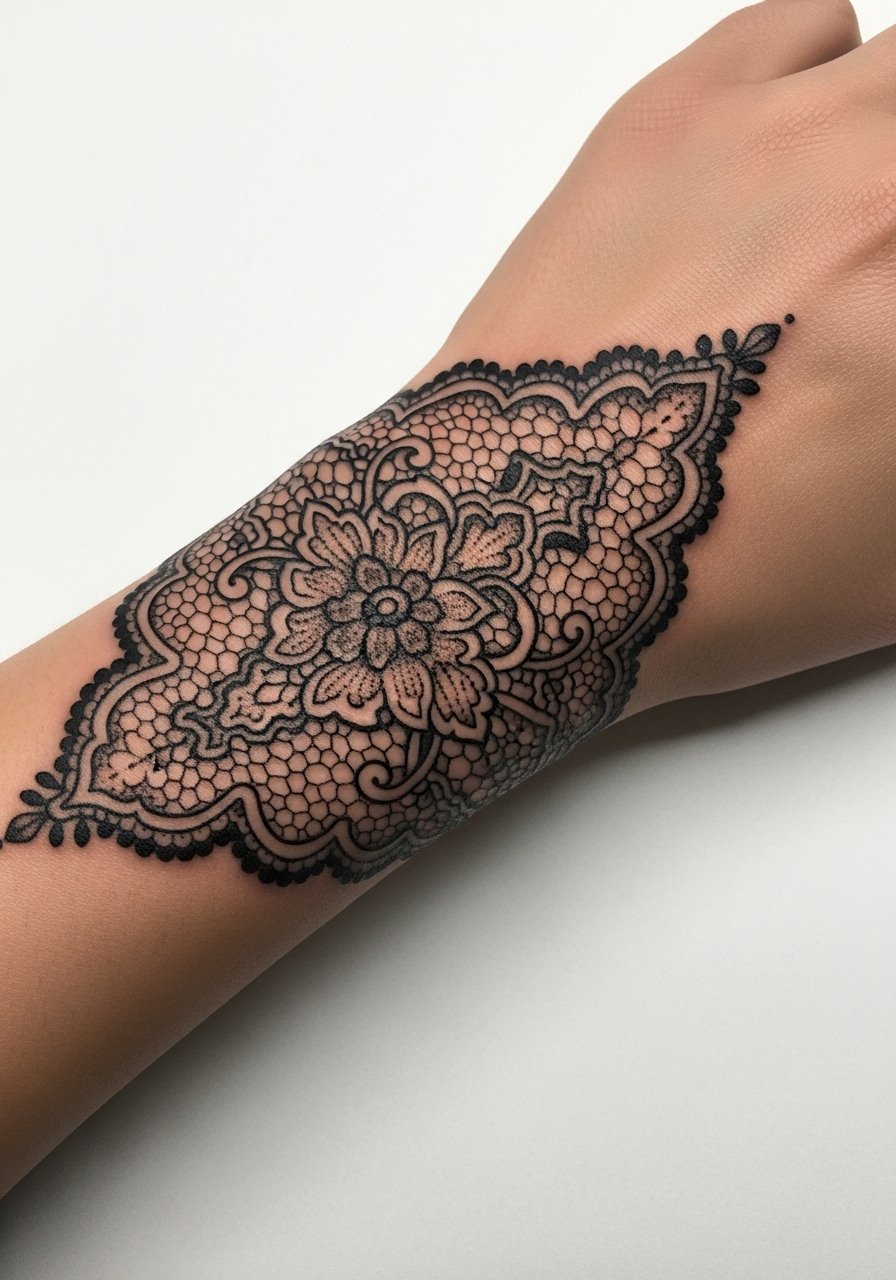
A cuff that meets the hand uses stipple shading and dot work to create texture. Pain is moderate for the wrist area and the session can be split if you want finer texture. Tell the artist you prefer stippling for shadows and to avoid continuous gray wash next to edges. A common mistake is overloading the pattern with tiny dots near the knuckles. Those vanish faster than heavier black blocks. If you plan for long-term clarity, ask for contrast between dense black anchors and airy dot work. This design is a good choice if you like ornamental detail and can commit to a light touch-up schedule.
8. Micro Dot Crescent and Star Cluster Between Fingers
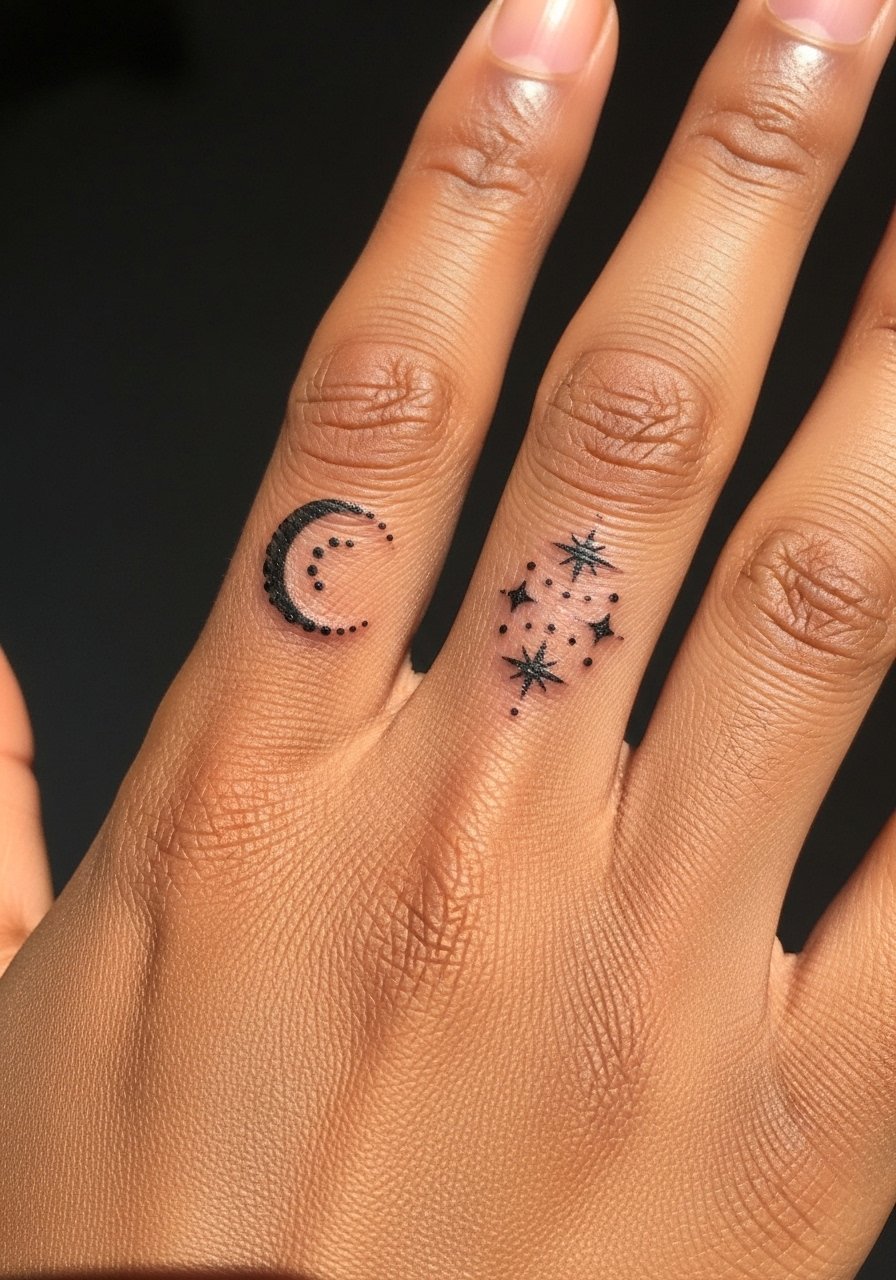
Small placements between fingers are deceptively volatile because the skin there shifts constantly. Expect short, sharp sessions and spotty healing if friction is high. Ask for slightly larger dots than the flash version so they do not disappear. The mistake I see most is insisting on tiny microdots that vanish in a year. With subtle scaling, this composition can last as a discreet accent for a couple of years before a refresh. It suits someone who wants low-profile symbolism and accepts a realistic touch-up plan.
9. Negative-Space Eye in the Center of the Hand
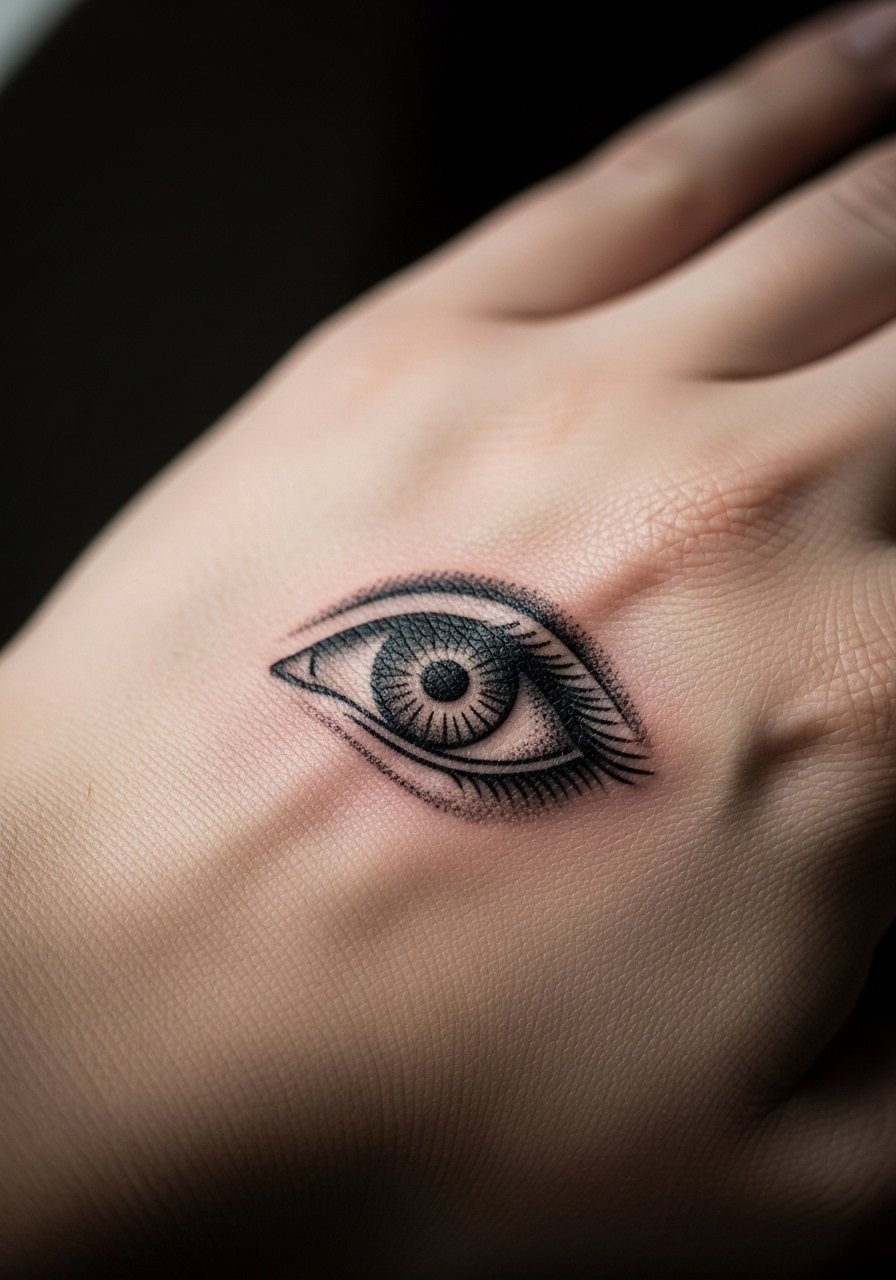
Center-of-hand pieces face constant contact and sun exposure. Expect a moderately painful session and plan for denser fill around the negative-space eye to preserve contrast. During consultation, say you want crisp negative fields rather than thin outlines around voids. A common mistake is relying on slender borders to define negative space. Those borders blur first. At six months the eye will read if contrasts are strong. At two to five years expect softening and potential need for re-saturation. This is for someone who wants a bold central motif with symbolic weight.
10. Bold Black Dagger Along the Index Finger
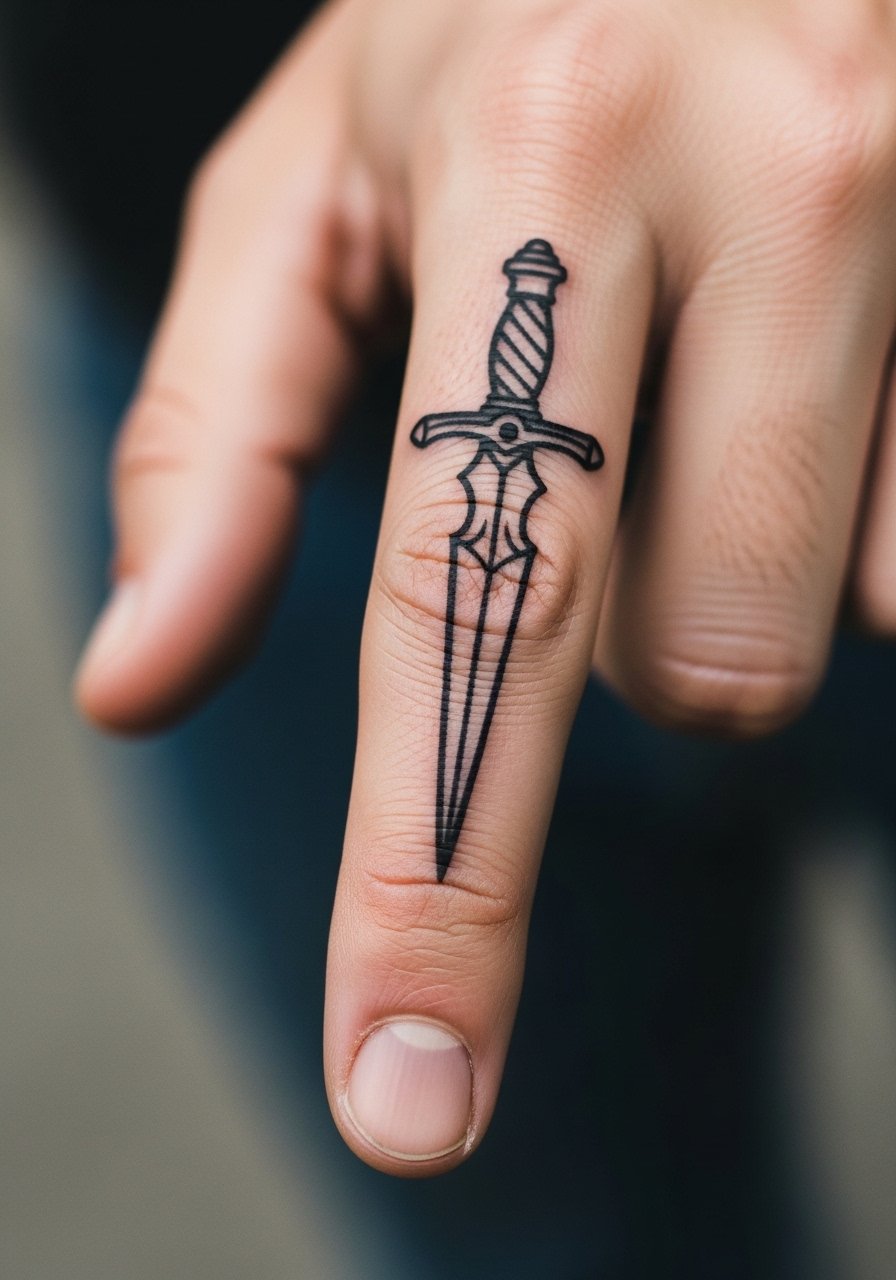
Finger pieces are high maintenance, and the index finger bleeds and fades faster than other digits. Pain is sharp and session time is short but intense. Tell the artist to emphasize a solid black spine and simplified guard so the silhouette survives. The typical error is packing tiny hatches and soft shading into the blade. Those elements disappear quickly and leave a ghost shape. Expect touch-ups as early as one year. This design is best for someone who wants a visible vertical motif and knows fingers require maintenance.
11. Stipple-Shaded Dark Rose on the Back of Hand
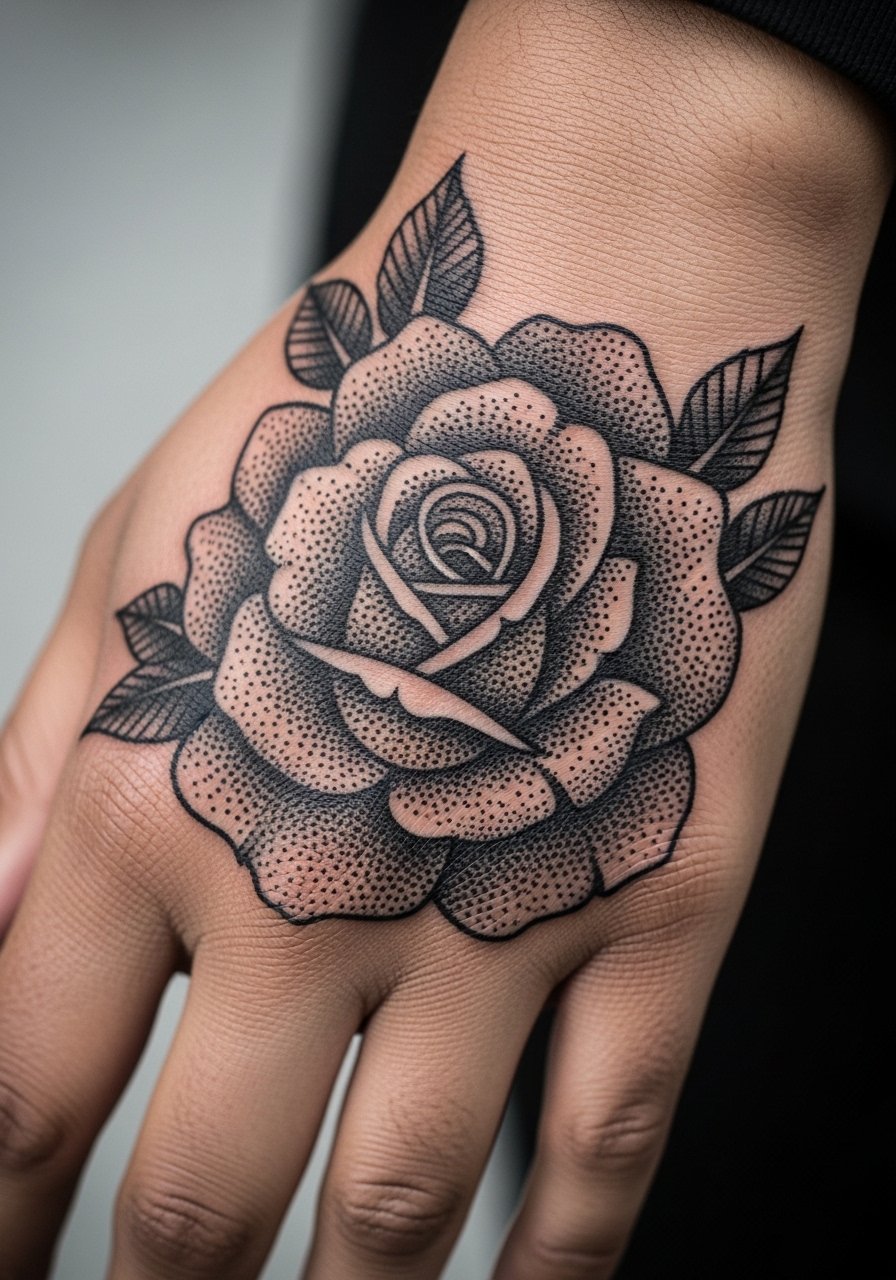
Stipple shading gives tonal depth without heavy gray washes. Pain sits in the moderate range for back-of-hand work and sessions can run longer because dot work requires controlled pacing. Ask your artist for denser stipple near the petal bases and open dot gradients toward edges to keep depth as it heals. The common mistake is overusing smooth gray wash next to delicate stipple. Washes spread more. Over time the stippling tends to hold texture but may lose tightest dots, so plan a touch-up at year two or three. This style suits someone who likes detailed tonal work without full gray saturation.
12. Geometric Mandala Filling the Back of the Hand
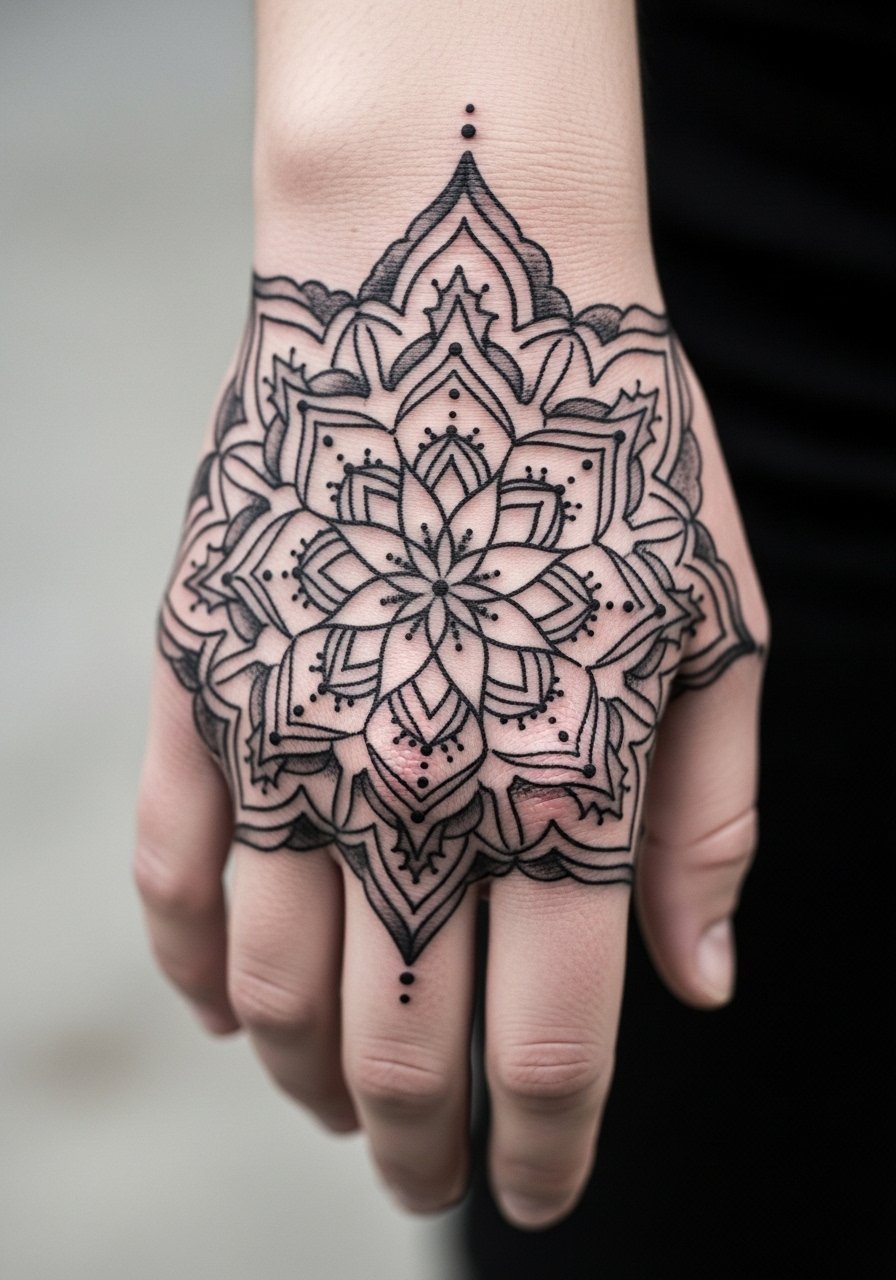
Geometric pieces demand precise linework and spacing to age well. Expect moderate pain and a session that can be divided into layout and fill phases. During the consult, bring reference photos that show exact line weight so the artist can scale elements to hand anatomy. The biggest mistake is scaling a chest-sized mandala down to the hand without adjusting spacing. When lines are crowded they blur together. A properly scaled mandala will keep its radial readability for years, though minor touch-ups are common. This works for people who want symmetry and a meditation-style focal point.
13. Medieval Heraldic Cross with Banner Accent
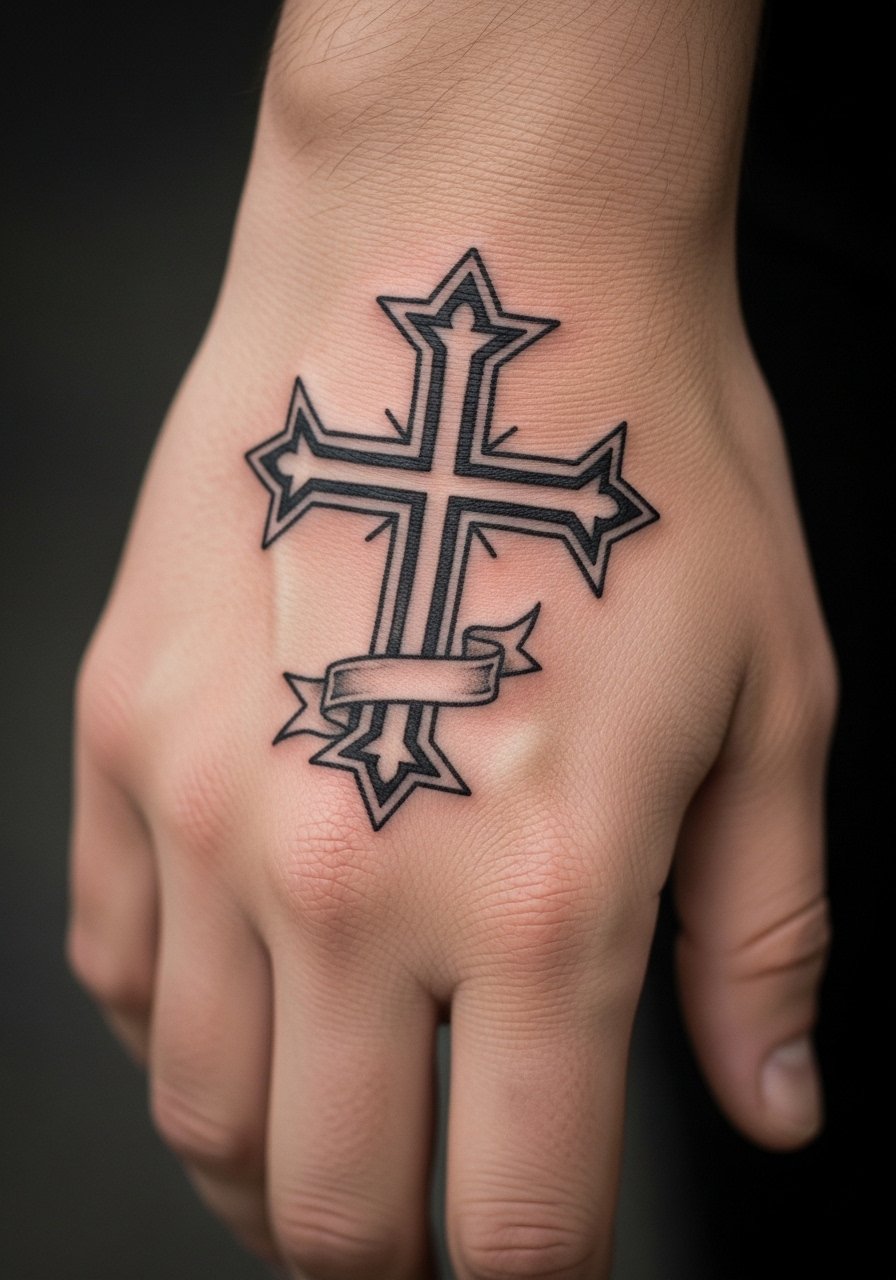
A heraldic cross benefits from heavy central saturation and spare lettering in the banner. Pain is moderate and sessions vary with size. Tell the artist you want the banner text bold and short so letters do not compress over time. The usual mistake is asking for long script in a thin serif that disappears. Keep the banner simple. If this carries cultural or religious weight, acknowledge its origin and consider a respectful variation rather than a direct historic replica. This design suits someone who wants iconography with a structured, graphic feel.
14. Interlaced Knotwork on the Knuckles
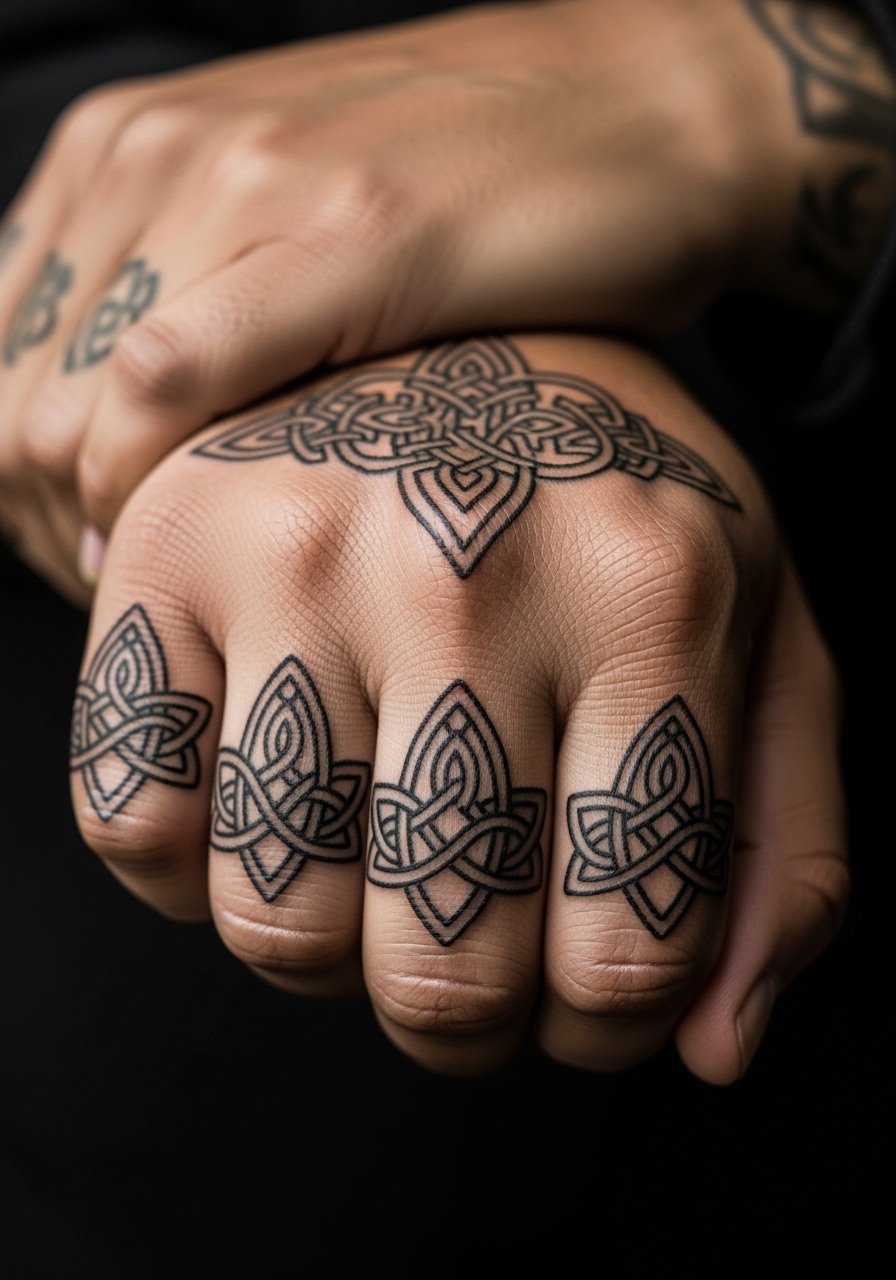
Knotwork across knuckles needs negative-space planning to keep each loop readable. Expect sharp, stinging pain and a session that focuses on clean, steady linework. Ask your artist to map negative channels wider than the sketch to allow for skin movement. The common error is cramming a complex knot into two inches of real estate. That choice leads to a muddy healed look. Be mindful of cultural origins if the knotwork echoes specific traditions. This motif is for someone who wants graphic continuity across finger joints and accepts periodic touch-ups.
15. Asymmetric Roman Numeral Date Along the Side of Hand
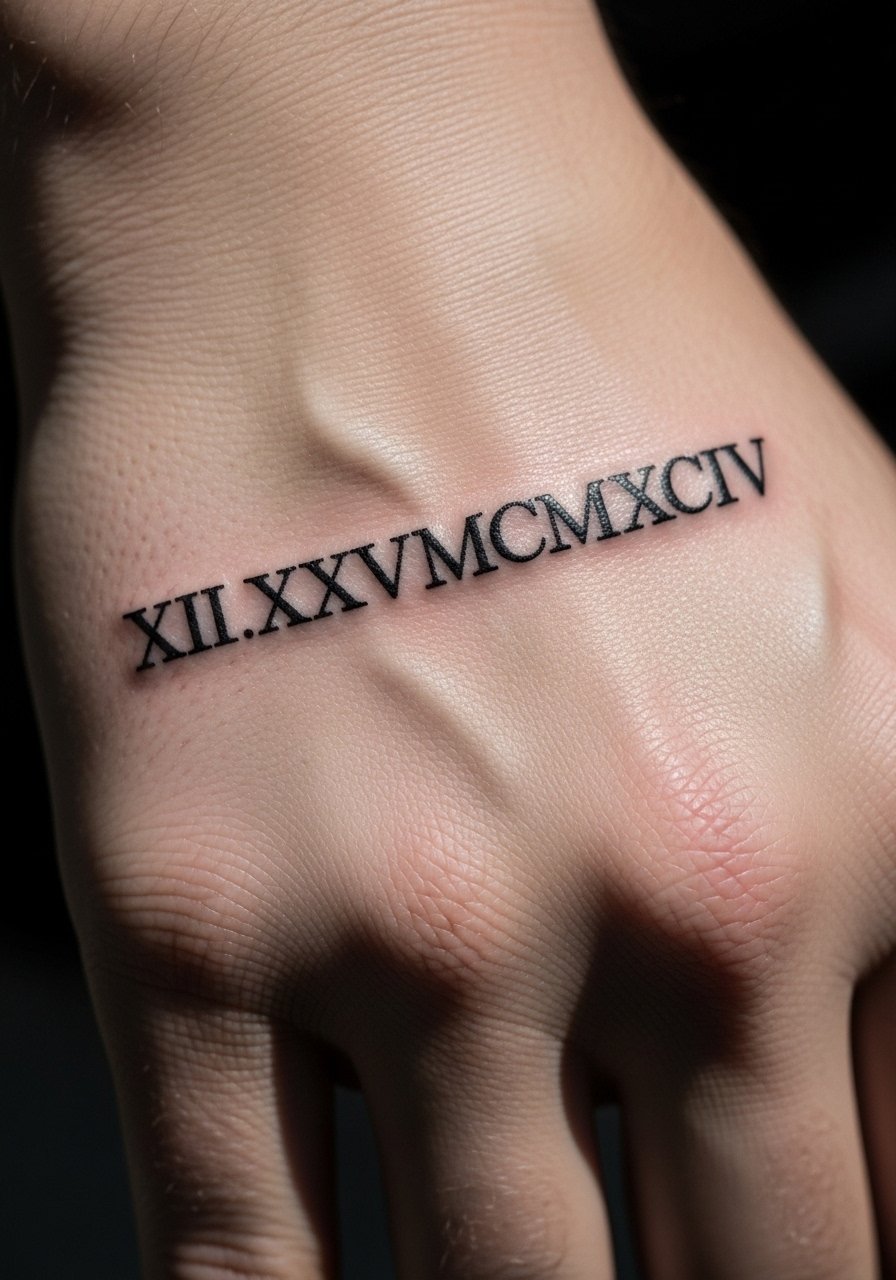
Text on the side of the hand reads differently than on flat skin. Pain is moderate and sessions are brief. Specify the exact numerals you want so the artist plates the spacing correctly. The biggest mistake is asking for tiny serif fonts that collapse. Opt for slightly larger, monospaced numerals that hold shape over time. This placement is visible during everyday motion and can fade unevenly where the hand bends. It fits someone who wants a discrete, time-stamped piece and accepts touch-ups when digits shift.
Tattoo Prep and Aftercare Essentials
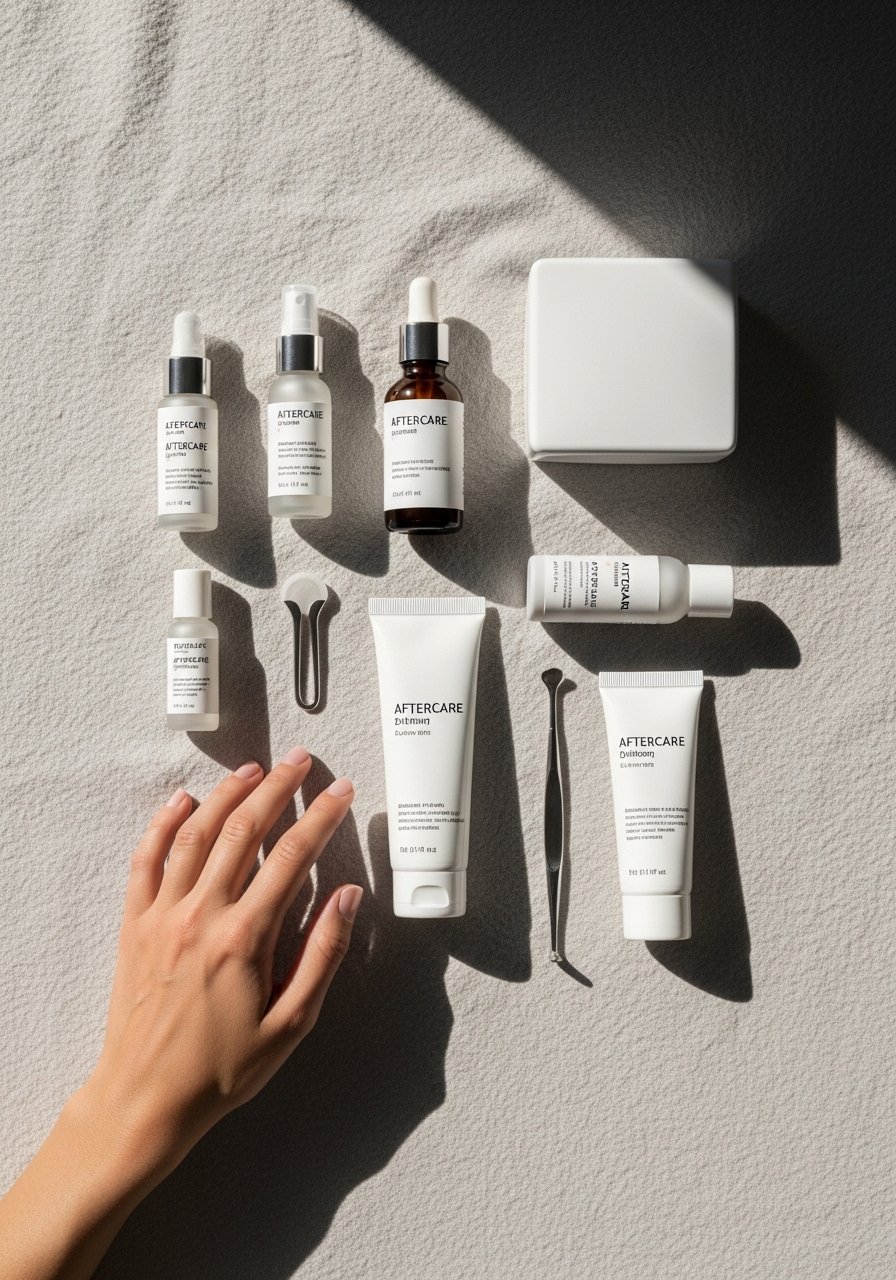
lightweight+fragrance-free+tattoo+balm. A gentle balm soothes new ink without heavy residue. Use sparingly during the scabbing phase to prevent over-moisturizing.
medical-grade+second+skin+bandage+6-inch+roll. A breathable occlusive for the first 24 to 48 hours when your artist recommends a secondary dressing.
pH-balanced+tattoo+cleanser. Mild cleansers help remove lymph without stripping pigment. Use during the first week as directed.
antimicrobial+non-scented+soap. Use for daily washing to reduce infection risk without added fragrance.
silicone+scar+sheet. For long-term texture smoothing around raised areas once healed.
Aquaphor+healing+ointment. A mainstream option I mention because some artists still use it for short-term occlusion. Use only if your artist recommends it.
mineral+sunscreen+SPF+50. Daily sun protection preserves saturation after the tattoo heals.
soft+cotton+compression+glove. Useful during initial healing for hand tattoos that snag on clothing or tools.
Every tattoo is different. Always follow your artist's specific aftercare instructions. Consult a dermatologist if you have skin concerns or unusual healing issues.
Frequently Asked Questions
Q: Do palm and finger blackwork tattoos really need touch-ups more often than back-of-hand pieces?
A: Yes, from what I've gathered palm and finger skin renews faster and faces constant friction. Expect touch-ups sooner on palms and fingers than on the back of the hand. Plan for a realistic maintenance timeline and ask your artist about anticipated touch-up intervals.
Q: How should I ask an artist to make a knuckle mandala age better without losing detail?
A: Ask them to scale central motifs larger, increase saturation in anchor points, and use negative space strategically. Bring healed photos that show line weight you like. Avoid demanding ultra-fine filigree across every knuckle because those details vanish first.
Q: Are there special considerations for aftercare on hand tattoos compared with arms?
A: Hands get washed more and meet more surfaces, so clean them gently and avoid heavy creams that trap bacteria. Use a pH-balanced cleanser and a lightweight balm from the shopping list. If your artist suggests an occlusive for the first day, follow that plan closely.
Q: Can negative-space designs on the hand remain crisp on darker skin tones?
A: They can if the artist designs wider negative channels and relies on strong black anchors rather than thin borders. Bring references that show healed examples on similar skin tones and ask the artist about spacing adjustments.
Q: Is it risky to get religious or cultural symbols in blackwork on the hand?
A: There is debate within communities about direct replicas versus inspired variations. One camp favors literal reproduction for authenticity. The other prefers respectful adaptation to avoid appropriation. Consider the origin, and discuss respectful options with your artist before committing.