Someone I know spent six months bookmarking UV tattoo photos before booking anything. The real problem was not picking a pretty flash. It was knowing which UV reactive styles hold up under sunlight, how they heal on different skin tones, and which ones need touch-ups every couple of years. Below are a dozen UV tattoo ideas that work in clubs and still read like art in daylight, plus practical prep and aftercare essentials to protect the glow.
1. Constellation Map on Outer Forearm

Someone I know first saw this on a friend who plays in a cover band and liked how it reads daytime and under a blacklight. Tell your artist you want slightly heavier linework for the connecting stars so the map still reads at year two, and ask for UV white dots packed with a neon base if you want daytime hinting. Common mistake is asking for ultra-thin lines that blur after one year. Expect a 1-2 hour session, moderate pain, and touch-ups every 1-2 years if you spend a lot of time outdoors. Blowout risk is low on the forearm but spacing matters so stars do not merge as the ink settles.
2. Neon Sign Script on Inner Wrist
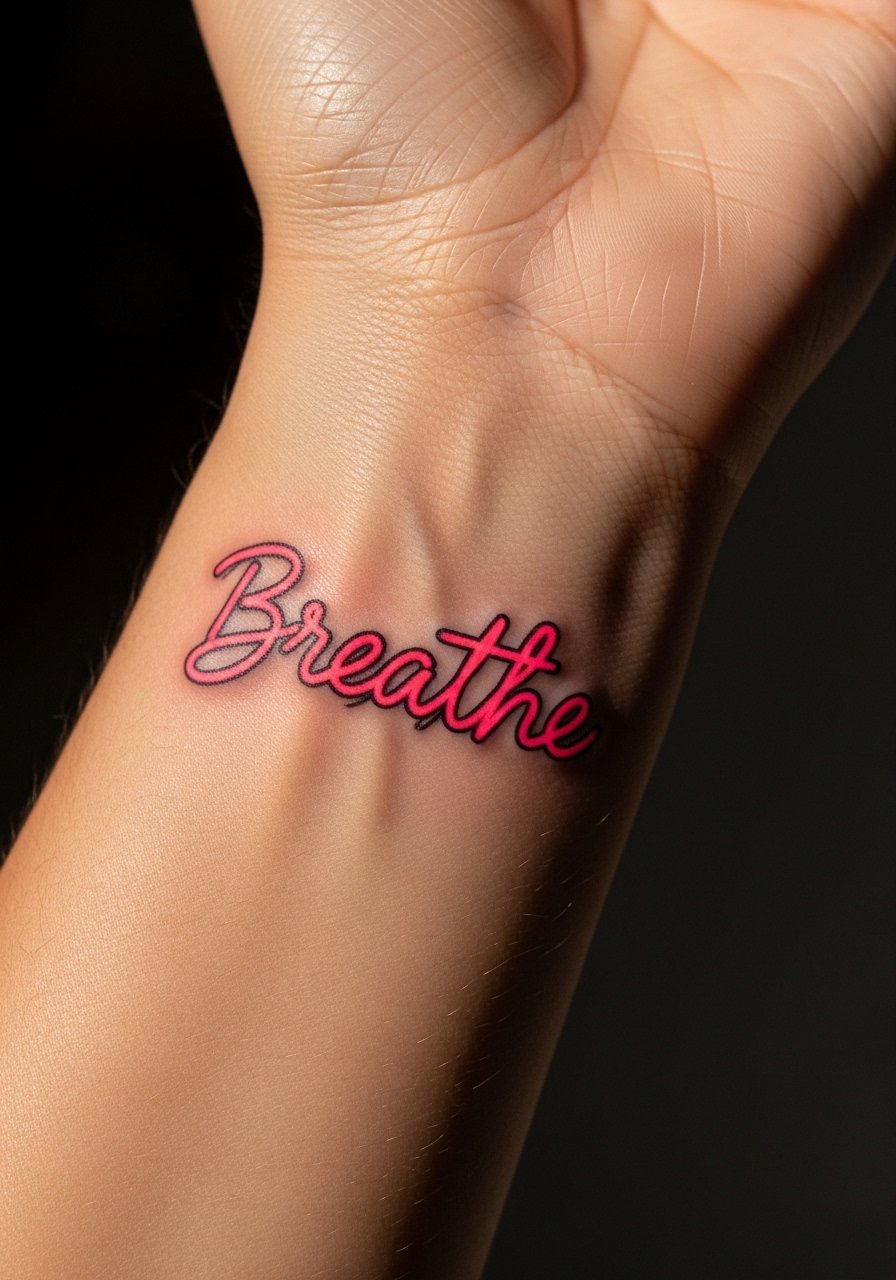
Fair warning: the inner wrist is unforgiving for tiny script. Ask for slightly thicker strokes and a faint neon underlayer so the piece has dual-visibility. The typical bad version is hairline script that looks perfect fresh but blurs into a gray smudge by year three. This takes under an hour and rates low to moderate on pain. Hands and wrists get more sun and wear so plan for an annual touch-up if you want the neon hint to stay obvious under stage lights. When you consult your artist, bring a photo of the exact lettering weight you want.
3. Fluorescent Lightning Bolt Shoulder Cap

Most minimalist designs lose their punch when lines are too thin. For a shoulder lightning bolt ask for bold linework with saturated UV purple fill to preserve presence from a distance. The shoulder is a forgiving placement with lower blowout risk and a shorter session time around 45 minutes to 1.5 hours. The design suits performers who want instant club visibility and people who prefer a simple symbol. Overexposure to sun will fade the UV pigments faster than regular inks. Plan on touch-ups every 1-3 years depending on how much time you spend outside.
4. Blacklight Dandelion on Ribcage
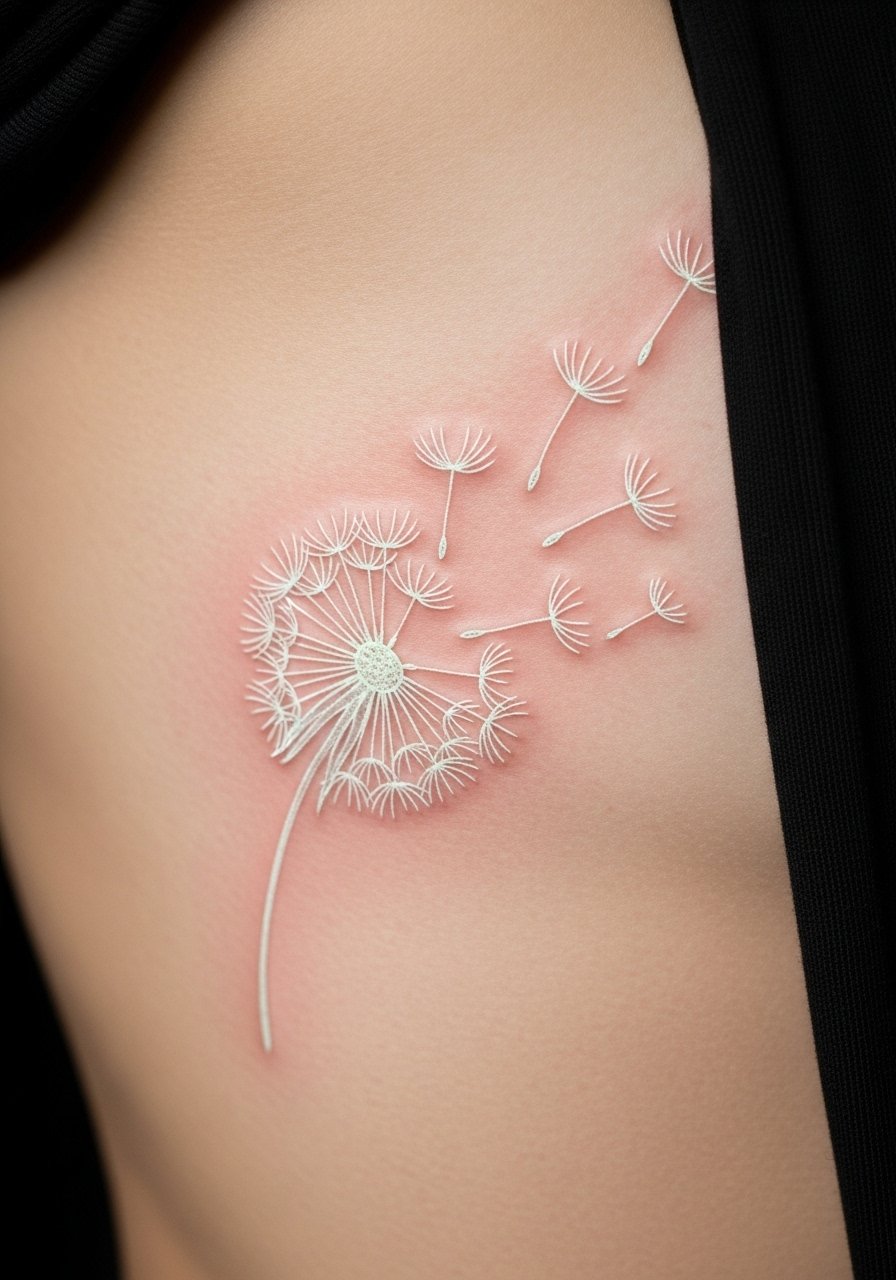
Artists split on fine line on ribs. One camp says the skin stretch and movement blur thin lines within two years. The other camp says careful spacing and precise needle depth let fine line stay crisp. If you want this on your ribs, ask your artist which camp they fall into and see healed photos of ribs they have done. Expect higher pain on ribs, a 1.5 to 3 hour session, and a higher blowout risk if the artist goes too deep in one pass. The benefit is dramatic blacklight activation, but plan for touch-ups and be strict about sun avoidance while healing.
5. Psychedelic Fish Scale Upper Arm Band
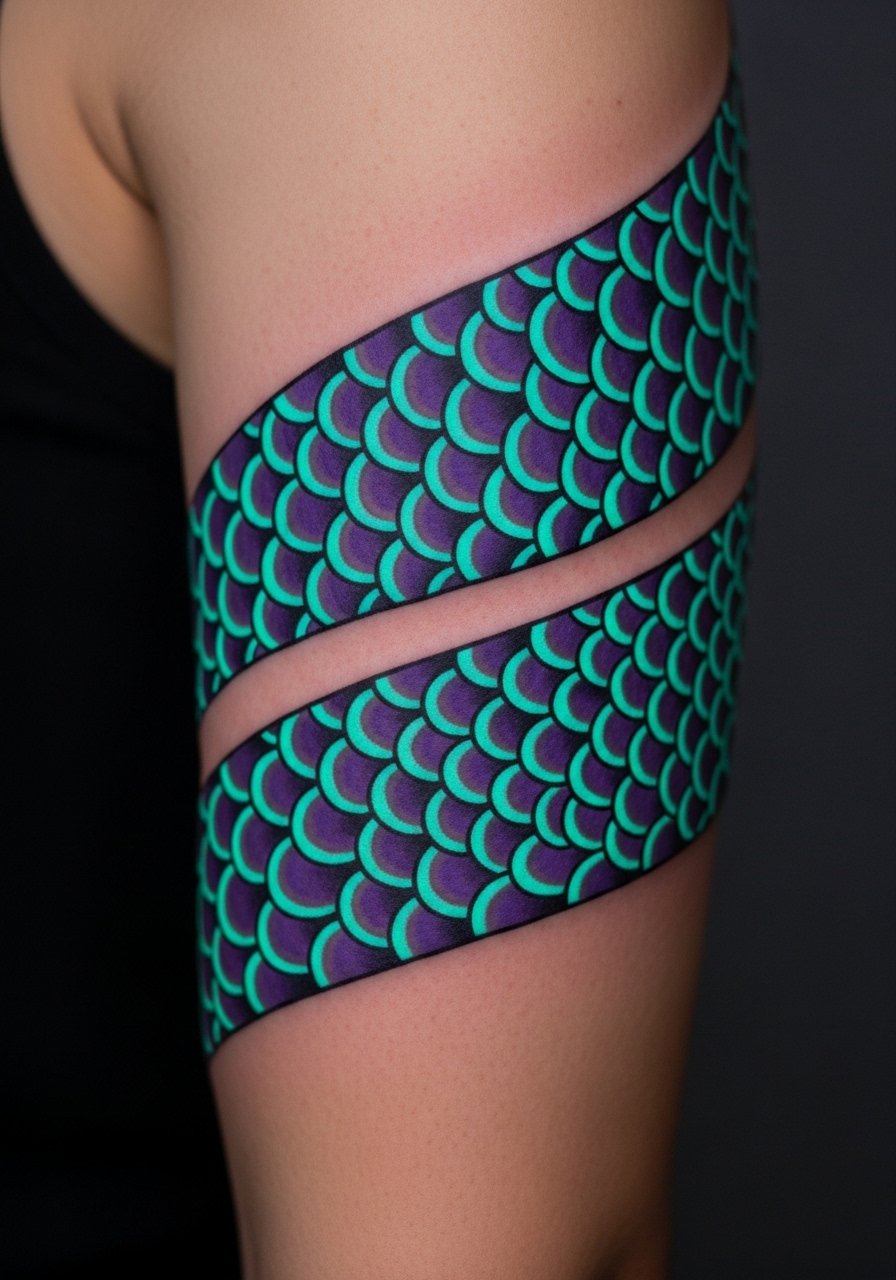
There is a trend toward UV-neon hybrids that add a visible daytime tint. For an arm band, ask for layered color blocking so the scales still read at six months when some UV fade has started. The wrong approach is packing tiny scales too close together, which makes the pattern muddy as saturation drops. Upper arm sessions usually run 2-3 hours and feel moderate on pain. The band is great for someone who wants oceanic vibes and stage visibility. Expect touch-ups every two to three years and avoid long sun exposure to slow pigment breakdown.
6. UV Moon Phase Collarbone Cluster
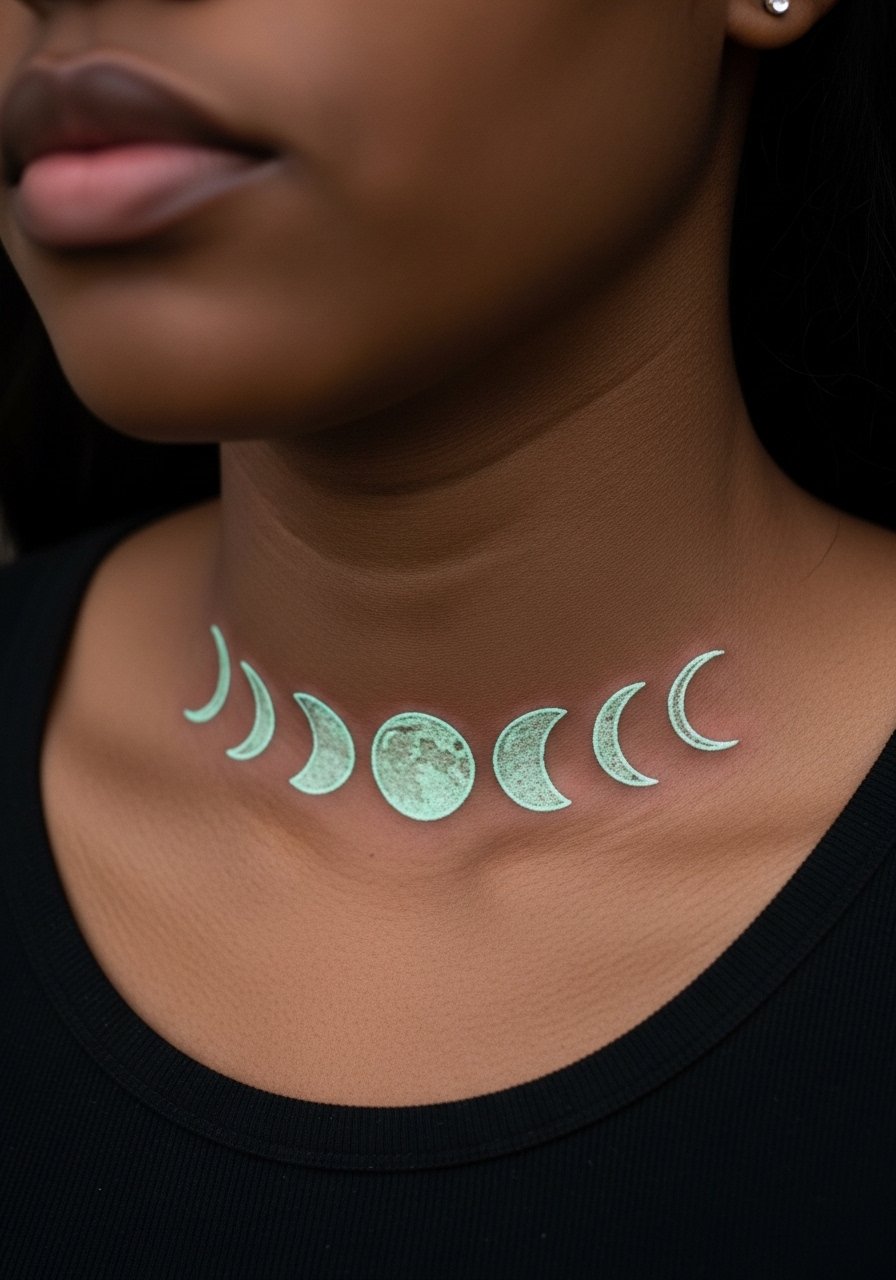
When you sit down with your artist for collarbone moons, bring collarbone mockups so spacing works with your clavicle. The collarbone area can show scarring more easily, so ask about needle depth and healing photos for that placement. Session time is usually under an hour and pain is moderate because of thin skin over bone. The UV-only white reads strongest under blacklight but may look extremely faint in daylight. If you need daytime visibility, request a faint neon base layer. Touch-ups are typical at year two if you wear sun-exposed clothing regularly.
7. Fluorescent Geometric Mandala on Outer Thigh
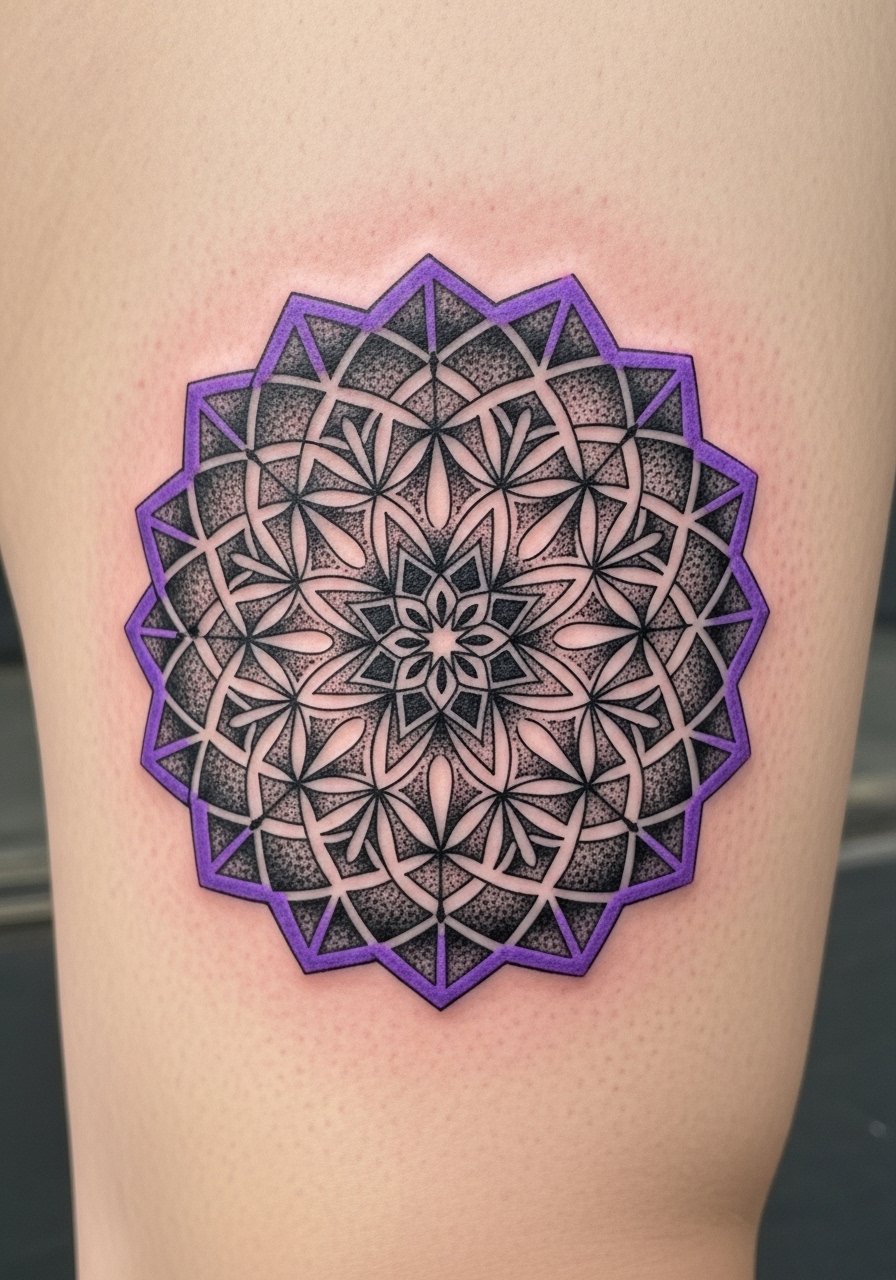
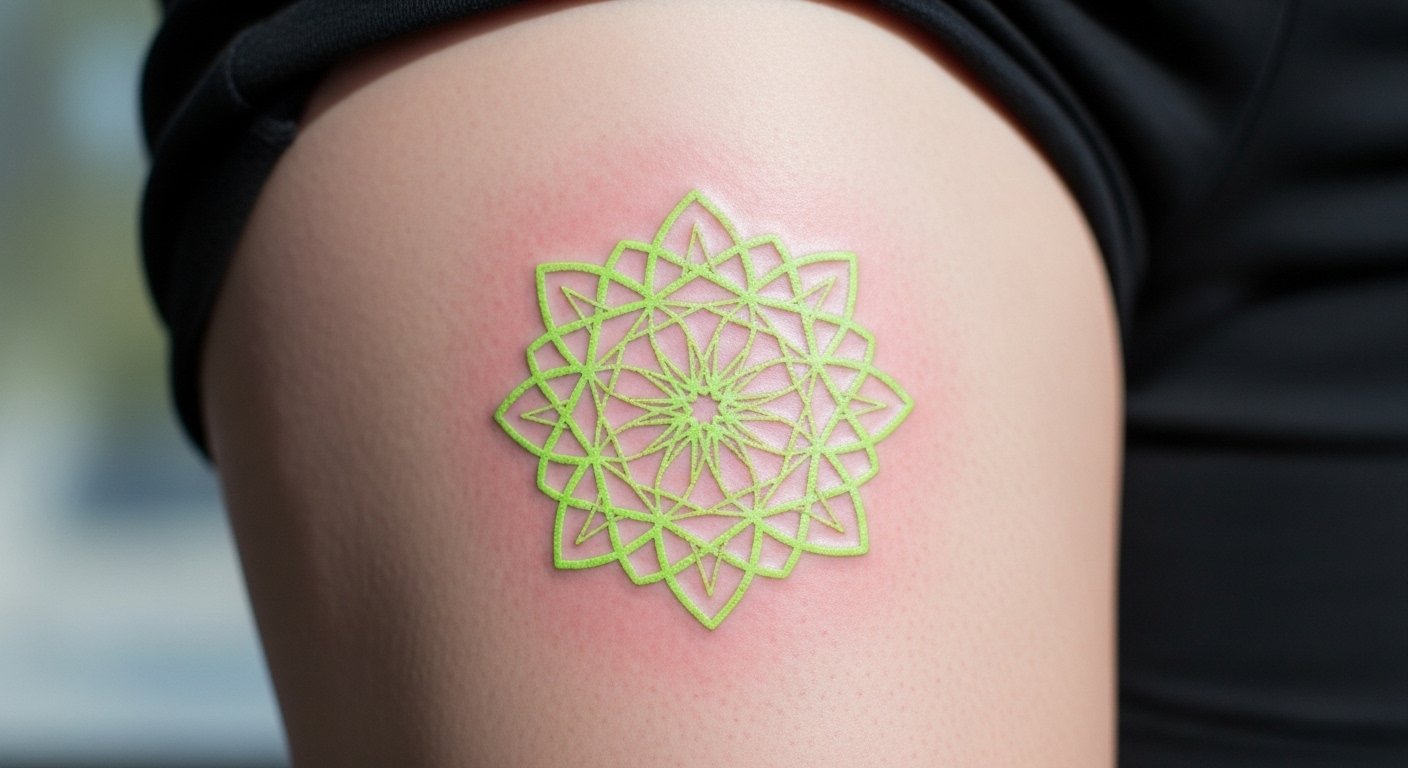
Most geometric work ages poorly when artists compress too many tiny lines into a small space. The smartest mandalas give lines breathing room and use stipple shading to retain texture as saturation softens. Thigh placement keeps daytime discretion and reduces blowout risk compared with thin-skinned areas. Sessions run longer, often split into two visits, and pain is generally low to moderate. If you want this to read under stage blacklights, ask for a purple UV accent layer under the blackwork. Expect a touch-up at year three if you regularly expose the area to sunlight.
8. Blacklight Wave Pattern Calf Starter

There's something about motion in a calf piece that looks alive under blacklight. Tell your artist to use whip shading and ghosted edges so the waves keep dimension as the UV pigments fade. Common mistakes are using neon as flat fill without layering, which flattens after a few months. Calf sessions usually take 1-2 hours and pain is moderate. This placement is great for performers who want visible motion on stage. Touch-ups every 1-2 years maintain the blacklight pop, and sunscreen while healed helps slow pigment breakdown.
9. Micro-Illustrative Sea Creature on Ankle
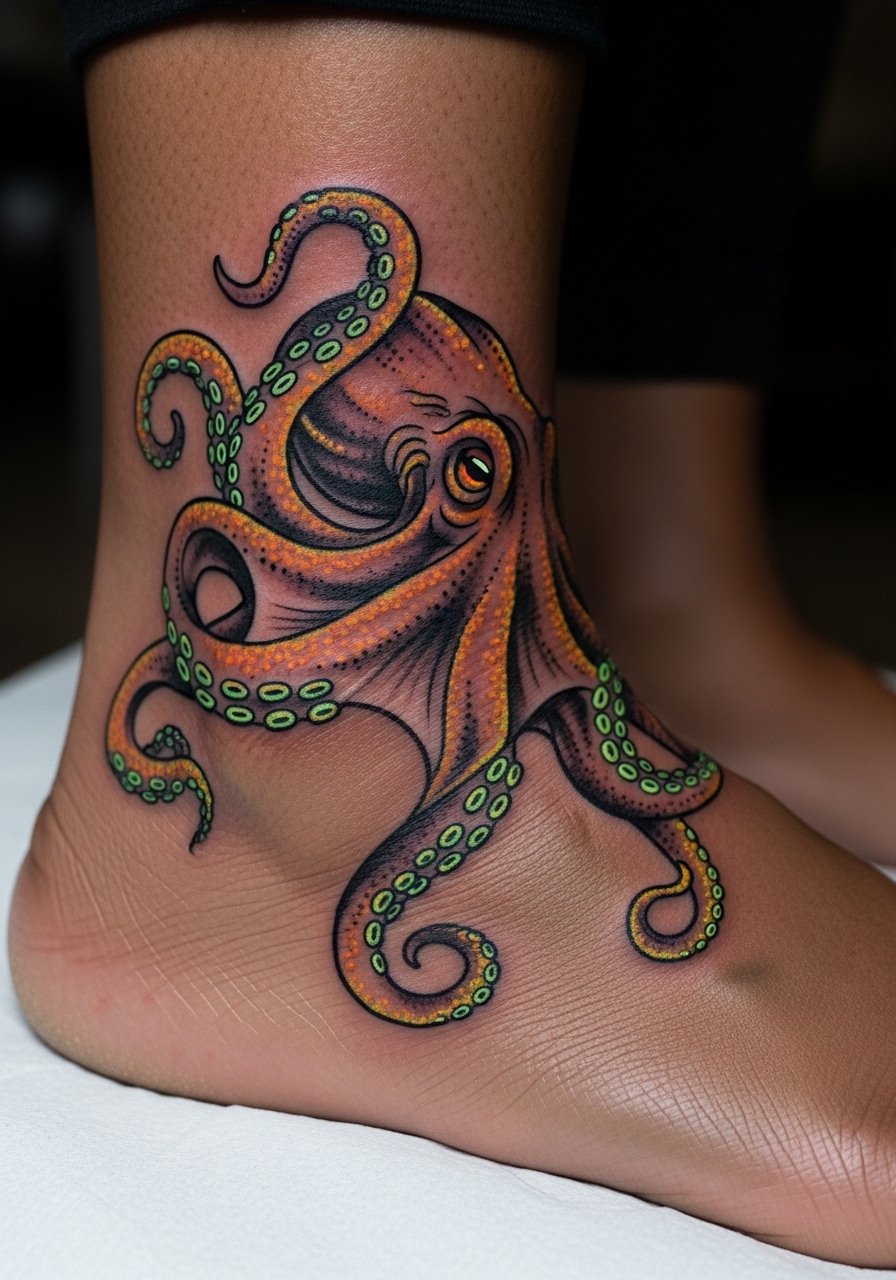
The biggest mistake with micro-illustration on ankles is asking for too much tiny detail in a compact space. For a sea creature ask your artist to simplify negative space and use dot work that holds up as UV pigments spread. Ankle sessions are short but pain can spike near bone. Blowout risk is higher on ankles because skin is thin. This piece looks subtle in daylight and activates under blacklight, which suits people who want low-key art with club-ready pop. Plan for a touch-up around year two if you wear ankle-exposing shoes often.
10. Neon Hybrid Sleeve Accent Panel
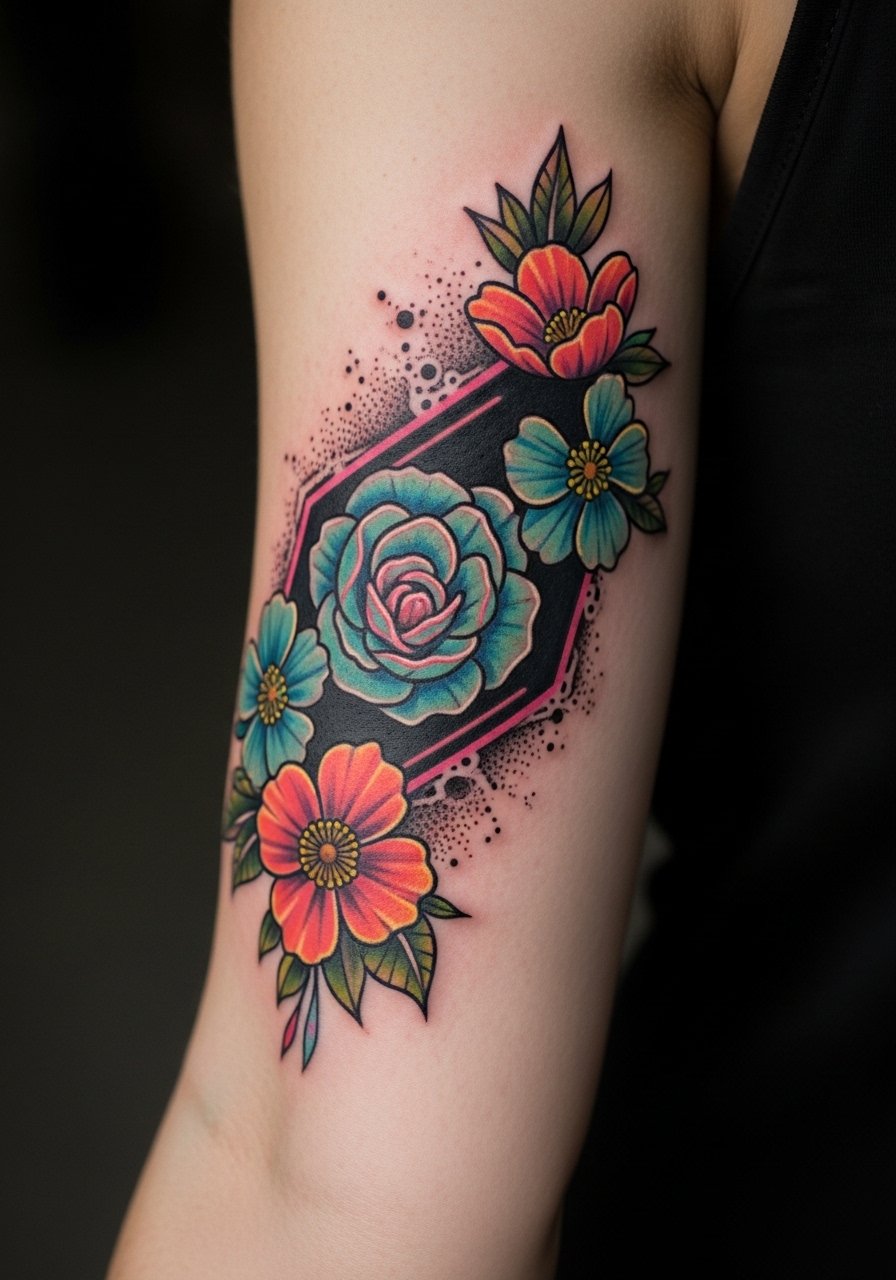
When you plan a sleeve accent panel, specify which parts should be UV-only and which get neon base colors for daytime reading. The wrong request is to expect full-sleeve micro detail in UV only, because the pigments fade unevenly and can look patchy. Outer bicep sessions can be broken into multiple three-hour parts and feel moderate. This approach is for someone who wants a mostly regular sleeve that activates under blacklight for gigs or nights out. Touch-ups to the UV layers are common every 1-3 years depending on sun exposure.
11. Medical Marker-Style Spot for Privacy or Care
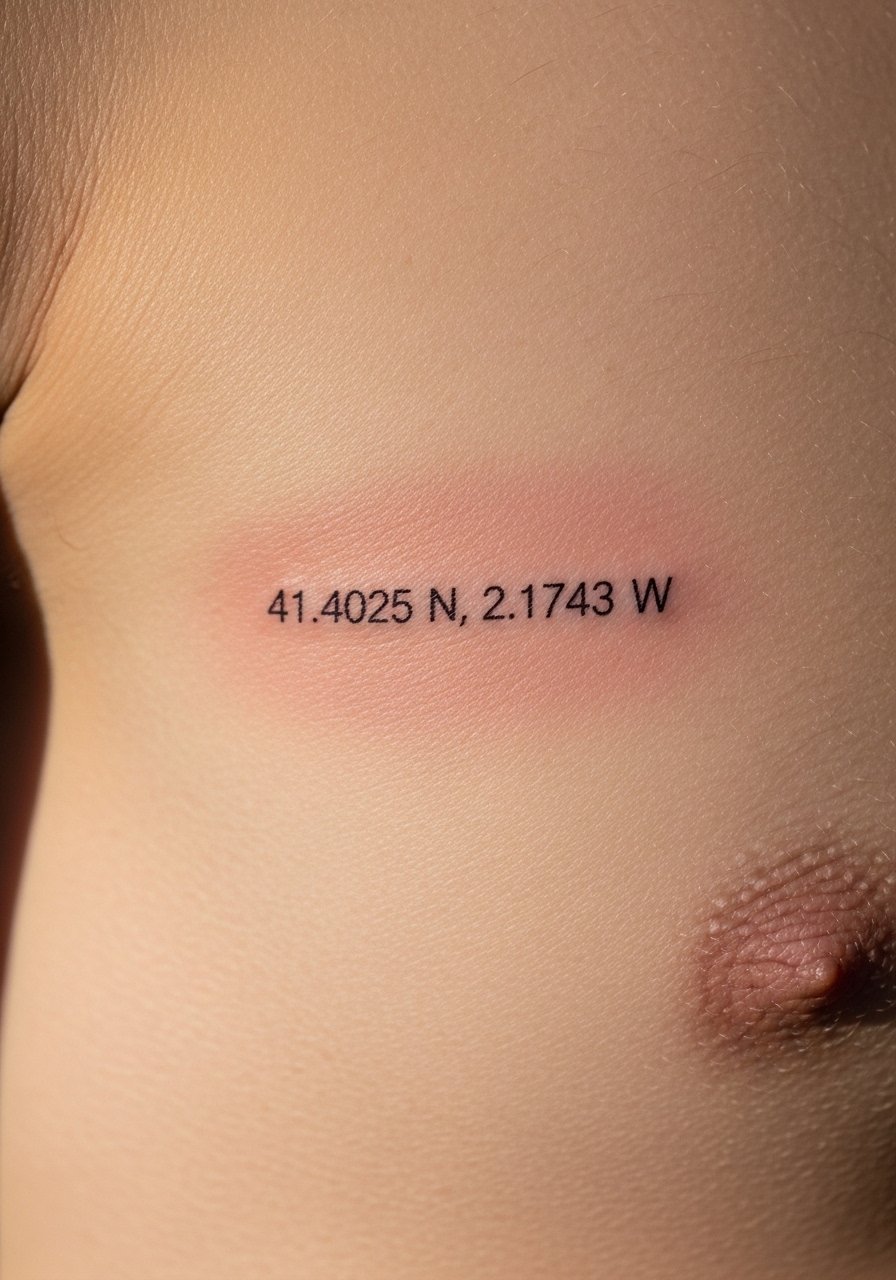
Artists and medical advocates have explored discreet UV markers for things like surgical site reminders and privacy-preserving medical info. One camp supports this for patient privacy and quick clinician visibility under blacklight. Another camp warns about informed consent and potential irritation from fluorescent dyes. If you consider a medical-style piece, discuss long-term plans and test for reactions on a small patch. This is a sensitive use case so bring it up when you search directories or conventions for artists who work with UV. Session time is brief and pain is low but aftercare must be strict.
12. Fluorescent Mandala Finger Ring
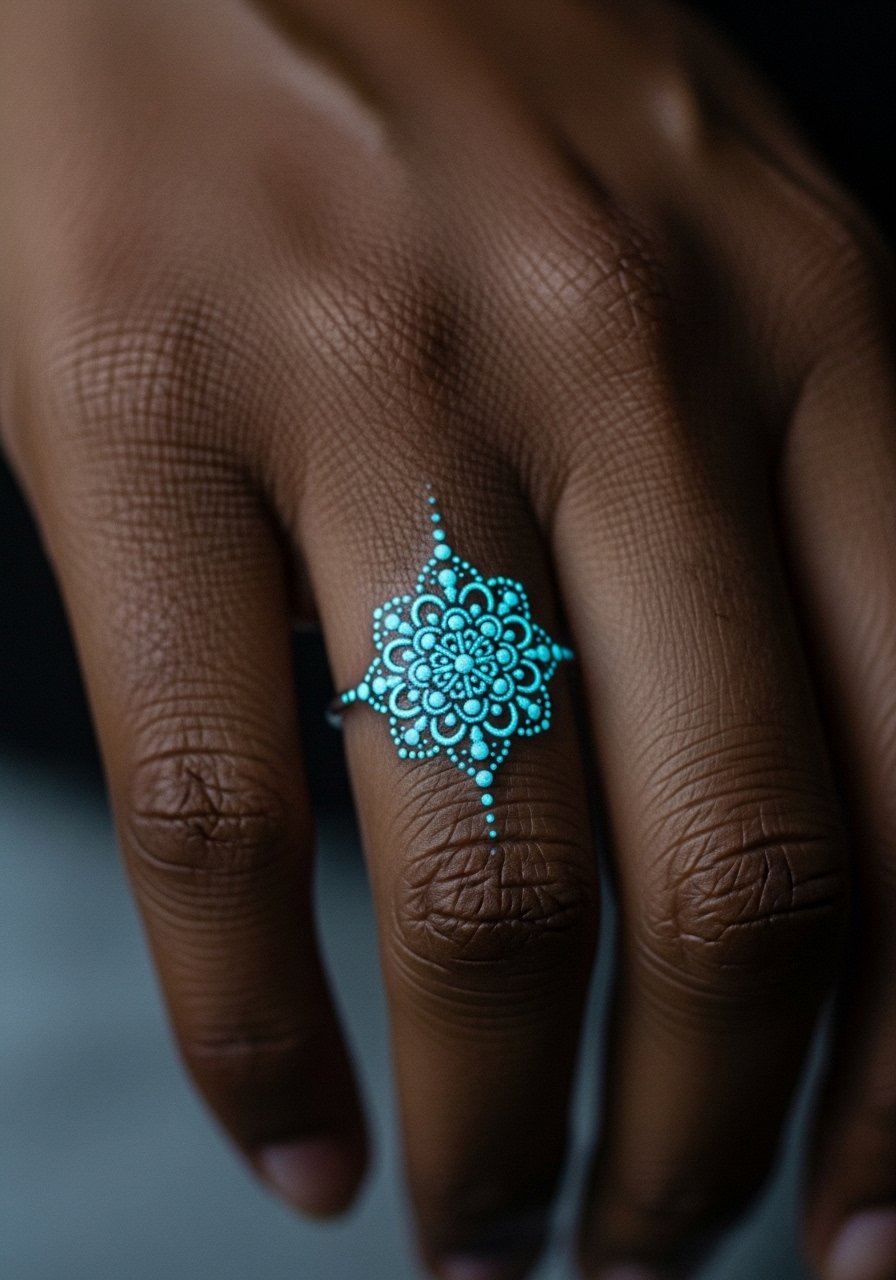
The biggest mistake with finger rings is going too tiny. Fingers wear down tattoos faster and UV pigments fade quicker in high-motion zones. If you want a fluorescent ring, ask for slightly thicker linework and expect to return for touch-ups frequently, often every year. Pain is high on digits and blowout risk exists because the skin is thin. This design suits someone who wants a hidden pop for nights out but accepts maintenance as part of the deal. Consider a mockup on paper to scale the lines before you commit.
Tattoo Prep and Aftercare Essentials

Fragrance-free gentle foaming cleanser for tattooed skin. Use this to clean the area gently twice a day during the first week. It removes excess plasma without stripping natural oils.
Lightweight fragrance-free healing balm. Apply a thin layer after cleansing to keep the skin supple and reduce scabbing. Works well for sensitive skin.
Medical-grade second skin bandage, 6-inch roll. Useful for high-friction placements or if you sleep on the fresh piece. Follow your artist's timing for removal.
Gentle saline wound spray. Spray to rinse off debris during the first few days if you need a no-touch clean.
Thin breathable sunscreen stick for healed tattoos. Use on healed UV layers to slow pigment breakdown when you will be in sunlight. Apply only after the tattoo is fully healed.
Occlusive ointment for initial sealing, Aquaphor. One mainstream option for the first 24 hours if your artist recommends an occlusive. Use sparingly.
Soft non-abrasive clothing or silicone sleeve for protected wear. Handy for protecting thigh or arm pieces while they heal and when you need low-friction coverage.
Every tattoo is different. Always follow your artist's specific aftercare instructions. Consult a dermatologist if you have skin concerns or unusual healing issues.
Frequently Asked Questions
Q: Will UV reactive constellations on my forearm stay visible in daylight?
A: They stay faint in daylight unless you ask for a neon underlayer. If you want daytime hinting, tell your artist to pack a neon base under the UV-white dots so the map reads at six months. Expect touch-ups sooner if you spend a lot of time in the sun.
Q: Are ribs a bad place for fine line UV pieces because of scarring?
A: Ribs are higher risk for scarring when an artist overworks the skin. Two camps exist. One camp advises against ultra-thin work on ribs because lines can blur. The other camp accepts ribs with adjusted depth and spacing. Ask to see healed rib photos from the artist before booking.
Q: How often will a neon hybrid upper arm band need touch-ups?
A: Plan for a realistic touch-up window of one to three years depending on sun exposure and how saturated you want the neon to remain. The upper arm holds pigment well, but UV pigments fade faster than regular inks.
Q: Can I test for irritation before committing to a large UV mandala?
A: Yes. Request a small test patch or a micro-flash session. That helps identify sensitivity to fluorescent dyes. Many artists recommend testing for anyone with sensitive skin or a history of contact reactions.
Q: Where should I look to find reputable artists who work with UV inks?
A: Search hashtags like #UVtattoo and #blacklighttattoo on Instagram for style browsing. Use directories and convention guest spot lists, and check Tattoodo or app filters for "UV reactive" in your city. Ask to see healed photos under blacklight and daylight.
Q: Do finger and ankle placements require special aftercare compared with forearms?
A: They do. High-motion and thin-skin placements like fingers and ankles need more careful protection and more frequent touch-ups. Expect heavier scabbing potential and avoid friction while the piece heals. Follow the specific bandaging guidance your artist gives.