
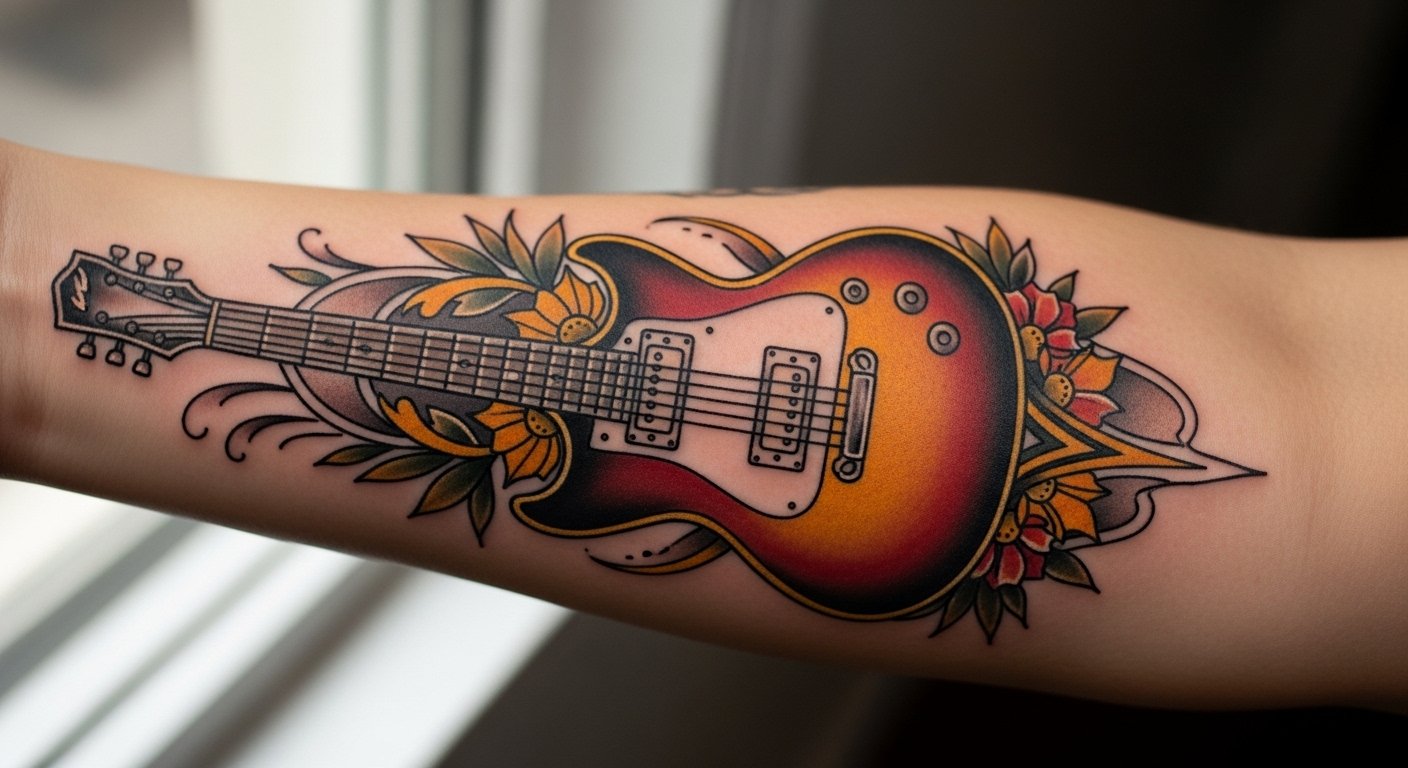
Someone I know spent six months agonizing over a guitar design, then booked the wrong style for their wrist and watched the lines blur after a year. Picking a guitar tattoo often means balancing detail, placement, and how the piece will age. Below are 25 electric guitar tattoos that solve common worries about fading, blowout risk, and visible touch-up timelines while giving clear cues to take to your consultation.
1. Fine Line Stratocaster Outline on Inner Forearm
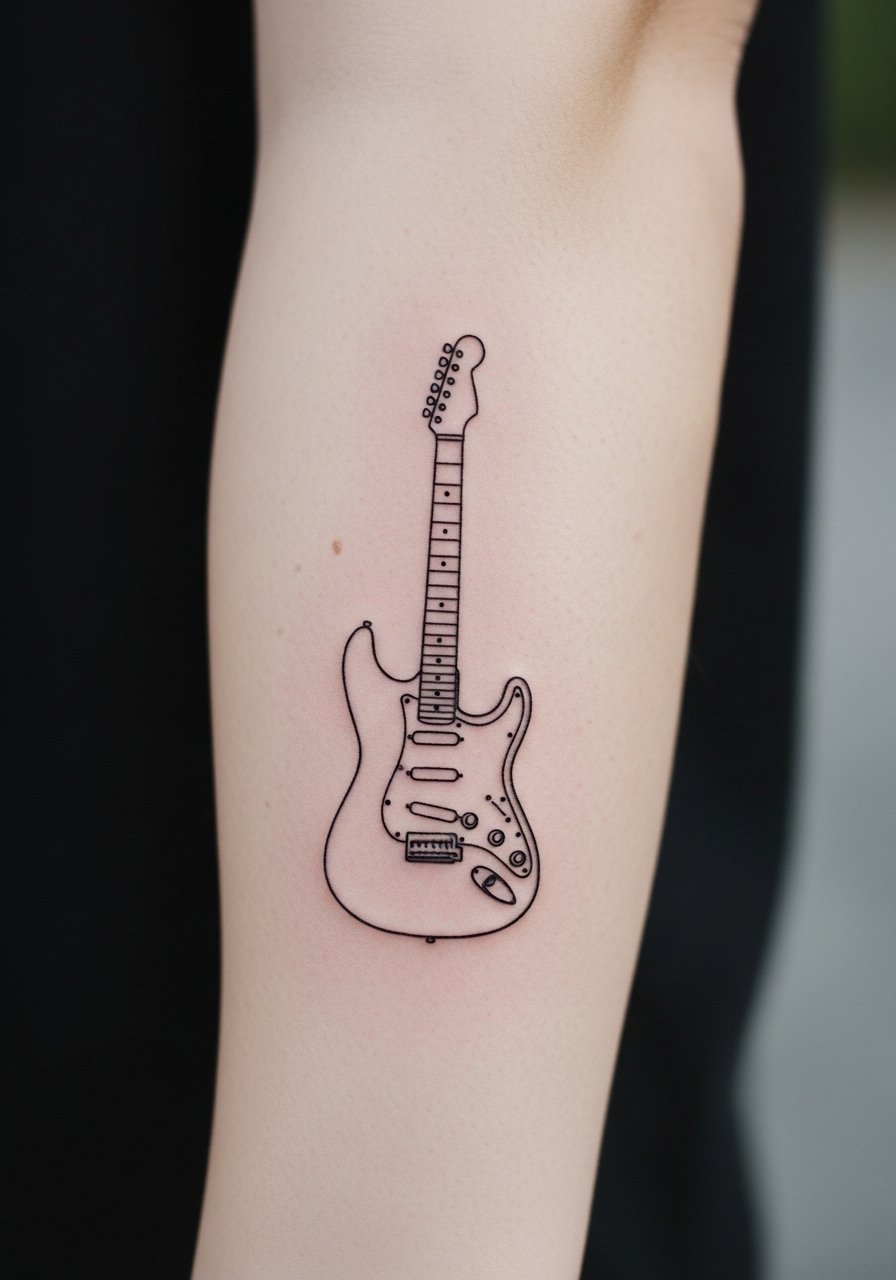
Someone I know first noticed this on a friend and liked how subtle it read under short sleeves. Fine line works best here because the forearm gives the linework room to breathe and reduces blowout risk compared with high-stretch areas. Tell your artist you want slightly wider spacing between parallel lines and a bit more negative space around the headstock. A common mistake is asking for razor-thin single passes, which can fade into soft gray by year two. Expect one short session and a possible touch-up around year two to restore crispness.
2. Neo-Traditional Stratocaster with Flames on Upper Bicep
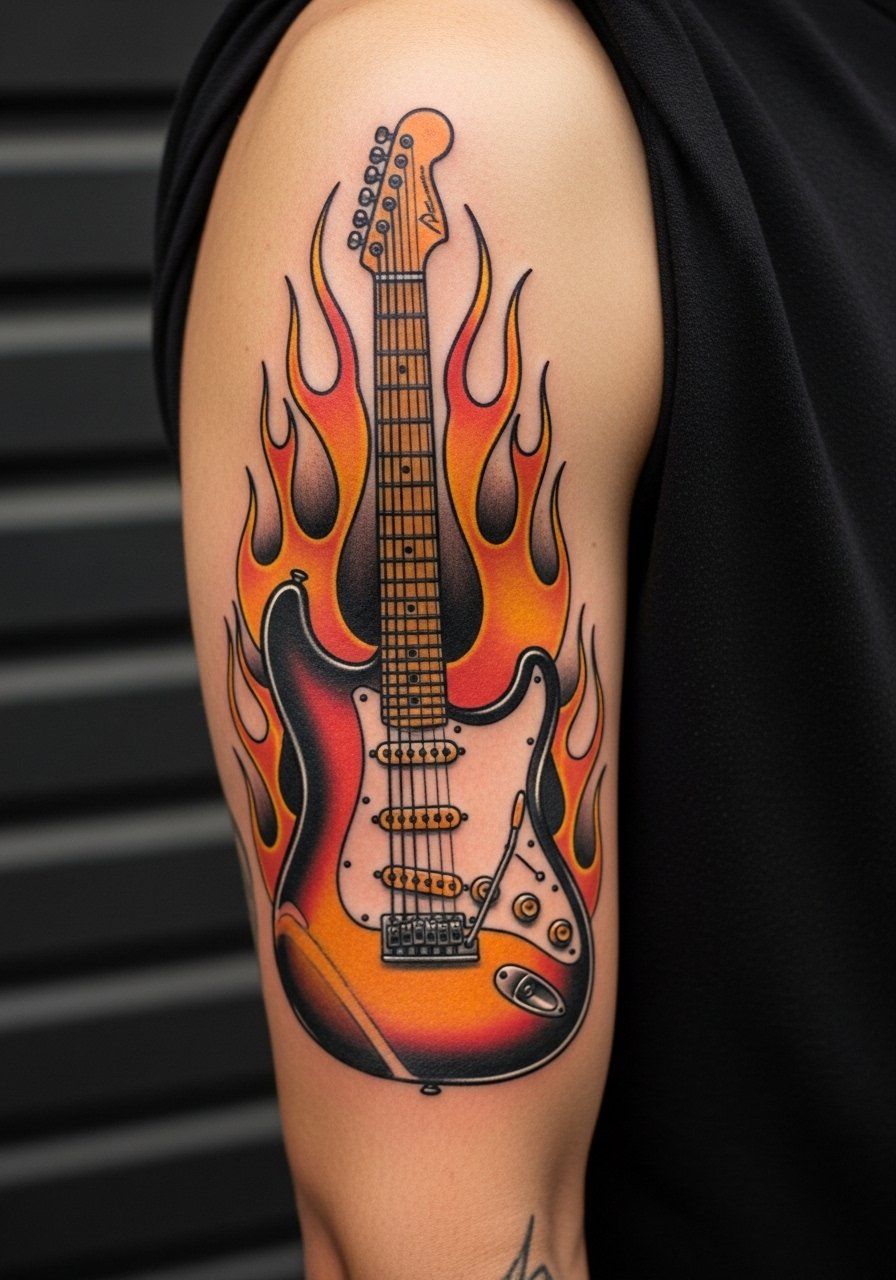
There is visual impact from bold outlines filled with saturated color that shows across a room. This placement tolerates saturation and heavier shading without sacrificing detail, so it holds up better than a thigh watercolor of the same scale. In consultation, bring examples of line weight and color palette and ask your artist to anchor shadows with black and gray so color has something to sit on. Pain is mild to moderate on the bicep and sessions are medium length. Expect color retention to look strong at six months and to mellow at two to five years without major touch-ups.
3. Realistic Flying V on Upper Arm
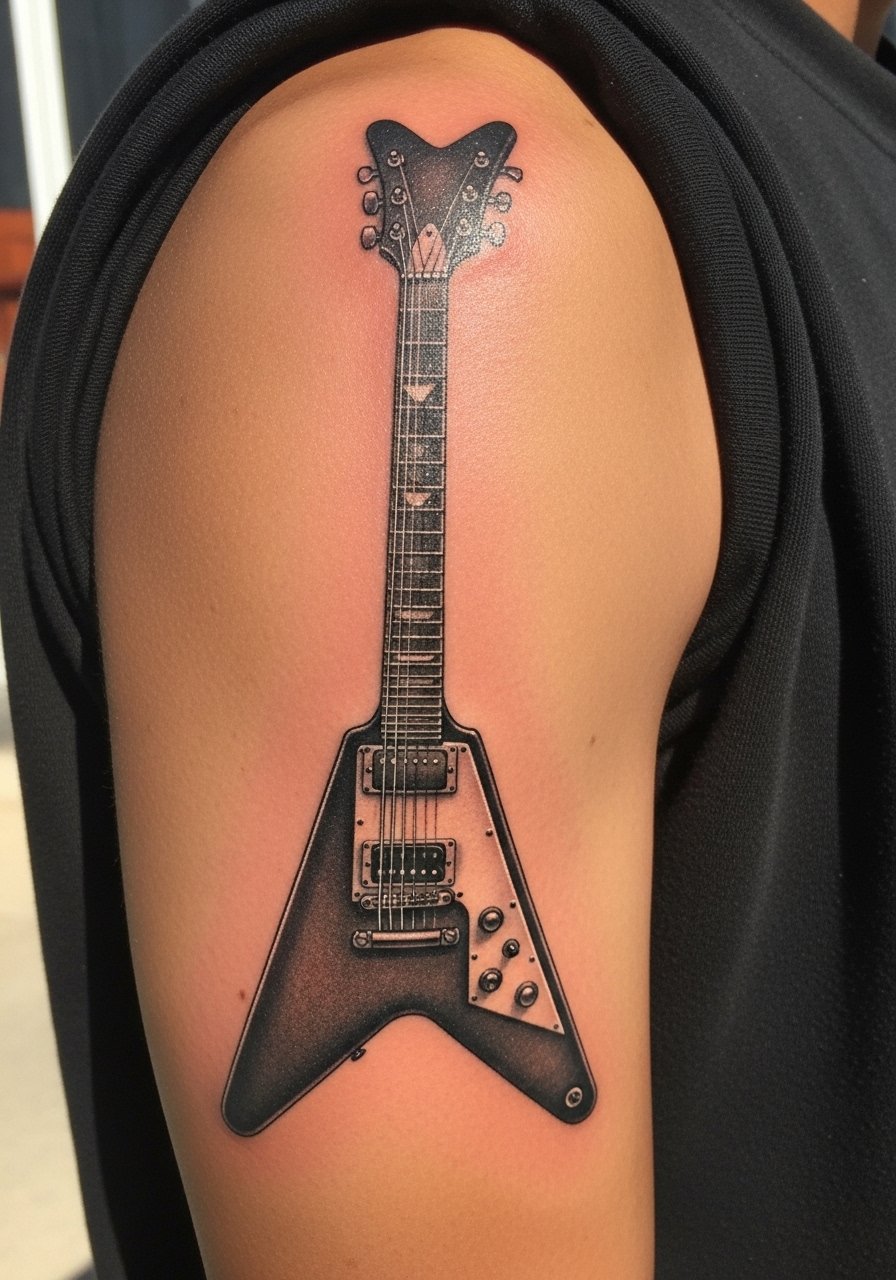
Fair warning, micro-realism demands time and patience from both you and your artist. This style benefits from multiple sessions to get the small highlights and stage-worn scratches right. Tell the artist you want reference photos of the actual guitar and ask them to map out where highlights will be lost first so they can compensate with stronger contrast. The biggest mistake is compressing a large, detailed guitar into a small patch. On the upper arm, pain is manageable and touch-ups are common around year three if you want those tiny details to stay crisp.
4. Electric Guitar with Soundwaves on Forearm
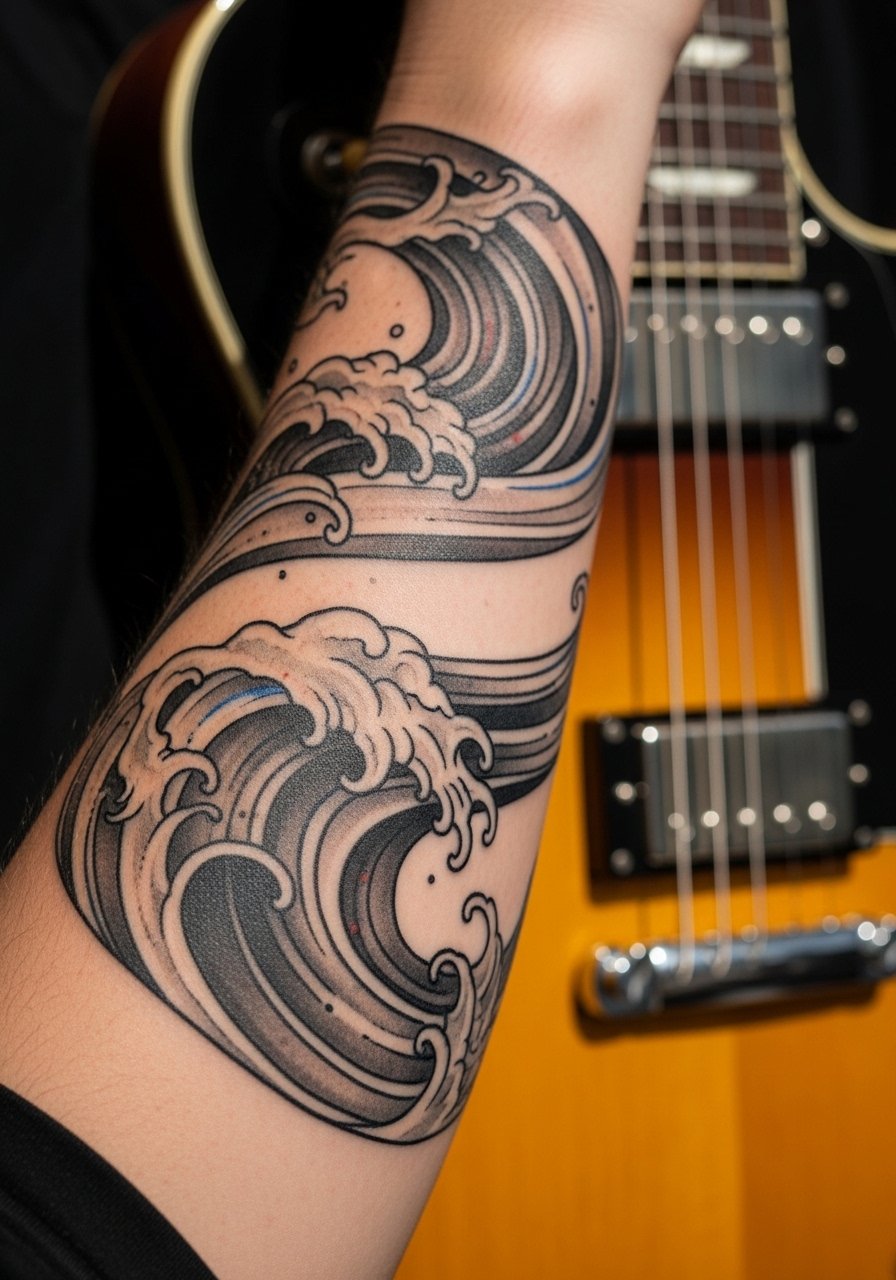
This hits a sweet spot for people who want the instrument and the idea of music connected visually. When you sit down with the artist, describe how bold or faint you want the soundwaves and whether they should follow real waveform shapes or a stylized curve. A frequent issue is making the waves too thin across the wrist where blowout happens. On the forearm it reads cleanly and ages more predictably. Ask for slightly heavier outlines on the guitar and feathered, dot-based wave tails to keep the motion readable after a few years.
5. Colorful Telecaster with Sheet Music on Outer Forearm
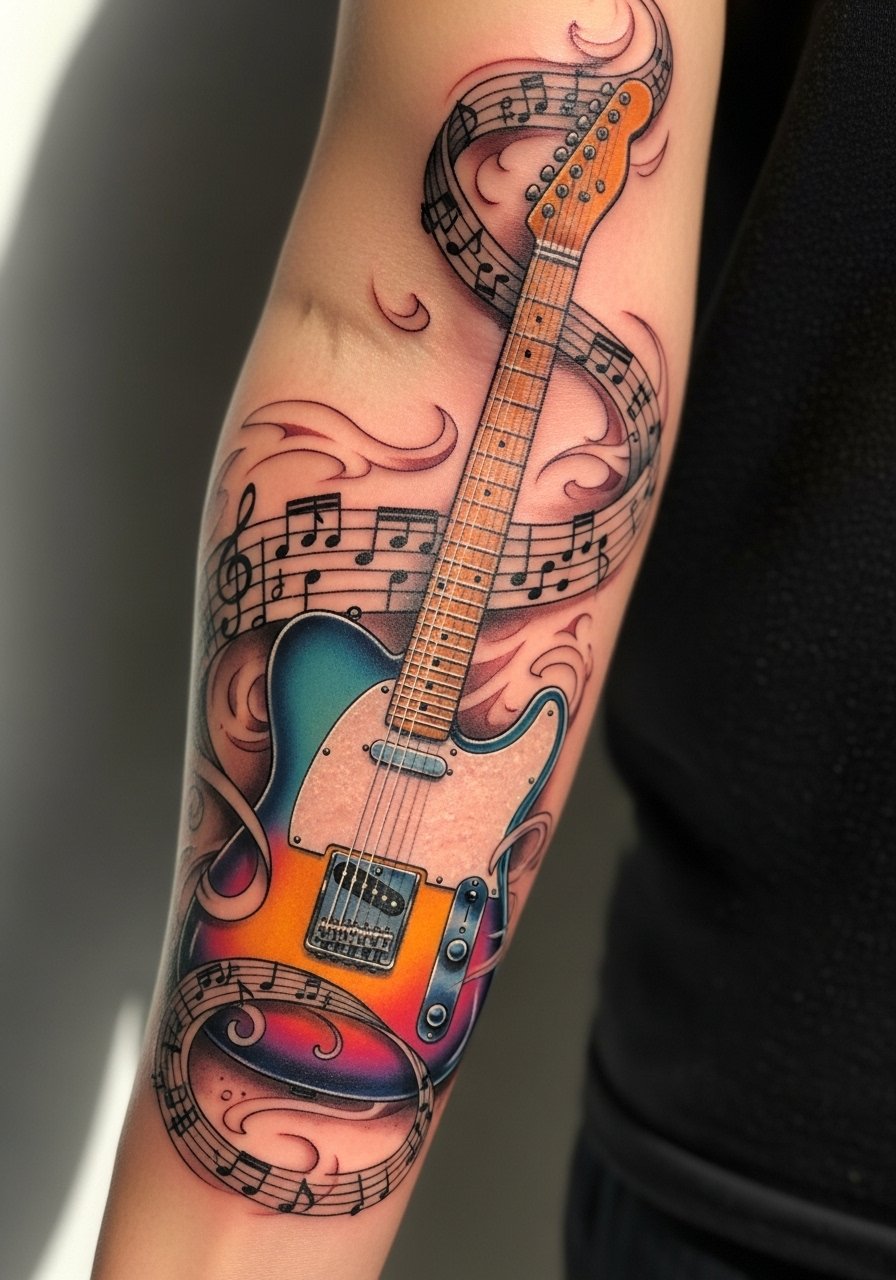
If you want a narrative piece, integrate recognizable notes or a short lyric line and specify exact sheet positions so the staff reads legible. The mistake people make is crowding the staff into narrow bands that blur with time. This forearm placement helps the notes keep spacing. During consultation, ask the artist to render the top line darker so it anchors the composition. Sessions are medium length and color will soften after a year, so plan a touch-up if you want the music to remain vivid long term.
6. Blackwork Les Paul with Geometric Amp on Calf
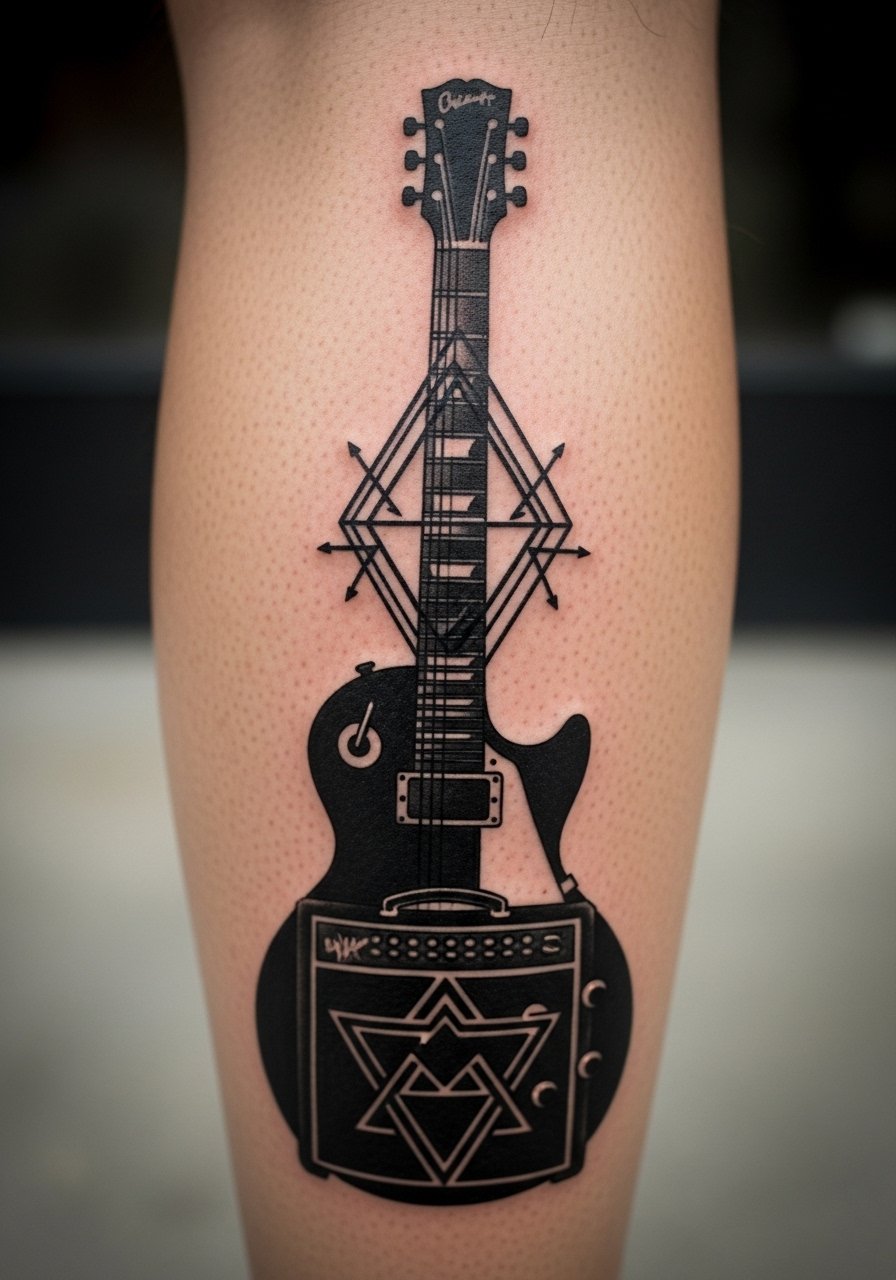
There is a modern edge to solid blackwork that reads well on darker skin tones. The calf is forgiving for large black fills and gives the artist space to balance negative shapes. Tell the artist you want crisp borders between filled areas to avoid patchy fading. A common error is leaving tiny isolated black islands that age inconsistently. Expect moderate pain for long fills and a multi-session schedule. Touch-ups may be needed where the skin flexes but overall blackwork maintains graphic legibility longer than light gray wash.
7. Watercolor Electric Guitar with Notes on Thigh
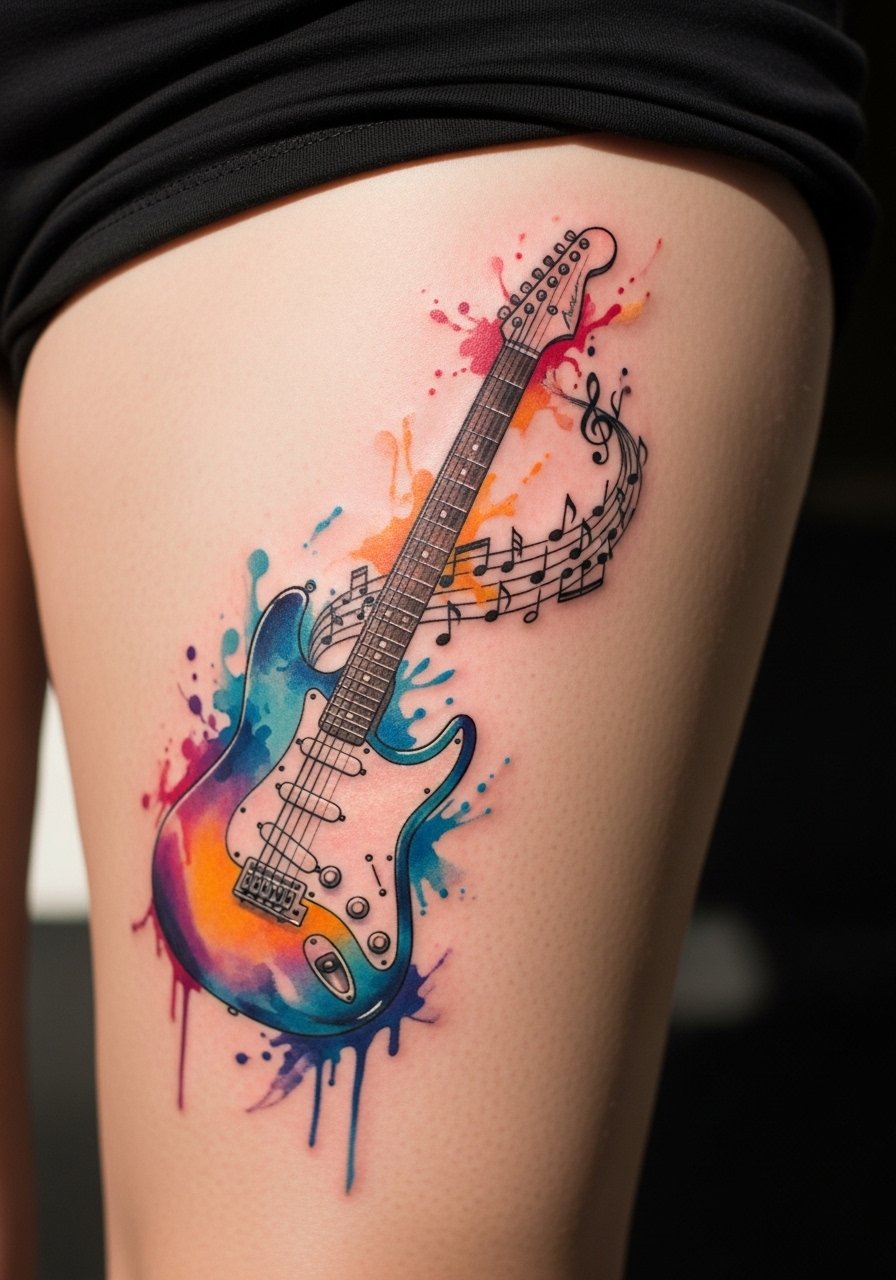
Most watercolor treatments lose saturation faster than solid color because they rely on soft saturation and feathered edges. If you want a thigh piece, ask the artist to anchor the watercolor with thin black or dark gray outlines in high-detail areas so the composition survives fading. The thigh tolerates larger canvases and direct sun impact is lower than forearms, so color retention can be better if you use UV protection. Sessions run moderate and you should expect a color refresh by year three if you want the original intensity back.
8. Fine Line Guitar Pick Guard on Wrist
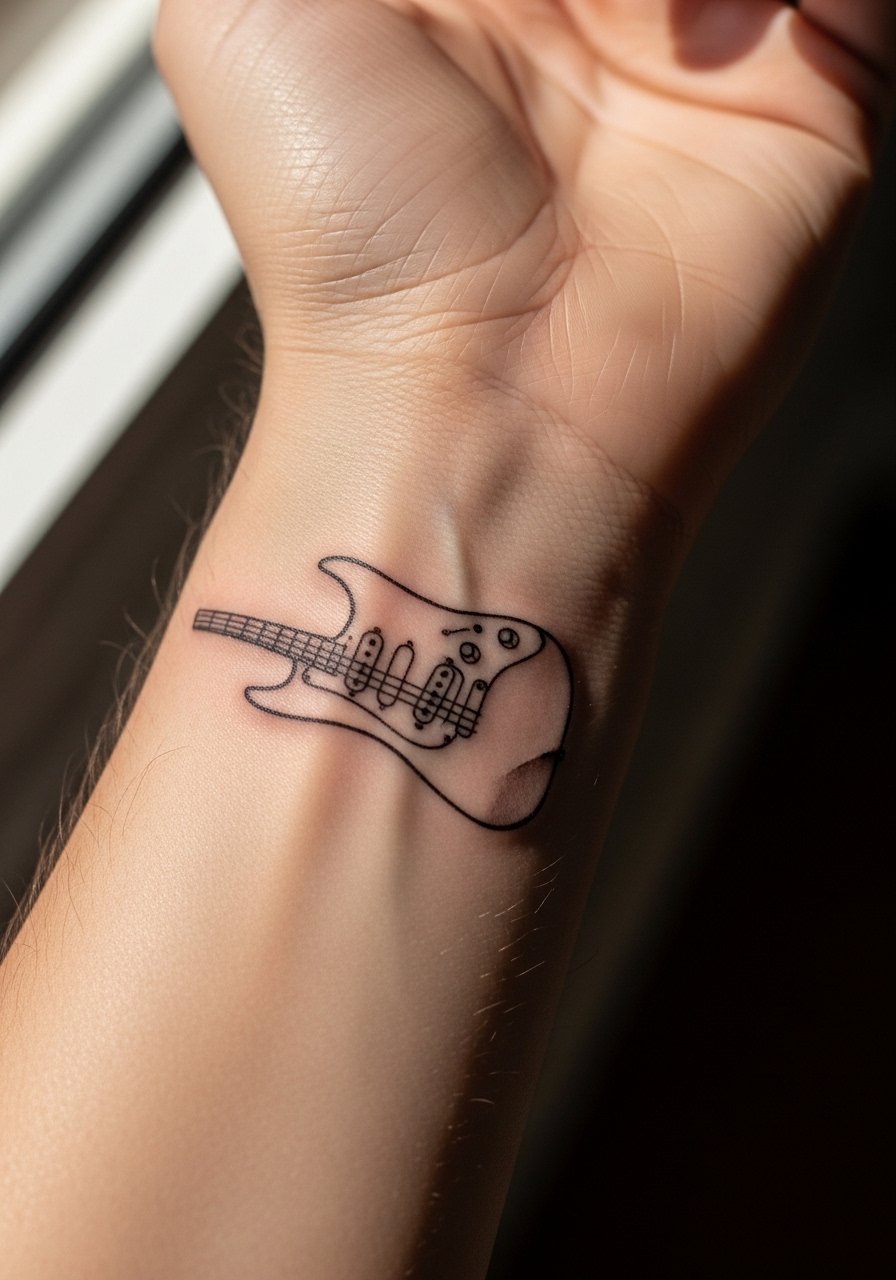
Small, minimalist pick guard tattoos solve the "I want a guitar but not a page of ink" problem. Wrist skin moves and receives a lot of contact, so ask for slightly bolder primary strokes and more spacing in the guard's curves. The most common mistake is asking for ultra-thin lines that disappear within months. Expect a quick session and a touch-up window at six to twelve months if the guard softens. Also consider how visible it will be for work settings and plan placement accordingly.
9. Dotwork Electric Guitar Fretboard on Ribcage
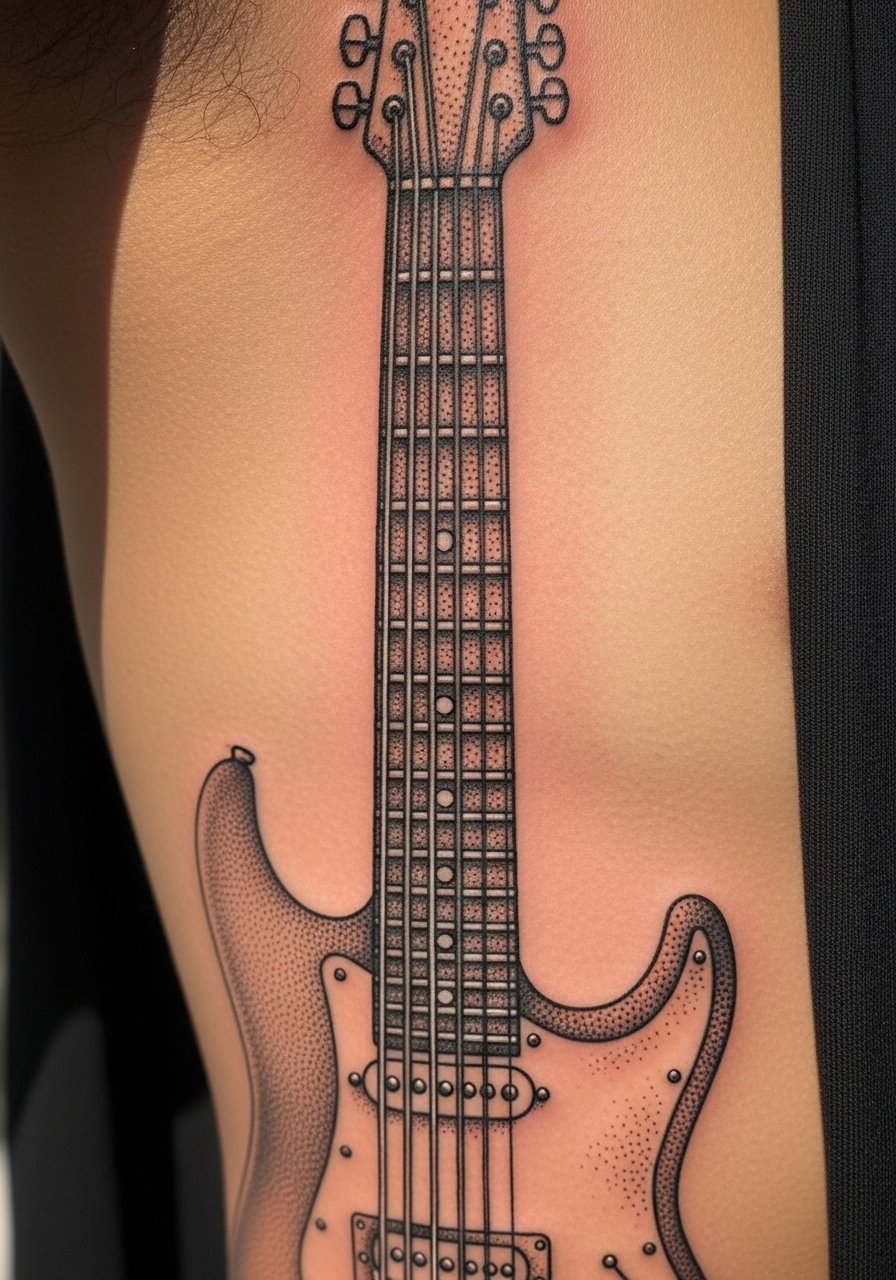
Fair warning, the ribcage is a higher pain area and also a place where skin stretch can affect line clarity. Artists split on whether fine dotwork holds up on ribs. One camp argues that frequent breathing movement disrupts dots and causes softening. The other camp says proper spacing and deeper dot placement can make stipple settle nicely. Ask the artist for a shading map and a sample of healed dotwork on similar placement. Expect multiple sessions and plan for a touch-up at year two if density softens.
10. Ignorant Style SG Headstock on Knuckle or Hand
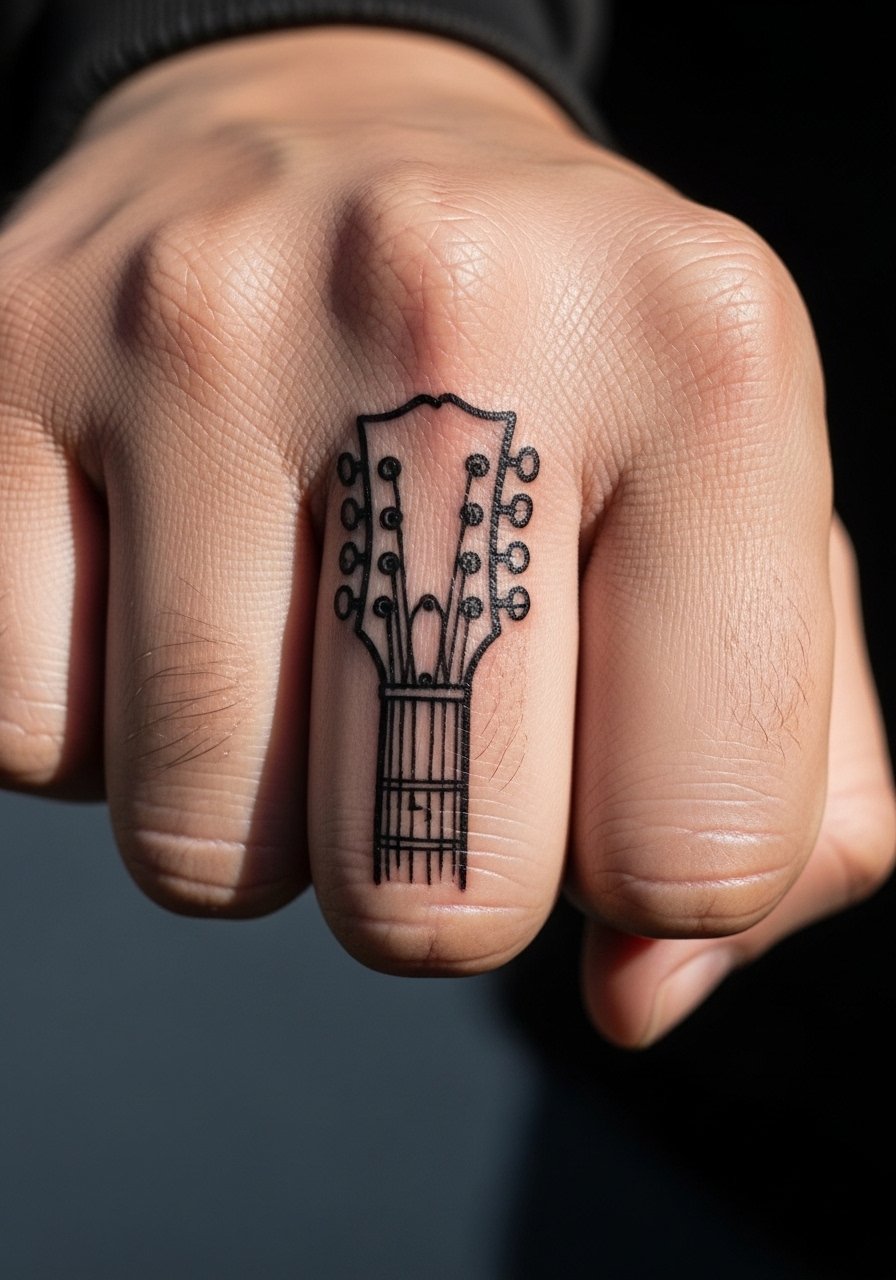
Hand and knuckle tattoos are bold because they get seen every day, but they also have higher fade and touch-up rates. The ignorant style purposely embraces asymmetry and rough edges, so ask your artist how much imperfection you want versus deliberate design decisions. A frequent mistake is treating hand pieces like forearm pieces and requesting fine detail that will not last. Expect sharp initial contrast and more frequent refreshes. Think through career and social considerations before booking a visible hand spot.
11. Ornamental Electric Guitar with Mandala Strings on Back
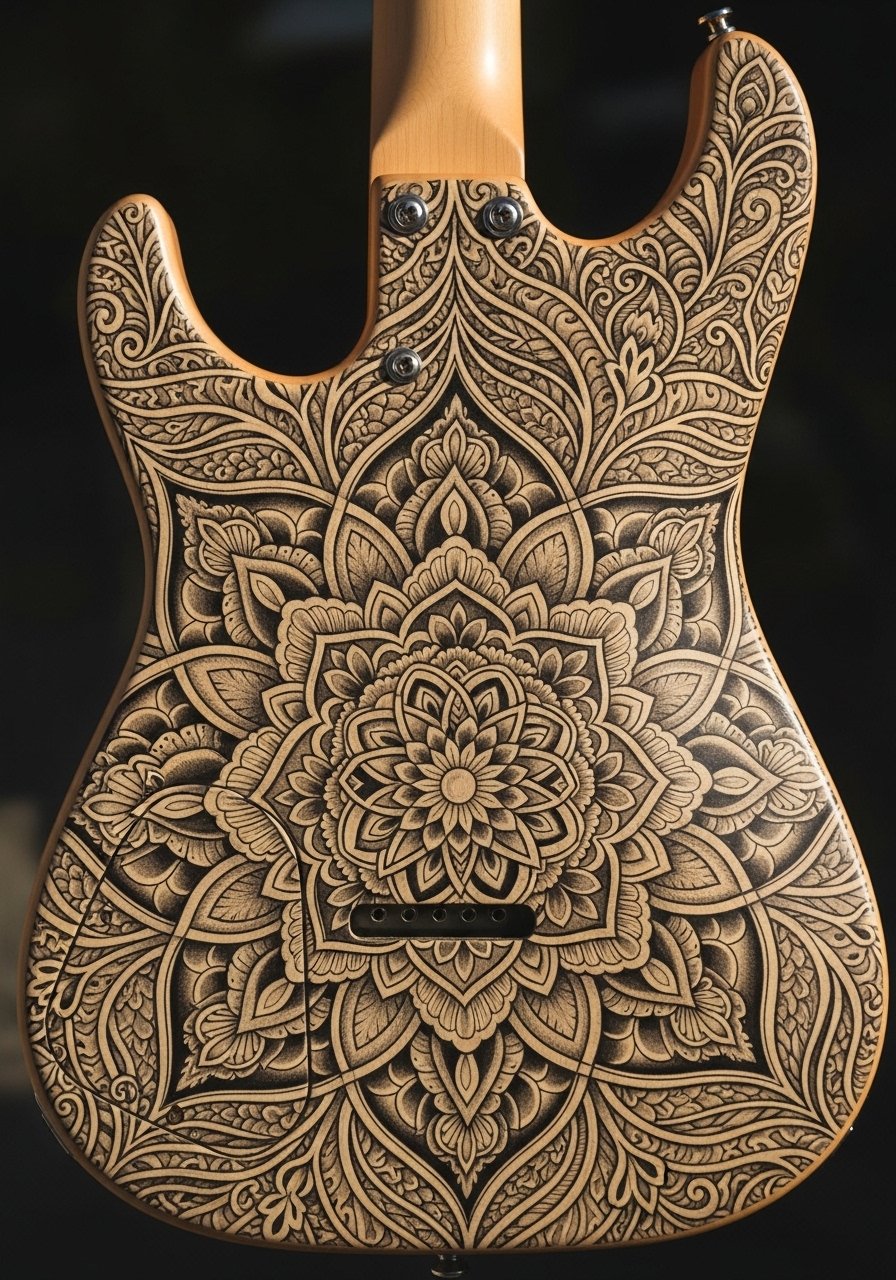
This pattern owes elements to mandala traditions, so consider origin and approach the design with respect. Some people choose abstracted mandala motifs rather than direct cultural replicas. The back gives plenty of room for large-scale ornamental work and allows for layered stipple shading that reads well over time. In your consultation, ask your artist how they will space repetitive elements to avoid visual crowding when healed. Expect long sessions over multiple appointments and a multi-year timeline before calling it finished.
12. Micro-Realism Gibson with Stage Lights on Thigh
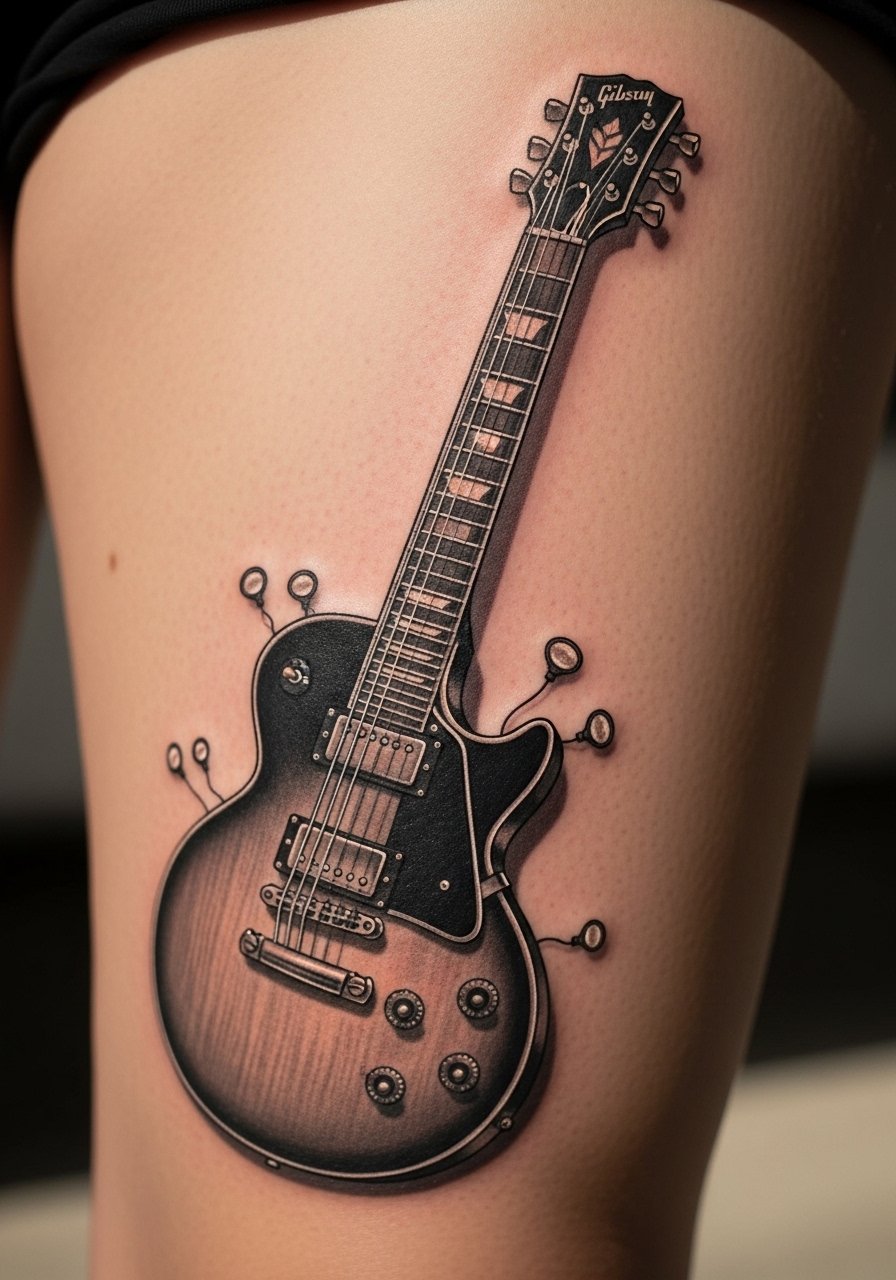
Micro-realism is rewarding if you want a lifelike memory of a specific instrument or gig. The thigh handles dense tonal work and lets the artist push subtle highlights. Bring clear reference photos and ask how the artist will translate tiny reflections into tattoo ink. The most common mistake is compressing complex reflections into small areas which then merge. Sessions are longer and you should plan for at least one touch-up to preserve crisp highlights that define realism.
13. Black and Gray Les Paul with Geometric Background on Shoulder Blade
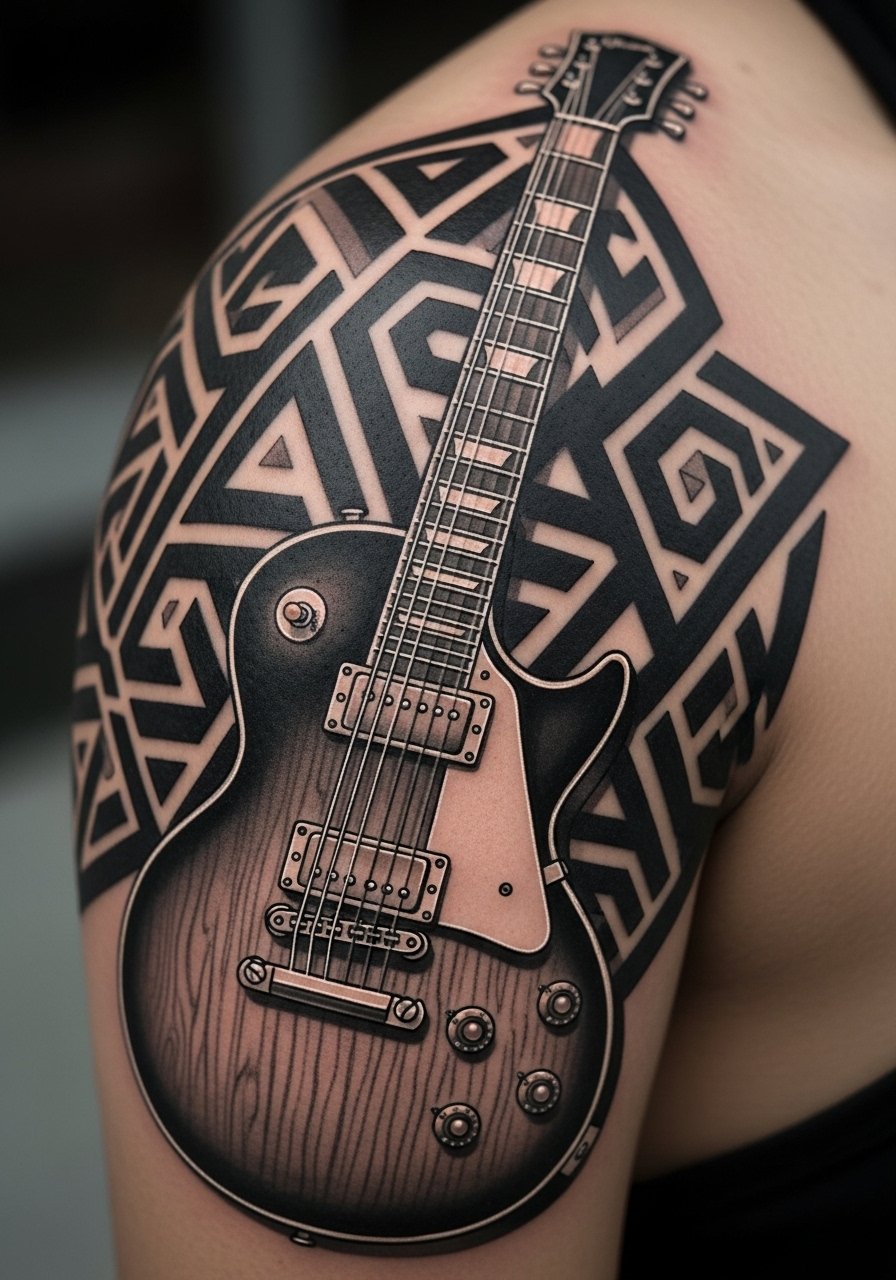
The shoulder blade is a low-movement canvas so dense black and gray holds exceptionally well there. When you consult, explain how you want the geometric elements to interact with the guitar silhouette. A common error is overcomplicating negative space which later reads muddy once healed. Ask for larger negative zones and clear anchor points so the guitar shape remains dominant. Pain is low to moderate and sessions can be longer but fewer, with occasional touch-ups in areas that receive friction from clothing.
14. Simplified Headstock Tattoo Behind Ear
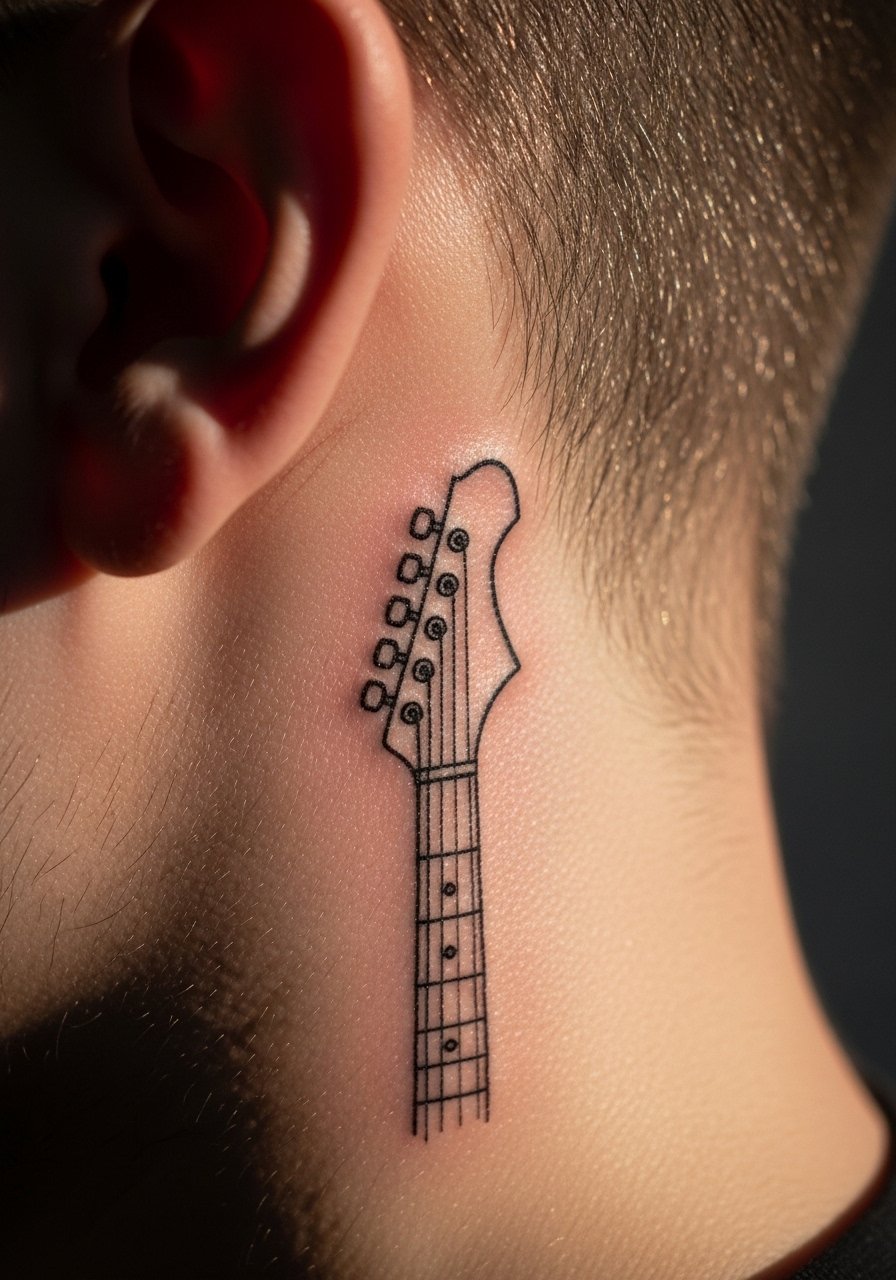
Behind the ear is discreet and intimate, and it suits micro or simplified headstock designs. Keep in mind this is a sensitive spot and healing needs careful aftercare because hair and sweat affect scabbing. Tell the artist you want a slightly bolder outline than a single hairline so it survives regular shampooing. The biggest mistake is making it too intricate for the tiny area. Expect a short session and plan to protect it while it heals.
15. Traditional-Style Jazzmaster on Forearm with Banner
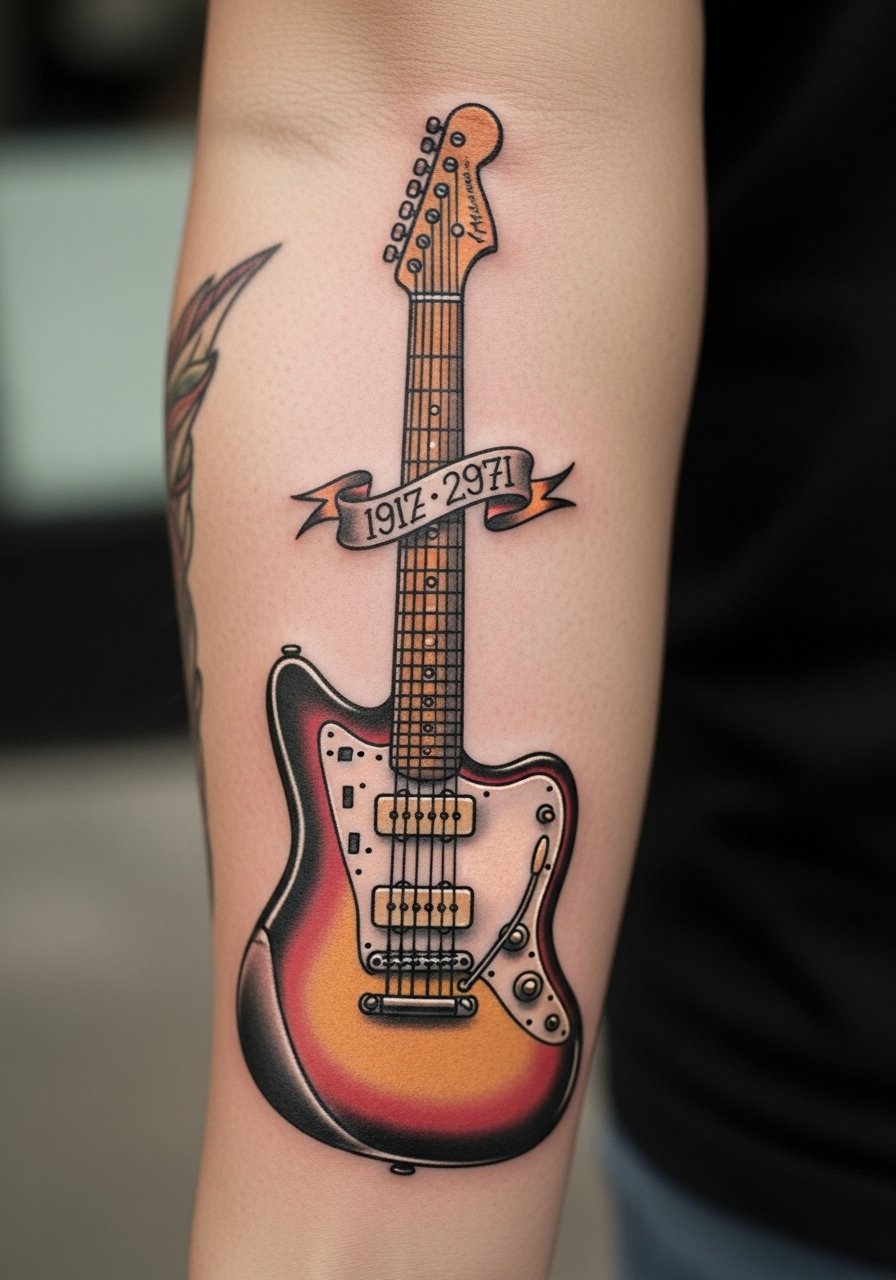
Traditional tattooing reads well at distance and tends to age predictably because of consistent saturation and solid outlines. If you want a banner with a specific date, specify the exact text like "XII.XI.MCMXCIV" to ensure the image prompt and reference are accurate. Avoid cramming small script into narrow banners; ask for bolder lettering or shortened text. Forearm placement makes touch-ups straightforward and pain is mild. This style will likely need less frequent refreshes than watercolor pieces.
16. Geometric Amp with Integrated Headstock on Calf
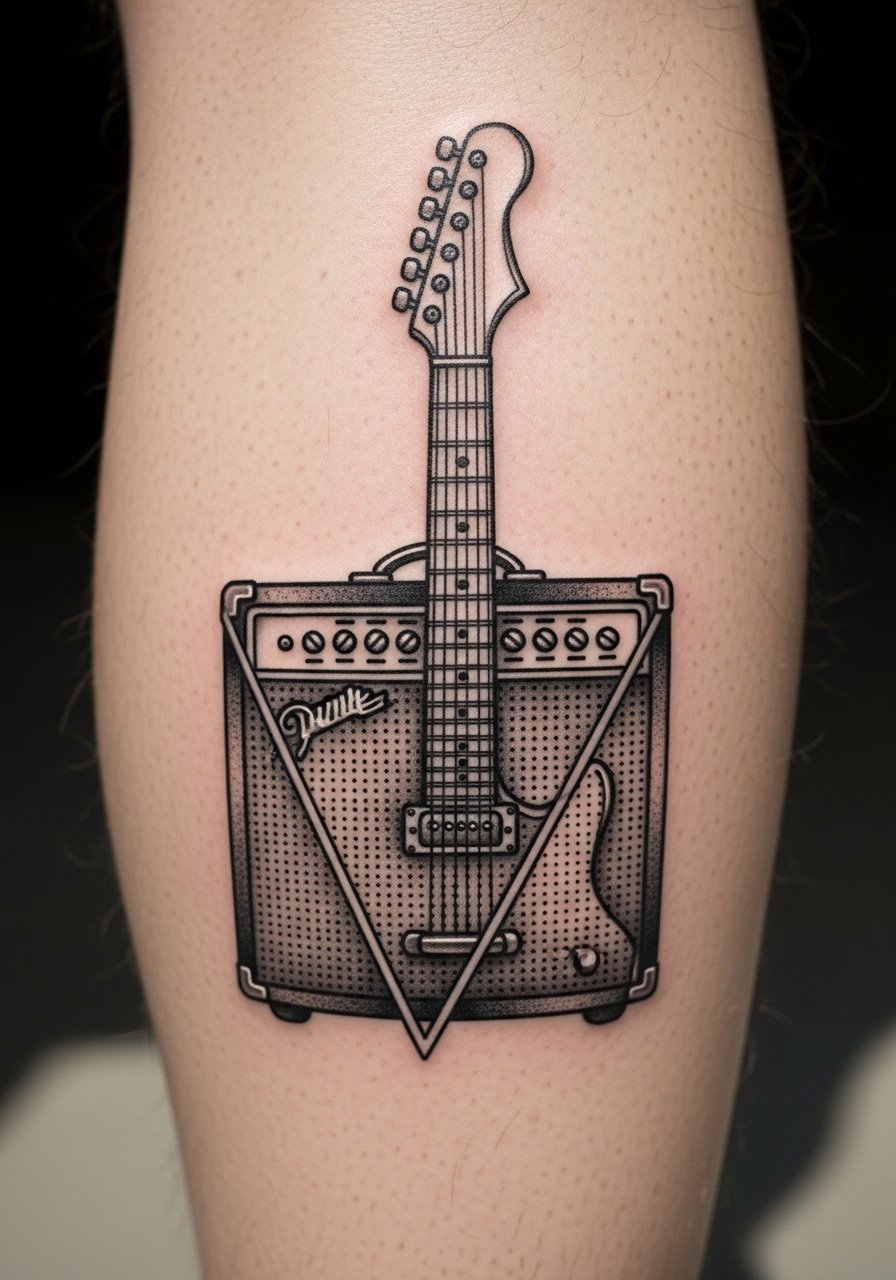
There is a practical reason to pair instruments with amps visually. The calf is ideal for geometric patterns because the area can accommodate long vertical shapes without distortion. Tell your artist you want the amp angles to align with calf curvature so the design does not warp when you walk. The common mistake is ignoring natural muscle lines and creating elements that twist awkwardly. Expect medium pain and possible separate shading session to deepen contrast.
17. Retro Electric Guitar with Tape Recorder on Thigh
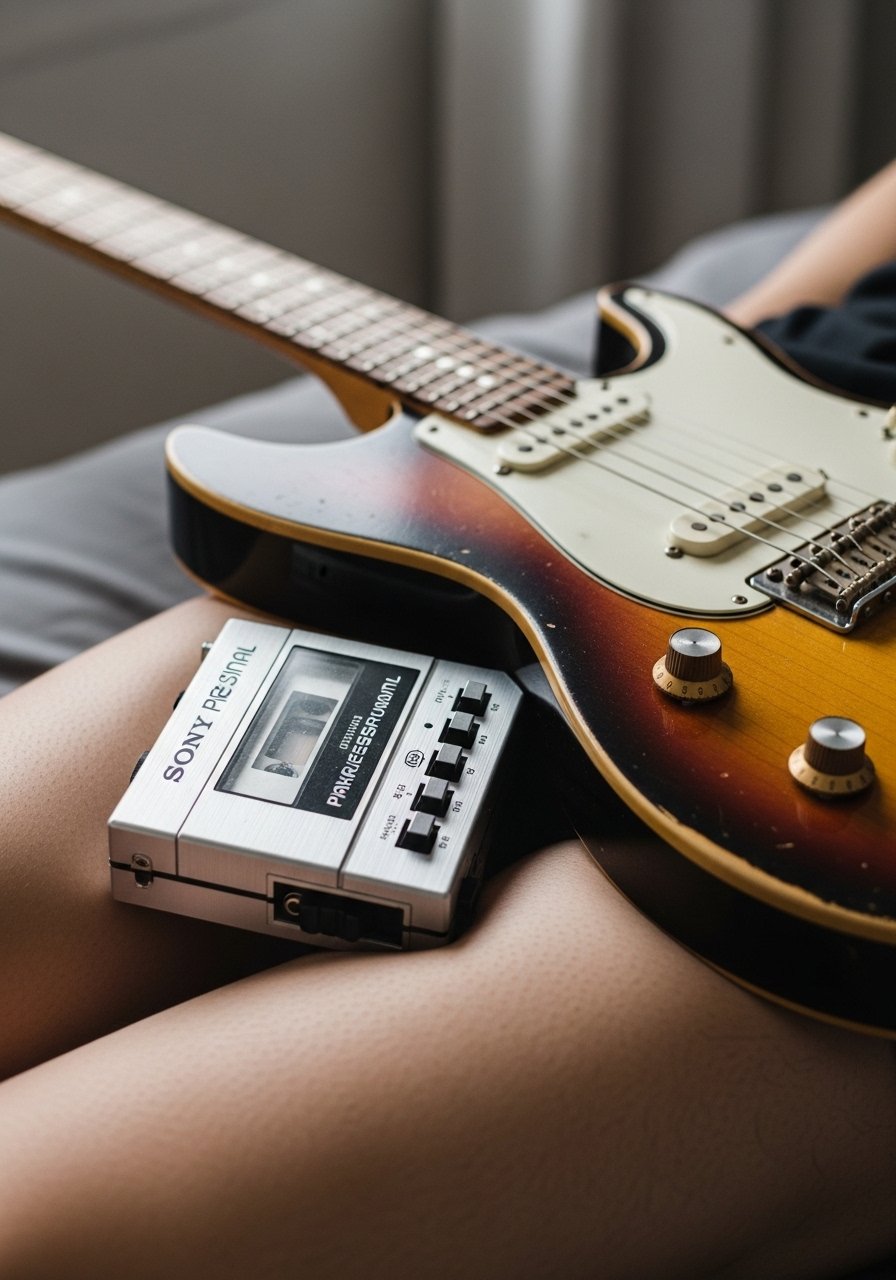
Think of this as a nostalgic band-memento piece. The thigh allows larger compositions while keeping the art private when you prefer. Ask your artist to block main shapes first and layer color washes instead of small overlapping strokes. A usual mistake is over-detailing small dials and tape reels which then lose clarity after healing. Sessions are moderate to long and color will gently soften, so plan a touch-up if you want the original pop to remain strong.
18. Stipple-Shaded Headstock Down the Ribcage
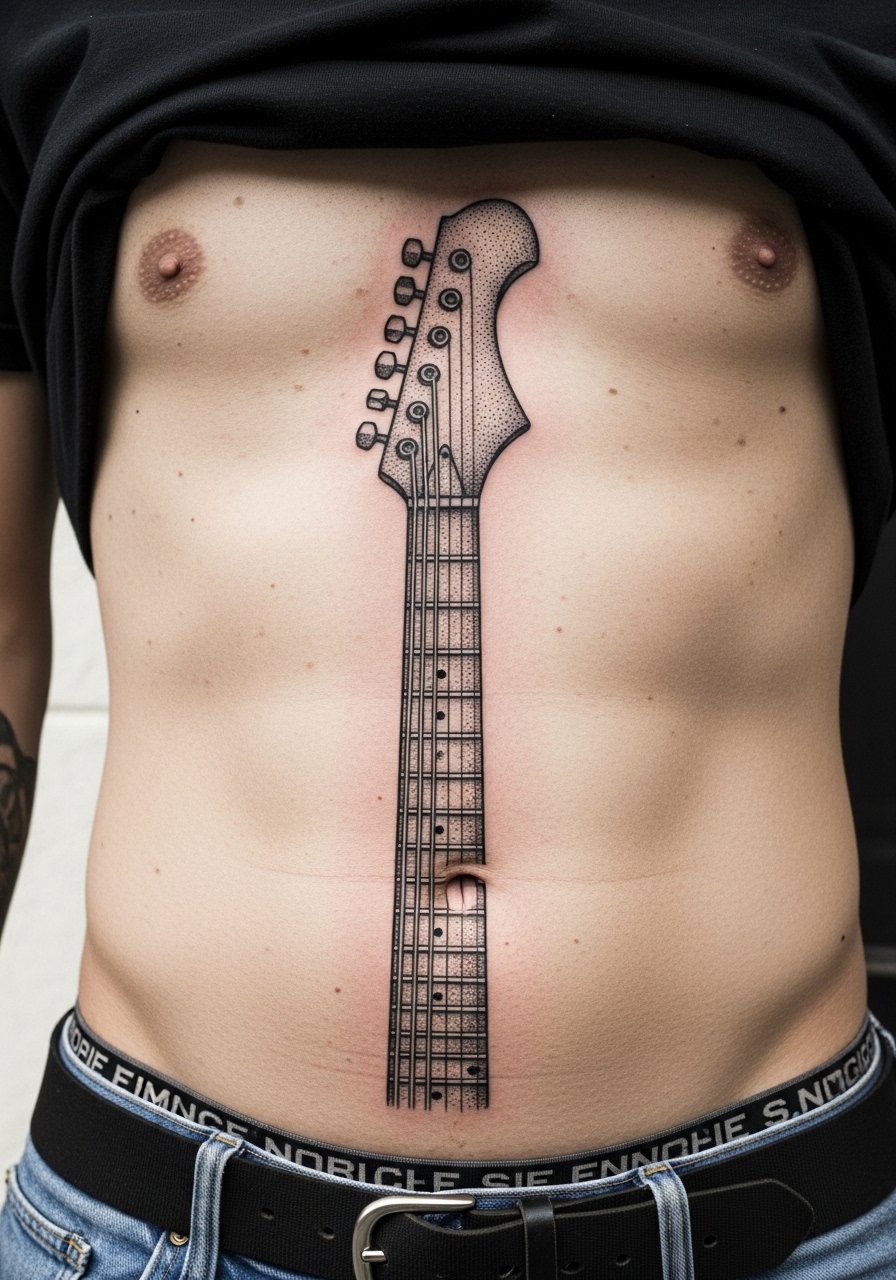
Ribcage pieces look dramatic but have two challenges: pain and skin movement. Stipple shading can read beautifully if the artist leaves proper spacing between dots. A mistake is packing dots too tightly which yields a muddy healed result. During consultation, ask the artist to show healed dotwork samples from the rib area. Expect multiple sessions and a realistic touch-up two years out if density fades.
19. Silhouette Guitar with City Skyline Fill on Forearm
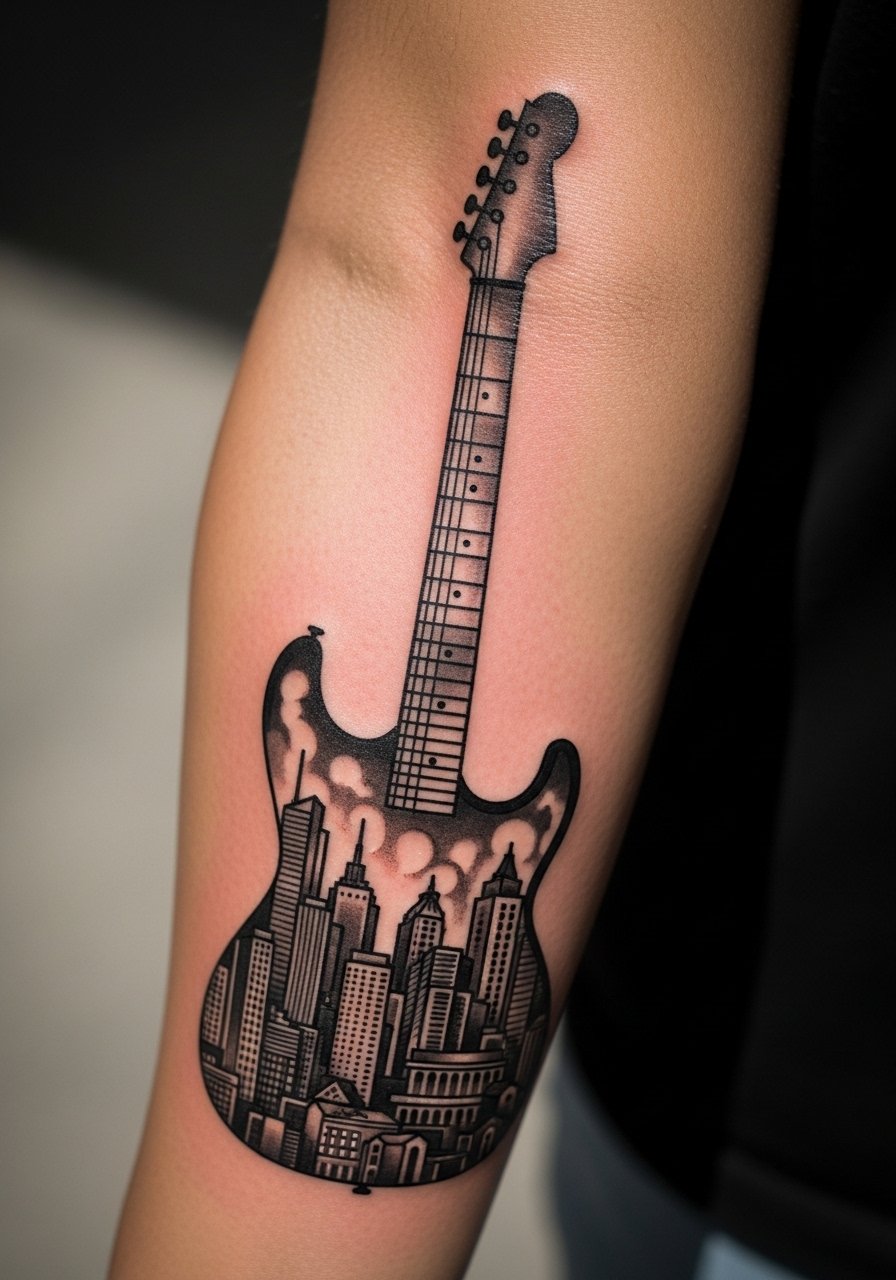
Combining skyline imagery with a guitar silhouette makes for a personal tribute to a hometown or venue. Tell the artist which skyline features you want emphasized and make sure those features will remain legible at the size you choose. The common error is squeezing too many skyline details into a small silhouette. Forearm placement gives the piece room, so opt for simplified building shapes that read well when healed. Sessions are moderate and touch-ups are typically minimal if outlines are strong.
20. Minimalist Single-String Line on Ankle
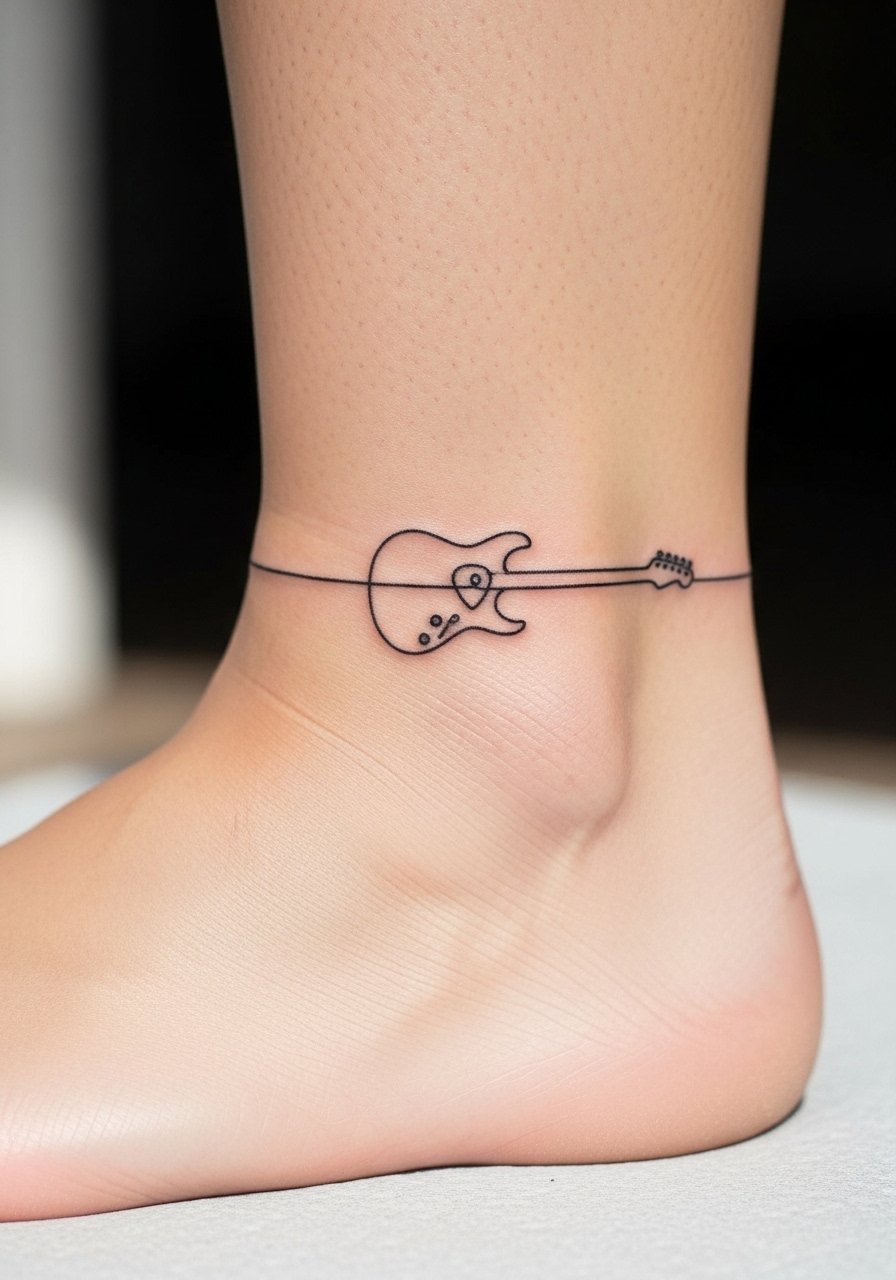
Ankle tattoos work for low-commitment placements but the skin there is thin and exposed to friction from socks and shoes. Ask for a slightly heavier primary line and avoid tiny internal detail. The most common mistake is requesting micro-detail that will not last under daily abrasion. Sessions are quick and pain is low to moderate. Expect a small touch-up window at six to twelve months if the line softens.
21. Neo-Traditional Flying V with Banner Sleeve Start on Bicep
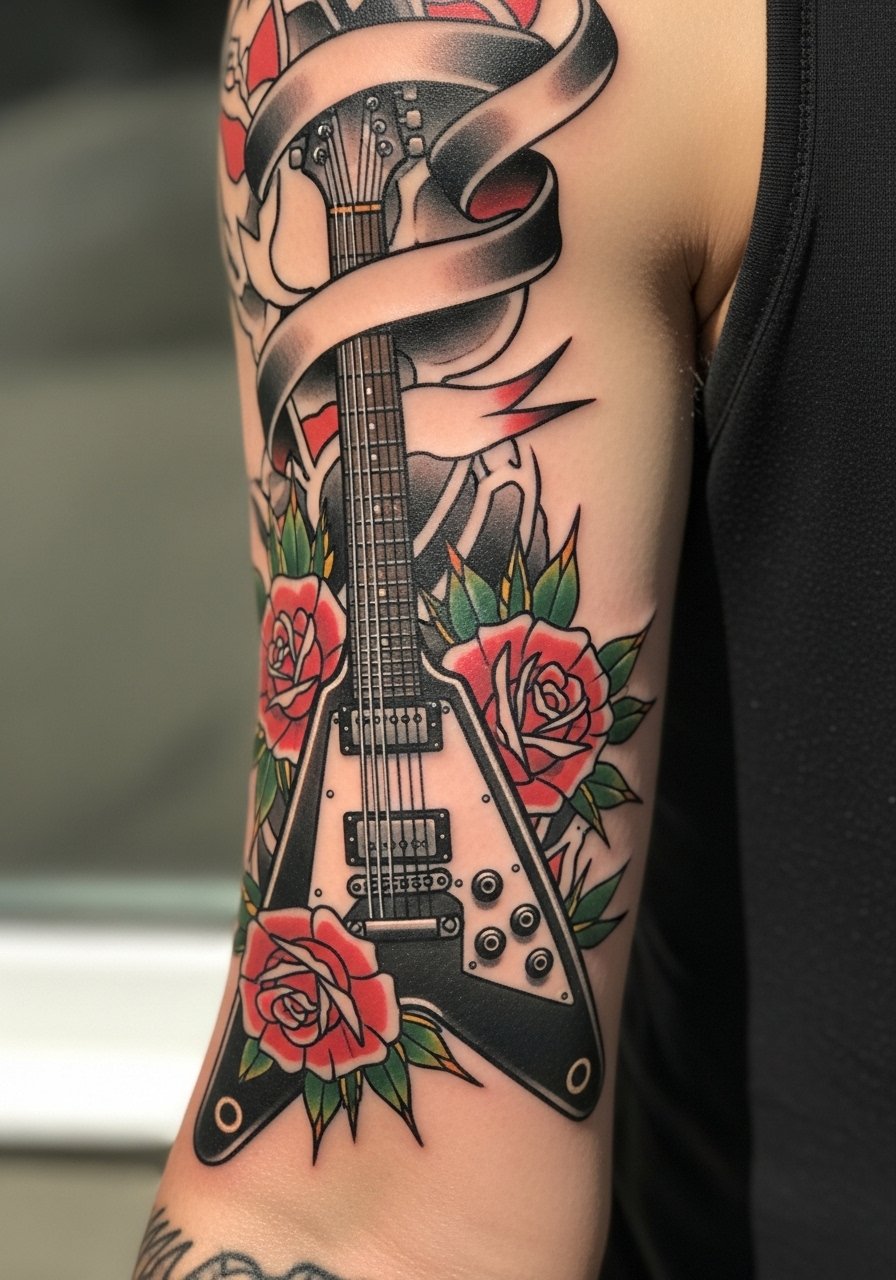
A sleeve start lets you plan growth and consistency across sessions. Communicate the palette and banner wording early so later additions match. A mistake some people make is picking a palette that clashes with future pieces. Biceps tolerate heavier saturation, so this is a good place for bold color that will mellow but remain readable. Sessions will be multiple and you should expect periodic touch-ups as the sleeve matures.
22. Abstract Soundwave Guitar on Sternum
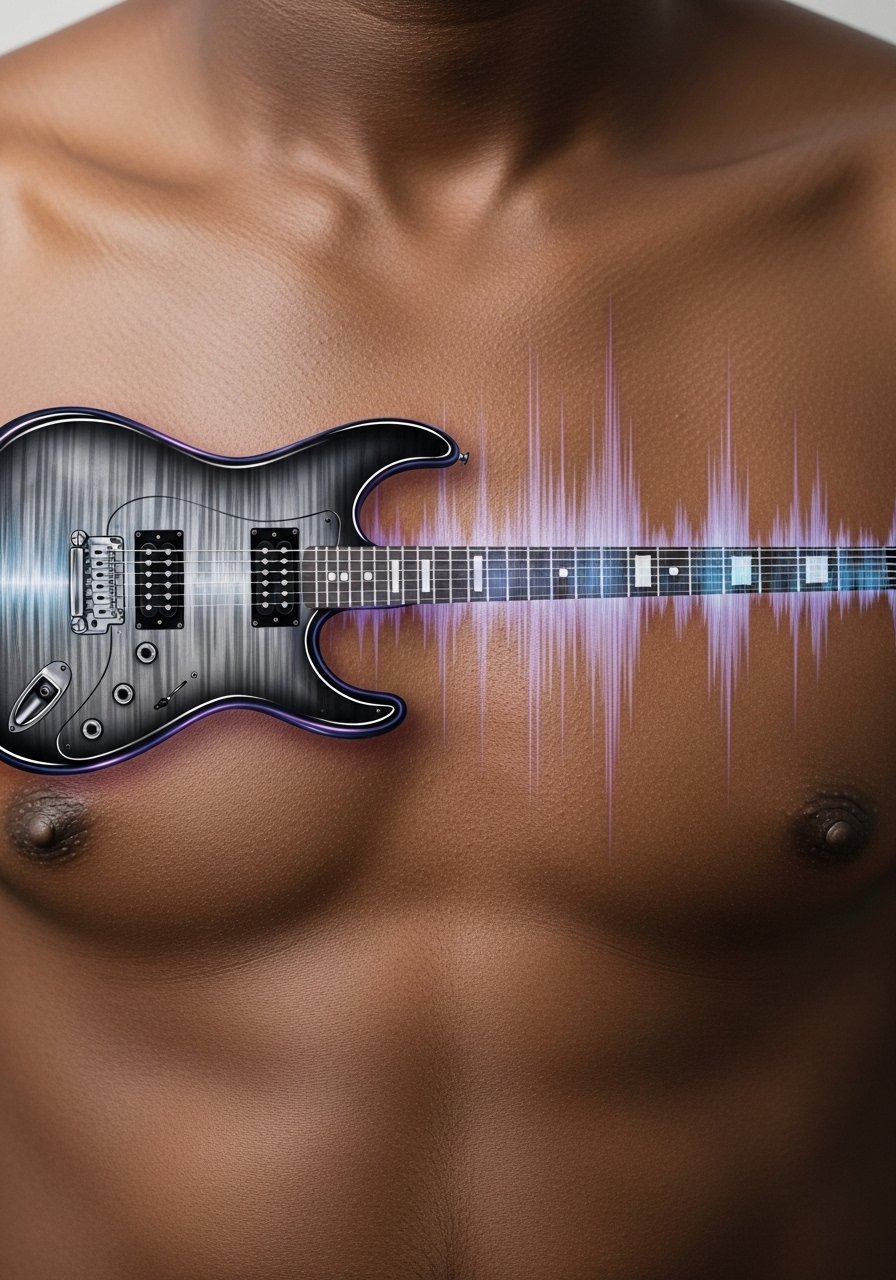
Sternum work is bold and intimate and it requires an artist comfortable with tight curves and pain zones. One-sentence professional note: sternum tattoos often need an artist experienced with chest work because the curvature and breathing affect line placement. When you consult, discuss how the waves will shift with breathing and whether you want symmetry or deliberate offset. Sessions will be intense and healing needs careful aftercare to avoid scabbing across the midline.
23. Ignorant Style Cartoon Guitar on Foot
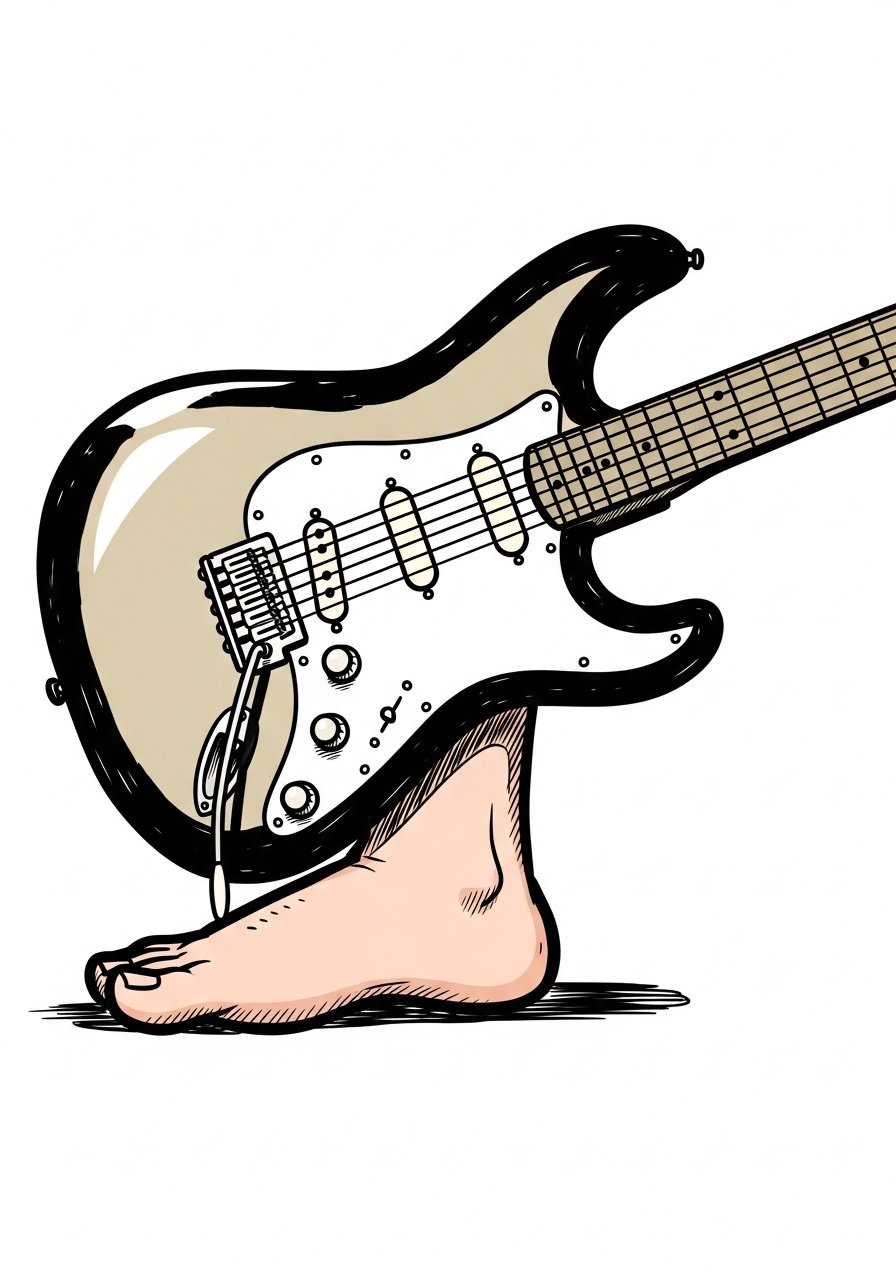
Foot tattoos weather quickly because of shoe friction and moisture. The ignorant aesthetic welcomes irregular linework but you should still ask the artist how much natural wear you will accept. A common mistake is forcing excessive small detail onto the foot. Expect faster fading and a higher likelihood of touch-up. If you want longevity, plan for simplified shapes and thicker strokes.
24. Ornamental Mandala Guitar on Chest
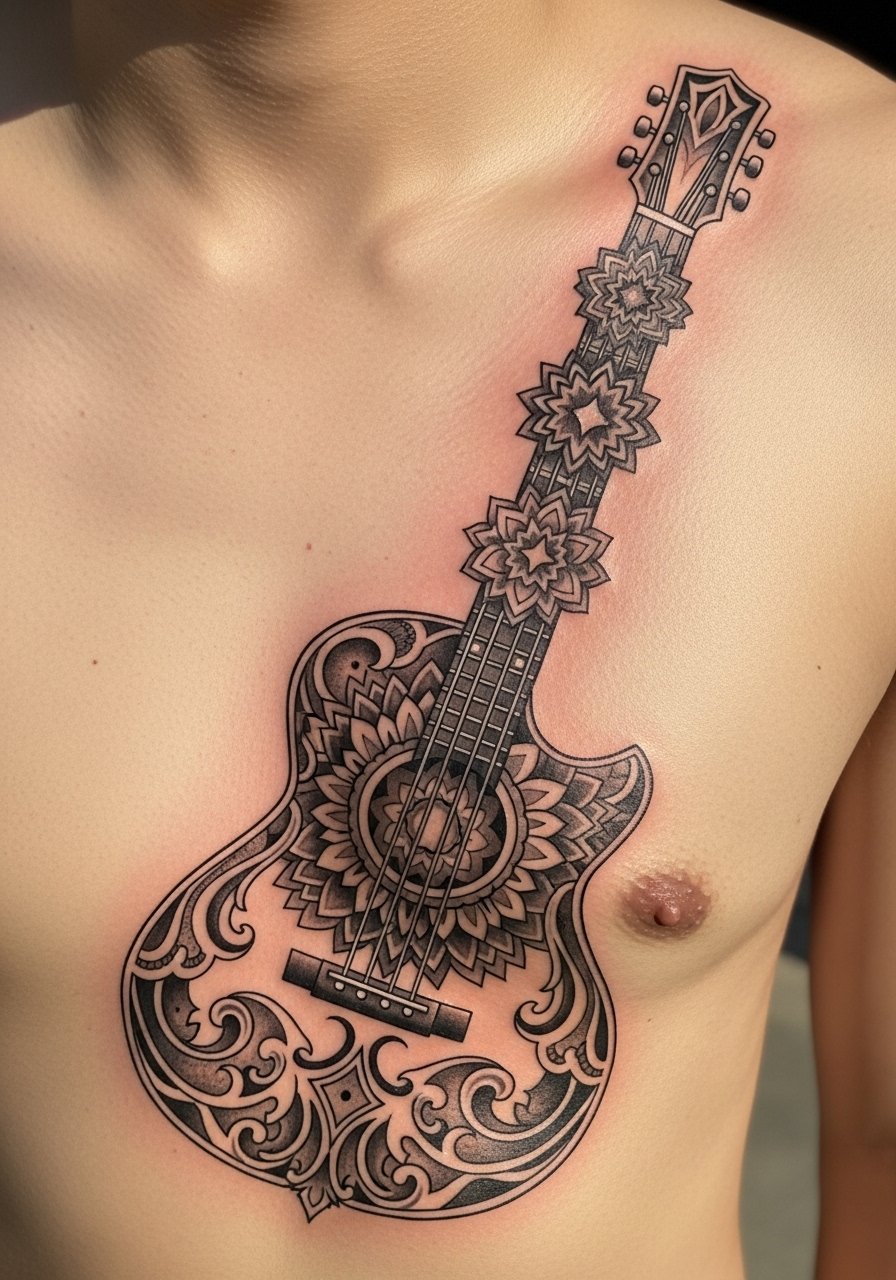
This draws on mandala geometry so approach with cultural sensitivity. Consider abstracting elements rather than copying sacred motifs exactly. The chest gives a broad, flat plane that holds symmetric detail well. Tell your artist if you prefer stronger black anchors or lighter stipple shading. Sessions are long and you should expect a touch-up to unify tones after layering is complete.
25. Small Micro Guitar with Roman Numeral on Wrist
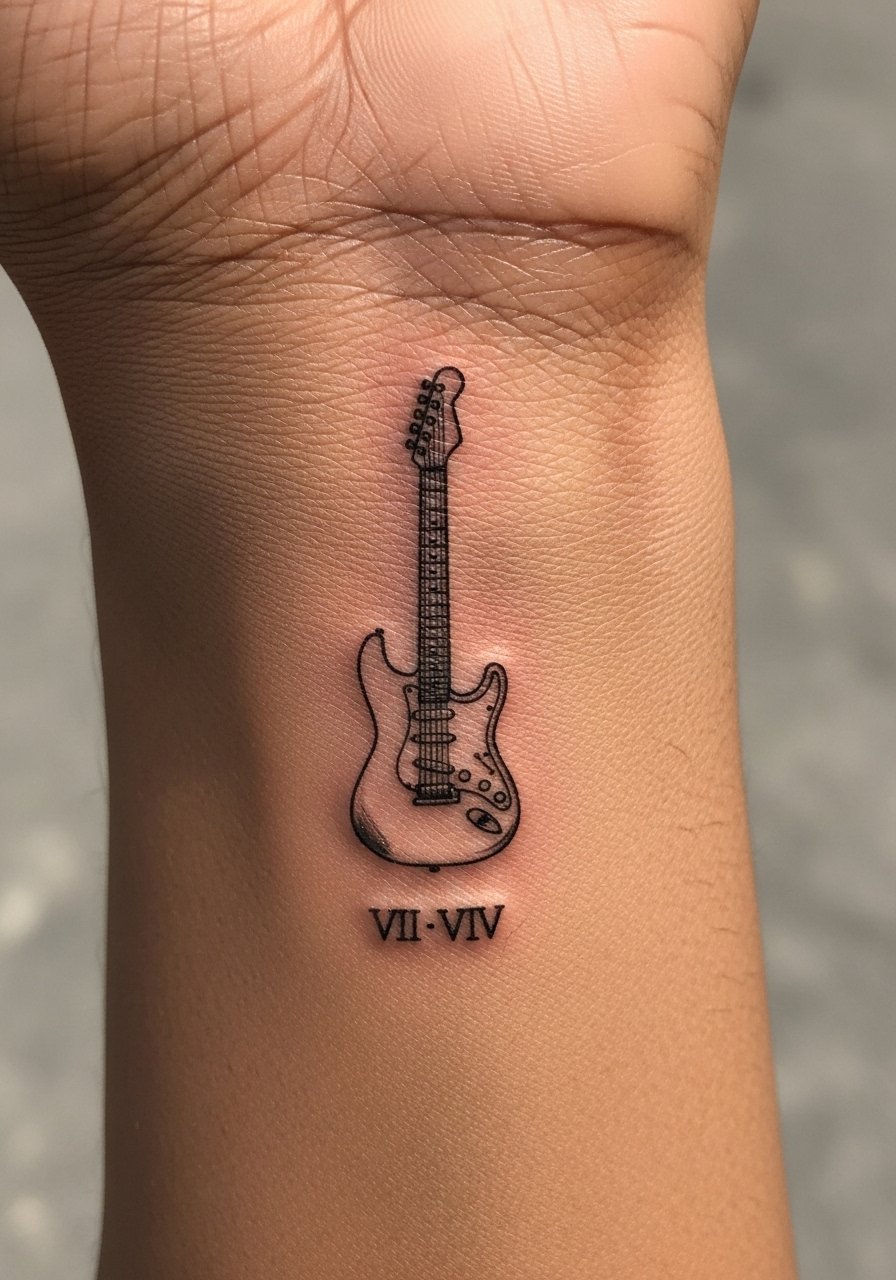
Wrist placement keeps the tattoo visible and personal. If you plan to incorporate a date, specify the exact Roman numerals such as "X.II.MMXV" so the layout is clear. Tiny micro designs on the wrist can blur if lines are too delicate. A common mistake is trusting the first draft without checking healed samples. Expect a quick session and plan for a small touch-up if the numerals or thin headstock lines soften.
Tattoo Prep and Aftercare Essentials

Shopping list (7 items). Links include search queries and my affiliate tag.
Fragrance-free gentle foaming cleanser for tattooed skin. Use this for the first few days to gently remove ointment and prevent residue. Avoid scented soaps while the scab forms.
Lightweight fragrance-free moisturizing balm. Apply a thin layer after cleaning to prevent cracking and keep saturation intact.
Medical-grade second skin bandage, 6-inch roll. Useful for high-friction placements like hands and feet during the first 24 to 48 hours.
Breathable adhesive dressing strips for edges. Use to protect small spots from rubbing against clothing while healed.
Silicone-based long-term scar softening sheet, reusable. Helpful later in healing to keep texture even without compromising ink.
Lightweight SPF 30 mineral sunblock stick. Apply after the tattoo fully heals to protect color and saturation from UV fading.
Gentle microfiber healing towel, lint-free. Use for patting dry after showers to avoid snagging scabs.
Aftercare note: I included practical, lesser-known items and generic descriptors because product availability varies. Use one mainstream product sparingly if recommended by your artist for early moist healing.
Every tattoo is different. Always follow your artist's specific aftercare instructions. Consult a dermatologist if you have skin concerns or unusual healing issues.
Frequently Asked Questions
Q: Will fine line Stratocaster outlines blur faster on the inner forearm than a thicker traditional Telecaster piece?
A: From what I've seen, fine line pieces can soften faster because the ink sits in narrower bands. The inner forearm is forgiving compared with ribs, but if you want longevity ask the artist for slightly heavier single-line passes and more spacing. Expect a possible touch-up around year two to restore sharpness.
Q: Do watercolor-style guitar tattoos need different aftercare than blackwork or traditional ones?
A: Yes. Watercolor relies on soft pigmentation and subtle blends, so protecting the piece from sun after healing matters more. Use a gentle cleanser, a lightweight balm during the scab phase, and mineral SPF after full healing. A color refresh at two to three years is common if you want the original intensity back.
Q: Why do dotwork or stipple fretboards blur on ribcages more often than on forearms?
A: Ribcage skin moves with breathing and stretches differently than the forearm. If dots are packed too densely or placed too shallow, they can merge as the skin shifts. Ask your artist to space dots with breathing dynamics in mind and to show healed ribcage dotwork before booking.
Q: How should I search for an artist who specializes in micro-realism or neo-traditional guitar work in my city?
A: Try style-specific hashtags and location tags, for example use the style tag plus your city or search "[city] electric guitar tattoo studio" on directories. Attend local conventions or browse portfolios on tattoo directories to confirm healed images in the style you want.
Q: If I get a guitar and banner sleeve start on the bicep, how long before I can add connecting pieces?
A: Allow the initial session to fully settle at least eight to twelve weeks before planning large adjacent work. The exact timeline depends on how much scabbing and swelling occurred. In practice, most artists schedule follow-ups three to six months out to ensure consistent color and line integration.